The AI Doc: Or How I Became an Apocaloptimist


The Facts
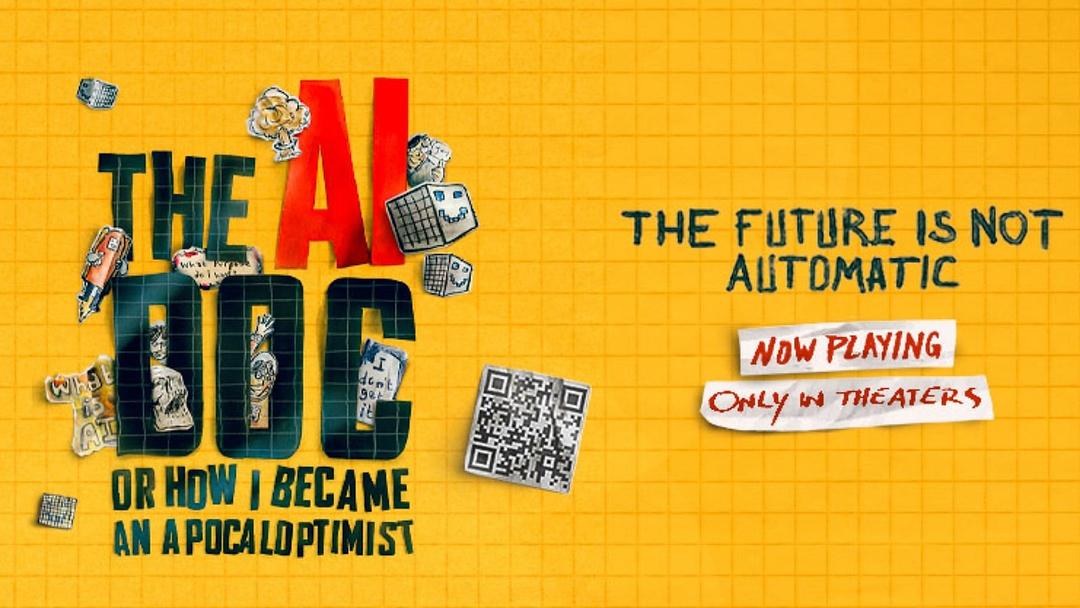
- Documentary Overview: "The AI Doc: Or How I Became an Apocaloptimist" is a 104-minute documentary directed by Daniel Roher and Charlie Tyrell, released in theaters March 27 by Focus Features. The film follows Roher as he interviews more than 40 AI experts — selected from roughly 140 pre-interviews — to examine whether artificial intelligence represents an existential threat or an unprecedented opportunity for humanity. The documentary is structured in three parts: perspectives from those predicting catastrophe, views from those forecasting a technological utopia, and direct conversations with leading AI company executives.
- Context: Roher, who won an Academy Award for his 2022 documentary "Navalny," anchored the film around his and co-director Tyrell’s shared experience of expecting their first children, attempting to answer a central question: is this a good or bad time in history to bring a baby into the world? The project took nearly three years to complete, generating 3,300 pages of transcripts. Producer Ted Tremper developed more than 100 contacts, including sources inside major AI labs, conducting pre-interviews lasting up to 20 hours. The film premiered at the 2026 Sundance Film Festival before its theatrical release.
- Documentary's Claims: The film's central argument is captured in the coined term "apocaloptimist," which Roher describes as "a third path" between doomsday scenarios and unchecked enthusiasm about AI. Co-director Tyrell states that the film's biggest realization was that "there probably isn't an 'off switch'" — meaning AI cannot simply be rejected, as it is already integrated into daily life. The filmmakers argue that the window for shaping AI through regulation and public engagement remains open but is not permanent, and that individuals should engage with the technology consciously rather than passively.


Sources Split
LEFT
CENTER
RIGHT

+7
+7
+6
+1
+1
ESTAB
CRIT
CENTER
PRO
ESTAB
The Spin
Narrative A
"The AI Doc" is essential viewing for anyone alarmed by unchecked corporate power reshaping society without public consent. Roher's personal framing — anchored in impending fatherhood — keeps abstract dangers viscerally human. The film's direct-address interview style and hand-drawn animations remind audiences they belong in this conversation, even when excluded from boardrooms. By platforming journalists, whistleblowers and activists alongside tech CEOs, the documentary ultimately calls viewers toward regulation and collective action — a genuinely radical act in a media landscape that too often treats Silicon Valley's agenda as inevitable.


Narrative B
"The AI Doc" squanders remarkable access to industry leaders by lobbing softball questions and accepting hyperbolic claims at face value. Roher's emotional framework — fatherhood anxiety as a lens for civilizational risk — substitutes sentiment for scrutiny. The film never interrogates how AI threatens creative workers, including filmmakers like Roher himself, a glaring omission given its reliance on animation studios. By siloing doomers and accelerationists into tidy chapters rather than forcing genuine confrontation, the documentary mirrors the very hype cycle it claims to examine, leaving audiences informed of the debate's contours but no wiser about its substance.


Narrative C
“The AI Doc” lays out the stakes of AI with clarity, yet misses the elephant in the room: the loss of political capacity to govern. By treating the crisis as primarily technological, it ignores that the real bottleneck is a captured political system unable to regulate the forces it unleashes. Tech CEOs offer reassurances, yet the film never seriously confronts whether governments — shaped by money and influence — can act at all. Without restoring democratic capacity, the solutions Roher and Tyrell's film gestures toward will continue to remain illusions.

Metaculus Prediction


The Controversies
Go Deeper














































© 2026 Improve the News Foundation.
All rights reserved.
Version 7.17.1