SK Hynix Raises $26.5B in Stock Market Debut
The Facts
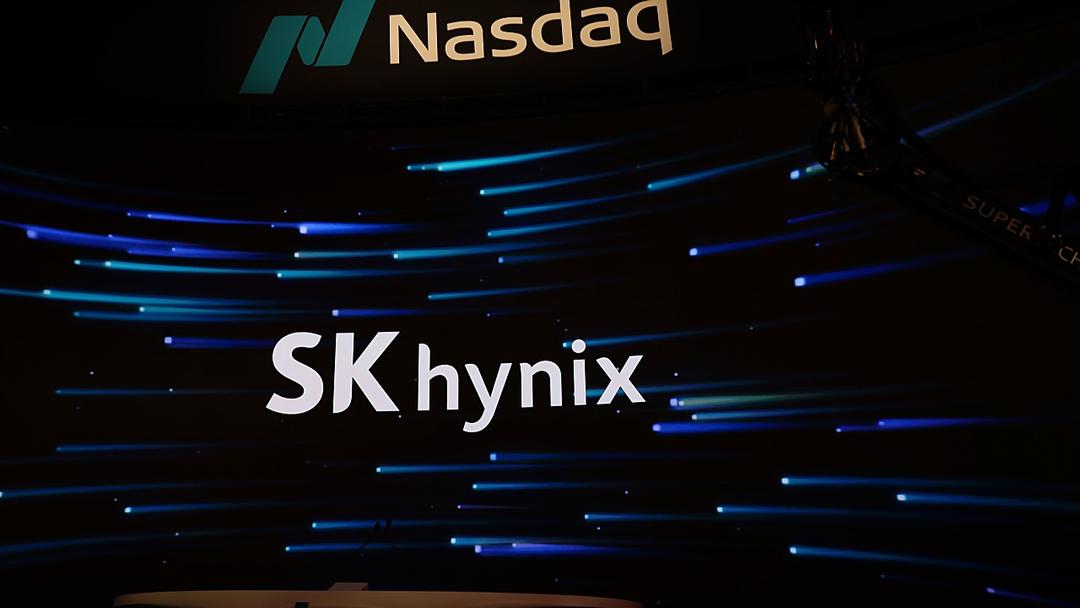
- South Korean chip maker SK Hynix raised $26.5 billion in its Nasdaq stock market debut, marking the largest-ever U.S. listing by a foreign company, surpassing the $25.6 billion raised by Saudi Aramco in 2019 and the $21.8 billion raised by Alibaba in its New York IPO.
- The offering was seven times oversubscribed, with more than 500 investment firms competing for shares. SK Hynix sold 177.9 million American depositary shares at $149 each.
- SK Hynix plans to use the proceeds to fund construction of a fabrication hub in Yongin near Seoul and an advanced packaging facility in Cheongju, as well as to purchase equipment such as ASML's extreme ultraviolet scanners.


Sources Split
LEFT
CENTER
RIGHT

+1


ESTAB
CRIT
CENTER
PRO
ESTAB
The Spin
Narrative A
SK Hynix's record-breaking Nasdaq debut is proof that AI-driven memory demand has fundamentally reshaped the semiconductor landscape. Seven times oversubscribed with 500-plus investment firms competing for shares, the market is voting loudly that HBM chips are the backbone of the AI economy. With revenue nearly tripling year-on-year and analysts forecasting massive profit growth, the chip rally has plenty of runway left.
Narrative B
This IPO is riding a cycle that has historically ended in spectacular collapse, as memory markets have crashed violently four times since the 1990s, wiping out dozens of companies each time. AI capex is the only thing holding this super-cycle together, and the moment hyper-scalers pause datacenter builds, those advance volume agreements become renegotiation talks. Meanwhile, government equity entanglement through Korea's National Growth Fund risks diluting shareholders and spooking foreign investors.

Cynical narrative
This is more than just an SK Hynix problem — the world economy is floating on an AI bubble. While trillions of dollars flow into chip manufacturing corporations and data centers on AGI dreams, the AI systems they're powering yield weak investment returns. Fragile financing and circular deals are propping up U.S. markets and Asian exports, likely leading to a future bubble burst, wiping out large chunks of global wealth.






© 2026 Improve the News Foundation.
All rights reserved.
Version 7.18.2