Sanchez Travels to Ceuta as Over 50k Migrants Storm Enclave



The Facts
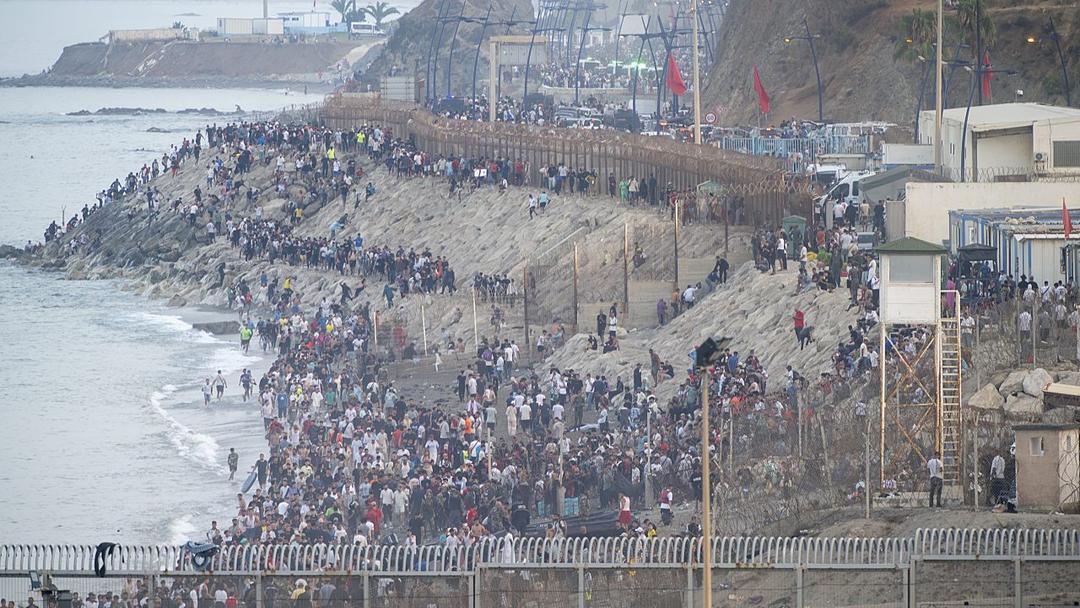
- Spanish Prime Minister Pedro Sánchez traveled to Ceuta on Friday and described the mass crossings as "a violation of Spain's territorial integrity," pledging to use all state resources to ensure security. Spain deployed its armed forces to bolster security in both Ceuta and Melilla.
- An estimated 50,000 to 60,000 migrants crossed into the Spanish enclave of Ceuta from Morocco by land and sea within roughly 24 hours on Thursday. At least 34 people died during the crossing, with many drowning and some killed in a stampede near Tarajal beach.
- Spain's Interior Ministry said more than 37,500 people had voluntarily returned to Morocco by Friday afternoon. However, thousands remained near the border, with Moroccan forces using tear gas and water cannons in Fnideq to disperse crowds still attempting to cross into Ceuta.


Sources Split
LEFT
CENTER
RIGHT
+2

+3

+1
+1
+1
+1
+1

ESTAB
CRIT
CENTER
PRO
ESTAB
The Spin
Pro-government narrative
The Ceuta crisis reinforced concerns that Morocco is willing to weaponize migration to advance its foreign policy goals. By exerting pressure at Europe's only land border with Africa, Rabat demonstrated the significant leverage it holds over the EU's external frontier. Allowing migration to become a geopolitical bargaining chip would only encourage further coercive tactics, embolden similar strategies elsewhere and ultimately undermine long-term Mediterranean security.

Government-critical narrative
The Ceuta crisis was largely the result of Spain's own policy failures and not a covert Moroccan operation. Madrid's Supreme Court ruling, combined with years of increasingly permissive migration policies, created exactly the incentive smuggling networks needed to mobilize tens of thousands of people through TikTok and WhatsApp. With 34 dead and over 50,000 crossings, the real lesson is that weak deterrence and mixed political signals carry devastating humanitarian consequences.


Pro-Israel narrative
Israel's response to Ceuta exposed an uncomfortable inconsistency in Spain's foreign policy. Madrid has been among Israel's most vocal critics over territorial issues, yet continues to govern Ceuta and Melilla on the African continent. If historical territorial claims justify international pressure on Israel, the same principle should apply to Spain's own enclaves. Selectively invoking decolonization depending on the country involved only reinforces perceptions of a double standard.

Anti-Israel narrative
The Ceuta crisis quickly became another front in Israel's diplomatic dispute with Spain. Rather than focusing on a humanitarian emergency that left dozens dead, Israeli officials and commentators used the surge to attack Madrid over its pro-Palestinian stance and deflect criticism of Israel's own policies. Turning a deadly border crisis into a geopolitical messaging campaign risks deepening divisions instead of addressing the humanitarian emergency and human suffering at its center.