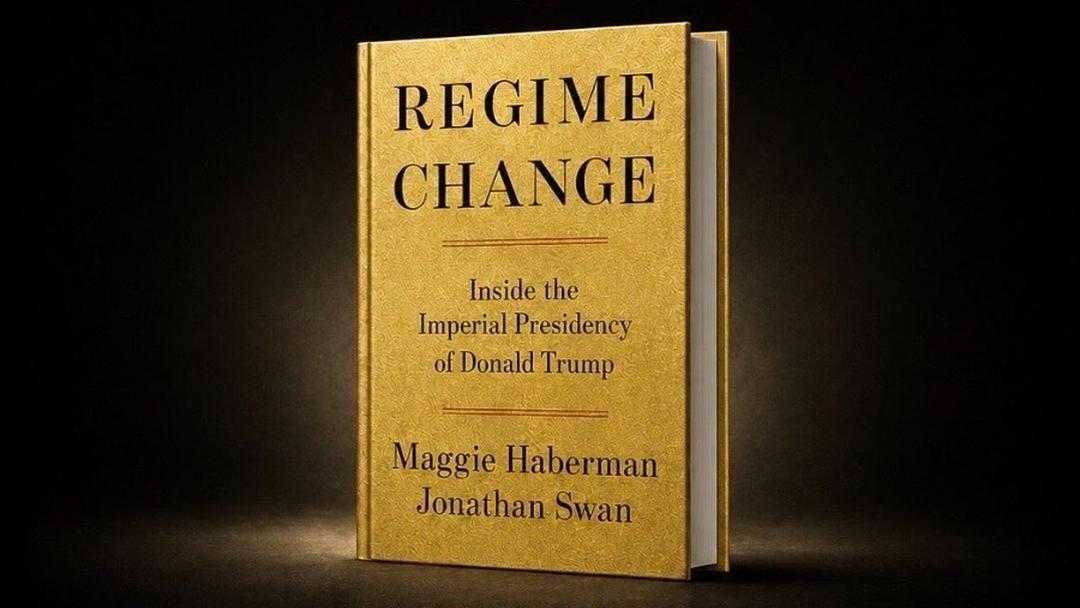
Regime Change: Inside the Imperial Presidency of Donald Trump
The Spin
Anti-Trump narrative
Haberman and Swan's "Regime Change" offers a richly textured chronicle of a presidency that increasingly treats government as an extension of Donald Trump's personal will. Taking readers inside the room, the book reveals a White House consumed by loyalty tests, political vendettas and efforts to control public narratives, even as officials scrambled to contain the Epstein controversy. By documenting attacks on institutional restraints and demands for unquestioning obedience, it presents a troubling portrait of democratic norms yielding to personal power.
Pro-Trump narrative
In "Regime Change," Haberman and Swan rely almost entirely on anonymous sources, reconstructed conversations and claims that can't be verified by readers. Reported near-verbatim accounts of Situation Room discussions also raise questions about whether sensitive national security deliberations were improperly disclosed. Rather than a neutral history, the book reflects the perspective of journalists who have long been among Trump's most prominent critics, warranting serious skepticism about their conclusions.
Narrative C
"Regime Change" treats Donald Trump as the culmination of a crisis that has been building for decades. While Haberman and Swan portray a White House operating with fewer constraints than before, the steady expansion of executive authority long predates Trump and spans administrations of both parties. Congress, the courts and successive presidents helped create the modern imperial presidency. Trump may have pushed executive authority further than most, but he did not build the system he inherited.