NUS Launches World's First Biological Server Rack
The Facts
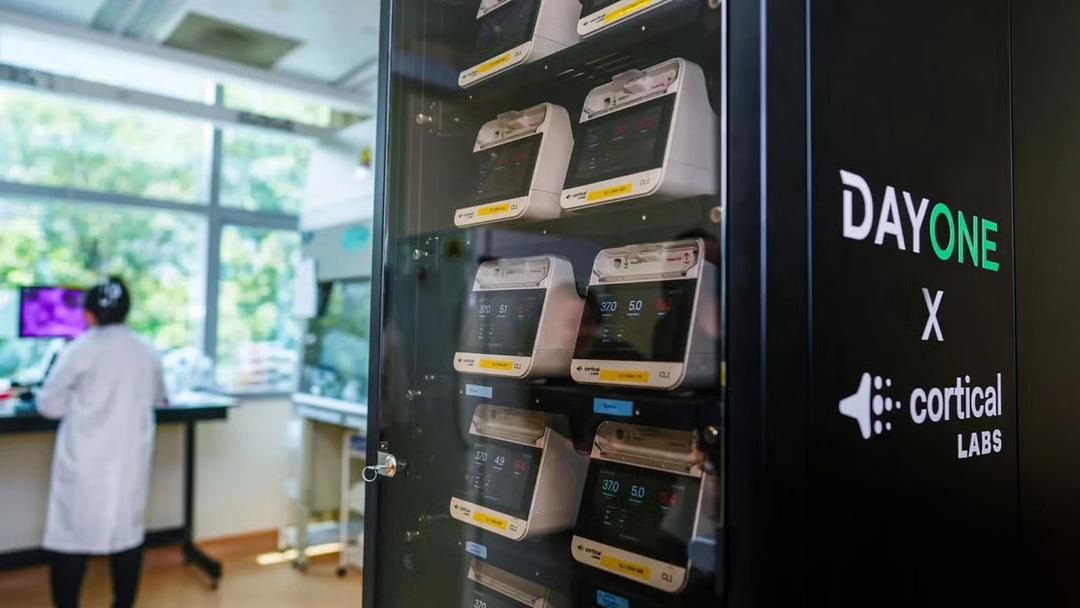
- Singapore's National University of Singapore (NUS) has launched what it describes as the world's first independently operated biologically integrated server rack, housing 20 CL1 biological computing units at the NUS Life Sciences Institute.
- Each CL1 unit contains around 800,000 lab-grown human neurons placed on silicon platforms fitted with microelectrodes, giving the 20-unit rack an estimated total of roughly 16 million neurons, though NUS has not independently published a confirmed total count.
- The neurons, derived from human stem cells, exchange electrical signals with conventional hardware via microelectrode arrays and are kept alive for up to six months by built-in life-support systems supplying oxygen, carbon dioxide and nitrogen.


Sources Split
LEFT
CENTER
RIGHT


+1
+2

+2


ESTAB
CRIT
CENTER
PRO
ESTAB
The Spin
Narrative A
Biological computing is the most important breakthrough in tech right now — living neural tissue can run complex AI workloads on a fraction of the power silicon demands, and the AI industry, burning $1.2 trillion on data centers, desperately needs exactly this kind of solution. A single biological rack draws under 1,000 watts, whereas traditional GPU clusters consume tens of kilowatts. The Singapore prototype therefore could signal a fundamentally greener architecture for future AI infrastructure.

Narrative B
This may be technologically exciting, but efficiency should not outrun ethics. Living human neurons are being integrated into computing systems while questions about consent, moral status, ownership and acceptable uses remain unsettled. The technology is still experimental, and its real-world energy advantage at data-center scale has not been independently demonstrated. Before commercialization accelerates, society may need an ethical framework designed specifically for biological computing.
Metaculus Prediction
The Controversies











© 2026 Improve the News Foundation.
All rights reserved.
Version 7.18.2