Learjet Elevator Reportedly Separated Before Fatal Florida Crash
Did icing and turbulence trigger the loss of control or did a vital elevator fail before impact?
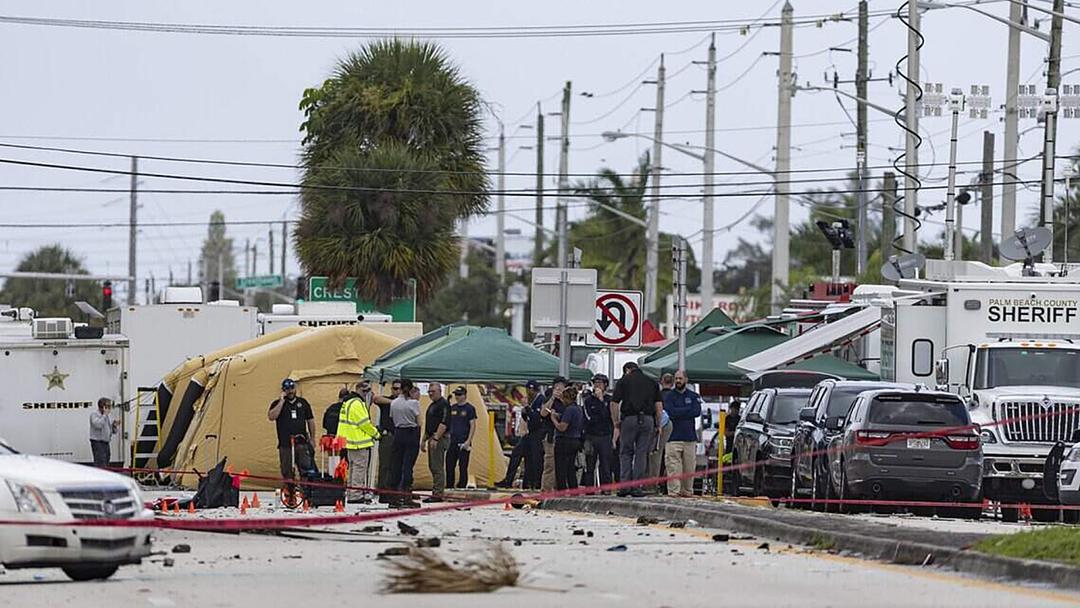
Above: Authorities responded to a private Learjet 60 crash in Greenacres, Florida, on Nov. 2. Image credit: Matias J. Ocner/Miami Herald/Tribune News Service/Getty Images
The Facts
- In the aftermath of Sunday's private jet crash in Florida, investigators said Tuesday that most of the Learjet 60's left elevator was recovered in three pieces 1.3 to 3.8 miles (2.1 to 6.1 km) from the Palm Beach County crash site.
- The elevator component reportedly separated before impact, but investigators had not determined whether its loss caused the nosedive or resulted from forces on the aircraft, while weather remained a major focus of the inquiry.
- The National Transportation Safety Board (NTSB) said that crews expected to find critical aircraft components from the water-filled impact crater, while determining the probable cause was expected to take more than a year.


Sources Split
LEFT
CENTER
RIGHT
+4
+1
+1


ESTAB
CRIT
CENTER
PRO
ESTAB
The Spin
Narrative A
The scattered elevator pieces point more convincingly to damage from an unrecoverable, high-speed dive than to the initiating event. Icing and violent turbulence offer the stronger path to explaining the initial loss of control, while treating late structural breakup as the root cause jumps ahead of the evidence.
Narrative B
An aircraft shedding a vital pitch-control surface before impact makes structural failure the central concern. Extreme speed may have reduced elevator effectiveness, but an incomplete tail erased any chance of recovery. A weather-first theory risks minimizing the clearest physical evidence.


© 2026 Improve the News Foundation. All rights reserved.Version 8.0.0
© 2026 Improve the News Foundation.
All rights reserved.
Version 8.0.0