Dells Give UT Austin $750M for 'AI-Native' Hospital, Research Campus

The Facts
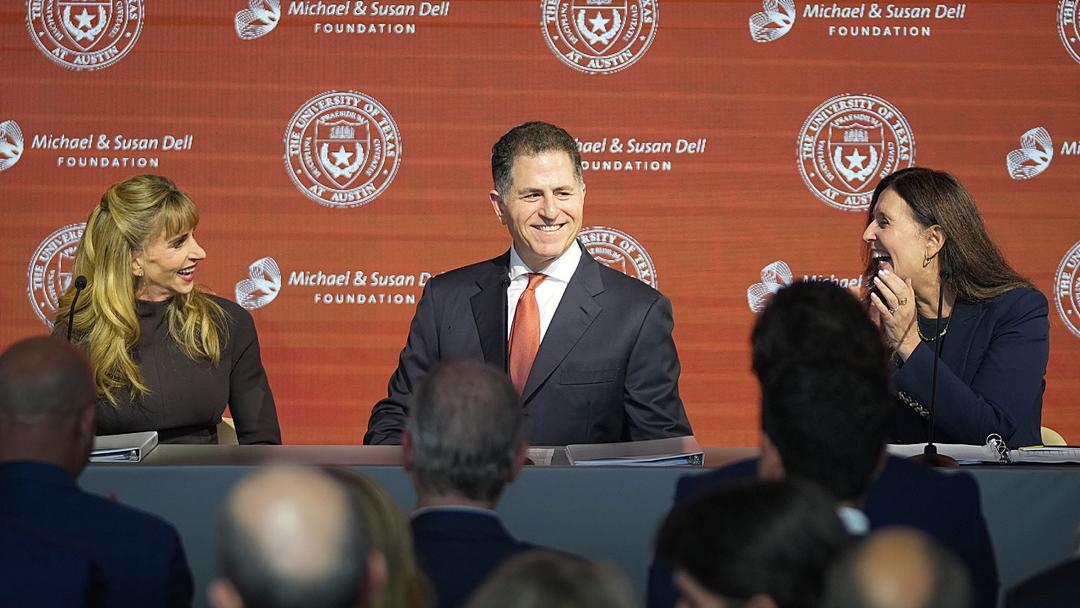
- Michael and Susan Dell have become the University of Texas at Austin's first billion-dollar donors after announcing a $750 million gift on Tuesday, bringing their total contributions to the university to more than $1 billion.
- The donation will fund the UT Dell Campus for Advanced Research and the UT Dell Medical Center, a planned "AI-native" hospital set to open in 2030 on a 300-plus-acre site in North Austin.
- The medical center, expected to open with 300 to 500 beds, will integrate AI and advanced computing into care delivery from the outset, with the aim of enabling earlier disease detection and more personalized treatment.


Sources Split
LEFT
CENTER
RIGHT
+1


+3
+4
+2

ESTAB
CRIT
CENTER
PRO
ESTAB
The Spin
Techno-optimist narrative
The Dell family's $750 million gift to UT Austin is exactly the kind of bold, visionary investment that moves medicine forward. Building an AI-native medical center from the ground up — integrating MD Anderson cancer care, advanced computing and personalized treatment — is how Texas builds the hospitals of the future and becomes a global leader in health and life sciences. This is what happens when private ambition meets public good.
Techno-skeptic narrative
Rushing to build AI-native hospitals before solving AI's core problems may turn out to be a serious mistake. Bias baked into training data means these systems routinely underserve Black patients, women and low-income communities — and automation bias causes clinicians to blindly trust flawed outputs. Pouring billions into AI-driven health care without rigorous bias mitigation frameworks risks encoding today's disparities into tomorrow's medicine.


Metaculus Prediction
Public Figures





© 2026 Improve the News Foundation.
All rights reserved.
Version 7.18.2