Washington Declares Emergency as Floods Hit State

The Facts
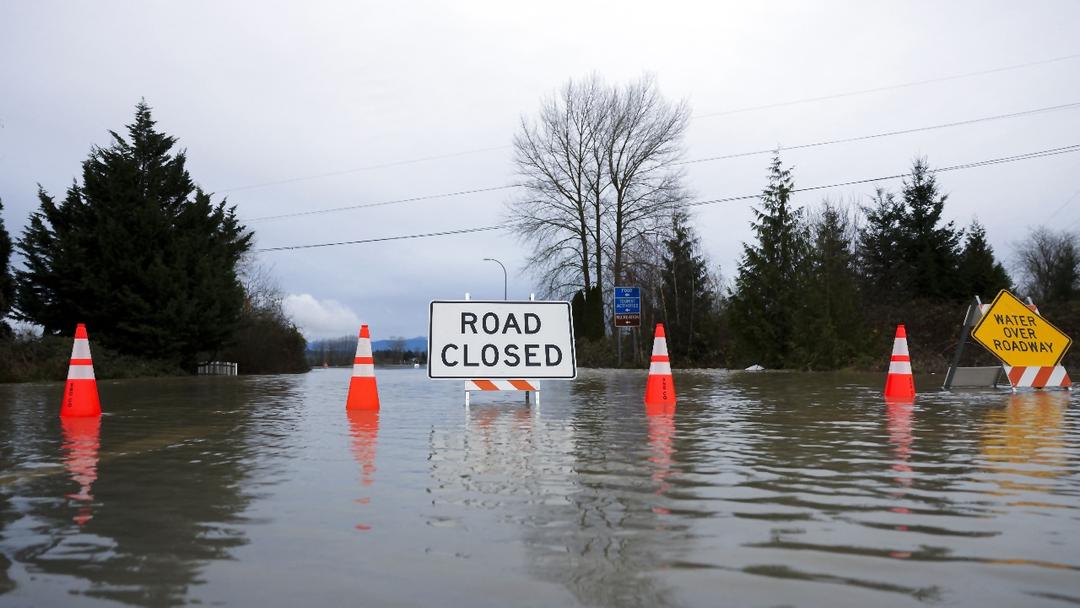
- Washington Governor Bob Ferguson declared a statewide emergency on Wednesday in response to widespread flooding as flood levels could be "potentially historic in nature." President Donald Trump reportedly cleared this on Friday, letting the state seek federal funds.
- The Skagit River near Mount Vernon was forecast to crest at record levels on Friday morning, while the Snohomish River at Snohomish reached 34.1 feet on Thursday, surpassing its previous record of 33.5 feet set in 1990, according to river monitoring data.
- Around 78,000 residents living in the Skagit River's 100-year floodplain were ordered to evacuate, with officials stating that up to 100,000 people across Washington state could face evacuation orders or warnings as flooding moved into more densely populated areas.


Sources Split
LEFT
CENTER
RIGHT
+1
+2
+4
+1
ESTAB
CRIT
CENTER
PRO
ESTAB
The Spin
Climate-concerned narrative
Climate change is fundamentally altering rainfall patterns and making catastrophic flooding more frequent and severe. Rising global temperatures cause air to hold 7% more moisture for every 1 degree Celsius increase, leading to extreme precipitation events that overwhelm communities. Washington's recent flooding demonstrates how warming temperatures are pushing more precipitation to fall as rain rather than snow, creating dangerous conditions that will only worsen without action to limit global warming.


Climate-skeptic narrative
Despite the catastrophic Washington floods, blaming climate change alone is too easy. The devastation stems more from flawed governance, poor land-use planning and infrastructure unfit for known regional risks. Climate narratives — often inflated, politicized or selectively applied — cannot substitute for accountability. Disasters become inevitable when preparation fails, not simply when the climate shifts.

Narrative C
Aging infrastructure and deferred maintenance pose serious threats to communities across the country. Washington state has 50 high-hazard dams in poor condition requiring immediate repairs, with some structures dating back to the 1920s now surrounded by homes and businesses that didn't exist when they were built. The $1 trillion infrastructure bill provides only $3 billion for dam projects — a fraction of what's needed to address thousands of deteriorating dams nationwide.
Metaculus Prediction
Public Figures
Go Deeper


© 2026 Improve the News Foundation.
All rights reserved.
Version 7.18.0