The Singularity Is Nearer
The Facts
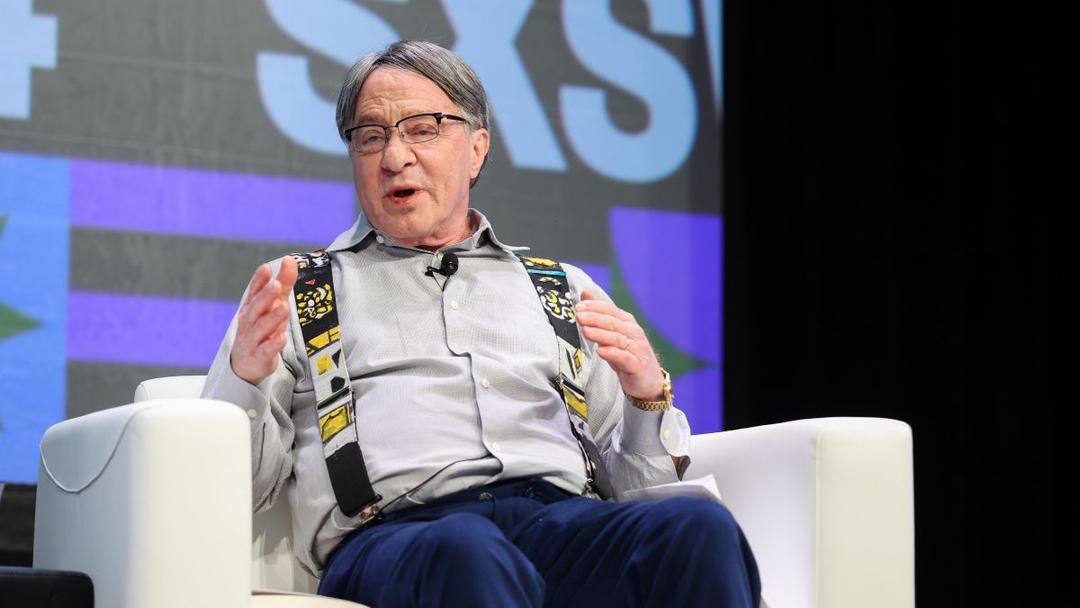
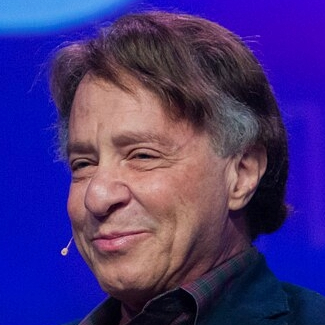
- Book Overview: "The Singularity Is Nearer: When We Merge with AI" is a 432-page nonfiction book by futurist, inventor and current Google AI researcher Ray Kurzweil, published in 2024. It serves as an update to his 2005 work "The Singularity Is Near: When Humans Transcend Biology," reaffirming his timeline for artificial general intelligence (AGI) by 2029 and the technological singularity — when people will merge with AI — by 2045. The book blends technological forecasting with futurist philosophy, exploring AI, biotechnology, human-machine integration, and consciousness.
- Context: The book emerges amid rapid advances in AI systems such as GPT-5 and robotics, which have led some experts to revise their timelines for achieving human-level intelligence. Kurzweil, however, maintains his original projections, arguing that AGI must equal the capabilities of the top human experts across all fields — not just average performance in specific domains. The book situates itself in the discourse on post-human futures, the ethics of superintelligence, and philosophical questions of identity.
- Author’s Claims: Kurzweil predicts that by the 2040s, nanobots will link human brains to AI-enhanced cloud systems, radically amplifying cognition and enabling full-immersion virtual experiences. These nanobots, he claims, will repair aging cells, eradicate diseases including cancer, and allow consciousness to be uploaded to digital platforms. The result, he suggests, could be the functional immortality of human minds and the blurring of lines between biology and technology.


Sources Split
LEFT
CENTER
RIGHT
+1
+2
ESTAB
CRIT
CENTER
PRO
ESTAB
The Spin
Techno-optimist narrative
Kurzweil’s "The Singularity Is Nearer" isn’t speculation — it’s a roadmap backed by decades of predictive success. With a track record unmatched in tech forecasting, Kurzweil shows how exponential growth in AI, biotech, and nanotech will end disease, aging, and scarcity — not by replacing us, but by amplifying our intelligence to solve humanity’s greatest challenges, including the very risks posed by AI. Brain-cloud integration and digital immortality mark humanity’s evolutionary leap — and Kurzweil makes a compelling, evidence-backed case that it’s already underway.

Techno-skeptic narrative
Kurzweil’s "The Singularity Is Nearer" conveys a vision of the future that reduces humanity to an engineering problem, collapsing ethics, politics, and personhood into code. His sleek forecasts ignore the real barriers to progress — from institutional inertia to deep-rooted inequality — and assume that faster tech automatically means better lives. By treating human consciousness as something to be enhanced rather than understood, he offers a future that’s frictionless, bloodless, and ultimately inhuman.

Cynical narrative
Kurzweil’s "The Singularity Is Nearer" is a classic example of the Ptolemy Principle — assuming we stand at the center of history’s grandest transformation. He overlooks hard physical limits like quantum and thermodynamic barriers, the nonlinearity of history, and the exponential rise of ethical risks such as AI safety and loss of human control. While Kurzweil is undeniably a brilliant thinker, his confident forecasts overlook the unpredictability of progress and the profound risks ahead — revealing more about human hubris than about the future itself.
Narrative D
Kurzweil’s "The Singularity Is Nearer" is driven by an almost desperate fixation on defeating death. His vision of nanobots curing aging and uploading consciousness promises immortality, but this obsession — fueled by a quasi-religious faith in technology’s redemptive power — blinds him to broader social realities and scientific limits. He casually dismisses economic stagnation and ethical risks, assuming exponential tech progress will solve all problems. While inspiring, his near-fanatical hope for eternal life risks veering into naive techno-utopianism.
Metaculus Prediction
Public Figures
The Controversies
Go Deeper



























© 2026 Improve the News Foundation.
All rights reserved.
Version 7.18.3