Ford Records $19.5B Charges, Scales Back Plans for EVs
Are EVs economically unviable without subsidies, or is misinformation sabotaging a successful technology?
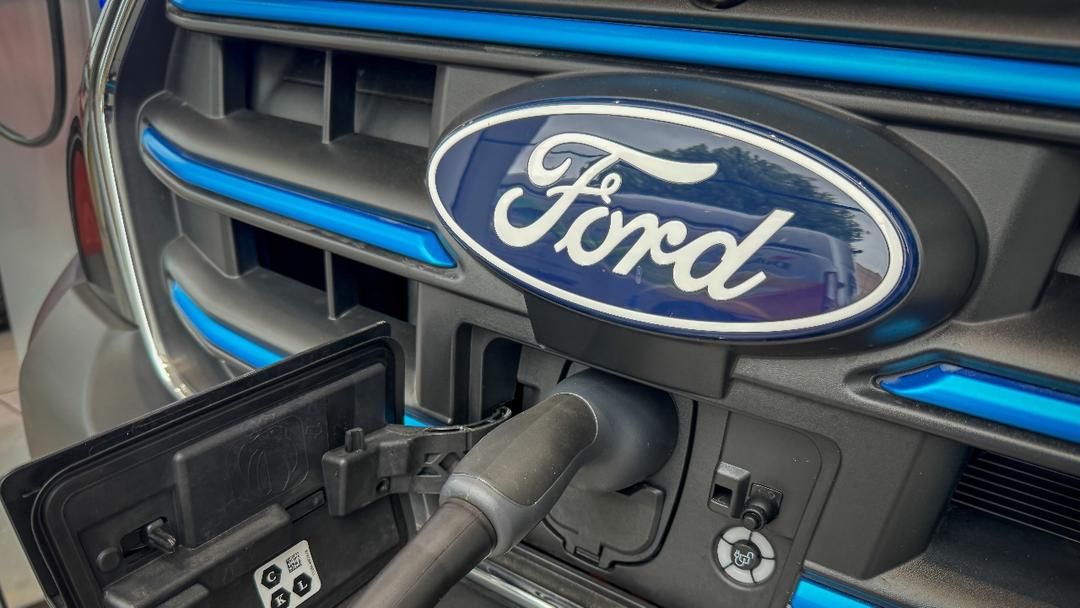
Above: The front grille of a Ford Transit electric van in Bristol on Aug. 4. Image credit: Anna Barclay/Getty Images
The Facts
- Ford said it will record about $19.5 billion in special items tied to restructuring and EV pullback — most in the fourth quarter — and expects roughly $5.5 billion in related cash effects spread through 2027, with most to be paid next year.
- Despite the restructuring charges, Ford raised its 2025 adjusted operating earnings target to about $7 billion, up from guidance outlined earlier, citing continued strength in its core operations and cost improvements after an October revision.
- Ford ended production of the all-electric F-150 Lightning and said the next iteration will be an extended-range electric model with a gasoline generator, with estimated range exceeding 700 miles. The model's launch date is yet to be announced.


Sources Split
LEFT
CENTER
RIGHT
+2

+1

+1
+1

ESTAB
CRIT
CENTER
PRO
ESTAB
The Spin
Right narrative
Electric vehicles have proven economically unviable without massive government subsidies. Even with federal tax credits of $7,500 and state incentives reaching $5,000, carmakers still lose money on every EV sold after nearly three decades of trying. Now that subsidies are ending, they are slashing capacity as the business case just doesn't exist.


Left narrative
Misinformation campaigns are deliberately sabotaging EV adoption despite overwhelming evidence of success. Modern EVs offer 300-400 miles of range and save drivers 50% annually in running costs. Battery prices are dropping 40% by 2025, making EVs cost-competitive while delivering superior performance and environmental benefits.