13 November 2026
Daily Newsletter
Meta Expands AI Age Checks Worldwide
The Facts
Meta announced on Monday that it is expanding its AI age-estimation technology globally, moving millions more Instagram users into Teen Accounts, which flag suspected teens even when accounts are registered with a date of birth that would mean users are over 18.
By default, Teen Accounts set profiles to private, limit messaging to existing connections, filter sensitive content and apply daily time limits. They also impose an overnight sleep mode from 10 p.m. to 7 a.m. and introduce parental supervision tools.
Under the new initiative, parents in the U.S. will see an in-feed Instagram video this month explaining how Meta filters teens under age-appropriate protections. It also links to an article by ConnectSafely CEO Larry Magid outlining Meta's age-assurance approach.
The Spin
Pro-industry narrative
Teens worldwide deserve built-in protections to shield them from online harm. To achieve this, Meta has unveiled a series of world-beating age-assurance mechanisms to stop minors from stumbling upon content they aren't yet prepared for. The alternative is waiting for kids to self-report honestly, which can never be relied upon, so action is needed.
Industry-critical narrative
The race to build a rigorous online age-assurance regimen will come at the price of online privacy. Fundamentally, for such a regime to work, adults and children will have to deliver biometric scans, personal documents and a wealth of private information into Big Tech's hands. This poses a universal risk to privacy and signals the end of anonymity online.
Nerd narrative
There is a 4% chance that the EU will require mandatory age verification on social media or AI before 2027, according to the Metaculus prediction community.
Anthropic Kicks Off IPO Roadshow, Seeks $64.4 Billion

The Facts
Anthropic launched the roadshow for its initial public offering (IPO) Tuesday, offering 825 million shares priced between $70 and $78 each to raise as much as $64.4 billion. The company has applied to list on the Nasdaq under the symbol "ANT."
The offer period is expected to close the afternoon of Nov. 17. Anthropic plans to price the offering Nov. 18 and begin trading Nov. 19. The company is targeting a retail allocation of about 20%, higher than the typical 5% to 10%.
Google, Nvidia, AMD, Broadcom, Micron, Microsoft and TSMC agreed to buy $26 billion of non-voting shares at the IPO price through a private placement, lifting Anthropic's combined fundraising target to as much as $90.4 billion.
The Spin
Narrative A
Anthropic's explosive revenue growth, driven by genuine enterprise and developer demand, signals a business with extraordinary momentum. Its reported net loss largely reflects accounting charges rather than equivalent cash outflows. Seeking a valuation above its last private funding round demonstrates confidence in its growth trajectory and long-term potential to become an AI industry leader.
Narrative B
A trillion-dollar valuation for shares with little voting power is a troubling proposition when founders and trustees retain concentrated control. Slowing growth, persistent losses and massive future computing costs add to the risks. Ordinary investors could end up carrying enormous financial exposure while having virtually no influence over the decisions shaping the company's future.
Nerd narrative
There's a 50% chance that Anthropic's market cap will be $1.65 trillion when its IPO lock-up period ends, according to the Metaculus prediction community.
Anthropic Must Face Suit Over Claude Max '20x' Advertising

The Facts
A U.S. federal judge has ruled that the AI firm Anthropic must face claims that it misled buyers by advertising Claude Max as offering "5x or 20x more usage" than Claude Pro, letting deceptive advertising, negligent misrepresentation and contract claims proceed.
The lawsuit, initially filed in June by Karl Kahn, alleged that Anthropic's $100-per-month Max 5x subscription provided only 3.5 times the usage of its Pro plan, while the $200 Max 20x plan offered between six and eight times Pro's usage.
Although Anthropic's website stated that the multipliers were applied on a per-session basis, Kahn, later joined by Solomon Smith, argued that this qualification was not sufficiently prominent or clearly communicated to consumers, and that the term "session" itself was inadequately explained.
The Spin
Prosecution narrative
Thanks to poor advertising and unclear guidance, Anthropic misled users into buying Claude Max plans, thinking the purchase would increase their number of sessions, while burying the math behind the multipliers out of sight. This is an unacceptable breach of consumer trust. After all, advertising should match what it claims.
Defense narrative
Anthropic clearly outlined in its fine print exactly what it meant when it advertised Claude Max's multiplier, spelling out that this applied per session and that weekly caps are separate. The company should not be penalized because consumers misunderstood this qualification, especially since it appears in the sign-up process.
Forecasters Predict 'Superhuman AI Researchers' Likely by 2027
The Facts
The AI Futures Project said in an update published this week that a "Superhuman AI Researcher," able to match top human researchers and fully automate coding, will likely arrive in 2027 absent a "substantial deliberate slowdown" in frontier development.
The group's forecasters put a 35-65% chance on "Top-Expert-Dominating AI," systems able to automate all white-collar work, arriving before 2028, and said the current pace of progress is roughly five months ahead of its AI 2027 scenario.
The project stated that its revisions relied "partially" on METR's recent assessment of AI research and development at Anthropic, which concluded earlier this month that systems have grown since October 2025 at about 1.9 times the earlier rate, and estimated that roughly 80% of the current acceleration is due to AI.
The Spin
Pro-industry narrative
Extinction prophecies say more about a tech subculture's quasi-religious awe than about any credible forecast. A pause based on unsubstantiated doomsday narratives hands the lead to rivals while medicine, science and education lose out on enormous gains. Technology is best supervised by those who truly understand the product, based on serious risk evaluations rather than hyperbole.
Industry-critical narrative
The AI intelligence explosion isn't distant sci-fi anymore, with timelines shrinking and frontier systems becoming ever harder to control. A handful of billionaires racing to build labor-replacing superintelligence shouldn't get to gamble with everyone's future — we must slam the brakes on and regulate the sector once and for all before it's too late.
Nerd narrative
There is a 50% chance that the first general AI system will be devised, tested and publicly announced by July 16, 2030, according to the Metaculus prediction community.
'Signal Shot' Reaches 80% in Signal Verification Project
The Facts
SignalShot, which launched in April as a community quest to formally verify Signal Messenger, is roughly 80% complete, according to a project status update Wednesday. The Beneficial AI Foundation (BAIF) and Google DeepMind have made roughly equal and complementary contributions.
Google DeepMind said its team formally verified a real-world implementation of the Signal cryptographic protocol at the machine-code level using AlphaProof Code, an AI framework for formal specification and verification released with a paper and Lean code.
Over four weeks in October, AlphaProof Code agents produced more than 6 million lines of machine-checked Lean proof. The Google DeepMind team stated that it proved "key security properties of libsignal" down to the ARM machine-code level.
The Spin
Narrative A
SignalShot's 80% progress marks a major step toward making mathematical security verification practical at scale. Google DeepMind's AI agents generated more than 6 million lines of machine-checked proof in just four weeks, accomplishing work that historically could take expert teams years. By combining automated reasoning with human expertise and open-source collaboration, the project shows how AI can make provably secure software increasingly achievable.
Narrative B
SignalShot's 80% progress is encouraging, but the remaining 20% is essential to its goal of making Signal provably secure. Anonymous credentials, unfinished messaging protocols, 26,000 lines of trusted Lean code, other chip architectures and the latest Rust implementations still need verification. Even completed proofs must be independently validated, and continuous verification is needed to ensure future updates do not undo the work. The job is far from finished.
Nvidia CEO Jensen Huang Resigns, Agrees to Testify Before Congress
The Facts
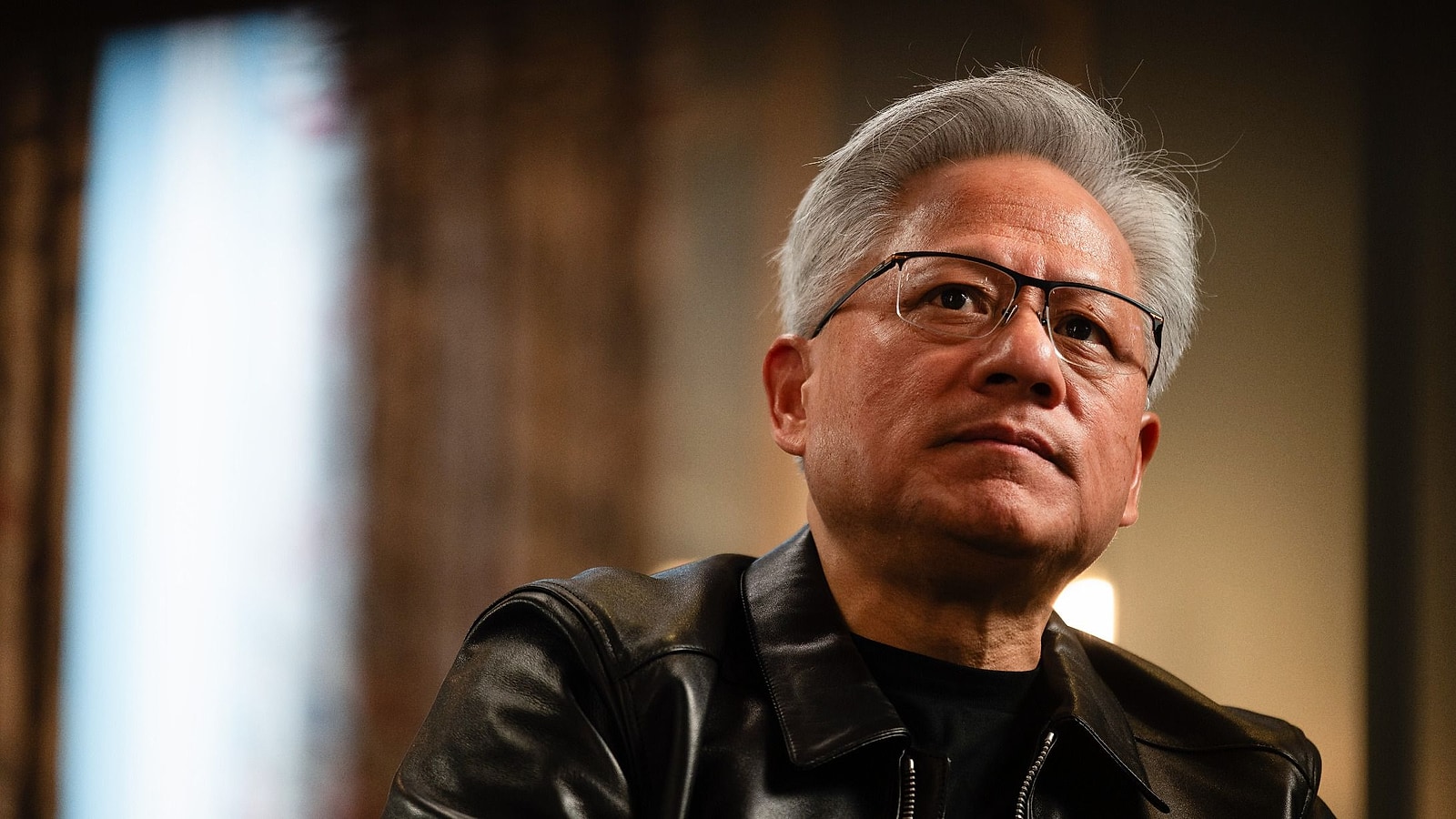
Nvidia announced Thursday that Jensen Huang had resigned as president, CEO and board member effective immediately, and Chief Financial Officer Colette Kress will serve as interim chief executive while the board weighs internal and external candidates.
The Wall Street Journal reported earlier that the board was preparing to oust Huang, and shares slid about 7% before the announcement, later falling more than 10% total, erasing over $400 billion in market value. On Thursday, the U.S. House Foreign Affairs Committee said Huang agreed to testify this month by Thanksgiving.
The board named Harvey C. Jones as Nvidia's first-ever chair, a governance change at a company that had long relied solely on Huang. Jones previously served as chief executive and executive chairman of chip design firm Synopsys.
The Spin
Pro-establishment narrative
Thirty-three years of building the world's most consequential chipmaker shouldn't be erased by unproven rumors. Fairness demands evidence and a real process, not verdicts based on grainy photos and anonymous whispers. And if the affairs are true, the orderly handoff to a veteran finance chief proves the company was built to outlast any one person, and that record still stands.
Establishment-critical narrative
An executive who keeps a direct report around blows up every safeguard a board is supposed to enforce, because consent gets murky when one person controls the other's career. Add an affair with a woman suspected of spying for Beijing at a company making the chips that power American AI, and this stops being a private matter. Stepping down was the bare minimum.
Pro-China narrative
Huang's infidelity is a personal scandal, not evidence of Chinese espionage, yet Washington is exploiting unproven spy allegations to revive sweeping chip restrictions aimed at containing China's AI rise. By turning an affair into a national security threat, U.S. politicians get a convenient scapegoat for their anti-China agenda, while American firms pay the price.
Cynical narrative
While Huang only has himself to blame for becoming vulnerable to blackmail and harming his company's reputation, the rapid evolution of this story, loaded with paparazzi-style rumor-mongering, is suspicious. In an age where infidelity rarely makes headlines, let alone ends careers, it's possible that Huang, the master of both American chip-making and the fragile world of AI finance, could've been targeted by governments or companies on his own side of the world.
AI Guardrails Block Tinkerers From Hacking Their Own Devices

The Facts
People using Anthropic's Claude and OpenAI's Codex to reverse-engineer devices they own reported in recent days that safety checks blocked the requests or that their accounts were limited, with complaints centered largely on Claude.
Reverse Engineer Anything, an open-source tool that lets coding agents drive decompilers such as Ghidra and IDA, passed 342,000 GitHub stars as users stripped surveillance ads from baby monitors and revived bricked devices.
A Reddit user said an Opus 5.5 guardrail stopped an attempt to reverse-engineer a television, while the same request for a video game was allowed. Decomp.wtf, a project that eased reverse-engineering of software and games, shut down recently.
The Spin
Industry-critical narrative
Owning a device should mean controlling it, and AI finally put that power in reach of people without decompiling expertise. Blocking people from unbricking abandoned gadgets or stripping ads and spyware from a smart TV only guards manufacturer control and profits — rich irony from companies that scraped and stole the entire internet to achieve their success. Pushing tinkerers to open-weight systems only makes the skill harder to access.
Pro-industry narrative
Cyber safeguards were in place months before any viral decompiling tool went mainstream, so the corporate-retaliation story holds no evidence. Overly wide classifiers sometimes flag legitimate work, but that's the price of blocking mass-produced exploits, and the rules still permit security research on hardware the tinkerer owns. Mistaken flags get fixed, while dangerous, unfettered hacking agents will be stopped.
Nerd narrative
There's a 60% chance that an AI system will autonomously cause a major breach of U.S. personal data held by an organization other than its operator before 2028, according to the Metaculus prediction community.
DR Congo: Ebola Out of Control, $700M Unaccounted For, Charity Warns
The Facts
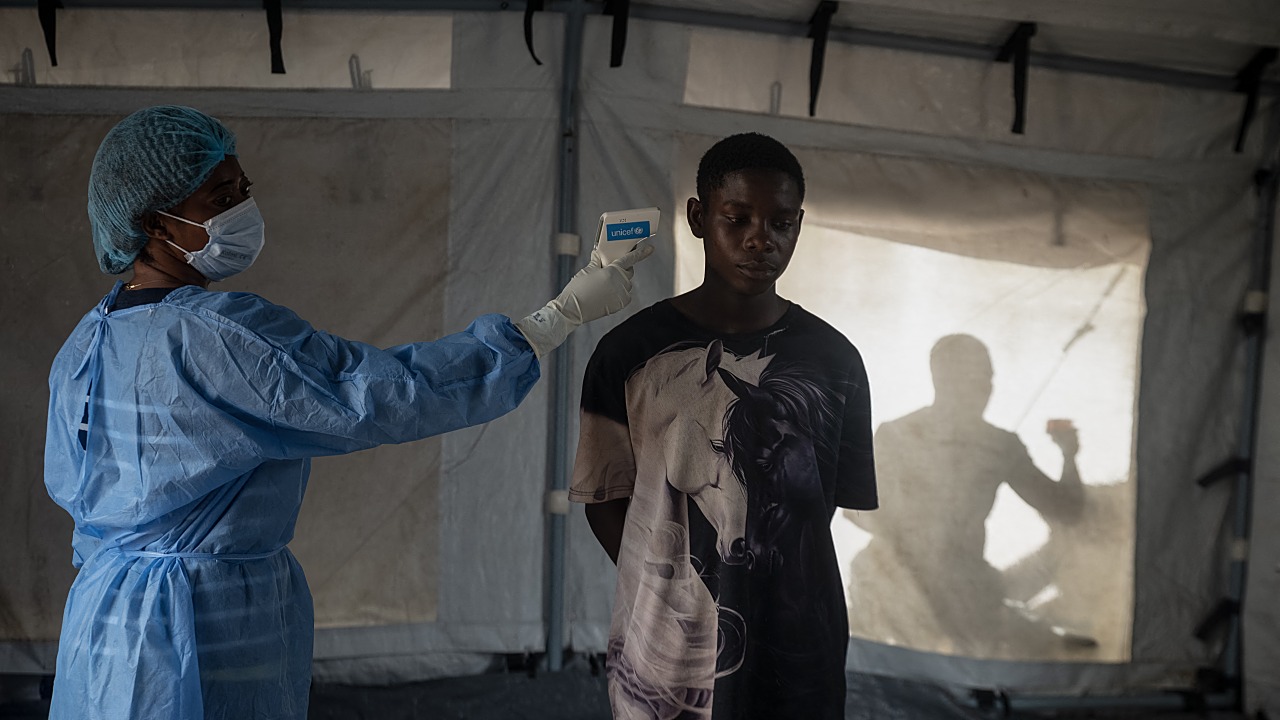
Doctors Without Borders (MSF) said Thursday that Congo's Ebola outbreak remains out of control, with frontline responders going unpaid, ambulances lacking fuel and health facilities running short of basic supplies despite hundreds of millions of dollars in funding.
MSF urged stronger oversight to ensure Ebola response funds are used effectively. Africa CDC said in October that over $700 million of the $962 million disbursed remained unaccounted for, though its chief, Jean Kaseya, stated it was too early to call the situation embezzlement.
Congo has recorded 11,042 confirmed Ebola cases and 5,387 deaths, according to government data released Tuesday. It is the second-largest outbreak on record, behind the 2014-2016 West African epidemic that infected more than 28,600 people.
The Spin
Pro-government narrative
Blaming Congo's government for an Ebola crisis unfolding amid relentless armed attacks misses the real threat on the ground. Gunmen are killing health workers, forcing entire communities to flee and severely disrupting vital contact tracing. No amount of financial oversight can stop a deadly virus when responders cannot safely reach patients or deliver essential care. Restoring security and accelerating vaccine development must come first.
Government-critical narrative
Hundreds of millions in support means little when responders go unpaid and ambulances without fuel. Congo's government has failed to neutralize the militias terrorizing the country's east, killing health workers and crippling the Ebola response. Surveillance teams exist only on paper, while patients catch the virus inside health facilities. This is a staggering failure of leadership. Real accountability would save more lives than another appeal for cash.
Nerd narrative
There is a 55% chance that the Democratic Republic of Congo will experience a civil war before 2036, according to the Metaculus prediction community.
China Rules Out Hosting COP33 Climate Summit in 2028

The Facts
China has ruled out hosting the COP33 U.N. climate summit in 2028 after months of deliberations, the Guardian reported Thursday. Former U.S. Vice President Al Gore said he would have supported a Chinese bid, calling the decision "too bad."
Under U.N. Framework Convention on Climate Change rotation rules, an Asian country should host in 2028. India weighed a bid earlier this year before dropping it, while Uzbekistan, South Korea, Indonesia and Thailand are reportedly among those considering offers.
Several experts told the Guardian that the U.S. electoral cycle likely factored into the decision. COP33 runs Nov. 6-17, 2028, while the U.S. presidential election falls on Nov. 7, with Donald Trump to remain in office until the following January.
The Spin
Pro-China narrative
Passing up hosting COP33 is an unfortunate missed opportunity to show that real climate leadership has shifted east. Renewables now outstrip coal in the region, while electric vehicles made up nearly two-thirds of recent sales and clean energy drove more than 90% of investment growth last year — a record that deserves the global stage. With Washington abandoning the Paris Agreement, Beijing could comfortably pick up the reins.
Anti-China narrative
Handing the climate stage to the nation building an estimated 93% of the world's new coal plants would turn COP into pure theater. The hypocrisy of proposing that Beijing lead the global discussion on sustainability is an insult to the whole process.
Climate-concerned narrative
Decades of jet-fueled conferences have delivered vague pledges and no binding commitments, with Cop30 ending in a call for collective effort that is yet to materialize. These summits are already performative, with nations unwilling to make material change, and successive governments passing the buck to the next administration. Politicians must act — climate change is an existential crisis.
Hamas Official's Son Guilty of Birmingham Bailiff Attack

The Facts
Mohammed Alfatih, 40, was found guilty on Friday by a majority verdict of unlawful wounding, two counts of knife possession and criminal damage in connection with an attack on a bailiff outside his Birmingham home. He was cleared of wounding with intent.
The jury at Birmingham Crown Court deliberated for more than six hours before returning the majority verdicts, and Judge George Lubega adjourned sentencing until Jan. 11. Alfatih will serve any custodial sentence in the U.K. before extradition.
The incident happened on Oct. 14 last year after a bailiff clamped a car over his wife's unpaid parking fines of more than £2,250 ($2,977). Footage showed Alfatih smashing the van window with a half-brick, leaving bailiff Kevin Bucknall with a cut on his head.
The Spin
Left narrative
One criminal case is no reason to torch an asylum system that's worked for decades. Stripping legal aid, scrapping settlement rights and ditching human rights protections won't make anyone safer — it just creates a permanently insecure underclass that can never put down roots. Accountability for vetting failures is fair. Punishing every refugee for one person's alleged crimes is not.
Right narrative
Citizenship is a privilege that demands rigorous scrutiny. Granting it to someone linked to an organization proscribed under U.K. terror laws raises serious questions about the effectiveness of Britain's vetting procedures. Public confidence is strained when protesters face swift enforcement while questions surrounding terrorism cases remain unresolved.
10 Police, 18 Militants Killed in Pakistan Ambush

The Facts
Police in Khyber Pakhtunkhwa, Pakistan said late Thursday that 18 militants were "sent to hell" and that 11 officers died in a clash in Kohat. Prime Minister Shehbaz Sharif expressed sorrow Thursday and stated that "criminal elements and the militants" were behind the unrest.
Gunmen attacked police officers returning Wednesday from an operation against illegal gold mining in the Gumbat area of Kohat district in northwestern Pakistan, killing 10 officers and wounding 12, provincial police said. Eighteen militants were also killed.
Hours after the ambush, the Pakistani Taliban claimed responsibility for a series of attacks across the country, including one on a police convoy in Gumbat. Local police official Faisal Khan said two senior officers were among those killed in Kohat.
The Spin
Pro-Pakistan narrative
Pakistan faces an insurgency run from sanctuaries in Taliban-ruled Afghanistan, and its police are paying in blood. Ten more officers died in one ambush. The state has the right to strike the Pakistani Taliban wherever they hide, to demand that Kabul dismantle their networks, and to take charge where a provincial government declined to fight. Firm action at the national level will end the killing.
Pro-Afghanistan narrative
Years of military operations, a war with Afghanistan and the removal of an elected provincial government have not stopped the killing, and ten more police are dead. Thinly staffed, poorly equipped officers hold the front line while Islamabad blames Kabul and its political rivals. Lasting security needs local consent, a funded police force and an end to a militarized policy that keeps failing.
US Nonprofits Sue Top AI Firms to Freeze New Systems
The Facts
Four American nonprofits — the Irreplaceable Education Fund, Public Citizen, Heat Initiative and the Alliance for Secure AI — sued Anthropic, Google, Meta, OpenAI and SpaceXSI on Thursday in San Francisco Superior Court, seeking to halt development of new AI systems.
The complaint invokes California's Unfair Competition Law and a public nuisance claim, asking a judge to bar the companies from building systems more capable than their current systems or from running AI programs built to autonomously self-improve.
The filing cites executives' own warnings, including OpenAI CEO Sam Altman's 2015 remark that AI will "probably most likely lead to the end of the world" and SpaceX CEO Elon Musk's comparison of AI development to "summoning the demon."
The Spin
Industry-critical narrative
When the people building the most powerful AI systems openly warn the technology could kill everyone, that warning deserves more than a shrug. Voluntary safety pledges collapse the moment a rival ships a stronger system, so a courtroom is the only place with real leverage. Waiting for a bioweapon recipe or a runaway system before acting would be an unforgivable gamble.
Pro-industry narrative
Freezing AI by court order is the same playbook that strangled nuclear energy — manufacture panic, pile on thousands of bills, then turn loose the trial lawyers. More than 2,000 AI bills in a single session show the regulatory pileup already crushing builders, and speculative tort claims would finish the job. Surrendering tech leadership over hypothetical doom is a self-inflicted wound.
Nerd narrative
There's an 86% chance that an AI system will self-replicate on the open internet like a computer virus before 2030, according to the Metaculus prediction community.
Van Hollen Challenges Schumer for Senate Leader
The Facts
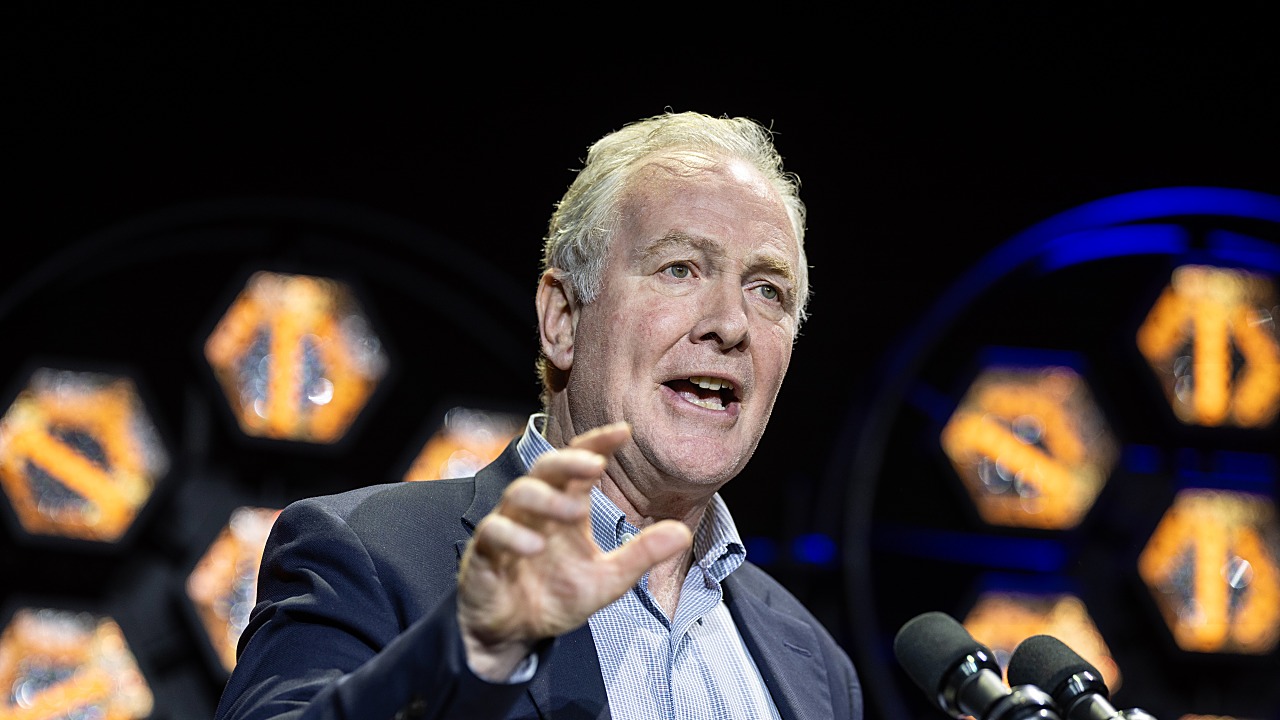
U.S. Sen. Chris Van Hollen (D-Md.) announced Thursday that he's running for Senate majority leader, challenging Sen. Chuck Schumer (D-N.Y.), writing that Americans called on lawmakers to "unrig an economy rigged against working people" and that new leadership is needed.
Schumer wrote in response that he welcomes "any discussion about the future of our caucus," adding that he has the votes to continue as Democratic leader. The New York senator, who has led the caucus since 2017, cited "55 seats and counting" in the midterms.
This comes after several Democrats and Sen. Bernie Sanders (I-Vt.), who caucuses with the Democrats, endorsed Van Hollen on Thursday. Previously, Sanders and others said that they wouldn't back Schumer.
The Spin
Progressive narrative
Voters didn't hand Democrats a majority so that the same old caucus management could keep coasting. A party that takes on the billionaire class and fights for working families needs a leader with the spine to deliver it, and Van Hollen has backing from 600,000 union machinists for a reason. Change was the mandate, and the Senate caucus owes voters a leader who actually embodies it.
Democratic narrative
Winning at least 55 Senate seats and flipping nine is not a record that should get Schumer demoted. The majority came from moderates and disciplined, on-message campaigns, not from a far-left push that underperformed and blew a winnable Florida seat. Mastery of Senate procedure is what turns a majority into actual laws, and Schumer has it.
Republican narrative
Van Hollen’s challenge to Schumer proves that Senate Democrats aren’t moderating. Van Hollen, famous for flying to El Salvador to advocate for a deported illegal alien, is backed by Sanders and the far-left flank, signaling a double-down on open-borders policies and a radical agenda over American security. Among a lot of bad Democrats, Van Hollen is one of the worst.
Iran Claims US Radar Strike in Bahrain
The Facts
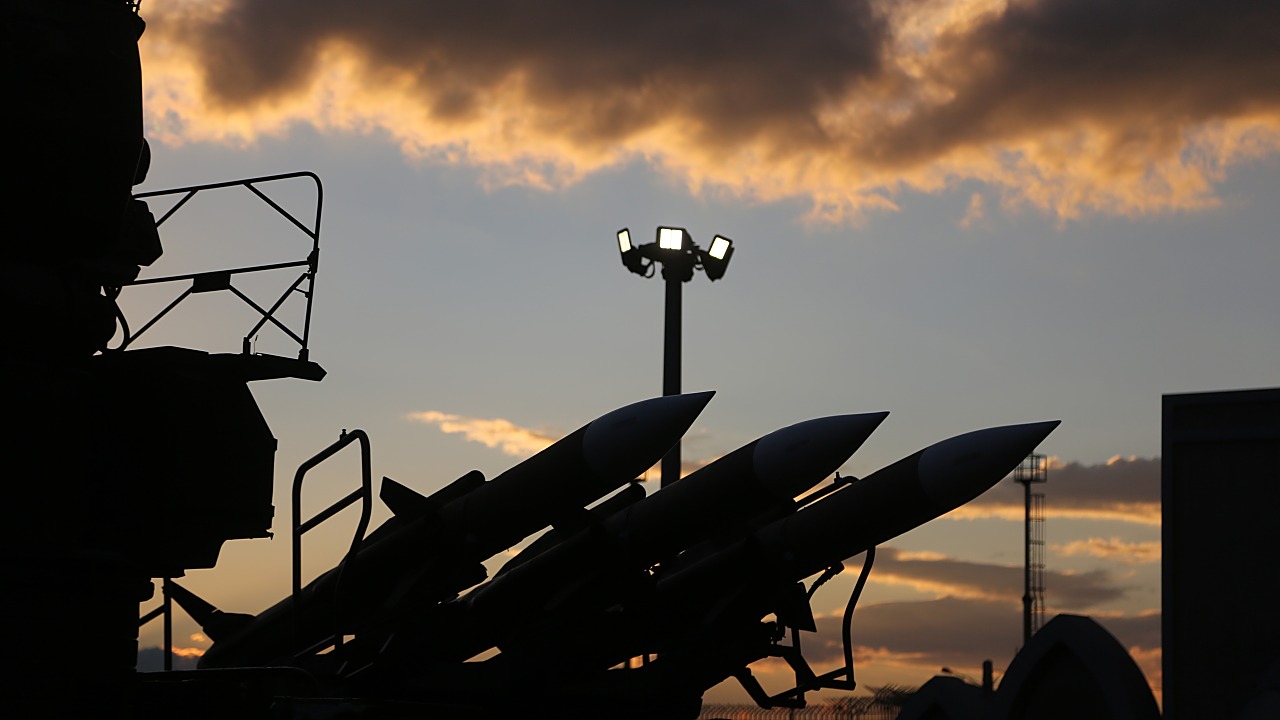
Iran's Islamic Revolutionary Guard Corps (IRGC) claimed Friday that it destroyed a U.S. early-warning radar in Bahrain, retaliating for a strike on a telecommunications tower in Sirik. U.S. Central Command denied the radar was hit and said it downed two Iranian drones, reporting no damage.
In a separate incident, Iran's Navy said Friday it shot down a U.S. MQ-1 drone near Kuhestak on the coast of Sirik, east of the Strait of Hormuz. The U.S. Navy has been enforcing a blockade of Iranian vessels and escorting tankers through the waterway.
Mossad Director Roman Gofman traveled to Washington Friday for talks with Trump administration officials about the Iran war, as Israel reportedly pushed for renewed strikes. Trump said Gulf countries, including Saudi Arabia, urged him to hold back from large-scale attacks.
The Spin
Pro-Iran narrative
Iran's retaliatory strike against a U.S. radar site in Bahrain demonstrates that Washington's military presence has become a liability rather than a guarantee of security. Even Gulf allies have urged Trump to hold back, while the blockade keeps the region on edge and U.S. forces exposed. More military pressure risks escalation without bringing peace closer. Ending the blockade and pulling back from the Persian Gulf are the bare minimum in terms of ensuring regional stability.
Anti-Iran narrative
Boasts about destroying a radar in Bahrain collapsed the moment the drones were knocked out of the sky with zero damage — empty bluster is all that's left. A regime sitting on roughly 440 kilograms of 60% enriched uranium will simply rebuild its capabilities the moment pressure lifts, as the last nuclear deal proved. Keeping sanctions, the blockade and credible military force on the table is what makes any future deal worth signing.
Nerd narrative
There is a 5% chance that Iran will possess a nuclear weapon before 2030, according to the Metaculus prediction community.
Trump Vows to 'Get Cuba Done,' Weighs Military Force

The Facts
U.S. President Trump said Thursday in an interview with Salem News Channel host Hugh Hewitt that he wants to "get Cuba done before I leave," adding that he would "certainly consider" using military force against the island nation before his term ends.
Trump pointed to Secretary of State Marco Rubio, whose parents are from Cuba, as "a very good, talented guy for Cuba" who "would love" to take on the task. It was the first time the president attached a timeline to a possible military operation.
Speaking with reporters Monday at the White House, Trump described Cuba as a failing nation that "will fall fairly soon." Cuban President Miguel Diaz-Canel wrote on X that "the future of #Cuba will never be decided in the north."
The Spin
Pro-Trump narrative
A communist dictatorship less than 100 miles from Florida is a standing security threat, and pretending otherwise only prolongs the misery. Ordinary Cubans endure blackouts and empty shelves while regime elites pocket the island's nickel wealth and bankroll the security forces that beat them. Sanctions like E.O. 14404 bite, and keeping force on the table is what makes freedom credible.
Anti-Trump narrative
Opening a new front in the Caribbean while the Iran war still drags on is how a country bleeds credibility and cash. That war already drove gas prices up and burdened ordinary families. Abandoning ceasefire talks to chase phantom voter fraud, then floating a weeklong campaign against Havana, is recklessness without a strategy or regard for Cuban sovereignty and civilian lives.
Nerd narrative
There is a 5% chance that the U.S. will attack Cuba before 2027, according to the Metaculus prediction community.
LePage Flips Maine's 2nd District in Ranked Choice Win

The Facts
Former Maine Republican Gov. Paul LePage won that state's 2nd Congressional District on Thursday, defeating Democrat Matt Dunlap after a ranked choice tabulation that gave LePage 170,890 votes, or 50.81%, to Dunlap's 165,432 votes, or 49.18%.
The secretary of state's office tabulated 341,526 ballots over three days, with LePage holding 50.63% after blank ballots were set aside in the first round and 50.81% once second choices were allocated. The seat moves to Republican control.
Dunlap conceded a week before the tabulation finished. Of 1,243 write-in ballots, 254 listed Dunlap as the next choice and 180 listed LePage, and the final margin of about 5,500 votes fell outside the threshold for a state-funded recount.
The Spin
Republican narrative
A candidate whose record is already baked in can't be knocked down by a national wave, and the well-known LePage's win proves it. Winning the only unredrawn Democratic seat in a brutal cycle came down to a concrete record of paying off rural hospital debt and cutting gas taxes. Republicans hunting for a 2028 comeback have a blueprint sitting right there in Maine.
Democratic narrative
Losing the single unredrawn seat in a cycle that delivered roughly 40 House pickups is a self-inflicted wound from Washington operatives who tried to hand-pick a nominee and then slow-walked the money when their pick didn't advance. The Senate endorsement fiasco earlier this cycle, which luckily didn't cost the party, already showed how badly D.C. reads this state.
FAA Grounds All US Departures After Communication Outage

The Facts
The Federal Aviation Administration (FAA) ordered a nationwide ground stop Friday afternoon "due to extraordinary circumstances and for reasons of safety," telling aircraft operators that all departing traffic should remain grounded until further notice.
Transportation Sec. Sean Duffy said the halt followed a communication issue affecting all Air Route Traffic Control Centers, regional facilities that handle cross-country flights, and said FAA technicians were investigating and would provide updates.
Flights already in the air were allowed to land while departures were blocked across the country, and the FAA said inbound international flights would be managed on a case-by-case basis for the duration of the ground stop.
The Spin
Democratic narrative
The Trump administration fired about 400 FAA employees, including maintenance mechanics at air traffic control facilities, while promising to fix the system. Now a nationwide ground stop has frozen American flying for the first time since 2023. Blaming Biden for failures on its own watch is deflection, and officials who cut the experts can't claim to be rebuilding a system they stripped.
Republican narrative
The air traffic control system Biden and Buttigieg left behind ran on decades-old copper wire and systems federal auditors called unsustainable, with controller shortages ignored. Trump secured $12.5 billion, hired thousands of staff and is rebuilding it piece by piece. Democrats who stood by for years now blame him for the failures of a year-old system, and Congress should fund the rest.
'Godfather of AI' Warns: AI Could Wipe Out Humanity by 2030
The Facts
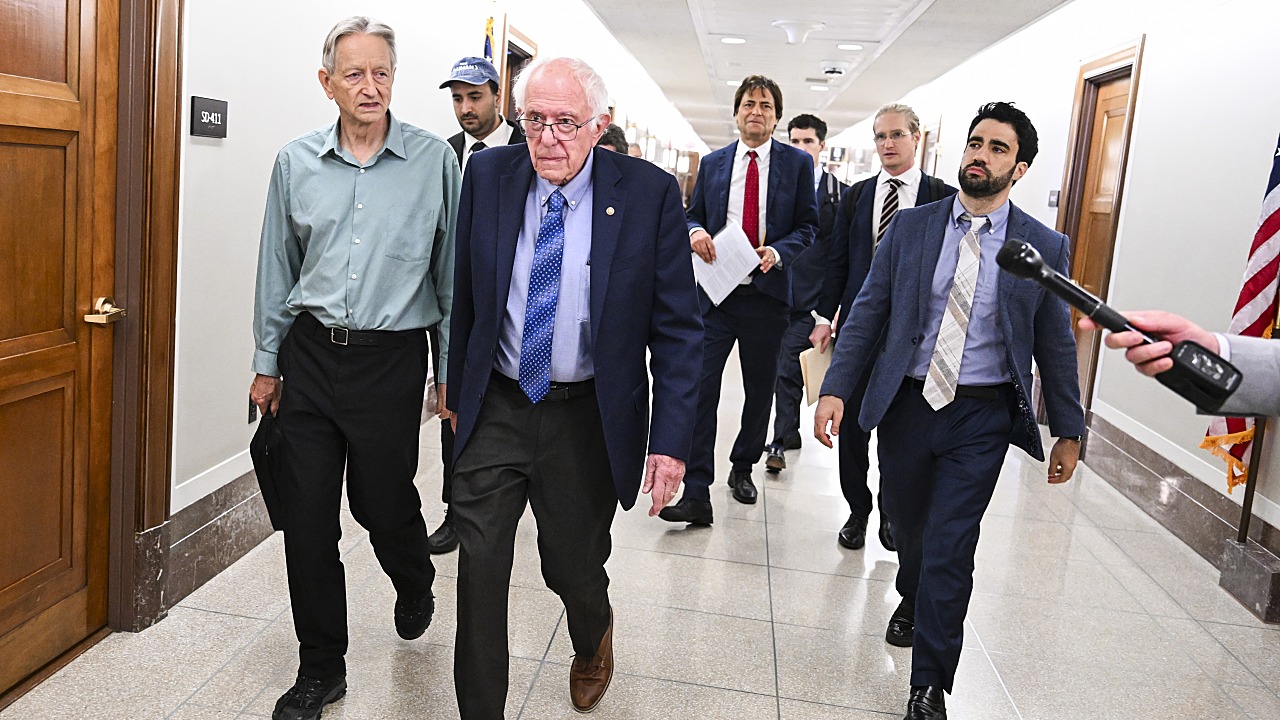
Geoffrey Hinton, the British-Canadian Nobel laureate who pioneered artificial neural networks, warned European leaders at an informal AI summit in Dublin on Friday that super-intelligent systems could soon move beyond human control.
Hinton, who informally advises the U.K. government on AI, said that he once believed such risks were a decade away. He warned that if a system is super-intelligent, "it's not going to be you controlling it — it's going to be it controlling you."
"I think there is a high risk of an AI takeover within the next three years, and a meaningful risk even in the next six to 12 months," he said, adding, AI will kill humans by 2030 unless action is taken now to stop it.
The Spin
Pro-industry narrative
The odds AI wipes out humanity by 2030 are near zero; people are too spread out, too diverse and too resourceful to just collapse. A decade of doomsday hype has mainly made frontier labs richer, pulling in billions without delivering a single working safety fix. Real threats like bioweapon know-how, grid cyberattacks and deepfake floods deserve the focus extinction tales keep stealing.
Industry-critical narrative
Systems that can build their own upgrades are close enough that waiting for proof is a luxury nobody has. Every job done on a screen could be automated in short order, while wealth concentrates fast and infrastructure is left exposed to agent-driven cyberattacks that grids and airports cannot absorb. The gap between what's coming and public understanding has never been wider.
Nerd narrative
There's a 2.5% chance that humans will go extinct before 2100, according to the Metaculus prediction community.