29 October 2026
Daily Newsletter
Christine Lagarde to Step Down as ECB Chief 9 Months Early
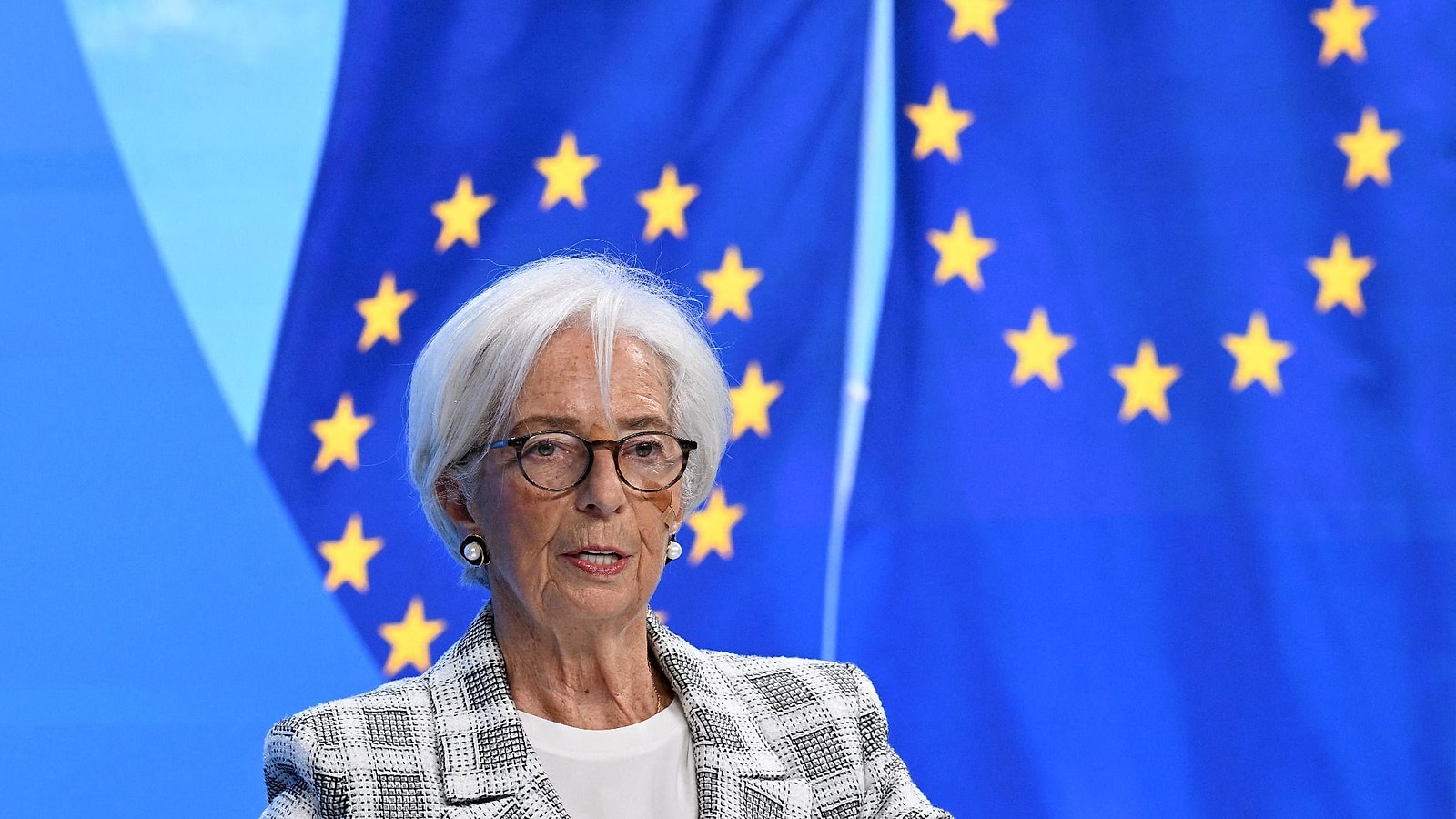
The Facts
European Central Bank President Christine Lagarde announced Thursday that she will step down on Feb. 7, nine months before her eight-year term, which was due to end on Oct. 31, 2027.
In a video message posted on X, where she appeared with plasters on her face, Lagarde said she is leaving the institution "with a sense of good work done, and an ECB that is fit for the future." Her exit allows current EU leaders to name a successor before France's presidential election.
An official told Politico that Lagarde moved early to gain "greater freedom to express her views and to engage in non-monetary matters, because she cannot remain neutral when she sees the developments taking place in her own country and in the world." In July, she told Les Echos she would not run for France's president.
The Spin
Establishment-critical narrative
An early exit timed to land before a pivotal election is political engineering. The choreography — warm tributes, a rushed successor hunt and a tidy handover — makes sure voters never get a say in who controls Europe's money. Institutions that stage-manage their own departures have stopped being independent and have become loyalty clubs.
Pro-establishment narrative
Steering a currency bloc through back-to-back crises takes nerve, and Lagarde's steady hand kept the euro area intact. Serious institutions avoid chaos by flagging a departure well in advance, leaving room for the treaty process to run properly. What counts now is a successor with the spine to defend price stability when politics screams otherwise.
Cynical narrative
Lagarde's controversial career reflects persistent questions about elite accountability. As France's then-finance minister, she was convicted of negligence in 2016 over a €404 million payout to Bernard Tapie, but she avoided any prison sentence. At the ECB, her decisions caused market instability, prolonged inflation and eroded trust, yet she stayed due to political favoritism. Her early departure after wrecking the eurozone is another example of the powerful evading accountability while ordinary citizens pay the price.
Historic New York Mansion Auctioned for $72M

The Facts
Oheka Castle, the Long Island estate in Huntington, N.Y., sold at auction Tuesday for $72 million to Ronald Browning and Paul Alflen of Gold Coast Property & Estate Management. Seven participants bid in the Manhattan sale run by Concierge Auctions.
A 2025 appraisal prepared during Oheka's Chapter 11 bankruptcy proceedings valued the property at $137 million, well above the winning bid. The buyer's identity was to be announced at a bankruptcy court confirmation hearing Thursday.
Built in 1919 for financier Otto Kahn and later left abandoned, the castle was bought by Gary Melius in 1984 for $1.5 million. It has served as a backdrop for Citizen Kane, Succession and Taylor Swift's "Blank Space" music video.
The Spin
Pro-establishment narrative
Turning a massive, unused property into housing while preserving its history is a sound idea, as the island has been walled off from residents who keep it alive for far too long. Building near rail stations would spread riders, fill downtowns with shops and still leave plenty of room for lawns and single-family blocks. What's needed now is an end to loopholes allowing zero affordable units, the final step toward giving forgotten residents a taste of the American dream.
Establishment-critical narrative
This sounds nice, but it's part of the state's broader goal of bulldozing single-family suburbs when everyone knows that what works best is local zoning and public input driving housing change. Downtown revitalizations that neighbors actually agreed to show consensus beat coercion. Meanwhile, the real squeeze comes from corporate investment funds collecting houses like Monopoly pieces and turning owners into permanent renters.
Report: Weekly AI Use Rises as AI News Trust Lags

The Facts
The University of Oxford's Reuters Institute Generative AI and News Report 2026, published on Thursday, found weekly use of standalone generative AI systems rose to 51% from 34% a year earlier in six countries (Argentina, Denmark, France, Japan, U.K., U.S.) surveyed since 2024, while daily use climbed from 7% in 2024 to 28% in 2026.
ChatGPT remained the clear market leader, with weekly use rising from 22% to 34% across the six countries with past data. Google's Gemini grew from 11% to 24%, Microsoft Copilot from 6% to 11% and Anthropic's Claude from 1% to 7%.
Getting information is now the most common use case, with 38% saying they turned to generative AI for it in the past week, up from 11% in 2024 and 24% in 2025. Researching a topic was cited by 24% and seeking advice by 20%.
The Spin
Industry-critical narrative
Outsourcing reading, writing and thinking to chatbots is a slow lobotomy that is undermining our information environment. The hard work of weighing evidence, holding ideas in mind and sitting with a voice unlike one's own is the very heart of human interaction, and cannot simply be replaced without damaging consequences. Convenience now, shallower minds and thinner empathy later.
Pro-industry narrative
Treating AI as a threat to information consumption ignores how much more of the world it cracks open. Whether via a chatbot or through an integrated newsroom, AI suddenly allows archives to become searchable, reporting to arrive in a reader's own language and mountains of documents to no longer be a barrier to truth. By alleviating human judgment from grunt work, the global experience of the world around us can only get better.
Nerd narrative
There is a 64.5% chance that the New York Times will publish an article that it claims or acknowledges is 100% written by AI, according to the Metaculus prediction community.
'Architect' of Minnesota Food Fraud Sentenced to 30 Years

The Facts
Salim Said, 37, the co-owner of the former Safari Restaurant in Minneapolis, was sentenced Wednesday to 30 years in federal prison for his role in the Feeding Our Future fraud scheme, the third-longest term among 32 people sentenced so far.
U.S. District Judge Nancy Brasel told Said, "You took the reputation of our state down with you," while Said told the court he was "deeply sorry" for his involvement. In their sentencing memo, prosecutors called Said the "undisputed architect" of the scam operation.
Prosecutors had sought a 40-year sentence, while defense attorney Barry Zone asked for 12 years, arguing Said did not design the scheme and that Aimee Bock, sentenced in May to nearly 42 years, signed every check and controlled the money.
The Spin
Pro-establishment narrative
Thirty years is the price you pay for looting a program meant to feed hungry kids during a national emergency. Phony meal counts bankrolling mansions and luxury cars amount to cold, calculated greed that wrecked trust in government. And one sentencing hardly dents the billions lost while state oversight slept.
Establishment-critical narrative
This sentence is pure scapegoating, as the gatekeepers who waved the money through and the politicians who happily worked the room at Safari somehow walk away clean. Decades behind bars for someone who survived war and refugee camps, then got recruited into somebody else's network, stretches punishment far beyond the crime.
Ofcom Sets Out Possible ID Checks for Under-16 Social Media Ban

The Facts
The U.K. regulator Ofcom published an assessment on Thursday detailing four age-assurance methods it considers highly effective at determining whether a user is 16 or over ahead of an incoming social media ban.
The proposals include photo ID matching, digital ID services, banking checks and facial age estimation, with Ofcom ruling out self-declaration, general contractual agreements and verifiable parental consent as insufficient.
Ofcom said photo ID would be required; if not as a recommended method, then as a backup. It estimates that 94% of people aged 16 and over hold a passport or driving licence, but around 150,000 16- to 17-year-olds lack either, stating they likely need to obtain one to access age-restricted services.
The Spin
Pro-establishment narrative
Strong age checks are the only way to make a social media ban mean something, and the tools to do it reliably already exist. A loose "reasonable steps" standard is an invitation for platforms to do nothing, while a tough test forces real compliance. Some kids will slip through — underage drinking never killed alcohol laws — but far fewer children exposed to harm is a win worth the hassle.
Establishment-critical narrative
"Protecting children" is just a pretence to cover the government's creeping authoritarianism. By demanding ID to post online, the government is trying to sneak a national ID scheme through the back door, at the price of everyone's anonymity. Poorer people without photo ID will be shut out of public conversation, while the rest will be made to hand documents to foreign tech firms.
Cynical narrative
A ban that any teenager can dodge with a free VPN offers no real protection, just the comforting illusion of one. Even worse, herding millions of ordinary users onto VPNs wreaks havoc on the accurate subscriber data that police rely on to keep people safe. These rules, much like the social media ban that precipitated them, were doomed to fail from the start.
Nerd narrative
There is a 5% chance that the EU will require mandatory age verification on social media or AI before 2027, according to the Metaculus prediction community.
Hegseth Fires Pentagon's Top Planner Over Leak Probe

The Facts
U.S. Defense Secretary Pete Hegseth fired Army Lt. Gen. Brett Sylvia, the Pentagon's top military planner, this week amid an investigation into alleged leaks. Sylvia was director for strategy, plans and policy on the Joint Staff, known as the J5.
President Donald Trump told reporters Thursday that Sylvia is "going to have big problems," saying that the administration is "very much looking for leakers." Trump repeatedly referred to the male general as "she" during those remarks.
In addition, Pentagon spokesman Sean Parnell said Thursday that the department took personnel action after "an extensive Air Force OSI investigation" and referred the matter to the Department of Justice (DOJ), adding, "We vowed to find you, and we meant it."
The Spin
Establishment-critical narrative
Carrying out this firing just as a new Middle East campaign looms is strategic malpractice. A pattern of unexplained firings breeds fear, chokes off honest advice and leaves the armed forces rudderless when steady hands matter most. A defense secretary who treats the officer corps as a loyalty test weakens readiness and drags the ranks toward the politicized militaries of Russia and China.
Pro-establishment narrative
Sylvia had to go. Leaking classified war plans to reporters is a betrayal that puts troops in danger, and no rank should buy immunity from consequences. Accountability at the top is long overdue after years of senior brass treating stars as a shield. Protecting national security means cutting the leak off fast.
Alaska Governor Orders Probe of Peltola Campaign

The Facts
Alaska Gov. Mike Dunleavy ordered the state Department of Public Safety late Wednesday to investigate whether Democratic Senate candidate Mary Peltola's campaign broke state law by helping recruit a candidate with the same name as the Republican incumbent.
Dunleavy cited a New York Times report and said that the Alaska Division of Elections examined similar concerns in June, adding that the new reporting "substantially supports the Division's findings." He did not specify which laws may have been broken.
The New York Times reported Wednesday that a Peltola campaign staffer was instructed to search for every Dan Sullivan in the state, an effort that located Daniel J. Sullivan Jr., a retired teacher listed on the ballot without party affiliation.
The Spin
Republican narrative
This is voter deception of the worst kind. Democrats have lived up to the worst of their reputation as cheaters. Alaskans deserve a ballot that doesn't deceive them and the secret cash behind the decoy raises serious campaign finance questions that could disqualify Peltola, whose denials continue to make things worse.
Democratic narrative
Spoiler candidates have been a bipartisan campaign tactic for decades and nobody called it a crime until a Republican seat was on the line. Courts already let the ballot stand, so opening a criminal probe days before voting ends reeks of election interference by Republicans. Alaskan voters should settle this race.
Nerd narrative
There's a 4% chance that Republicans will control both chambers of the U.S. Congress following the 2026 midterm elections, according to the Metaculus prediction community.
EU-Canada Summit in Montreal Launches 'Alliance for the Future'

The Facts
European Council President António Costa and European Commission President Ursula von der Leyen joined Prime Minister Mark Carney in Montreal on Thursday for the 21st EU-Canada summit, a two-day meeting set to launch an "Alliance for the Future."
The term "associate member" was dropped from the draft joint statement for the Montreal summit. The text instead pledges to define an "ever closer association" by the 2027 summit.
Von der Leyen said Thursday that geography prevents Canada from full EU membership but that the sides are discussing an "association without accession." She used the term "associate member" in a post on X after landing in Montreal.
The Spin
Pro-Europe narrative
The "Alliance for the Future" is the kind of new partnership the failed U.S.-led world order now demands. Canada's critical minerals, energy, AI and quantum know-how paired with Europe's market power and manufacturing muscle mean lower costs, new export markets and real leverage through CETA and the SAFE defense instrument. An alliance strong enough that no one gets to dictate the choices made in Ottawa or Brussels is worth building.
Pro-establishment narrative
Grand summits and glossy declarations in Montreal do nothing for families drowning in grocery and mortgage bills. A free trade deal with Europe already exists — getting the nine holdout countries to ratify CETA, opening the continent to Canadian beef and killing the planned carbon tariff would beat another round of hollow buzzwords. And cozying up to a stagnant EU while picking fights with the booming U.S. market is a recipe for isolation.
Haiti Postpones Elections to July 2027

The Facts
Haiti's Provisional Electoral Council (CEP) announced on Wednesday that the first round of general elections has been postponed to July 18, 2027, with a potential runoff vote set for Oct. 4, 2027, after consultations with the security forces, the government and civil society.
This comes as reports earlier this month said that authorities were working on a new election calendar after the CEP extended the deadline for candidate registration and document submission to Oct. 31. At the time, AFP quoted a council member saying that the vote would "no longer" take place on Dec. 13.
When Haiti approved its first electoral decree in nearly a decade last December, the first round of voting was due to take place on Aug. 30, 2026, contingent on improved security conditions and full funding. In July, the election day was moved to December 2026.
The Spin
Government-critical narrative
The news that the vote has been moved into the middle of hurricane season bolsters concerns that Fils-Aimé is planning to stay in power for years. A temporary government should not treat chaos as cover for another quiet extension of unelected rule. Technical room exists for an earlier vote, so the calendar amounts to stalling rather than serious preparation.
Pro-government narrative
If Haiti holds a ballot before security, voter lists and candidate screening are actually ready, it would deepen instability instead of putting an end into its crisis. An arbitrary deadline carries less weight than a timetable anchored to benchmarks for registration, vetting and safe voting. A deliberate pause gives the process a chance to become credible enough to last instead of rushing into another collapse.
Nerd narrative
There's a 69.1% chance that Haiti will experience a successful coup d'etat before 2040, according to the Metaculus prediction community.
Google Launches Gemini 4 Carbon

The Facts
Google unveiled Gemini 4 Carbon on Wednesday, two weeks after releasing Gemini 4 Argon, describing it as its strongest frontier system with state-of-the-art cybersecurity and long-horizon capabilities, plus gains in coding and agentic tasks.
The system was announced hours before Alphabet reported third-quarter revenue of $127.6 billion, below analyst estimates of $128.2 billion. Shares fell more than 10% in extended trading, and CEO Sundar Pichai told analysts Google was again leading at the frontier.
Carbon ranks first on version 5.0 of the Artificial Analysis Intelligence Index with a score of 59, one point ahead of Claude Opus 5.5, according to the independent evaluator. Scores cannot be compared directly with the index's previous version.
The Spin
Pro-industry narrative
Pushing the frontier while locking down safety at the same time is exactly how AI should be built. Putting the strongest cyber defense tool in the hands of defenders first, before anyone else, is the only responsible call for a frontier system's release. Rapid-fire progress paired with voluntary government testing proves speed and caution can coexist.
Industry-critical narrative
A shiny new system name doesn't mean much when the gains over the last version are razor thin and every rival lands in the same neighborhood. Company-picked benchmarks make a lousy substitute for letting real users test the thing. And a system nobody can actually use, with a fuzzy timeline and a discount that won't last, looks more like hype than a launch.