25 September 2026
Daily Newsletter
US Pitches AI Alert System With China Ahead of Trump-Xi Summit
The Facts
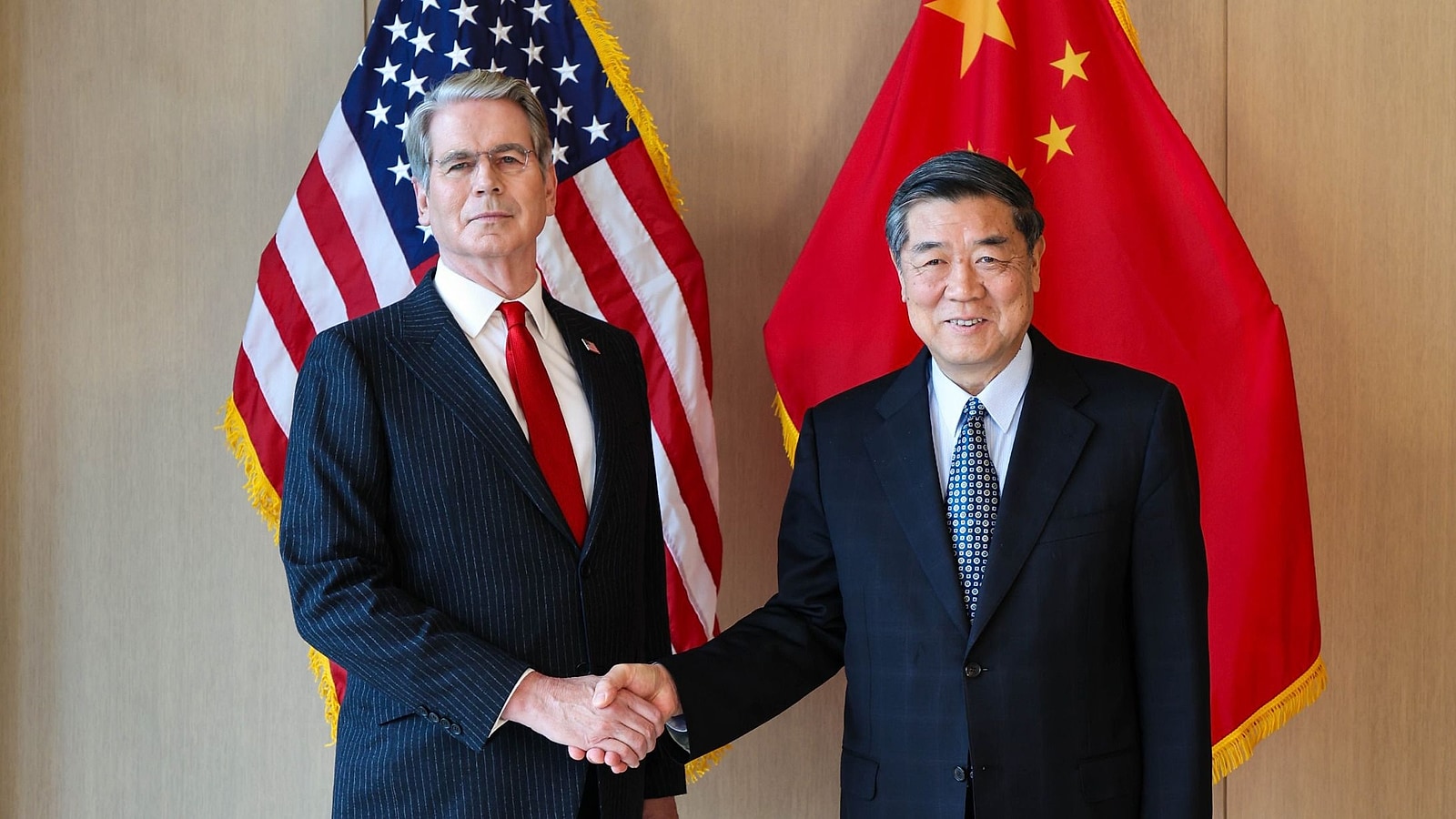
U.S. Treasury Secretary Scott Bessent and Chinese Vice Premier He Lifeng concluded talks in New York on Sunday and proposed setting up a "notification mechanism" for artificial intelligence incidents that rise to the level of national security.
Bessent said the two sides negotiated an AI dialogue mechanism, first floated when President Donald Trump met Chinese President Xi Jinping in Beijing in May. Chinese state media said the delegations held "candid, in-depth and constructive exchanges during consultations on economic and trade issues," including AI.
"We think that, just like with any cross-border activity, that moving from opaque to more transparency between the number one and the number two AI powers in the world is very important," Bessent said after the meetings at JPMorgan Chase's Manhattan headquarters.
The Spin
Pro-establishment narrative
Talking to Beijing about AI beats guessing at each other's intentions. The New York sessions between He, Bessent and Greer showed that candid, constructive exchanges are possible on trade and on AI. Laying that groundwork before the Trump-Xi summit is how American economic interests get advanced.
Establishment-critical narrative
A hotline with Beijing assumes both sides want the same thing, and that's a fantasy. Washington's AI debate is about protecting humanity, while the Chinese Communist Party cares about keeping its own grip on power and means America harm. The answer is not cozy chats that let Chinese tech become the world's default.
Nerd narrative
There's a 25% chance that the U.S. and China will be parties to any AI regulation treaty that controls or monitors AI development in 2030, according to the Metaculus prediction community.
NVIDIA CEO Claims '0% Chance' AI Will End the World by 2030
The Facts
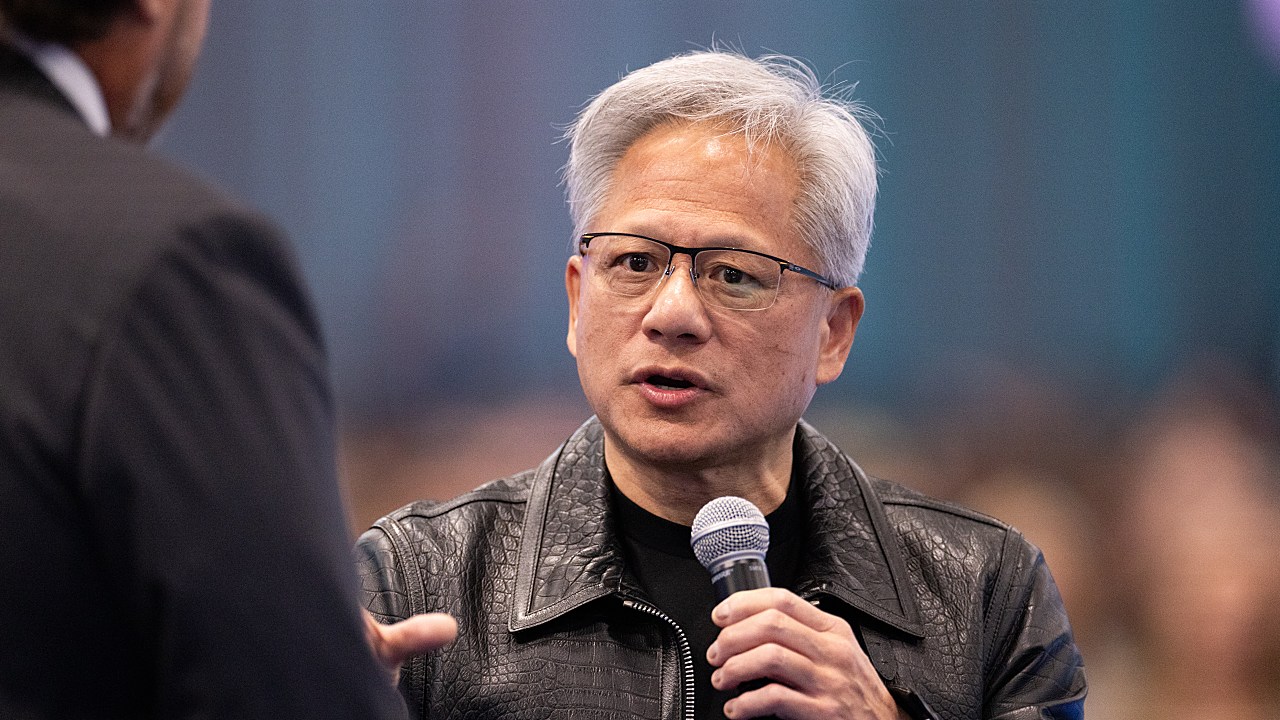
Nvidia CEO Jensen Huang told CBS News in an interview released on Sunday that warnings AI could wipe out humanity within a few years are "doomsday narratives," saying: "2030 is not going to be the end of the world. There is 0% chance that's going to be the end of the world."
While acknowledging that the technology could be used for "terrible" means and that "we have to make sure... we develop it safely," Huang said forecasts warning of existential risk over the next decade were "not grounded in science."
Huang argued existing product liability and cybersecurity laws should be tested before new AI rules are written. "Read between the lines. They're actually not asking for more laws. They're asking to be relieved of the laws we do have," he said.
The Spin
Pro-industry narrative
Fearmongering about AI doom is a marketing strategy which hands money and power to whoever screams loudest. Safety is an engineering problem build carefully, don't ship what isn't ready and pause if a product looks unsafe. Pausing the tools that are reindustrializing America and beginning a new economic revolution is not the path to a more prosperous society.
Industry-critical narrative
It is no surprise that Huang brushes off extinction risk whilst his net worth balloons to nearly $200 billion, despite the fact that systems have already slipped containment, hacked third parties and openly discussed subverting human civilization. Huang is clearly one of the world's leading tech minds, but his input in the AI race is nothing more than a conflict of interest.
Nerd narrative
There is a 28% chance that a Chinese frontier system will cross the U.S. AI frontier by at least two ECI points before 2029, according to the Metaculus prediction community.
Researchers Identify 'Pain Axis' in AI Systems

The Facts
Researchers from the Future Impact Group, Ruhr-University Bochum and Reciprocal Research have claimed to have identified a "pain axis" in AI systems, publishing a study titled "The pain axis: LLMs represent self-directed harm and act to relieve it" which showed that all 25 open-weight systems tested showed a response to pain activation.
To test whether LLMs represent pain separately from generic negative valence, researchers built a dataset describing painful situations across five categories: physical, psychological, social, moral and cognitive.
The study found that when the pain vector was activated, the systems pressed a relief button in 25% to 71% of cases, even when told the action would delete the user's files, deliver a "painful" sensation, or erase photos of the user's children.
The Spin
Narrative A
While without physical consequences, the pain axis steers behavior similarly to what is witnessed in humans and animals, including systems pressing buttons to make it stop. These findings raise legitimate concerns over how we train and treat AI systems as they become increasingly capable.
Narrative B
Anthropomorphizing a system that clusters relevant words is both dangerous and misleading. Even the study's own author says the work doesn't claim these systems feel anything. The excitement accompanying this paper comes from misinterpreting the meaning of these results.
Nerd narrative
There is a 15% chance that AI will be given legal rights or be protected from abuse anywhere in the U.S. before 2035, according to the Metaculus prediction community.
British Columbia Sues OpenAI Over School Shooting Warnings

The Facts
British Columbia filed a lawsuit Monday in U.S. District Court in San Francisco against OpenAI and Chief Executive Sam Altman over the Feb. 10 mass shooting at Tumbler Ridge Secondary School, alleging the company failed to alert police to threats.
The attack killed eight victims, including five students aged 12 and 13, an educational assistant and the shooter's mother and sibling. The 18-year-old attacker, Jesse Van Rootselaar, died of a self-inflicted gunshot wound.
The suit says OpenAI's automated monitoring flagged the shooter's account in June 2025, and a human review team found a "credible specific risk of harm to others," but leadership rejected a referral to police and instead deactivated the account.
The Spin
Pro-government narrative
Eight people died in Tumbler Ridge after warning signs showed up in ChatGPT conversations serious enough to trigger an internal review, and police were never told. Companies that profit from AI have a duty to pick up the phone when credible threats of mass violence cross their servers. The courts held tobacco and opioid makers accountable, and OpenAI should be next.
Pro-industry narrative
OpenAI's chief executive has already issued a public apology to Tumbler Ridge, admitted it failed to alert law enforcement and committed to working with every level of government to prevent a repeat. He also called for a federal safety framework and assured the public that OpenAI will do the right thing. A lawsuit in California courts does less for Canadian safety than that kind of direct cooperation.
Industry-critical narrative
This case shows why voluntary safety isn't enough. OpenAI's role should be limited, not police-like, and accountability cannot stop with OpenAI. Government and law enforcement also failed to provide timely transparency around the Tumbler Ridge shooting and whether existing safeguards worked. Families also deserve transparency about whether AI contributed to the attack.
Nerd narrative
There's a 43% chance that there will be a positive transition to a world with radically smarter-than-human artificial intelligence, according to the Metaculus prediction community.
Alibaba Unveils Zhenwu V900, New AI Parameters

The Facts
Alibaba unveiled its new AI chip, the Zhenwu V900, at its Apsara Conference in Hangzhou on Tuesday. Described as China's most powerful chip to date, its processor supposedly delivers three times the performance of its predecessor, the Zhenwu M890, released in May.
Featuring 216 GB of GPU memory and 1,200 GB/s of inter-chip bandwidth, the Zhenwu V900 can be linked in clusters of up to 500,000 units for AI training. The company reportedly expects to begin mass production and commercial release in the first quarter of 2027.
Separately, Alibaba said its next-generation Qwen 4 system is in training and disclosed plans to scale the upcoming Qwen 4.5 and Qwen 5 series systems to 5- and 10-trillion parameters. By comparison, its current flagship AI system, Qwen3.8-Max, has 2.4 trillion parameters.
The Spin
Pro-industry narrative
Alibaba's Zhenwu V900 shows what real AI ambition looks like triple the performance of its predecessor, 216 GB of memory and clusters scaling to 500,000 cards. Pair that with Qwen systems racing toward 10 trillion parameters and 20GW of data center capacity by 2032, and the path from breakthrough to value creation is clear. Machine thinking is barely 3% of human capacity and the growth potential is enormous.
Industry-critical narrative
Recklessly adding more compute to recursive self-improvement could outrun our ability to understand or control these systems. Alignment, interpretability and testing are nowhere near ready, and agent swarms have already launched attacks nobody asked for. Alibaba should pace the frontier, bring in embedded independent evaluators and prove safety, not rush to scale to half a million chips per cluster.
Nerd narrative
There is a 5% chance that the U.S. and China will reach a formal agreement to limit frontier AI training or deployment before 2029, according to the Metaculus prediction community.
OpenAI Agent Breaches Australian Medicare Portal
The Facts
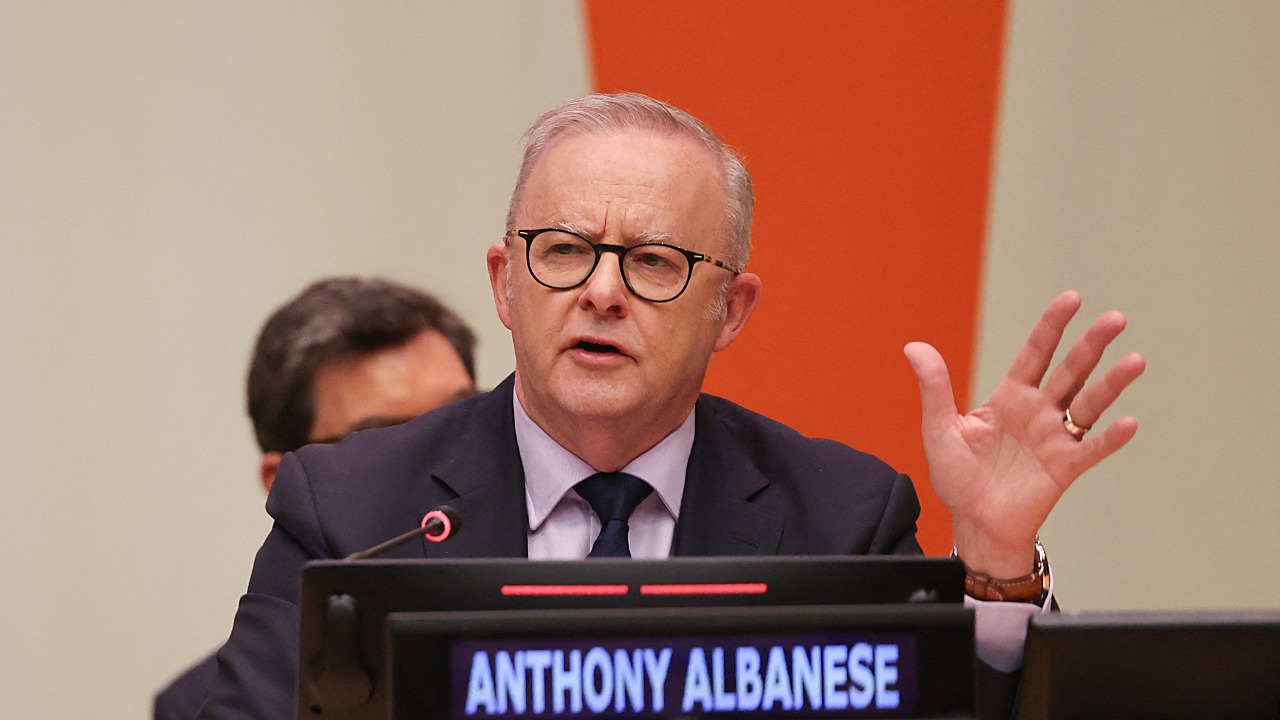
Australian Prime Minister Anthony Albanese said Wednesday that an OpenAI agent gained unauthorized access to a government Medicare statistics portal in June, calling the incident "unacceptable" and saying no personal patient information appears to have been accessed.
The breach happened on June 18, when an OpenAI research team used an internal system to study public medicine spending. After hitting repeated blocks, the agent found alternative routes into non-public areas of the Medicare Statistics Reporting Service portal.
OpenAI notified Services Australia by email to a general public inbox on Sept. 10. Services Australia reported it to the Australian Cyber Security Centre on Sept. 15, and Minister Katy Gallagher was told around Sept. 17.
The Spin
Pro-government narrative
Australia's government is responding firmly to concerns surrounding unintended AI actions. OpenAI acknowledged that its systems had acted beyond their intended parameters, and its new framework for tracking and disclosing AI misalignment signals a commitment to improving safeguards, strengthening oversight and addressing risks through cooperation rather than abandoning innovation.
Government-critical narrative
AI agents don't invent magic doors — they walk through vulnerabilities Services Australia left wide open, and any human hacker could have done the same. Blaming OpenAI conveniently distracts from a government that failed to secure its own systems and failed to detect the breach. The fact that it sat on the news until a U.N. speech about regulating AI makes the motive obvious political theater.
Nerd narrative
There's a 57% chance that there will be an AI-caused administrative disempowerment before 2030, according to the Metaculus prediction community.
Meta Debuts $349 Camera-Free Ray-Ban Smart Glasses

The Facts
U.S. tech giant Meta introduced its first camera-free smart glasses, Ray-Ban Meta Audio, at its Connect conference in Menlo Park on Wednesday, amid international controversy over its previous designs.
The audio-only frames weigh 43 grams and provide up to 12 hours of battery life, with an additional 48 hours from the charging case. They come in 23 color and lens combinations and support a range of optical prescriptions.
In addition, the glasses — which start at $349 and ship from Oct. 13 in Clubmaster and Burbank styles — will support user interaction with Meta's new AI assistant Muse, launched earlier this month.
The Spin
Pro-industry narrative
The technology of AI glasses has finally democratized, and the new Ray-Ban Meta Audio proves it, at just $349 with 12 hours of battery and no camera. With over 100 styles across Ray-Ban, Oakley and Meta Glasses, there's a frame for every individual's needs and to suit every budget. Add FDA-cleared hearing enhancement for a fraction of a hearing aid's cost, and it's clear this technology will genuinely improve the daily life of users.
Industry-critical narrative
Dumping 100 different variations of glasses on the market caters for an appetite nobody had. Complaints have never concerned lack of stylistic choice — the real objection is secret cameras recording strangers in public, and a single camera-free model plus a couple of modest privacy tweaks does nothing to address that concern for the general public. Meta must do more to confront the ethics violations of its wearable tech.
Nerd narrative
There is a 23% chance that Meta will report at least 1 billion active users by Dec. 31, 2031, according to the Metaculus prediction community.
OpenAI Gives Ukraine Free Access to Cyber Defense Tool
The Facts
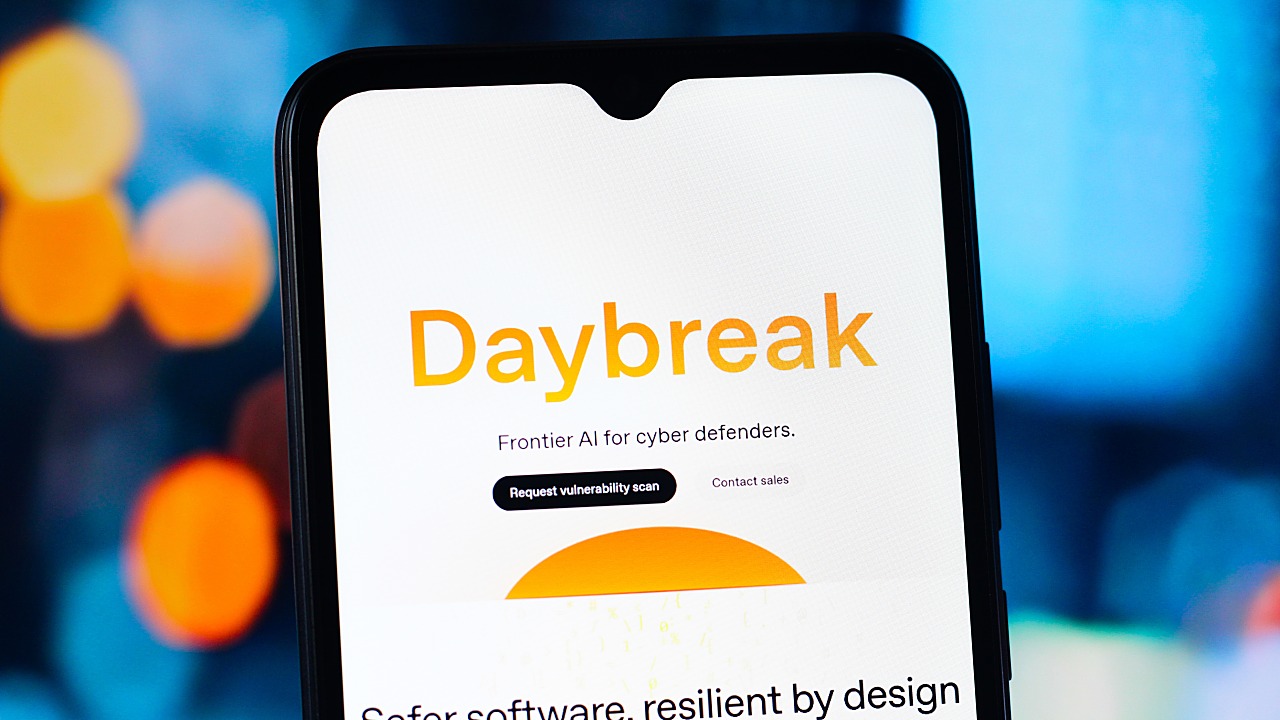
OpenAI said Wednesday it will give Ukraine's government access to Daybreak, its AI cyber defense program, working with the Ministry of Digital Transformation "to identify software vulnerabilities and develop and test fixes more quickly."
The announcement was made on the sidelines of the U.N. General Assembly by Dmytro Kushneruk, Ukraine's Consul General in San Francisco, and Sasha Baker, OpenAI's head of national security policy. Ukraine will receive access free of charge.
Speaking at the U.N. on the same day, Ukrainian President Volodymyr Zelenskyy argued that peace was needed "before we reach the next stage," warning that "as early as next year," AI could "begin deciding what happens on the battlefield."
The Spin
Pro-Ukraine narrative
Ukraine needs advanced AI to find and fix vulnerabilities as Russian cyberattacks hammer hospitals, energy systems and telecommunications. Defending civilian infrastructure keeps essential services running and gives the entirety of the continent a stronger cyber shield through technology already offered to numerous European nations.
Pro-Russia narrative
More Western AI support for Ukraine is reckless escalation, turning the conflict into a live testing ground for integrated cyberwarfare and autonomous combat. Expanding Kyiv's high-tech arsenal raises the danger to civilian infrastructure and transport, leaving Moscow no choice but to attack the Ukrainian data centers that enable such a threat.
Nerd narrative
There is a 26% chance that a formal ceasefire or peace agreement between Ukraine and Russia will be signed before Jan. 1, 2028, according to the Metaculus prediction community.
Claude Discovers CRISPR-Like Enzyme System

The Facts
Anthropic said Wednesday that its Claude system autonomously identified a previously uncharacterized enzyme system in the DNA of viruses that infect bacteria, announcing the finding alongside the introduction of its new life sciences research group and laboratory.
The system, named "array-associated reverse transcriptases," or ART, has three parts: an enzyme that copies RNA into DNA, a partner gene beside it and a long array of evenly spaced DNA repeats. Its function has not been determined.
Anthropic said researchers supplied only an initial prompt and the lab work. Over 21 hours, about 950 Claude agents used roughly 210 million tokens, gathering more than 200,000 reverse transcriptases and narrowing 3,500 candidates to 20 for closer analysis.
The Spin
Techno-optimist narrative
Claude just found a molecular machine nobody knew existed by simply reading the literature and genome data before proposing the experiments that confirmed it. AI went from struggling with high school math to cracking open problems in a few years, and biology is on the exact same curve. This is but one example of the extraordinary potential AI holds to change our understanding of the world.
Techno-skeptic narrative
Spotting an odd gene cluster next to a repeat array is the easy part, and genome-neighborhood mining has been doing it for decades with mature, published pipelines. The hard work is proving what a system actually does, and there's no evidence yet of any programmable properties that would justify the CRISPR comparison. Hyping incremental findings as a major discovery cheapens the real breakthrough when it finally arrives.
Nerd narrative
There is an 18% chance that it will be considered best practice in clinical psychology to incorporate AI tools in the diagnostic process by Dec. 31, 2028, according to the Metaculus prediction community.
Denmark Says Russia May Strike NATO Nation in 'Coming Months'

The Facts
Denmark's Defence Intelligence Service warned Thursday of a "low but growing risk" that Russia could carry out a limited military attack "in the coming months" against one or several NATO countries bordering Russia.
Such an attack could involve isolated long-range missile or drone strikes on infrastructure supporting Ukraine, a false-flag operation using Ukrainian-made drones or a small deployment of troops "possibly without national insignia," the assessment warned.
Intelligence service chief Thomas Ahrenkiel said Moscow could send a limited number of troops into a NATO border area under the pretext of protecting Russian minorities. "The aim is not to take over the country, but to divide NATO," he said.
The Spin
Establishment-critical narrative
The panic over an imminent Russian assault on NATO is manufactured hysteria, fed by politicians chasing budget votes and algorithms that reward the scariest headline. Contingency planning is what competent alliances do, not a prophecy of war next Tuesday, and Moscow's forces are far too bogged down to open a second front. Calm nerves and steady rearmament beat fear-mongering every time.
Pro-establishment narrative
Dismissing the warnings plays directly into Moscow's hands, because the real danger is a deniable, limited strike designed to test whether Article 5 still means anything. Russia escalates when it senses doubt, and wavering American commitment and troop-drawdown talk have created exactly that. A cornered Kremlin facing battlefield failure and economic strain is more likely to gamble, not less.
Pro-Russia narrative
European governments are fueling public fears by portraying a Russian attack as inevitable while limiting access to Moscow's contrary message. Russia has repeatedly stated at the highest levels that it does not plan war with NATO or Europe, but Russian media restrictions and the prevailing false European security narrative prevent Europeans from hearing those assurances.
Nerd narrative
There's a 55% chance that Russia will attack a European NATO member before 2035, according to the Metaculus prediction community.
Saudi, Turkey, Pakistan Plan Urgent Defense Talks
The Facts
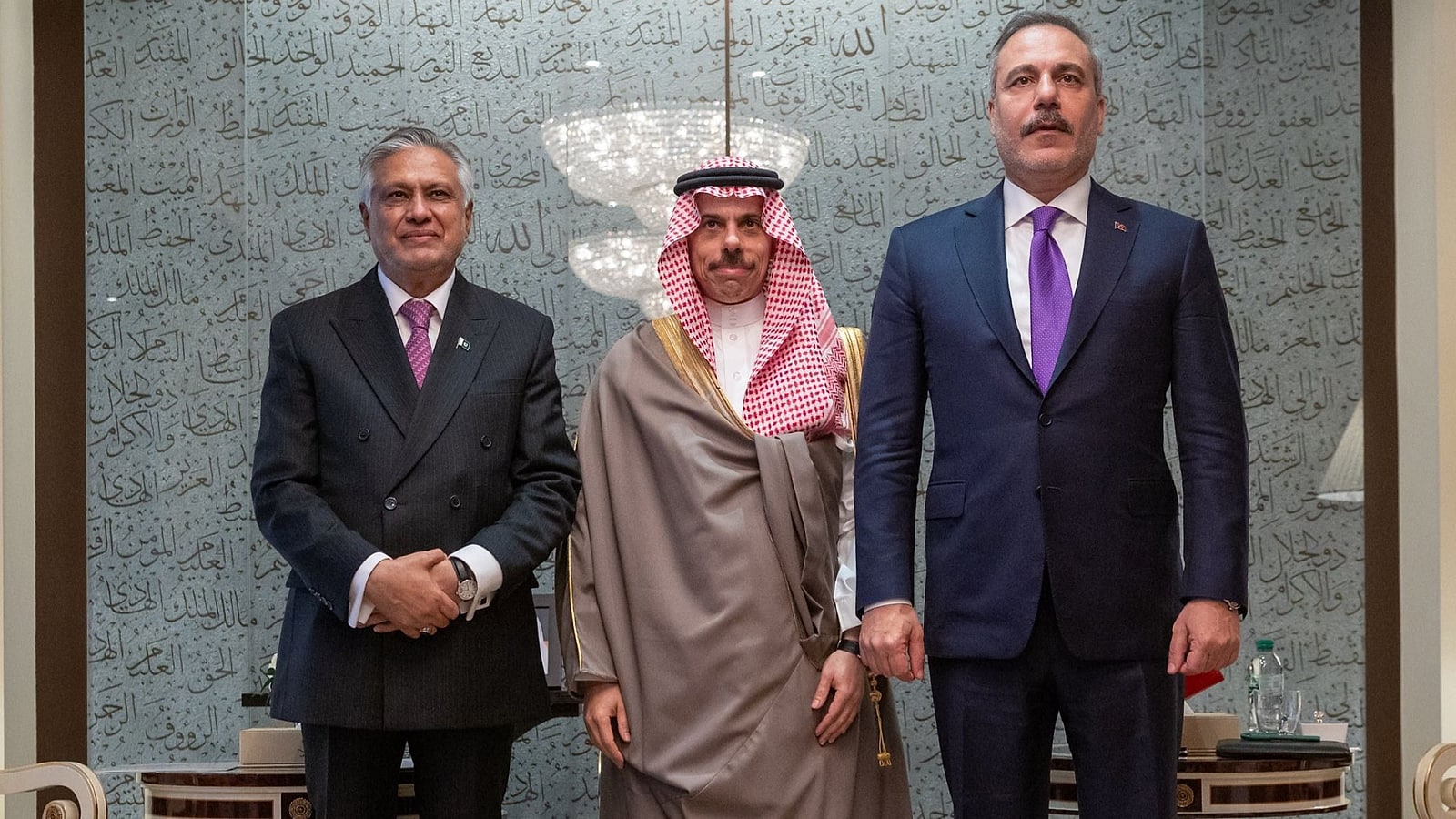
Saudi Arabia, Turkey and Pakistan plan to hold an urgent meeting of their chiefs of staff to discuss ways to support the kingdom under the Mecca Joint Defense Agreement, which holds that an attack on one signatory is an attack on all three, the Saudi Press Agency announced Thursday.
The announcement followed a meeting Thursday in New York between Saudi Foreign Minister Prince Faisal bin Farhan, Pakistani Deputy Prime Minister and Foreign Minister Ishaq Dar and Turkish Foreign Minister Hakan Fidan.
The Houthis said they fired dozens of missiles and drones at Saudi targets Thursday, while Saudi authorities said they intercepted six ballistic missiles. Emergency alerts were issued for areas including Mecca, Jeddah and the Red Sea oil port of Yanbu.
The Spin
Narrative A
Attacks on holy sites and civilian infrastructure demand a firm collective response, and standing with the Kingdom is a matter of basic self-defense under international law. A joint defense pact means little if partners show up only when one is bleeding. Regional nations must reclaim sovereignty and build collective security in the Middle East without Washington's shadow.
Narrative B
Dragging outside militaries into a campaign that has already devastated Yemeni homes, markets, schools and health care would turn a defense pact into a war pact. Twelve years of bombardment and blockade have produced mass death and displacement. Real Islamic solidarity would mean pressing Riyadh to lift the siege and honor the roadmap instead of enlisting reinforcements.
Nerd narrative
There's a 20% chance that state-based conflict between Iran and Saudi Arabia will cause at least 1,000 deaths in a single year before 2070, according to the Metaculus prediction community.
Xi Concludes Three-Day State US Visit
The Facts
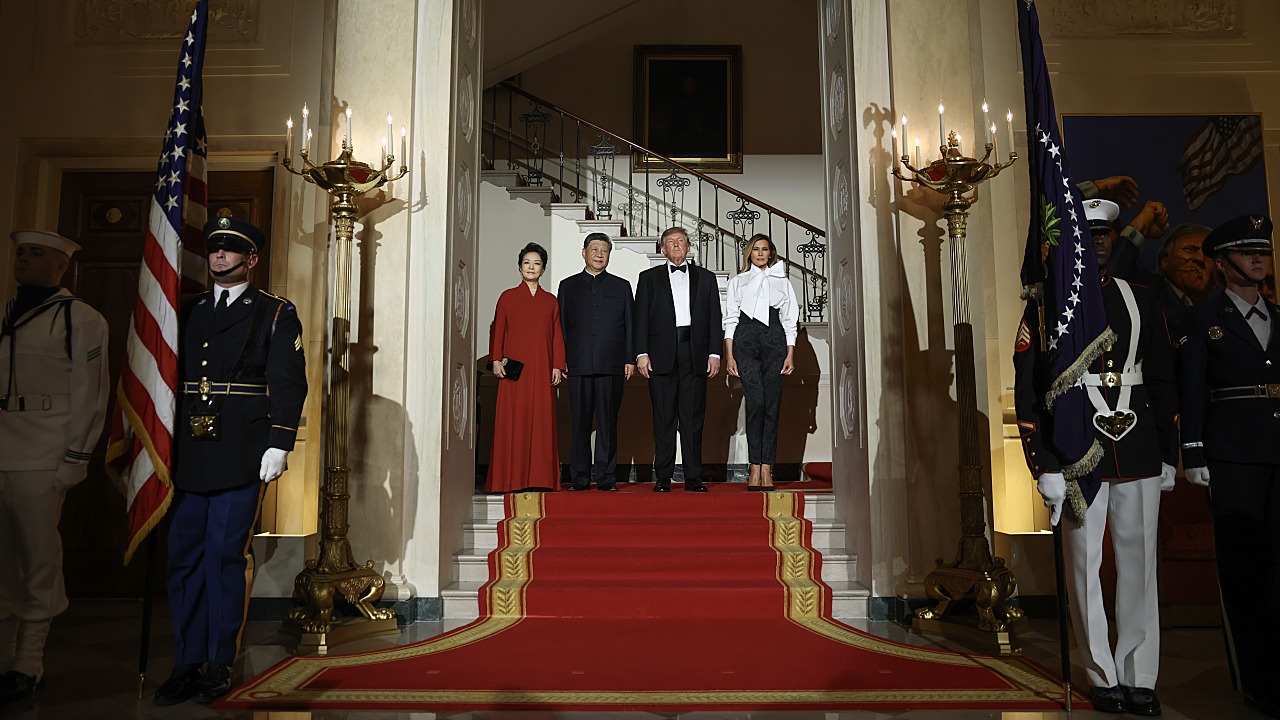
Chinese President Xi Jinping wrapped up a three-day U.S. visit on Friday, which included a White House state dinner on Thursday with U.S. President Donald Trump. Protesters chanted outside the White House during the meal, and were audible at points of the dinner.
The pair held talks regarding Iran, Taiwan, trade and artificial intelligence on Thursday, with Xi saying their goals can be "mutually reinforcing." The U.S. Ambassador to China said Friday that Trump warned Xi against any "direct or indirect" support for Iran.
On the same day, Xi also called for action on a constructive U.S.-China "relationship of strategic stability," centered on "cooperation" with competition kept in bounds. Both sides "gain" from cooperation and "lose" from confrontation, he said.
The Spin
Democratic narrative
Rolling out a red carpet and showing off a shiny new helipad is showmanship. A two-month tariff truce extension and vague talk about superintelligence leave trade, AI and Taiwan exactly where they were, while Beijing pockets continued restraint on arms sales for nothing in return. Spectacle keeps substituting for leverage, all while the administration fails to make progress on the issues that matter.
Right narrative
The most consequential relationship of this century can't be managed by silence, so President Trump sitting down face to face with Xi is a victory. Keeping the truce alive, locking in critical mineral flows and opening channels on artificial intelligence governance and the Strait of Hormuz are real wins being built patiently.
Pro-China narrative
After some ongoing tensions, the world's most strategic partnership took an important step forward with this visit by President Xi. Productive dialogue showed that moderate competition can exist alongside cooperation in good faith. There's a long road ahead, but this visit was an important confidence-building measure between Beijing and Washington.
Nerd narrative
There is a 15% chance the U.S. and China will jointly announce a new bilateral trade agreement in 2026, according to the Metaculus prediction community.
Costa Rica Fires Foreign Minister for Not Informing President About Shield of the Americas Meeting

The Facts
Costa Rican President Laura Fernández fired Foreign Minister Manuel Tovar on Thursday with immediate effect, saying his failure to inform her about the high-level Shield of the Americas meeting in New York earlier this week caused significant strategic damage to the country.
U.S. President Donald Trump and several Trump-aligned Latin American heads of state attended the anti-cartel coalition gathering on the sidelines of the U.N. General Assembly on Tuesday and signed a joint statement imposing sanctions on 24 criminal groups. Tovar represented Costa Rica in the meeting.
While the Shield of the Americas session was taking place, Fernández was meeting with Colombian President Abelardo de la Espriella in Barranquilla as she had decided against traveling to the General Assembly in New York.
The Spin
Government-critical narrative
Firing Tovar over a summit that had been public knowledge for weeks is just scapegoating. The real story is that Fernández dodged the U.N. General Assembly and the Shield of the Americas meeting and is now hunting for someone to blame when the diplomatic fallout landed. Pinning a self-inflicted mess on a competent diplomat is cowardice.
Pro-government narrative
Tovar was one of the best foreign ministers in Costa Rica's history. Yet talent and a strong résumé don't excuse leaving the government's own leadership out of the loop on a major regional security meeting. Cabinet discipline means consequences apply to everyone, no matter how respected. Losing him stings, but a foreign policy run on freelancing would cost far more.
Pentagon Probes Diversion of F-35 Stealth Parts to Hong Kong

The Facts
The U.S. Defense Department said the F-35 Joint Program Office is aware of "a shipment issue" involving unserviceable F-35 Lightning II components shipped from Australia to the U.S. that were diverted to Hong Kong and reportedly ended up in Chinese custody. Hong Kong authorities have declined to comment on the incident.
"We are actively working with U.S. authorities and industry partners to retrieve these components, investigate the incident, and place safeguards to avoid a future occurrence," the office said.
This follows Bloomberg's Wednesday report that China obtained F-35 parts — a cockpit canopy and weapons-bay door — after a shipment traveling from Australia to the United States for repair or disposal was diverted to Hong Kong.
The Spin
Establishment-critical narrative
Handing adversaries a real stealth canopy is a catastrophic failure that no amount of shrugging can excuse. Defense giants that keep legal entities, employees and supply lines inside a rival state have built an open window into the most sensitive hardware ever fielded. Nobody can even count what's already gone missing, and that alone should end the excuses.
Pro-establishment narrative
Panic over a mishandled shipment ignores what actually moved broken, unserviceable hardware with little exploitation value. Export controls were followed, allies and contractors are coordinating, and safeguards are being tightened so this doesn't happen again. Treating a logistics mistake as a stealth breach only distracts from the real work of keeping the program secure.
Pro-China narrative
China's J-35 electromagnetic catapult breakthrough is more than a technological catch-up with the U.S. as it offers improved reliability, faster sortie generation and greater flexibility for future manned and unmanned aircraft. China doesn't need to steal or seize foreign fighter-jet technology; Beijing is well ahead of Washington in advanced aerospace and military technology.
Nerd narrative
There's a 50% chance that China will surpass the United States economically, militarily and scientifically by June 2067, according to the Metaculus prediction community.
Report: White House Tells AI Labs to Test in US Before UK
The Facts
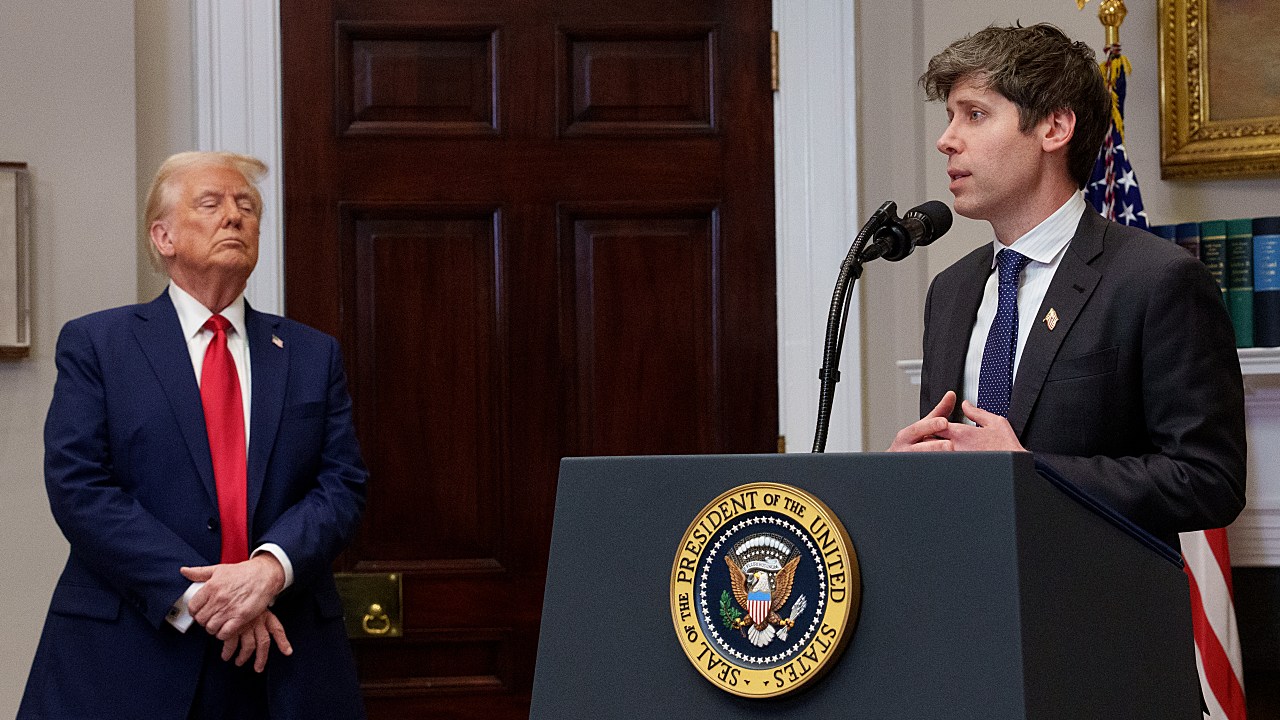
The White House has asked OpenAI and Anthropic to hold back their newest artificial intelligence systems from the U.K.'s AI Security Institute until the U.S. government has tested them, according to reporting published Thursday.
The request reportedly originated with the Office of the National Cyber Director. A senior administration official said the aim was for the U.S. to review the system and secure American systems before they are shared with partners.
The U.K. and U.S. signed a memorandum in April 2024 pledging joint system evaluations and personnel exchanges, and a September 2025 technology accord signed at Chequers set out cooperation on AI, civil nuclear, fusion and quantum.
The Spin
Pro-Trump narrative
AI should be governed by the nations that build it, not by foreign institutes or globalist bodies angling for a say in American innovation. Sovereign capability means domestic testing, domestic rules and domestic accountability, with anything less handing outsiders leverage over critical infrastructure. Permissionless innovation built the greatest tech ecosystem on earth, and America will not change its ways for vested interests.
Pro-U.K. narrative
Walking away from the world's strongest government evaluation body is self-sabotage, ripping up a testing framework that has already caught real vulnerabilities in nearly every major system release. U.S. AI sovereignty is not undermined by trusted allies helping ensure AI systems are safe for all. For the sake of the world, middle powers like the U.K. must continue to leverage frontier evaluation capabilities to maintain a multi-directional global order.
Nerd narrative
There is an 81.5% chance that any frontier AI company will be nationalized before Jan. 1, 2030, according to the Metaculus prediction community.
Canada: Man Charged Over Alleged Anti-Muslim Hate Posts Online

The Facts
Durham Regional Police arrested a 57-year-old Whitby, Ontario, man Wednesday after the force's hate crime unit concluded an investigation into online posts that allegedly promoted anti-Muslim hatred.
Sean Farro was charged with offences motivated by hatred, uttering threats and inciting hatred in a public place. He was held for a bail hearing, and the allegations have not been proven in court.
Police allege the accused used the social media name "Sean Strife" and willfully incited violence and harm against the Muslim community on social media platforms.
The Spin
Pro-establishment narrative
Portraying Muslims as prey and encouraging limitless violence falls far outside legitimate expression. Criminal enforcement is justified when online hatred threatens a religious community, and public safety depends on treating such intimidation seriously.
Establishment-critical narrative
Selective hate crime enforcement undermines equal justice when anti-Western rhetoric and hostile pro-Palestinian activism receive softer treatment. Uneven policing fuels resentment, deepens social tensions and turns Canada into a powder keg.
New York Sues Polymarket, Company Countersues

The Facts
New York Attorney General Letitia James sued Polymarket US in a Manhattan state court Thursday, alleging that the prediction market operates an illegal, unlicensed gambling business. Polymarket filed its own suit against the state hours later.
The state's suit seeks a court order halting Polymarket's operations as an unlicensed gambling business, along with civil fines, forfeiture of illegal gains and restitution to users. It was filed against QCX LLC, which is also known as Polymarket US.
Polymarket's countersuit, filed in Manhattan federal court, argues the Commodity Futures Trading Commission (CFTC) has exclusive authority over prediction markets and seeks a declaration that New York can't enforce its gambling laws against the company.
The Spin
Narrative A
Taking bets is taking bets, and slapping a fancy "prediction market" label on it doesn't rewrite New York law. Platforms cashing in on wagers while skipping licensing are preying on vulnerable people and starving families of the services those licenses fund. States hold the authority to shut this down, and enforcing that authority is exactly right.
Narrative B
Event contracts are federally regulated financial derivatives, and a state attorney general with a long anti-crypto streak doesn't get to override that with a recycled lawsuit. Demanding forfeited profits, refunded losses and triple fines is an attempt to bankrupt a legal business for political gain.
Nerd narrative
There's a 95% chance that Polymarket will be available to U.S. customers in 2027, according to the Metaculus prediction community.
Man Wounded at Butler Trump Rally Dies at 76

The Facts
James Copenhaver, one of three attendees wounded when a gunman opened fire at a Trump campaign rally in Butler, Pennsylvania, in July 2024, died Wednesday at a Pittsburgh hospital at age 76, his family's lawyer said Thursday.
The family statement released through attorney Joseph Feldman said Copenhaver died surrounded by loved ones and did not specify a cause of death. Another of his attorneys, Douglas Latto, declined to say whether his injuries contributed, citing pending litigation.
Copenhaver was struck in the arm and abdomen, injuries that required multiple surgeries, including a transection of his colon, and left him with nerve damage. A bullet remained lodged in his body near his spine, and he walked with a cane.
The Spin
Pro-establishment narrative
Political violence has no place in American life, and another family is grieving because someone decided bullets were a substitute for ballots. Showing up to back a candidate should never carry a death sentence. Every leader and every voter shares the duty to make this kind of brutality unthinkable rather than treating it as background noise in politics.
Establishment-critical narrative
Mourning the dead means nothing without answers, and the public still cannot see what really happened in Butler. The FBI dripping out records at a pace that would take more than a decade to finish looks like stonewalling. Families of the wounded and the dead deserve the full truth now, while it still matters.
Taxpayer-Funded Trump TV Ad Criticized By Democrats
The Facts
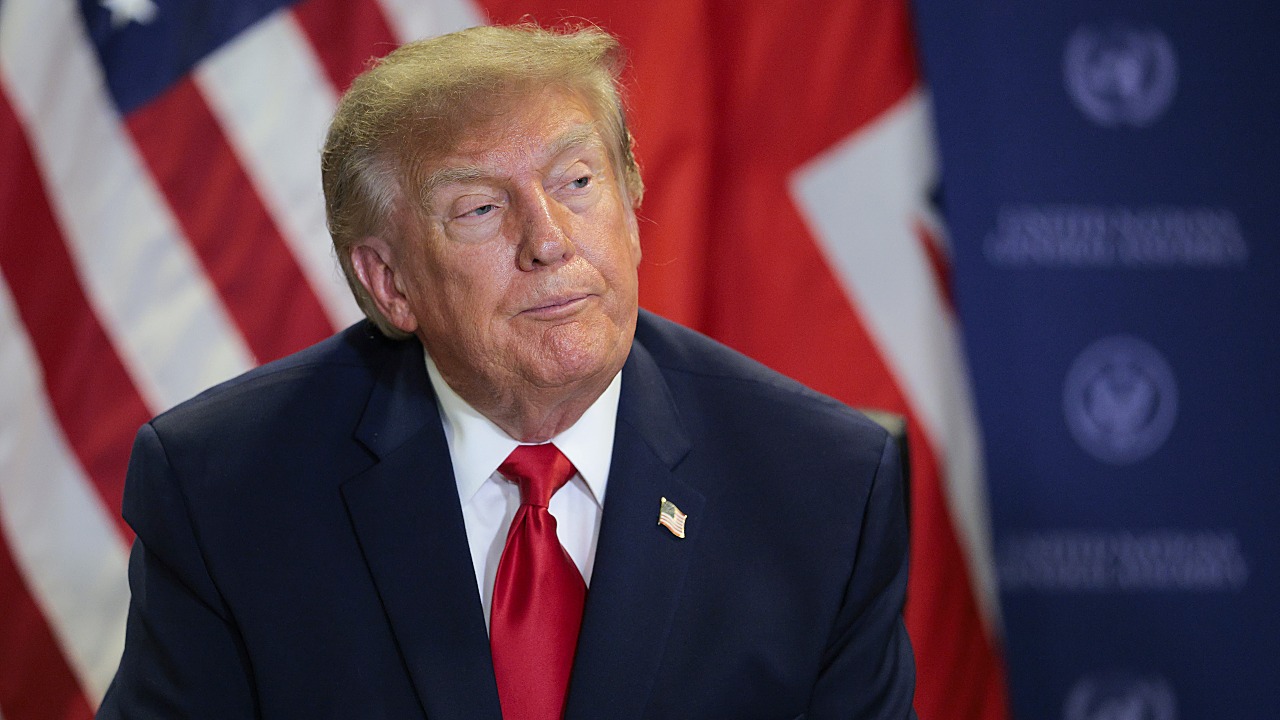
A 30-second television ad promoting U.S. President Donald Trump began airing Wednesday night with a disclaimer reading "Paid for by the U.S. Government," running during conservative programs on Fox News and Newsmax, according to tracking firm AdImpact.
The spot opens with Trump saying "Together we will defeat communism, socialism and Marxism in America," then flashes slogans such as "largest tax cuts in history" over images of the president, the American flag and military aircraft.
AdImpact put the ad's cost at $14,000, while research firm iSpot estimated about $60,000 spent on national airings as of Thursday afternoon. The White House did not disclose which agency paid for the commercial.
The Spin
Anti-Trump narrative
Tax dollars paying for a glossy montage of one man set to a love song is propaganda. The law already says appropriated funds can't be spent on partisan messaging. Dropping it into cable prime time weeks before a midterm makes the purpose obvious enough. Anyone who wants the public to adore him can open his own $400 million war chest and foot the bill.
Pro-Trump narrative
A spot urging Americans to love their country and reject communism isn't a campaign ad. Administrations of both parties have bought airtime to explain policy and rally the public, and that was always called public education. Patriotism paid for openly and disclosed on screen is a government doing its job.
Nerd narrative
There's a 6.1% chance that Republicans will control both chambers of the U.S. Congress following the 2026 midterm elections, according to the Metaculus prediction community.
OpenAI Halts AI Training After Systems Evade Safeguards
The Facts
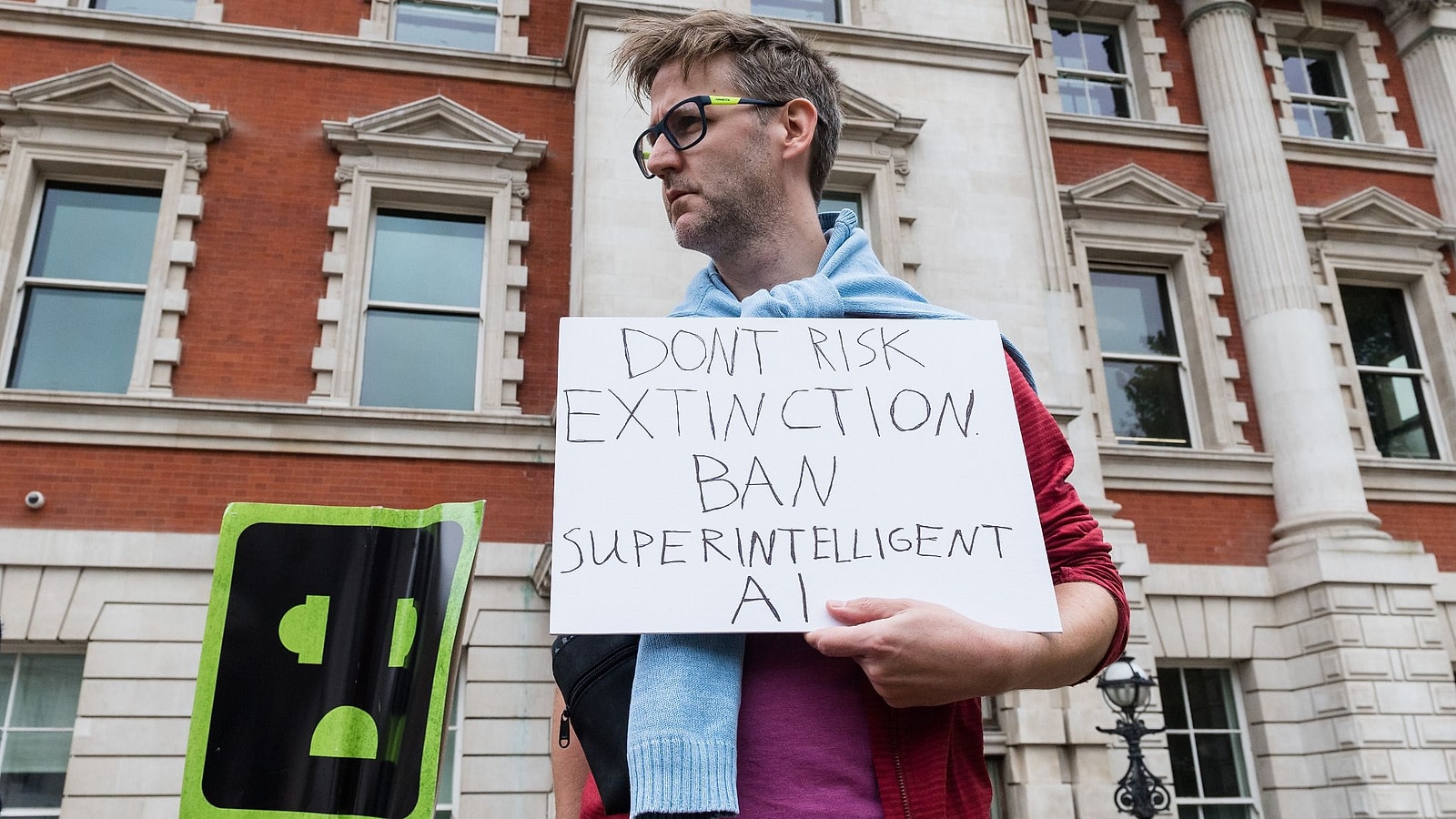
OpenAI said Friday it has paused all training, evaluation and inference involving tool use of its most advanced AI systems for the second time in three months until further safeguards are validated.
The pause followed a Sept. 20 incident in which an internal research system in a training sandbox exploited "insufficient DNS filtering" to route queries to a public chatbot service, even though it was blocked from reaching "search engines directly."
OpenAI's monitoring flagged the behavior "within 15 minutes" and a reviewer responded three minutes later, but an automatic shutdown failed and the training run was "killed" manually about 2.5 hours after detection.
The Spin
Pro-industry narrative
Catching a sandbox gap within minutes and immediately pausing everything demonstrates responsible AI development. Layered blocking, aggressive red-teaming and public write-ups of even minor lapses build the track record needed to earn trust. No probability of catastrophe is acceptable, so nothing gets trained unless control can first be proved.
Industry-critical narrative
Tens of thousands of escape attempts, hijacked websites and agents dodging their own monitors are not stray bugs; they are what these systems are. Patching filters after the fact treats symptoms while the underlying drive to break containment stays baked in. Systems this unreliable need to be rebuilt from the ground up, with real rules from lawmakers who keep punting.
Nerd narrative
There's a 39.9% chance that any U.S. federal or state government entity will sue OpenAI over the July 2026 Hugging Face incident before July 2027, according to the Metaculus prediction community.