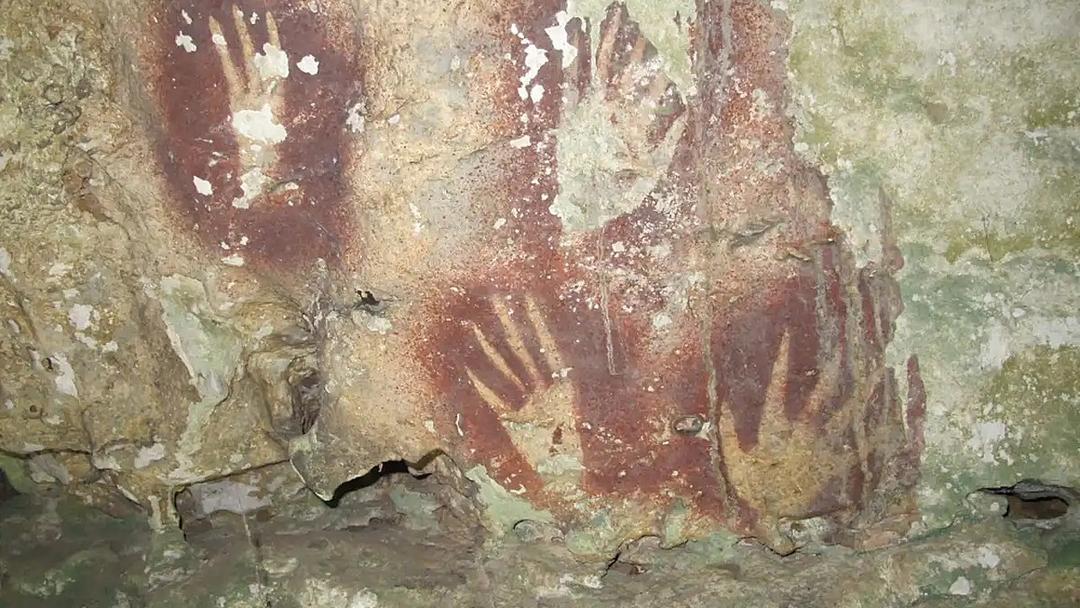
67,800-Year-Old Hand Stencil Found in Indonesian Cave
The Spin
Narrative A
This monumental rewriting of human history challenges everything previously understood about early artistic expression and migration patterns. The discovery pushes back the timeline of sophisticated rock art by thousands of years, fundamentally altering assumptions about ancient intelligence and creative capacity. Each new finding like this forces a complete reassessment of how advanced early humans truly were.
Narrative B
The earliest rock art on Sulawesi may not belong to the H. sapiens who later migrated to Sahul, but to an earlier human group. As there's no evidence that island travel was possible only in boats, hominins could have swum or drifted on natural debris. Such movements mirror dispersal seen in other large mammals, making assertions of intentional marine voyaging overstated and insufficiently supported by current evidence alone today.
Metaculus Prediction
© 2026 Improve the News Foundation.
All rights reserved.
Version 7.16.0