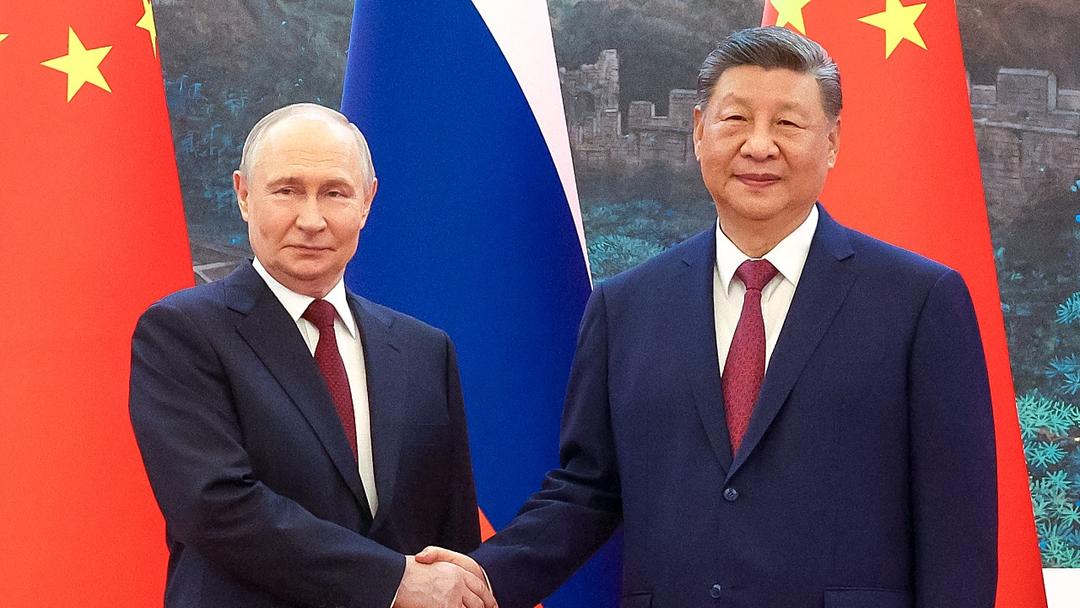
Xi, Putin Sign 40 Deals in Beijing
The Spin
Establishment-critical narrative
The China-Russia partnership is one of the most consequential relationships in modern geopolitics, built on genuine strategic alignment rather than opportunism. Bilateral trade has surpassed $200 billion for three consecutive years, and both nations coordinate across energy, finance, technology and military affairs. This is a mature, stable partnership that Washington cannot wedge apart — and its predictability is precisely what makes it a stabilizing force in an increasingly chaotic world.
Pro-establishment narrative
Despite heavy fanfare and symbolism, the Xi-Putin summit produced no major breakthroughs — just a restatement of known positions and vague energy language with zero timelines. Russia left without securing the Power of Siberia 2 pipeline deal, and the economic imbalance is glaring: China's economy is nearly eight times larger and far more technologically advanced. This partnership benefits Putin's grip on power, not Russia itself, and calling it a geopolitical triumph is a serious stretch.
Narrative C
After Donald Trump departed Beijing, Vladimir Putin arrived to meet Xi Jinping, underscoring China's growing centrality in global diplomacy. Trump had just issued a sharp ultimatum to Iran while claiming Xi agreed to curb weapons flows to Tehran. Now Putin seeks deeper coordination of his own. The sequence highlights Beijing's leverage with both Washington and Moscow, positioning Xi as a pivotal figure shaping calculations over the Ukraine conflict and tensions in the Middle East.
Metaculus Prediction
Public Figures


The Controversies
© 2026 Improve the News Foundation.
All rights reserved.
Version 7.7.2