The Gaza War & Its Aftermath
Overview
- On Oct. 7, 2023, Hamas launched a large-scale attack into southern Israel, killing about 1,200 people — most of them civilians — and seizing roughly 250 hostages. Israel declared war the next day, mobilized reservists and began a sustained air and ground campaign in Gaza, triggering a two-year conflict that has killed tens of thousands of Palestinians.
- Hezbollah in Lebanon opened what it called a "support front" for Gaza, triggering escalating cross-border exchanges in 2024 that included exploding pagers, widened Israeli strikes and the killing of the group's leader. A U.S.-brokered ceasefire in November of that year required Hezbollah to withdraw north of the Litani River. However, subsequent allegations of rearmament prompted further Israeli strikes.
- Iran and Israel moved toward direct confrontation in April 2024 when Iran launched drones and missiles at Israel in response to an Israeli strike on the Iranian consulate in Damascus. A 12-day conflict in June 2025 featured joint U.S.–Israeli strikes on Iranian sites and large Iranian barrages in response.
The Spin
Pro-Israel narrative
Oct. 7 was a savage massacre by a jihadi army dedicated to murdering Jewish civilians and taking hostages. A sovereign state that absorbs such an attack has one obligation: destroy the perpetrators and reestablish deterrence. Ceasefires without disarmament just reset the clock for the next slaughter, and Hamas' military and governing capacity must end. Victory over Hamas and firm regional deterrence are the only paths to a durable calm.
Pro-Palestine narrative
Israel's genocide in Gaza is the culmination of decades of increasingly brutal and repressive policies designed to disenfranchise and terrorize Palestinians. Israel was founded on the basis of ethnic cleansing, and its actions in Gaza, the West Bank and the rest of the region clearly demonstrate that Israel is not interested in peace or tolerance. The situation will only improve after Israel is sanctioned and pressured into ending its inhumane occupation.
Cynical narrative
This war persists because the worst actors set the agenda. Hamas engineered a mass-murder spectacle, and Netanyahu spent years entrenching a failed status quo that undermined any serious political solution to the conflict. Oct. 7 exposed strategic rot, and the response doubled down on failed tactics over strategy. The international community must sideline Hamas and the current Israeli government and anchor a binding political framework with security guarantees and real Palestinian sovereignty.
Anti-Iran narrative
For over four decades, Iran and its regional proxies have spread terror and instability across the Middle East. Indeed, Oct. 7 was the high watermark of Iran's regional meddling, forcing the U.S. and Israel to act. Now, Iran is being decimated because it has continuously refused to abandon its nuclear weapons, ballistic missiles and regional proxies. The U.S., Israel, and their Arab allies have effectively absorbed Iran's attacks and will continue fighting until all objectives have been achieved.
Pro-Iran narrative
Iran has consistently worked to avoid war, but, now, things have changed. The U.S. and Israel's aggression has forced Iran to act, and it has already demonstrated that it can cause significant pain to the U.S. and its client regimes in the region. Iran did not want this war, but it will fight until the aggression stops.
Background
Israel's creation in 1948 followed decades of tension during the British Mandate for Palestine, established after World War I.
The 1917 Balfour Declaration expressed British support for a Jewish national home, accelerating Jewish immigration while deepening conflict with the Arab majority. In November 1947, the U.N. General Assembly adopted Resolution 181, recommending partition into separate Jewish and Arab states. However, the situation only worsened.
As violence between Jews and Arabs in Mandatory Palestine escalated, David Ben-Gurion declared Israel's independence on May 14, 1948. Neighboring Arab states intervened the next day, launching the first Arab–Israeli war. By the 1949 armistice agreements, Israel controlled about 78% of the former mandate territory, while Egypt administered Gaza and Jordan took the West Bank and East Jerusalem. More than 700,000 Palestinians were displaced, creating a refugee crisis central to later conflicts in 1956, 1967 and 1973 and shaping enduring disputes over territory, recognition and refugees.
In 1967, Israel captured Gaza, the West Bank, the Sinai Peninsula and the Golan Heights in six days after another war broke out. Though Israel already had an Arab minority that had lived under military rule until 1966, it absorbed millions of Palestinians living in the West Bank and Gaza following the Six-Day War.
Stalled Peace
Peace efforts from Oslo onward left core questions unresolved. The accords created interim arrangements without final status agreements on borders, refugees, settlements or Jerusalem, and the five-year transition to statehood never materialized. The West Bank's division into Areas A, B and C left Israel in full control of most territory. Settlement expansion and demolition policies in the West Bank and East Jerusalem accelerated in the 2010s, fragmenting Palestinian territorial contiguity and drawing sustained criticism from the U.N. and rights groups, which argue these policies undermine the viability of a two-state solution under international law.
In parallel, Hamas — an Islamist group founded during the First Intifada — launched suicide attacks throughout the 1990s and 2000s, eventually expanding its military and governance capacity. Hamas' victory in the 2006 Palestinian legislative elections and its seizure of Gaza in 2007 further entrenched the political divisions among Palestinian factions, with the Palestinian Authority (PA) partially administering the West Bank and Hamas administering Gaza.
While its 2017 political document signaled tactical flexibility regarding a state along the so-called 1967 lines, Hamas continues to reject formal recognition of Israel. Recurrent Gaza conflicts (2008–09, 2012, 2014, 2021) featured rocket fire by armed groups and large-scale Israeli operations, producing heavy Palestinian civilian tolls and infrastructure destruction without resolving the political impasse.
Iran and Its Regional Network of Allies
Following the 1979 Iranian Revolution and 1982 Israeli Invasion of Lebanon, Hezbollah was the first major armed group in the Arab world that received significant Iranian support. The group quickly became a potent political–military actor, with extensive funding, weapons and training that enabled it to maintain one of the largest non-state rocket arsenals in the region.
Further Iranian support helped expand its precision-guided and long-range missile capabilities far beyond the smaller rocket stocks of earlier decades, reinforcing its deterrent posture against Israel while embedding it into Tehran's broader regional strategy. Iran also plays a central role in rebuilding and resupplying Hezbollah's military networks, including smuggling routes through Syria and Iraq that allegedly continue to channel missiles, communications equipment and drones into Lebanon even after major conflicts.
Following the 2003 U.S. Invasion of Iraq and the 2011 Arab Spring, Iran's network of allied forces further spread to Iraq, Syria and Yemen, where allied militias with ties to the Islamic Revolutionary Guard Corp (IRGC) grew their respective military capabilities. In Yemen, the Houthis received Iranian arms, training and technical support, including drones, cruise and ballistic missiles, and have directed attacks on Red Sea shipping in the context of broader regional tensions tied to the war in Gaza. In Iraq and Syria, Iran-backed Shiite militias fought alongside the Syrian and Iraqi governments.
Iran also provided support for Hamas in Gaza, though this support was more limited than in other regions. This support included annual funding estimated at $70–100 million (as publicly acknowledged by Hamas leaders), smuggling of rocket components into Gaza, logistical assistance for local arms production and tactical training for operatives — often conducted directly in Iran or via allied groups such as Hezbollah. Notably, unlike Iranian-backed militias in Iraq and Syria, for example, Hamas has generally been understood to be autonomous from Iranian decision-making, though the nature of their relationship is still debated.
Entrenchment and Divergence
By the late 2010s, Israel maintained military superiority in the region and deepened ties with Sunni Arab monarchies — especially through shared concerns about Iran's regional influence — culminating in informal security cooperation that underpinned the Abraham Accords and broader strategic engagement with the Gulf Cooperation Council states. These relationships focused on intelligence sharing, defense cooperation and counter-Iran objectives rather than resolving the Palestinian issue, reflecting a shift in priorities among several Gulf leaders who saw Tehran as a common threat.
Meanwhile, Palestinians faced entrenched political division: Hamas continued to govern Gaza and the PA administered parts of the West Bank under constrained autonomy, while diplomatic efforts toward statehood remained stalled. The 2018–2019 "Great March of Return" protests along the Gaza-Israel border, which drew thousands of demonstrators demanding an end to the blockade and the right of return for refugees, generated large numbers of casualties after Israeli forces opened fire on protesters and highlighted growing despair over the prospects for a negotiated settlement.
The Spin
Pro-Israel narrative
Israel's creation followed U.N. Resolution 181, which recommended the establishment of separate Jewish and Arab states and was accepted by the Jewish leadership, thereby giving international legal endorsement to statehood before independence in 1948. Rejection by Arab states and ensuing wars underscored Israel's need to defend its existence. Furthermore, the rise of revolutionary Iran has presented a new challenge to Israel which it has worked to contain.
Pro-Palestine narrative
In 1948, Palestinians were ethnically cleansed and barred from return, while Israel welcomed worldwide Jewish immigration. That unresolved right of return remains the core wound that created this conflict: the destruction of one society in order to establish a new one. Everything that has followed the Nakba has been part of a larger campaign to destroy Palestine. Oct. 7 was a spark in a powder keg built by dispossession, and all the region's conflicts flow from this issue.
Anti-Iran narrative
Iran's extensive proxy network — backing Hamas, Hezbollah and the Houthis with money, weapons and training — has fueled regional instability and armed conflict, extending beyond the Israeli-Palestinian issue and contributing to repeated escalations across the Middle East.
Pro-Iran narrative
Iran and its allies' actions are a legitimate defense against aggression and foreign influence rather than unprovoked expansionism. Tehran's support for Hezbollah and Hamas is an act of resistance against Israel and Western power, not proxy control. These groups act with their own motivations while resisting Israeli and U.S. domination in the Middle East.
Oct. 7 Attack
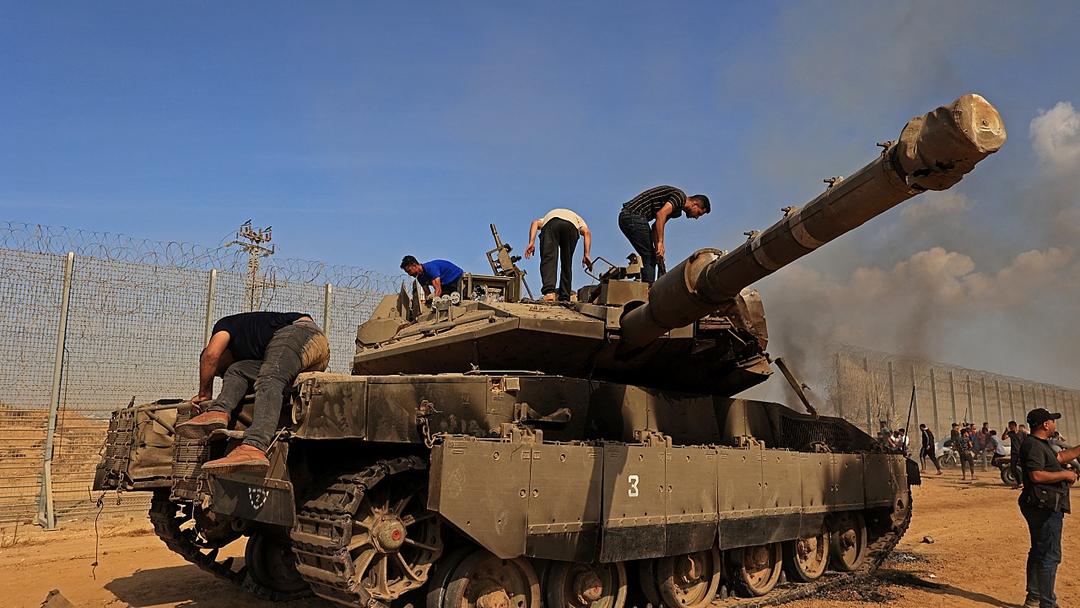
On the morning of Oct. 7, 2023, Hamas launched a large-scale, coordinated assault on southern Israel from the Gaza Strip that combined a massive rocket bombardment with ground, sea and air elements.
Militants fired thousands of rockets toward towns and cities in southern and central Israel. The barrage was concentrated in the first 20–30 minutes and overwhelmed parts of Israel's defense systems. Fighters breached border barriers at multiple points using explosives, bulldozers, motorized paragliders and boats, including a landing near Kibbutz Zikim.
By the end of the day's fighting, about 1,200 people were killed — the majority of whom were civilians — in what Israeli authorities and many international observers called the deadliest single day in Israel's history. More than 250 people were abducted and taken back into Gaza, including men, women, children and foreign nationals. Some were later released or rescued, while others remained in captivity until the end of the war. Reports indicate that 85 of the hostages died in captivity.
Methods and Targets
Open-source material, survivor testimony and independent investigations describe a coordinated, multi-pronged assault. Militants breached reinforced border barriers at more than 100 points using explosives and construction equipment, then moved quickly into nearby towns and kibbutzim. At the same time, thousands of rockets were fired toward civilian areas and military sites, overwhelming warning systems.
Homes, communities and open-air venues were attacked, with many residents killed inside houses or while fleeing. Kibbutzim such as Be'eri, Kfar Aza and Nir Oz were among the hardest hit. One of the deadliest sites was the Nova music festival, where survivor accounts describe shootings and abductions.
U.N. experts and human rights groups have documented evidence of sexual and gender-based violence during the Hamas attack and in captivity, allegations Hamas denies. Amnesty International said elements of the assault and hostage treatment amounted to crimes against humanity.
Immediate Military Context
Israel declared a state of war on Oct. 8, mobilizing hundreds of thousands of reservists and launching an extensive air and ground campaign in Gaza. The stated objectives were to dismantle Hamas' military capabilities, degrade its infrastructure and secure the safe return of hostages.
The scale and surprise of the attack prompted internal Israeli assessments into intelligence failures, examining why warning signs — including some prior reporting that Hamas was planning a large raid — were not prevented or countered.
In the months that followed, the war expanded beyond Gaza and triggered a multi-front conflict, something that has not occurred in the region since the 1973 Arab-Israeli War. In addition to Gaza, hostilities reached the West Bank, Lebanon, Syria, Iraq, Yemen and Iran.
Gaza Front
In response to Hamas' Oct. 7, 2023, attack, Israel initiated one of the most sustained and intense military campaigns in the region's recent history, combining airstrikes, artillery bombardments and ground invasion.
In the first months of the ground phase in Gaza, the Israeli military pushed into densely populated urban areas, including Gaza City's Al-Tuffah and Jabalia refugee camp, claiming to destroy militant infrastructure while also causing widespread destruction of civilian homes and infrastructure.
A 2024 joint World Bank–U.N. interim damage assessment estimated that destruction to physical structures alone — houses, public facilities, roads and utilities — was about $18.5 billion by late January 2024, and severely impeded basic service delivery like water, electricity and health care access. Over 26 million tons of rubble remain, requiring years of removal before reconstruction can start.
By early 2025, a joint World Bank, U.N. and EU assessment estimated $53.2 billion would be needed over the next decade to rebuild Gaza, including $20 billion in the first three years for housing, services, debris removal and economic recovery.
Humanitarian groups report widespread devastation: hospitals, schools, sanitation systems and transport networks were damaged or destroyed, contributing to severe public health crises and mass displacement. Gaza faced near-total power outages early in the war and persistent shortages of fuel, water and medicine.
Palestinian authorities and rights monitors estimate tens of thousands were killed and hundreds of thousands displaced. U.N. agencies have warned that access restrictions and damaged infrastructure repeatedly delayed aid delivery.
Rafah "Red Line"
In May 2024, Israel launched one of the most controversial military offensives of the war: its advance on Rafah, a city in southern Gaza on the Egyptian border, cutting Gaza off from the outside world. With an estimated 1.4–1.5 million displaced Palestinians sheltering in the densely populated area — many having fled earlier fighting farther north — Israeli forces seized the Rafah border crossing with Egypt on May 7.
Evacuation orders prompted nearly one million civilians to flee to designated "humanitarian zones" farther north, though aid groups and the U.N. warned of severe overcrowding, limited resources and risks of further displacement in an already devastated enclave. Israel maintained that Hamas embedded fighters, tunnels and weapons among civilians, justifying the operation as essential to neutralize Hamas' ability to smuggle weapons and supplies into the strip.
The offensive triggered significant U.S. pressure, culminating in explicit threats to restrict military aid. U.S. President Joe Biden had repeatedly cautioned Israeli Prime Minister Benjamin Netanyahu against a major assault on Rafah without a credible civilian protection plan. In early May, the administration paused delivery of a specific shipment containing 1,800 2,000-pound bombs and 1,700 500-pound bombs out of concern they could be used in densely populated areas.
On May 8, Biden publicly stated in a CNN interview that the U.S. would not supply offensive weapons or artillery shells for operations in Rafah, while emphasizing continued support for Israel's defense through systems like the Iron Dome. This marked a rare public rift, driven by humanitarian worries and reports of civilian casualties from prior heavy munitions use, though it stopped short of a broader suspension of U.S. security assistance.
Israel proceeded with a more limited campaign despite the warnings, and U.S. officials later acknowledged that Israeli planners had made "refinements" to reduce civilian risks. By late June 2024, Netanyahu declared the Rafah operation largely complete. Broader fighting in Gaza continued well beyond Rafah, but the U.S. pause on those specific munitions remained a focal point of debate in Washington.
Ceasefires and the "Yellow Line"
The conflict's first ceasefire began in November 2023, with Israel pausing its military actions in exchange for the release of hostages. Under the agreement, mediated primarily by Qatar, Egypt, and the U.S., Hamas released 105 civilian hostages in exchange for Israel freeing around 240 Palestinian prisoners, while humanitarian aid deliveries to Gaza increased significantly during the pause. However, fighting resumed after about a week.
In January 2025, another ceasefire and hostage deal was implemented, with phased humanitarian access to follow. Some hostages were released, but talks on a broader second phase collapsed, and clashes resumed in March after Israel abandoned the ceasefire. Qatar, Egypt and the U.S. continued mediation amid repeated violations.
An October 2025 agreement outlined a phased Israeli redeployment to an internal demarcation known as the "Yellow Line," intended to mark areas of military pause and expanded civilian movement. Reporting and satellite imagery indicate the line has since shifted deeper into Gaza, with demolitions reported nearby, drawing criticism that it entrenches control.
Shortly after the ceasefire was implemented, clashes near the Yellow Line and across Gaza continued to disrupt humanitarian operations. In late October 2025, OCHA reported Israeli airstrikes in response to alleged ceasefire violations that caused civilian casualties and worsened aid bottlenecks, with trucks funneled through limited routes such as the Philadelphi Corridor and Coastal Road. Aid agencies warned that recurring violence was undermining relief efforts and endangering civilians and humanitarian workers.
Doha Strike
One of the most contentious episodes linked to ceasefire negotiations occurred on Sept. 9, 2025, when the IDF carried out an airstrike in Doha, Qatar, targeting what it identified as Hamas leadership locations where internal discussions regarding negotiations over a U.S.-backed ceasefire framework were underway. The strike reportedly killed five members of Hamas and a Qatari security officer. Qatar's prime minister and foreign ministry condemned the attack as a violation of its sovereignty, international law and peace efforts, terming it "state terrorism," and raised the issue at the U.N. Security Council.
The incident was significant because Qatar had been hosting and mediating talks among Israel, Hamas, and international partners, and was widely viewed as an essential channel for hostage negotiations and truce implementation. Many regional governments, including Saudi Arabia and the UAE, publicly supported Qatar's stance and condemned the strike, arguing that it jeopardized years of diplomacy.
Hamas officials stated that the strike was deliberately timed to disrupt negotiations and pressured by Israeli strategic priorities, though they did not rule out future talks.
Lebanese Front
After the Hamas' Oct. 7 attack, Hezbollah opened a northern front against Israel, firing projectiles across the Blue Line while Israeli forces responded with artillery and airstrikes across southern Lebanon.
Through 2024, clashes intensified in multiple districts of South Lebanon, with frequent Israeli drone and artillery strikes aimed at disrupting Hezbollah's rocket launchers, personnel and infrastructure. In March 2025, embedded reporting documented a week of engagements resulting in dozens of Hezbollah fighters and at least a dozen civilians killed or wounded amid cross-border fire and retaliation.
September 2024 Escalation and Civilian Impact
In mid-September 2024, a wave of explosions targeting pagers, walkie-talkies and explosives stockpiles across Lebanon — widely believed to be linked to Israeli operations aimed at disrupting Hezbollah communications and supply caches — resulted in thousands injured and significant displacement of civilians near the border, according to regional reporting. These incidents were followed by expanded Israeli air and artillery strikes deep into South Lebanon and the Beqaa Valley, contributing to rising Lebanese casualty figures and emergency evacuations.
Alongside air and artillery actions, the Israeli military conducted a limited ground invasion into Lebanon, described by the Israeli military as intelligence-based operations to capture or neutralize Hezbollah operatives, as seen in a February 2026 raid that resulted in the capture of a Hamas-aligned official and drone strikes on Hezbollah targets.
Almost 4,000 Lebanese were killed during the war, with many villages in the south being completely razed by Israeli attacks. Another 1.2 million were also displaced. Further Israeli strikes and Israel's use of white phosphorus have complicated the return of civilians to their villages.
Hezbollah attacks into northern Israel displaced around 80,000 Israelis and killed dozens. In one notable incident, an alleged Hezbollah rocket killed 12 children in the Druze town of Majdal Shams in the Israeli-controlled Golan Heights, which were seized during the 1967 war.
Leadership Losses
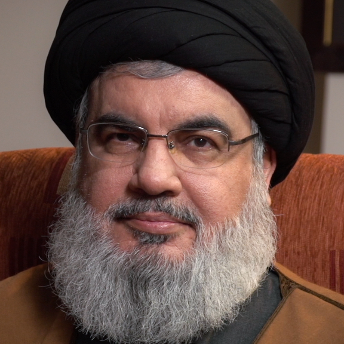
In September 2024, Israel carried out a high-profile airstrike in Beirut's southern suburbs, targeting what it described as Hezbollah's underground command headquarters. Israel confirmed that the strike killed Hezbollah's long-time leader Hassan Nasrallah — who had led the group since 1992 — alongside senior officials involved in strategic planning and intelligence operations.
The removal of Nasrallah and other senior commanders was portrayed by Israeli officials as a blow to Hezbollah's operational cohesion. Independent analysts noted the group faced serious disruption in command and control structures. However, other assessments emphasized that such strikes historically have not eliminated Hezbollah's organizational resilience.
Ceasefire
Following prolonged exchanges and high casualties on both sides — including estimates by Israel that thousands of Hezbollah operatives were killed during the conflict — a U.S.-brokered ceasefire came into effect on Nov. 27, 2024, bringing an official end to high-intensity combat after 13 months of fighting.
The ceasefire arrangement called for Hezbollah to withdraw north of the Litani River and the Lebanese Army to assume control of previously contested terrain, along with provisions for displaced civilians to return home. However, implementation difficulties quickly became apparent: within hours of the ceasefire, Israeli troops reportedly fired on returning vehicles, contributing to uncertainty about compliance and confidence in the agreement's durability.
Even after this formal truce, sporadic Israeli operations continued, including targeted strikes against Hezbollah personnel and infrastructure, signaling that while major combat had paused, hostilities and localized violence persisted. Israel has launched dozens of strikes on alleged Hezbollah targets as part of efforts to preempt rearmament and rebuild capacity. It has also retained five border points.
Rearmament and Post-Ceasefire Dynamics
By 2025, intelligence assessments alleged that Hezbollah was rebuilding its military capabilities after heavy losses during the war with Israel, including rockets and anti-tank munitions, using Syrian supply routes and local clandestine manufacturing. Israeli airstrikes and Western interdiction efforts have reportedly targeted depots and logistics hubs to prevent a rebound of medium-range rockets and unmanned aerial vehicles.
Weakened by economic and political crises, Lebanese authorities have limited ability to monitor or enforce disarmament. Efforts to integrate Hezbollah fighters into formal security structures have been uneven, with many units remaining intact or reorganizing under alternate operational covers.
In March 2026, Hezbollah fired rockets into northern Israel, triggering a resumption of high-intensity conflict, though Hezbollah alleged that its attack was preemptive and a response to Israeli plans to attack Lebanon.
Other Fronts
Several other parts of the Middle East have seen tensions, clashes, and military strikes in the wake of Hamas' Oct. 7 attack.
Many of these regions, such as Syria, Iraq and Yemen, are associated with Iranian-backed militias and political movements, transforming the conflict into a low-intensity regional war.
West Bank
Parallel to fighting in Gaza, the West Bank experienced a significant increase in Israeli military raids, arrests and movement restrictions. Human Rights Watch and U.N. monitoring reports documented hundreds of Palestinians killed or injured during operations in cities and refugee camps such as Jenin, Nablus and Hebron between late 2023 and 2025.
Jewish settler violence also escalated, including attacks on Palestinian farmers, property destruction and intimidation, frequently in areas near settlements in the Jordan Valley and northern West Bank. The U.N. noted that these dynamics disrupted livelihoods, impeded access to schools, health care and markets, and compounded displacement pressures.
Israeli authorities escalated their use of curfews, checkpoints and road closures, tightening control over Palestinian society and reducing humanitarian reach. Reports highlighted severe constraints on aid delivery and policing, with international agencies warning that ongoing restrictions were deepening economic shocks and intensifying food insecurity in vulnerable communities.
Syria and Iraq
Though Israel has launched strikes in Syria for over a decade, the pace and intensity of these strikes significantly increased after Oct. 7. Before the fall of the former Syrian government in December 2024, Israel launched periodic air and drone strikes in Syria, targeting Iran-linked weapons depots, missile production sites and logistical routes used to supply Hezbollah and other regional armed groups.
In response to the collapse of Bashar al-Assad's government, Israel launched hundreds of strikes in Syria to neuter its military capabilities and seized Syrian territory. Since then, Israel has backed Druze militias in southern Syria to counter Damascus's growing influence across the war-ravaged country.
In Iraq, Iran-backed militias launched missile and drone attacks targeting Israeli interests, U.S. forces and allied regional partners amid heightened tensions in 2023–2024. In retaliation, the U.S. conducted strikes against facilities linked to these militias in Iraq and Syria, following attacks in Jordan that killed U.S. personnel, signaling a broader deterrence campaign aimed at disrupting Iranian proxy operations across the region.
Yemen and the Red Sea
During the Gaza conflict, the Houthis declared war on Israel, launching missile and drone attacks that targeted shipping in the Red Sea and Gulf of Aden, threatening Israeli maritime interests indirectly. Additionally, the Houthis launched missiles at Israel itself, saying that its primary goal was to end Israel's campaign in Gaza, which it described as a genocide.
In response, the U.S. and U.K. conducted repeated strikes against Houthi-controlled Yemen starting in January 2024, including interdictions on launch sites along the Yemeni coast and near Hodeidah and Mokha. These operations were coordinated under the multinational "Prosperity Guardian" posture to protect international navigation routes and merchant shipping. Likewise, Israel also struck Yemen, hitting the capital Sana'a and civilian infrastructure like the port of Hodeidah.
U.S. intelligence reporting indicated a sharp drop in container shipping through the Red Sea — around 90% by February 2024 — reflecting the disruption to global trade and maritime traffic. U.S. Navy incident logs and operational briefings highlighted increased strain on navigation and convoy protection, with multiple accidental collisions and near-misses attributed to congestion and prolonged security operations.
After U.S. President Donald Trump entered office, he launched a bombing campaign in Houthi-controlled Yemen. The campaign ended in May, with the Houthis pledging to stop attacks on U.S. vessels and the U.S. pledging to stop striking Yemen.
Escalating Conflict with Iran
After Oct. 7, long‑standing Israel–Iran tensions escalated from proxy conflict and covert action to direct military exchanges.
Prior to 2024, much of the conflict was indirect, with Israel engaging Iranian-backed groups across the region. Israel has often accused Iran of being behind Hamas' Oct. 7 attack, though Iran has consistently denied this. Nonetheless, Iran and Hamas have enjoyed warm relations, with the Palestinian group receiving at least some support from Iran in the last two decades.
Confrontations in 2024
In April 2024, following an Israeli strike on the Iranian consulate in Damascus, Iran launched a large drone and missile barrage at Israel — with hundreds of drones and rockets fired toward Israeli territory in what was widely reported as Iran's first direct long‑range attack on Israel. Israel, with U.S. and allied air‑defense support, intercepted the vast majority of these projectiles, yet air‑raid sirens were triggered across multiple Israeli towns and at least some launches were confirmed impacting infrastructure and causing civilian injuries.
Later that year, in October 2024, Iran launched its second direct missile attack on Israel, firing approximately 180-200 ballistic missiles in at least two waves, primarily in retaliation for Israel's assassinations of Hamas leader Ismail Haniyeh, Hezbollah leader Hassan Nasrallah and an IRGC commander. Much like the escalation in April, Israeli defenses, supported by U.S. and allied forces, intercepted most of the missiles, resulting in limited damage to airbases and some civilian areas, with only minor casualties reported, including one Palestinian man killed by debris in the West Bank.
12-Day War
In June 2025, direct large‑scale hostilities erupted between Israel and Iran. Beginning around June 12, Israel conducted a coordinated air campaign targeting Iranian nuclear sites and military infrastructure — including Natanz and the Esfahan Nuclear Technology Center — using airstrikes that damaged uranium conversion, fuel fabrication and other facilities, according to satellite imagery assessments and International Atomic Energy Agency (IAEA) analysis.
Israeli operations were described by defense analysts as substantial, hitting multiple nuclear‑related infrastructures intended to degrade Iran's program. Israel also targeted Iranian scientists and military personnel, with intense strikes in Iran's capital Tehran.
Iran responded with missile barrages and drone strikes directly against Israeli territory, including radar‑tracked impacts on Israeli military bases. This cycle of counter‑strikes lasted about 12 days before a ceasefire came into effect, with Iranian missiles reportedly reaching several Israeli bases and prompting extensive air‑defense activity.
During the conflict, Iranian missiles killed at least 33 people in Israel — almost all of whom were civilians — wounded over 3,500, and caused at least $1.5 billion in damage. In turn, Israeli and American strikes killed almost 1,200 Iranians, at least half of whom were civilians. Another 4,475 were injured.
Impact on Iranian Programs and Capabilities
Israeli and allied strikes targeted core parts of Iran's nuclear infrastructure. Assessments from the Institute for Science and International Security and other analysts concluded strikes on Natanz and Esfahan inflicted significant damage to enrichment and fusion facilities, including electrical infrastructure and conversion plants, which can set back operational capacity. Still, evaluations pointed out that below‑ground halls and other parts remained intact, and Iran retains enriched material and technology that could fuel future capacity.
Despite these setbacks, Iran's stockpiles of enriched uranium and missile production capacities were not entirely eliminated, maintaining Tehran's ability to exert regional influence and launch future salvos through conventional or proxy forces.
Each escalation round — whether missile barrages or nuclear facility strikes — prompted financial market volatility, with energy and risk‑asset prices fluctuating amid fears of broader regional conflict. International powers repeatedly issued appeals for restraint, while European and global diplomatic efforts sought to contain escalation.
Tensions and War in 2026
In 2026, U.S.-Iran tensions escalated significantly. The 12-Day War compounded Iran's vulnerabilities after the weakening or outright removal of its regional allies, namely Hezbollah and the former Syrian government. Protests across Iran broke out in late 2025, leading to a crackdown. In response to the protests, the U.S. amassed one of its largest military buildups in the Middle East since the 2003 Invasion of Iraq, deploying two aircraft carrier strike groups (including the USS Gerald R. Ford and USS Abraham Lincoln), additional fighter jets, bombers and air defense systems, while issuing stark warnings of potential further limited strikes or even regime-change efforts if diplomacy failed.
Amid this brinkmanship, indirect nuclear negotiations between the US and Iran —mediated initially in Oman and continuing in Geneva — resumed in early February 2026 after a hiatus following the 2025 conflict. The talks focused on demands for Iran to halt uranium enrichment, curb ballistic missiles and end support for allied groups in exchange for sanctions relief, though progress was limited with stalled discussions on core issues like "zero enrichment" versus Tehran's insistence on limited civilian capabilities.
By the end of February 2026, the standoff escalated into full-scale conflict when U.S. and Israeli airstrikes hit multiple Iranian military sites across more than 130 cities. In retaliation, Iran responded with missile and drone attacks on Israel, Gulf states and U.S. positions across the region.
US Support for Israel
Since Israel's early wars with Arab states, particularly after 1967 and 1973, the United States established itself as Israel's primary security partner.
Washington's military aid framework, formalized through long‑term memoranda of understanding (MOUs), currently provides Israel with about $3.8 billion annually in defense assistance — including roughly $3.3 billion in Foreign Military Financing (FMF) and about $500 million for joint missile defense programs. This support underwrites purchases of U.S. aircraft, armored vehicles, ammunition and other key defense materials and is structured to sustain Israel's qualitative military edge in the region.
Over decades, U.S. aid has included emergency resupplies in wartime, large airlifts of weapons and equipment and diplomatic support in international forums. Joint programs, such as the Iron Dome, David's Sling and the Arrow missile defense systems, are examples of U.S.–Israeli collaboration. The Iron Dome was initially developed by Israel and later co‑produced with U.S. support, and David's Sling and Arrow systems are jointly developed to defend against medium and long‑range threats.
Since Oct. 7, 2023, U.S. military assistance to Israel has surged. Analysts estimate that between late 2023 and 2025, Washington delivered roughly $16–22 billion in direct military aid and equipment, including replenishing interceptors, artillery and other supplies used in multi‑front operations, along with support for allied forces in the region.
Post–Oct. 7 Cooperation and Constraints
In addition to the baseline MOU support, the U.S. Congress and the Biden administration approved supplemental aid packages totaling tens of billions, including an $8.7 billion supplemental package in 2024 that boosted wartime procurement, fortified Iron Dome and David's Sling stocks, and accelerated joint defenses like Iron Beam.
Independent research from Brown University's Costs of War project estimated that the U.S. spent at least $17.9 billion in military aid to Israel between October 2023 and late 2024, on top of regular FMF funds — making 2023–2024 one of the largest single‑year aid surges in U.S.–Israel history.
These operations underscored dependence on allied interceptor stockpiles and coordinated defense, highlighted by repeated Israeli missile‑defense actions that heavily relied on U.S. systems and logistics. Many of the deliveries included air‑defense interceptors, precision munitions and heavy munitions — often resupplied from U.S. stocks to Israel in real time.
At the same time, debates regarding the U.S.-Israel relationship have become increasingly contentious. Some lawmakers and advocacy groups have pushed for conditions on future aid tied to international humanitarian law compliance, oversight of arms transfers and respect for civilian protection norms. Reuters reported that the U.S. State Department publicly stated that recipients of U.S. weapons — including Israel — must use them in compliance with laws of war, echoing concerns over civilian casualties.
International Reactions
International reactions to Hamas' Oct. 7 attack and the conflicts that followed it have significantly varied.
In the region, Arab governments condemned civilian harm and participated in ceasefire and reconstruction efforts. At an Arab League summit in Cairo, leaders endorsed a $53 billion plan to rebuild Gaza, aimed at allowing Palestinians to remain in the strip and avoid displacement — a major regional initiative endorsed by Egypt and other Arab states to shape post‑war reconstruction. This plan included calls for governance arrangements under the PA and for security guarantees that exclude militant control.
Several Gulf states — notably Saudi Arabia and the UAE — conditioned their participation on concrete steps to ensure Hamas' disarmament and exclusion from governance before committing large reconstruction funds. Arab diplomats and local reporting highlighted that disagreements over security conditions and governance arrangements slowed formal financing pledges, with some leaders emphasizing that whoever funds the reconstruction should have a say in how security and demilitarization are enforced.
Jordan and Egypt remained key mediators, facilitating Arab coordination and ceasefire discussions. Egypt's plan has been backed by the U.N., African Union and European partners as a comprehensive framework for Gaza's recovery, though details on implementation and actual funding flows remain unresolved.
Arab leadership statements also stressed that any reconstruction must be tied to a credible security framework and political horizon that reflects Palestinian governance and rights — not just infrastructure rebuilding. This reflects a broader regional insistence that demilitarization, civilian governance and reconstruction be linked rather than treated as separate issues.
Turkey
Turkey, which has repeatedly criticized Israel for its conduct in Gaza throughout the war, has expressed willingness to contribute to Gaza's rebuilding and stabilization following the ceasefire, with Foreign Minister Hakan Fidan announcing that Ankara is prepared to deploy troops as part of the International Stabilization Force (ISF) to support reconstruction, aid efforts and security in the enclave.
This commitment includes sending military personnel, potentially up to 2,000 troops in a specialized brigade focused on engineering, logistics and ordnance disposal, alongside humanitarian initiatives like providing temporary barracks from past earthquake relief in Turkey and dispatching experts with heavy equipment for rubble clearance and relief operations.
Despite these intentions, Israel has firmly opposed any Turkish military presence in Gaza, citing Ankara's ties to Hamas and historical tensions as key concerns, leading to potential exclusions from the ISF. Recent developments indicate alleged U.S. pressure on Israel to accept Turkish involvement, though compromises discussed include limiting Turkey to logistical support from bases in Jordan and Egypt rather than direct troop deployment.
Europe and Multilateral Forums
European governments and multilateral actors have been active in shaping post‑war processes in Gaza. Major EU states — France, Germany, the U.K. and Italy — publicly backed the Arab‑led reconstruction plan launched in Cairo, calling it a realistic basis for rebuilding and for addressing catastrophic living conditions in Gaza while emphasizing the need for a security and political framework acceptable to all parties.
The European External Action Service (EEAS) released a statement welcoming the plan and making clear that reconstruction, governance and security must be addressed together. The EU emphasized that Gaza's future reconstruction should be linked to wider peace efforts and that Hamas should not resume governance nor pose a threat to Israel while supporting the Palestinian Authority's reform agenda.
Across U.N. and multilateral forums, European and Arab states have worked to shape language around mandates for stabilization goals and oversight. Analysts note debates over mandate clarity, reporting requirements and legal frameworks for international stabilization forces and boards tasked with overseeing reconstruction, reflecting ongoing discussions about how to operationalize ceasefires and longer‑term peace efforts.
European capitals have also faced public pressure and political debate at home, with domestic civil society groups and parliaments pushing for stronger humanitarian access, protection of civilians and accountability measures — including debates over trade measures and sanctions tied to conflict conduct. These debates have occurred alongside broader diplomatic coordination with Arab and global partners.
China
China has positioned itself as a supporter of Arab‑endorsed reconstruction frameworks and broader Palestinian governance efforts. Chinese officials publicly backed the Arab League's Gaza reconstruction plan, emphasizing that reconstruction should allow Palestinians to remain in Gaza and be governed by their own representatives, consistent with a two‑state solution. China framed its support as aligning with international law and political solutions, and Beijing reiterated calls for arrangements that reflect Palestinian governance and rights in the post‑conflict period.
Chinese statements have also stressed that post‑conflict arrangements in Gaza must reflect Palestinian governance and uphold the two‑state solution, framing Beijing's stance in a way that resonates with many Arab states' official positions and international diplomatic narratives.
Russia
Russia has demonstrated consistent support for Arab-led initiatives in Gaza's reconstruction, notably endorsing Egypt's plan. Moscow has urged all stakeholders in the Palestinian-Israeli conflict, including Palestinians, Israelis, and external actors, to rally around such Arab proposals to secure a lasting ceasefire, ensure civilian security, release hostages and advance humanitarian and economic recovery as a precursor to a two-state political solution in line with international law.
In addition to diplomatic backing, Russia has committed practical aid, with President Putin pledging $1 billion to support Palestinians and specifically rebuild Gaza, while criticizing Israel's actions and providing ongoing humanitarian assistance. However, Russia has been cautious regarding U.S.-centric approaches, abstaining from a U.N. Security Council resolution on Trump's "Comprehensive Plan to End the Gaza Conflict" due to concerns over its lack of accountability, omission of the two-state formula, unclear timelines for Palestinian Authority control and potential to entrench Gaza's separation from the West Bank in a manner resembling colonial administration.
Instead, Moscow proposed an alternative resolution calling for U.N. Secretary-General options on an international stabilization force, omitting the U.S.-proposed "Board of Peace" and aligning more with established U.N. resolutions and broader Palestinian involvement.
Casualties, War Crime Claims & Major Controversies
Both sides in the Israel-Gaza war have faced accusations of war crimes. The number of allegations against Israel is often higher, partly because Israel is a state military operating in a densely populated territory with extensive documentation from journalists, aid agencies, and international organizations.
Hamas, by contrast, is a non-state armed group that operates clandestinely, making independent investigations more difficult. In asymmetric conflicts, this imbalance in military capabilities, visibility and accountability mechanisms often results in more documented allegations against state actors, even as both sides may face credible accusations of violations of international humanitarian law.
Oct. 7 and Hamas War Crimes
Investigations by major human rights organizations and international bodies have concluded that the Oct. 7, 2023, assault by Hamas-led armed groups involved widespread war crimes and crimes against humanity. A report by Human Rights Watch found that Hamas' military wing, the Qassam Brigades, and other Palestinian armed groups carried out a coordinated attack targeting civilians across southern Israel, killing and abducting large numbers of people. The group concluded that the assault included "numerous war crimes and crimes against humanity," including the deliberate killing of civilians and hostage-taking.
Human rights investigators say the attack was designed to maximize civilian harm. Amnesty International has similarly documented how Hamas fighters and allied armed groups carried out killings, hostage-taking and other abuses against civilians during the Oct. 7 assault. Amnesty concluded that these actions constituted war crimes and crimes against humanity under international law.
Hostage-Taking and Treatment of Captives
Human rights organizations have also documented the abduction and treatment of hostages taken to Gaza. Human Rights Watch has stated that holding civilians as hostages is itself a war crime and called for the immediate and unconditional release of those detained.
Reports by U.N. investigators found credible evidence that hostages experienced severe abuse, including sexual violence, torture and other forms of mistreatment during captivity. A U.N. mission examining the Oct. 7 attacks described evidence of "extreme and inhumane forms of killing, torture and other horrors," including conflict-related sexual violence.
Separate testimony from released hostages and medical examinations cited by investigators suggest that some captives were subjected to sexual assault, humiliation and prolonged psychological abuse while held in Gaza.
Al‑Ahli Arab Hospital and Disputed Incidents
Israel has consistently denied that its forces have systematically committed war crimes, alleging that international institutions have applied standards to Israel that are not applied to other countries. Israeli officials have frequently pointed to disputed early incidents in the war as examples of how competing claims and conflicting evidence shaped the narrative of the conflict.
The first big controversy of Israel's campaign in Gaza was the Oct. 17, 2023, explosion at Al‑Ahli Arab Hospital in Gaza City. In the days after the blast — which killed dozens of civilians who had taken shelter there — conflicting claims about the death toll and who was responsible circulated widely. Gaza authorities blamed an Israeli strike, while Israeli officials rejected responsibility.
A visual analysis by The Associated Press later reviewed satellite imagery, damage patterns and available video, concluding that footage widely shared online was not from the incident itself, and that evidence indicated the explosion was most consistent with a misfired rocket launched from within Gaza.
The AP analysis noted that the damage observed — including light structural impact and blast characteristics — did not align with demolition by a large Israeli munition. U.S. and European analysts later echoed findings that the blast source most likely was a Palestinian‑launched projectile, though a fully independent forensic investigation on the ground has not been possible due to security conditions.
However, other investigations, such as one carried out by Forensic Architecture, claimed that the evidence for a Palestinian-launched rocket causing the incident was weak. Instead, Forensic Architecture's investigation claimed that the explosion was likely caused by an Israeli interceptor, claiming that all of the rockets fired by Palestinian militants had finished burning their propellant while in flight.
The incident quickly morphed into a wider controversy regarding Israeli strikes on Gaza's medical infrastructure. The WHO recorded over 930 attacks on health care in Gaza, affecting 125+ health facilities and damaging or destroying dozens of hospitals and ambulances. Earlier tallies included 735 attacks by June 2025 that killed 917 health workers and injured 1,411. By May 2025, at least 94% of hospitals in Gaza were damaged or destroyed, with only 19 of 36 hospitals remaining operational.
Israel accused Hamas of using hospitals as command centers, saying this justified its attacks on medical infrastructure.
Flour Massacre and Violence at Aid Sites
Another highly scrutinized incident occurred on Feb. 29, 2024, when a large crowd of civilians gathered around an aid convoy in western Gaza City seeking flour and other food supplies. Gaza health officials reported more than a hundred people killed and hundreds wounded amid what they described as chaotic conditions where people were shot while trying to access humanitarian aid.
The Israeli military acknowledged that troops fired warning shots and acted when they believed soldiers were threatened, while international agencies and witnesses questioned whether crowd control measures were adequate and whether civilians were unnecessarily exposed to risk. Throughout 2024 and into 2025, further deadly incidents around aid distribution points were reported, with U.N. reporting that thousands of people seeking food had been killed or injured near convoy routes and distribution locations.
These incidents became ever more common after the establishment of the U.S. and Israeli-backed Gaza Humanitarian Foundation (GHF). At one point, there were reports of attacks on aid seekers in or near GHF aid distribution sites on a near-daily basis, killing hundreds of Palestinians. Israeli outlet Ha'aretz alleged that Israeli forces had been ordered to open fire on civilians, though the Israeli military denied this. Israel and the GHF either denied that the incidents occurred, alleged that they were unrelated to GHF activities or claimed that Israeli forces had only fired warning shots. In one incident, Israeli tanks opened fire on a crowd of Palestinians, killing 59 aid seekers.
Palestinian Casualties
One of the war's biggest controversies was and continues to be the number of Palestinian civilians killed by Israel. Gaza's Health Ministry, which is a PA institution operating in Hamas-controlled Gaza, has been the most frequently cited institution regarding casualties in the strip. However, Israel consistently alleged during the war that its numbers were inaccurate, namely because the health ministry did not distinguish between civilians and combatants.
The health ministry's ability to track casualties became increasingly difficult as the war progressed, especially considering the destruction of Gaza's health and civilian infrastructure. By mid-2024, the health ministry was forced to rely on individual reports and social media posts to build its database of casualties, often updating the lists over time. As of March 2026, international organizations report that over 70,000 Palestinians have been killed in Gaza since Oct. 7, 2023.
Furthermore, studies published in medical journals like The Lancet estimate that hundreds of thousands of Palestinians died due to indirect causes, with other reports indicating that the current total is a significant undercount. These reports, based on past conflicts and survey data, cannot be fully validated.
Israel, which has claimed to have killed tens of thousands of Palestinian militants, has since acknowledged that the health ministry's numbers are likely accurate. Some Israeli reports have alleged that Israel has overestimated combatant deaths, indicating a civilian fatality rate well above 80%. Israel has denied these reports, claiming that it has followed the laws of war and done what any country would do after an Oct. 7-style attack.
Sde Teiman and Abuses in Israeli Detention
Alongside the war in Gaza, rights groups and oversight bodies have reported on conditions for Palestinian detainees in Israeli custody since Oct. 7, 2023. Allegations of abuse and torture in Israeli detention facilities have been common for decades, but reports significantly grew after Hamas' Oct. 7 attack.
The first reports of widespread abuses during the war focused on Israel's Sde Teiman Detention facility. Thousands of Palestinians from Gaza — many captured during Israeli military operations — were held, often without formal charges under the Unlawful Combatants Law, in conditions involving blindfolding, constant handcuffing and caged enclosures. The facility has faced widespread allegations of severe abuse, including beatings, torture, sexual violence, medical neglect leading to amputations, deaths in custody and systemic mistreatment described by human rights groups like B'Tselem, Amnesty International and U.N. experts as constituting torture and "hellish" conditions.
The Israeli military has rejected claims of systematic abuse and stated that operations comply with law, though some investigations into specific incidents have occurred amid domestic scandals over leaks and cover-ups. In early 2026, Reuters reported on rulings by Israel's Supreme Court ordering better food and medical care after lawyers for detainees documented weight loss, inadequate sanitation and crowded conditions in detention facilities. Human rights organizations have linked dozens of deaths in custody to deteriorating conditions, and Israeli legal defenders have warned that abusive treatment could expose security services to international law claims.
Famine Accusations
In Gaza, the humanitarian situation deteriorated to such an extent that the World Health Organization (WHO) and partners confirmed famine conditions in parts of the territory in August 2025. In a joint statement with the IPC (Integrated Food Security Phase Classification), the WHO reported that hundreds of thousands faced catastrophic hunger due to collapsed markets, blocked supply routes and destruction of agriculture and infrastructure.
By late September 2025, projections suggested more than 640,000 people were in the highest category of acute food insecurity, prompting urgent calls for a ceasefire and sustained humanitarian access to prevent further loss of life. Updates later in 2025 indicated that while famine classifications had eased following expanded aid access, severe food insecurity remained widespread and life‑threatening for large portions of the population.
Israel denied that it was blocking aid to Gaza, though it did report broad restrictions on what it called "dual-use" goods and certain food items. Israel also downplayed or denied reports of famine, either claiming that there was plenty of food in Gaza, blaming international organizations for failing to effectively distribute aid or alleging that Hamas was causing shortages by diverting aid. Hamas denied stealing aid, with international institutions indicating that incidents in which aid trucks were looted were largely carried out by desperate civilians.
Alleged Ethnic Cleansing
Allegations of ethnic cleansing against Israel in Gaza have centered on the Israeli military's extensive use of evacuation orders since October 2023, which human rights organizations argue have led to widespread forced displacement. According to a Human Rights Watch report, Israel issued at least 184 evacuation orders between October 2023 and August 2024, often providing inconsistent, unclear or inaccessible instructions that sowed confusion and panic among civilians.
These orders, combined with military operations, displaced approximately 1.9 million people — nearly 90% of Gaza's population — many of whom have been forced to relocate multiple times into shrinking "humanitarian zones" that cover only a fraction of the territory.
Critics have described this as a deliberate strategy to corral civilians into unsafe areas, exacerbating starvation, destruction and lack of access to essentials like food and medical care, potentially amounting to war crimes and crimes against humanity.
Compounding these allegations are public statements and leaked documents from Israeli officials suggesting intentions to expel Palestinians from Gaza, particularly to Egypt's Sinai Peninsula. A leaked October 2023 document from Israel's Intelligence Ministry outlined a plan to evacuate Gaza's civilian population to Sinai, proposing tent cities as a temporary measure followed by permanent resettlement, framing it as a strategic opportunity for long-term deterrence. Senior figures, including ministers like Gideon Sa'ar and Yoav Gallant, have made comments implying Gaza should lose territory or be fundamentally altered post-conflict, with some explicitly calling for Palestinians to leave and allow Israeli resettlement.
Think tanks linked to the government, such as the Misgav Institute, have echoed this by advocating for mass evacuation during the conflict. These proposals have drawn parallels to 1948, when hundreds of thousands of Palestinians were displaced, fueling fears of a repeated mass exodus.
International bodies and experts have classified these actions as potential ethnic cleansing, especially in areas cleared for "buffer zones" and "security corridors" where destruction appears aimed at preventing return. Human Rights Watch has explicitly labeled the dispossession in northern Gaza as ethnic cleansing.
While Israel maintains that evacuations are for civilian safety amid fighting with Hamas, the scale, permanence and accompanying rhetoric have led to accusations of using migration as a tool of war, though widespread resettlement abroad has yet to be seen.
Genocide Accusations
South Africa initiated proceedings against Israel at the International Court of Justice (ICJ) on Dec. 29, 2023, alleging that Israel's military operations in Gaza violated the 1948 Genocide Convention by committing genocidal acts, including killing members of the Palestinian group, causing serious bodily or mental harm and deliberately inflicting conditions of life calculated to bring about its physical destruction.
South Africa requested urgent provisional measures to halt the alleged violations, and the ICJ issued its first order on Jan. 26, 2024, finding a plausible risk of genocide and directing Israel to prevent genocidal acts, ensure its military did not commit them, punish incitement to genocide, facilitate humanitarian aid and preserve evidence. Additional provisional measures followed in March and May 2024, emphasizing urgent food supplies amid famine risks and further aid access.
Israel has consistently rejected the accusations as "baseless" and politically motivated, arguing it complies with international law while targeting Hamas. The case has proceeded slowly through written submissions. South Africa filed its detailed Memorial in October 2024, and the ICJ granted Israel multiple extensions for its counter-memorial, first to Jan. 12, 2026, and then to March 12, 2026 (following a further request in October 2025). Despite a ceasefire in Gaza in October 2025, South Africa confirmed the case would continue, with oral hearings likely in 2027 and a final merits judgment possibly not until 2028 or later.
Several countries have intervened in support of South Africa's interpretation of the Genocide Convention, including Belgium, Ireland, Spain, Mexico, Brazil, Colombia and Turkey. The ICJ has not yet ruled on the merits of whether genocide occurred, focusing instead on interim protections.
Separately, the International Criminal Court (ICC) issued arrest warrants on Nov. 21, 2024, for Israeli Prime Minister Benjamin Netanyahu and former Defense Minister Yoav Gallant for war crimes (including starvation as a method of warfare) and crimes against humanity (murder, persecution, and other inhumane acts) allegedly committed in Gaza from at least Oct. 8, 2023, onward. The ICC also issued a warrant for Hamas military commander Mohammed Deif on similar charges related to the Oct. 7 attack, though warrants for other Hamas leaders (Yahya Sinwar and Ismail Haniyeh) were withdrawn after their deaths.
Israel, which is not a party to the Rome Statute, rejected the court's jurisdiction and appealed unsuccessfully. Currently, the warrants remain active, obligating ICC member states to arrest the individuals if they enter their territory.
Aftermath
As of early 2026, the international community had largely rallied around a U.S.‑backed framework that seeks to consolidate the ceasefire in Gaza.
Under this plan, both Israel and Hamas agreed in October 2025 to a ceasefire and a phased hostage‑release arrangement, which was followed by a U.N. Security Council resolution (Resolution 2803) that endorsed a transitional governance mechanism called the "Board of Peace" and authorized an International Stabilization Force (ISF) for Gaza. The ISF is intended to help secure the ceasefire, protect civilians, support humanitarian access and assist with demilitarization and reconstruction efforts.
The Board of Peace is envisioned as a transitional administrative body with a mandate to oversee reconstruction, coordination of aid and support for a technocratic governance committee in Gaza, pending longer‑term political arrangements. The first leaders' meeting of the Board occurred on Feb. 19, 2026, in Washington D.C., with several national leaders in attendance to discuss fundraising and implementation strategies for reconstruction.
The ISF is intended to deploy under a unified command to provide security in the Strip, ensure the flow of humanitarian aid and contribute to demilitarization processes. As part of this framework, Israel has already begun creating an internal security belt known publicly as the "Yellow Line," which marks the area that Israel controls — reportedly more than half of the territory — with the intention of separating forces, reducing direct friction and enabling coordination of aid and stabilization activities pending broader transitions.
The ISF is expected initially to include personnel from one or two countries, with discussions underway for wider participation, but deployment details and full operational mandates remained unresolved, as of early 2026.
Regional Spillover
Efforts to consolidate the Gaza ceasefire intersected with tensions on Israel's northern front with Lebanon. Despite a U.S.‑brokered ceasefire between Israel and Hezbollah in late 2024, Israeli forces continued striking Lebanese territory, saying they were targeting weapons and infrastructure tied to Hezbollah. The Lebanese Armed Forces have worked to extend state control south of the Litani River as part of disarmament efforts, but Hezbollah's arsenal remained largely intact, and its cooperation incomplete, complicating ceasefire implementation and drawing repeated Israeli demands for total disarmament.
By early March 2026, those tensions erupted again into open conflict. Hezbollah launched a barrage of rockets and drones at northern Israel, triggering a broader exchange of fire and a fresh round of Israeli airstrikes on Hezbollah positions, including in Beirut’s southern suburbs and south Lebanon. The renewed fighting has displaced hundreds of thousands of civilians and prompted expanded Israeli military operations in Lebanon, marking a significant escalation in the long‑running confrontation between Israel and the Iran‑aligned militant group.
Next Steps and Risks
Despite the endorsement of transitional governance initiatives and an international stabilization force, significant unresolved issues remain. Hamas' disarmament has proven contentious, as the group has publicly resisted full demilitarization, and disagreements persist among parties about the criteria and timing for weapons decommissioning. The mandate and composition of the ISF also remain points of negotiation, with countries discussing but not finalizing troop contributions and authoritative roles.
Analyses from policy organizations stress that a fragile peace framework risks becoming entrenched without effective accountability mechanisms or sufficient oversight. Some experts caution that endorsement of an imperfect framework may give a false sense of stability, locking in gaps in governance, humanitarian access and ceasefire enforcement. Lack of clarity about roles for the Board of Peace, U.N. agencies and Palestinian representation could leave a governance vacuum, undermining long‑term prospects for peace and reconstruction.
New War & Current State
On Feb. 28, 2026, the U.S. and Israel launched a new military campaign against Iran.
In an operation named "Epic Fury," Israeli and U.S. forces targeted Iranian leadership compounds in Tehran, ballistic missile sites, air defenses, naval headquarters, warships and nuclear-related facilities. These initial waves killed Supreme Leader Ayatollah Ali Khamenei along with senior military and government officials, including the defense minister and several IRGC commanders. Over 1,000–2,000 targets were struck in the first 48–72 hours, with U.S. Central Command (CENTCOM) reporting more than 1,250 strikes in the opening phase and Israeli forces claiming air superiority over parts of Iran, including Tehran.
Trump stated that the campaign could last "four to five weeks," naming several objectives such as destroying Iran's missile and naval capabilities and preventing nuclear weapons development. The president also indicated that additional U.S. forces would deploy to the region. In turn, Iran's Secretary of Supreme National Security Council (SNSC) Ali Larijani said that Iran was prepared for a "long war."
No ground invasion has yet been launched, but Trump and other officials have said that it has not been ruled out. The conflict has quickly expanded, with global concerns over oil shipping and nuclear safety.
Iran's Response
Iran immediately retaliated with hundreds of ballistic missiles and drones aimed at Israel and U.S. military bases throughout the region. Iran has struck targets in Jordan, Iraq, Kuwait, Bahrain, Qatar, the UAE, Oman and Saudi Arabia. Iran has also announced that it will fire on any ship that tries to pass through the Strait of Hormuz, a key global shipping lane through which a fifth of the world's oil supply passes. So far, at least six vessels passing through the strait have been targeted.
Though most of Iran's attacks have been intercepted, Iranian missiles and drones have successfully struck the Erbil airport in Iraq; the U.S. Embassy compound, Camp Arifjan and Camp Buehring in Kuwait; the U.S. Navy's Fifth Fleet headquarters in Bahrain, alongside hotels and apartments in the capital Manama; Al Udeid Air Base and the Mesaieed industrial zone in Qatar, halting LNG production at key facilities; Dubai International Airport, Abu Dhabi airport, Zayed Port, Jebel Ali Port and civilian areas in the UAE, causing deaths and injuries; and the Ras Tanura oil refinery in Saudi Arabia, causing fires.
In the weeks following the beginning of the conflict, Iranian attacks have persisted, though the number of drones and missiles that Iran has launched has decreased over time. However, concerns have grown regarding interceptor stockpiles, with the U.S. redeploying assets from other theaters. Notably, the U.S. reportedly redeployed THAAD interceptors to the Middle East after claims that Iranian strikes had successfully damaged or destroyed these systems in allied regional countries such as Jordan and Saudi Arabia.
Separately, Iran's government has seemingly remained intact, with an assembly of clerics electing Ayatollah Mojtaba Khamenei — Ayatollah Ali Khamenei's son — as the country's new supreme leader, though his status is unclear.
Lebanese Front
Hezbollah entered the conflict soon after it began by firing rockets and drones at Israel, prompting Israeli strikes. So far, Israel has struck Beirut's southern suburbs, South Lebanon and the Beqaa Valley, calling on civilians to flee.
Hezbollah explicitly framed the strikes as retaliation for the U.S.-Israeli killing of Ayatollah Ali Khamenei, announcing that Hezbollah "will fulfill our duty in confronting aggression." Hezbollah's leader Naim Qassem had earlier vowed to "undertake our duty of confronting the aggression," while the group described the action as a "legitimate defensive response" to ongoing Israeli violations.
Israeli officials, including Defense Minister Israel Katz, declared Hezbollah leader Naim Qassem a "marked target for elimination" and vowed a "heavy price." Other officials have stated that Israel will turn parts of Lebanon "into Gaza."
Lebanon's government, led by Prime Minister Nawaf Salam and President Joseph Aoun, held an emergency cabinet meeting and announced an immediate ban on all Hezbollah military activities, calling them "illegal" and demanding the group hand over its weapons to the state. Notably, Lebanese Speaker of Parliament Nabih Berri, leader of the Shiite Amal Movement and Hezbollah ally, voted in favor of the cabinet's ban. Hezbollah rejected the vote via senior politician Mohammed Raad, stating there was "no justification for the government to take such aggressive measures against Lebanese who reject occupation."
As of March 12, 2026, Israeli strikes in Lebanon killed at least 634 people in Lebanon and injured over 1,500, according to Lebanese authorities. Israeli bombardment has hit central Beirut and its southern suburbs, while the Israeli military issued evacuation orders for dozens of towns and villages, forcing more than 800,000 people to flee their homes, according to U.N. and Lebanese government figures.
Hezbollah's continued cross‑border fire and coordinated attacks with Iranian support have kept northern Israel on high alert, drawing repeated Israeli retaliatory strikes and signaling a protracted and escalating conflict between the two sides. It is not clear if anyone has been wounded by Hezbollah fire so far, but, as of March 12, 2026, Israeli authorities report that at least 13-14 Israelis have been killed by Iranian‑linked missile and drone attacks since the broader Iran war began on Feb. 28. According to the Israeli Health Ministry, around 2,745 people have been injured in Iranian strikes across Israel, including civilians hit by shrapnel and other impacts.
Casualties
As of March 12, 2026, the Iranian Red Crescent Society said more than 1,300 people have been killed across Iran since U.S.- and Israeli-led strikes began on Feb. 28, targeting military leadership compounds, missile sites, air defenses, naval facilities and other infrastructure in more than 130 cities and towns.
One of the deadliest incidents occurred on Feb. 28 — the first day of the war — when a missile strike destroyed the Shajareh Tayyebeh Elementary School in the southern city of Minab near an IRGC facility. Iranian authorities said 168–180 people, mostly schoolchildren, were killed, making it the single deadliest civilian strike of the campaign.
The U.S. Department of Defense (War) initially said it was reviewing the incident. Early public statements from the White House suggested Iran may have been responsible. However, preliminary findings from a U.S. military investigation and reporting by Reuters and the Associated Press now indicate the strike was likely carried out by U.S. forces, possibly after outdated intelligence targeting a nearby IRGC site was used. Officials say the investigation is ongoing and a final determination has not been issued.
Iranian retaliatory attacks have also caused casualties across the region. At least 11 people have been killed in Israel by Iranian strikes, including several in a single attack near Beit Shemesh, while 15 U.S. service members have died in the region, mostly in Iranian attacks, according to U.S. officials.
The conflict has also disrupted regional infrastructure, forcing repeated airport closures, damaging energy facilities and raising concerns that fighting could escalate into a broader regional economic and military crisis.
Economic Impact
Though U.S. officials have downplayed any negative economic impacts of the war, it has already delivered a major shock to global energy markets through the disruption of the Strait of Hormuz. Commercial traffic through the strait has collapsed, with insurers and traders treating it as effectively impaired, while Iran has attacked vessels and forced production cutbacks across the Gulf.
As a result, Brent crude oil prices surged 10–15% in the opening days of the conflict, climbing from around $70 per barrel to peaks above $120 before settling near or above $100 in recent trading. This has driven U.S. gasoline prices up sharply and sent ripple effects into Europe and Asia, which depend far more heavily on Gulf supplies.
These energy shocks are transmitting directly into the broader global economy via higher inflation, elevated shipping and insurance costs, and strained supply chains. Analysts project that even a relatively short conflict could lift inflation in Europe and Asia by about 0.5% in 2026, while prolonged closure of the strait risks pushing oil toward $130–150 per barrel and compounding disruptions already seen in the Red Sea from Iran-backed Houthi attacks.
Fertilizer, food and industrial commodity prices have also risen, threatening growth in import-dependent regions, with the International Energy Agency (IEA) describing the situation as the largest oil-market disruption in history. Although the Gulf accounts for only 2–3% of global GDP, the indirect effects on energy costs and confidence are weighing on recovery prospects worldwide, with particular pressure on consumers and businesses in Asia.
Overview