NASA's TESS Finds Distant Planet Via Microlensing
The Facts
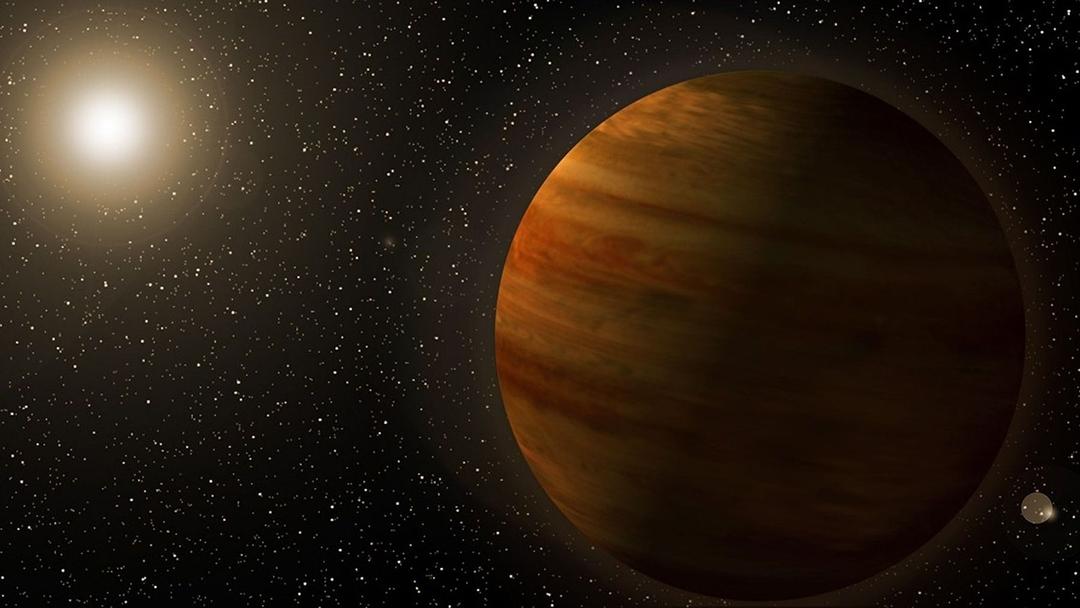
- NASA's TESS mission has identified a planet orbiting a distant star via gravitational microlensing for the first time, a method that was not anticipated when the satellite launched. The planet, Gaia23bra b, is a super-Jupiter located nearly 40,000 light-years from Earth.
- Gaia23bra b was first flagged in 2023 by European Space Agency's now-retired Gaia space telescope, which detected a star brightening consistent with a microlensing event. Researchers later found that TESS had simultaneously captured the same event in its archived data.
- The findings, published Wednesday in The Astrophysical Journal Letters, show Gaia23bra b is about 1.63 times Jupiter's mass and orbits an orange dwarf star roughly 80% of the sun's mass at a distance comparable to Jupiter's orbit.


Sources Split
LEFT
CENTER
RIGHT
+2
+1
ESTAB
CRIT
CENTER
PRO
ESTAB
The Spin
Narrative A
TESS just proved it's far more capable than anyone imagined — spotting a super-Jupiter 40,000 light-years away via microlensing, a method it was never designed for. This discovery means there are likely more microlensing planets buried in TESS' existing data, waiting to be found. Microlensing is the key to finding solar system-like planets that transit detection simply can't reach.


Narrative B
The real prize isn't just this one discovery — pairing TESS's microlensing finds in the galactic disk with Roman's upcoming survey of the galaxy's center will reveal how planets form across wildly different environments. The radiation-blasted galactic core may be hostile to life, making TESS' quieter survey region critical for understanding habitability. Roman and TESS together will transform the search for Earth-like worlds.

Metaculus Prediction




© 2026 Improve the News Foundation.
All rights reserved.
Version 7.18.2