St. Francis of Assisi's Remains on Public Display After 800 Years
The Facts
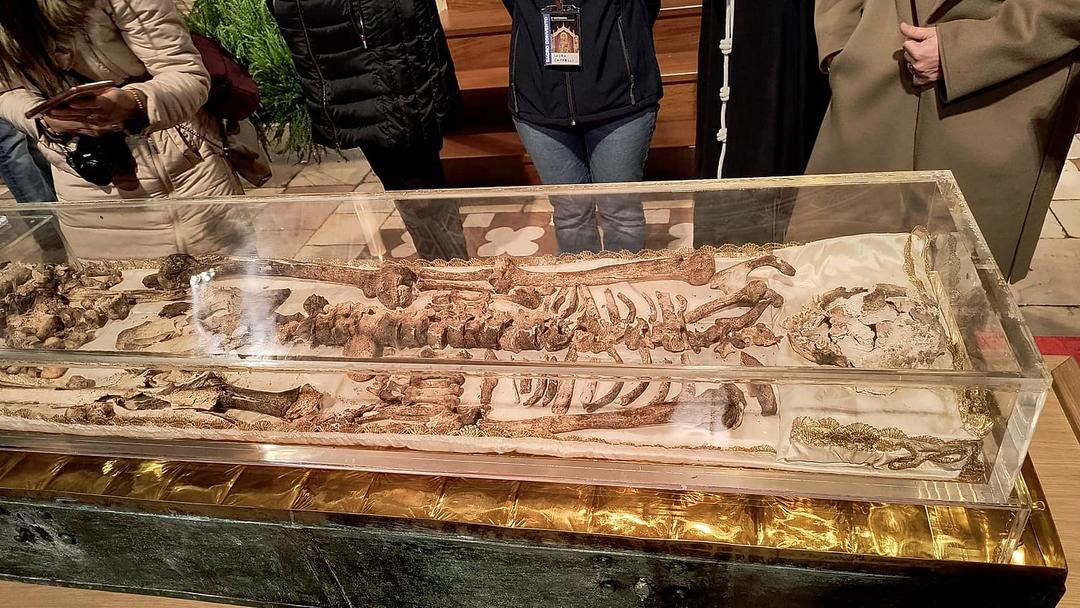
- The remains of St. Francis of Assisi went on public display for the first time on Sunday, marking 800 years since the saint's death in 1226. The bones are contained in a bulletproof Plexiglas case in the lower Basilica of St. Francis in Assisi, Italy.
- Nearly 400,000 people registered in advance to view the relics during the monthlong exhibition, which runs through March 22. Visitors, the number of which has been estimated to reach half a million, are scheduled in 30-minute timeslots, 750 people at a time.
- St. Francis was born in 1181 or 1182 to a wealthy merchant family in Assisi. After being taken prisoner during war at age 20 and becoming seriously ill, he underwent a spiritual transformation and renounced his family's wealth to embrace radical poverty.


Sources Split
LEFT
CENTER
RIGHT
+1

+1
+1

ESTAB
CRIT
CENTER
PRO
ESTAB
The Spin
Narrative A
Putting a saint's bones on display for veneration is not just strange, but blurs the line between reverence and idolatry. Scripture repeatedly warns against attaching spiritual power to physical objects and calls believers to worship God in spirit and truth. Relic practices resemble pagan shrine culture and have a history of fueling corrupt commercialization of religious artifacts. By directing devotion toward the remains of the dead, they risk shifting trust away from Christ.
Narrative B
Venerating relics is not morbid superstition but a timeless expression of an incarnational faith. From the earliest Christians who treasured Polycarp's remains, believers saw the bodies of saints as destined for resurrection, not as taboo. Scripture shows God, not idols or magicians, working through material things. The Church distinguishes veneration from worship, guards against abuse and treats relics with rigor and reverence, as signs of communion and hope in eternal life.

© 2026 Improve the News Foundation.
All rights reserved.
Version 7.18.0