Record Rains Kill 8, Strand 7K in Japan
The Facts
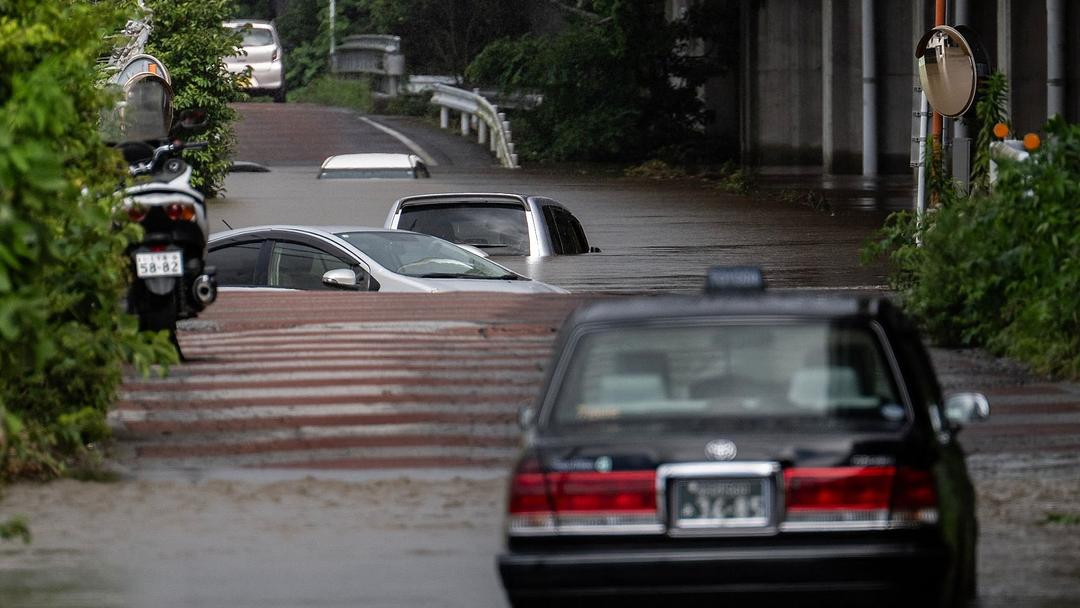
- At least eight people died after record rainfall struck Chiba Prefecture in eastern Japan between Thursday and Friday, with some fatalities found on flooded roads and others trapped inside submerged vehicles.
- The Japan Meteorological Agency issued its highest-level, Level 5 emergency warning for heavy rain across 22 municipalities in Chiba Prefecture — the first time such a warning had been issued since the agency revised its weather alert system earlier this year.
- Chiba City's Chuo Ward recorded about 367 mm of rain over 12 hours through Friday morning, roughly three times the area's average monthly rainfall for August and the highest amount recorded there since observations began in 1976.


Sources Split
LEFT
CENTER
RIGHT
+1

+1
+4

+1


ESTAB
CRIT
CENTER
PRO
ESTAB
The Spin
Climate-concerned narrative
Japan's record-breaking heat and catastrophic flooding back-to-back aren't a coincidence — this is what climate scientists have predicted. A warmer atmosphere holds more water vapor, making extreme downpours inevitable when weather systems move in. Dismissing the link between global warming and these deadly extremes ignores the physics driving these disasters.


Climate-skeptic narrative
Atmospheric CO₂ sits near 428 ppm today — a fraction of the 1,000 to 2,000 ppm that defined the most biologically abundant eras in Earth's history. Blaming floods on trace CO₂ increases of 2 to 3 ppm per year stretches far beyond what the science actually supports. Extreme weather events have always occurred, and pinning them on modern emissions ignores deep geological reality.
Government-critical narrative
Japan has spent years upgrading drainage, yet residents are paying the price again when infrastructure fails in extreme weather. Chiba Station's shopping district looked like a swimming pool after rainfall exceeded 100mm an hour. Governments cannot keep designing for yesterday's averages while today's storms intensify. If officials know the risks are changing, they must build drainage systems for the rainfall Japan is actually experiencing.

Pro-government narrative
The Metropolitan Area Outer Underground Discharge Channel runs roughly 50 meters underground, using kilometers of tunnels, giant storage chambers and powerful pumps to divert excess water toward the Edogawa River. Built through sustained public investment and engineering expertise, Japan's flood-control system shows the country is prepared for extreme weather through ambitious infrastructure, planning and government leadership.