Political Instability in Peru

Is Peru's political crisis driven by a power-hungry Congress or by presidents who brought corruption on themselves?
Political Instability in Peru
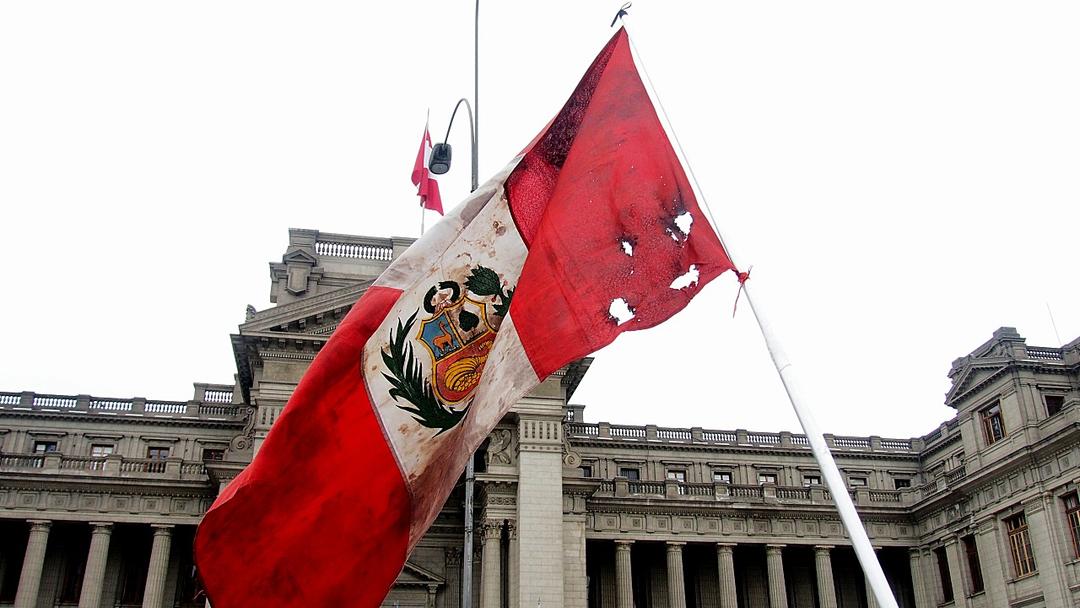
Above: A stained, perforated and tattered Peruvian flag is waved during a protest outside the Palace of Justice in Lima on July 28, 2025. Image credit: Carlos Garcia Granthon/Fotoholica Press/LightRocket/Getty Images

Overview

  • Peru is set to elect a new president in the 2026 elections, the ninth to be sworn in over the past decade and the 13th so far this century. The country's political instability is underscored by the fact that none of the five presidents elected by popular vote over the last 25 years completed a full five-year term without either being removed from office, imprisoned or both as in the case of Pedro Pablo Kuczynski and Pedro Castillo, while Alan García took his own life as police arrived to arrest him.
  • The country has experienced persistent tensions and executive-legislative conflict since Kuczynski narrowly won the presidency in 2016, while his rival Keiko Fujimori's party secured a congressional majority. Kuczynski eventually resigned after facing two impeachment attempts in less than two years in office, but institutional confrontation did not cease.
  • A new presidential election in 2021 also failed to ease tensions. Keiko Fujimori suffered another narrow defeat, this time to Pedro Castillo, and legislative elections produced a Congress with no clear majority. Facing a third impeachment vote in late 2022, Castillo attempted to dissolve Congress and impose a curfew. However, he was swiftly removed from office and arrested.

Sources Split

The Spin


Narrative A

This is, at its core, a story of legislative capture. Congress has systematically weaponized the vague moral incapacity clause to remove president after president since 2018, not out of democratic duty but to accumulate power. More damning still, the least trusted branch of government has bent the constitution to dismantle judicial independence and control electoral institutions. The result is a hollow democracy: constitutionally intact, substantively gutted.

Narrative B

Peru's instability is not accidental, but the predictable output of a political class that has never distinguished public office from private opportunity. Presidents have fallen or been arrested not because Congress overreached, but because they took part in corruption schemes. While Congress is a symptom worth examining, the infection runs deeper. Peru will only find institutional stability when those in charge stop disguising private greed as public interest.


History of Peru

The political instability Peru faces today is part of a much longer pattern that extends back to the colonial period and predates independence.

When Francisco Pizarro returned to modern-day Peru in 1531 leading a group of Spanish conquerors, he found the Inca Empire devastated by a war of succession fought between half-brothers Atahualpa and Huáscar in the wake of the death of their father, Sapa Inca Huayna Capac, possibly from a European-introduced disease. Atahualpa won the civil war but was arrested months later in a Spanish ambush in Cajamarca after refusing to submit to the authority of the Spanish Crown and accept the Christian faith.

Above: The execution of Inca by A.B. Greene. Image credit: Photo12/Universal Images Group/Getty Images

The Spanish conquest did not bring stability: Manco Inca, another son of Huayna Capac, was installed as a puppet ruler in Cusco but started a rebellion in 1536. Later, Pizarro and his brothers fell into an open conflict with their former partner Diego de Almagro in 1538 over who would control Cusco — Almagro was executed later that year and Pizarro three years later.

In the early 1540s, the Spanish Crown moved to centralize power and impose order in South America, creating the Viceroyalty of Peru and the Real Audiencia of Lima. Three decades later, colonial authorities captured and executed Túpac Amaru, the last Sapa Inca, in a move to extinguish the last remnant of Inca political legitimacy and close the door on Inca restoration.

Over the following two centuries, dozens of uprisings revealed the limits of this centralized order, underscoring how colonial stability rested on fragile foundations rather than broad political consensus. In 1780, the name of Túpac Amaru inspired a movement that spread swiftly across southern Peru and present-day Bolivia, under the leadership of self-proclaimed Sapa Inca Túpac Amaru II. Suppressed with violence, the rebellion exposed that colonial legitimacy was fragile and deepened mutual suspicion between the creole elite and indigenous and mestizo majority.

Under these circumstances, Peru lacked a strong internal independence movement. The last major stronghold of Spanish power in the Americas was liberated largely from the outside, by José de San Martín and Simón Bolívar. Since then, the country has had repeated constitutional breaks, shifting charters and recurring military interventions.

Above: Detail of a statue depicting Peru's liberators Jose de San Martin (R) and Simon Bolivar (L). Image credit: Ernesto Benavides/AFP/Getty Images

Post-Independence

Throughout the 19th century, Peru was shaped by caudillismo — a political system organized under the rule of local strongmen — and recurring military predominance. The War of the Pacific against Chile, from 1879 to 1884, weakened the regional power bases that had sustained classic caudillismo and a civilian-led order emerged in the country, yet military intervention did not disappear.

In 1914, Col. Óscar Benavides carried out a coup against President Guillermo Billinghurst, breaking 20 years of civil government to prevent the dissolution of an opposition-led Congress. Five years later, former president Augusto Leguía and his supporters staged a coup amid fears that Congress would annul his new election victory. Leguía was eventually deposed in a coup in 1930 due to economic issues, administrative corruption and the signing of border treaties involving territorial concessions.

Civilian leaders returned to power in 1939, ruling the country until Gen. Manuel Odría took it over in 1948 amid growing political polarization. In the 32 years that followed, Peru had only two democratically elected presidents and three military takeovers — including the one carried out by Gen. Juan Velasco Alvarado in 1968.

Return to Democracy

When civilian rule was finally restored in 1980, Maoist insurgent group Sendero Luminoso (Shining Path) launched an armed campaign in opposition to electoral democracy, leaving an estimated 70,000 people dead or disappeared over two decades. Capitalizing on disenchantment with the establishment after the governments of Fernando Belaúnde and Alan García failed to contain the insurgency and hyperinflation, a political outsider of Japanese descent named Alberto Fujimori rose to power in 1990.

Above: Peruvian President Alberto Fujimori hands a weapon to a peasant in Huancayo on June 23, 1991. Image credit: Marc Thibault/AFP/Getty Images

Once in office, Fujimori depicted Congress and the judiciary as corrupt obstacles to effective government. On April 5, 1992, with the backing of the armed forces, he dissolved Congress, suspended the constitution and intervened in the judiciary in what became known as a self-coup. The capture of Shining Path leader Abimael Guzmán in a Lima safe house later that year boosted Fujimori's popularity.

The political outcome of the self-coup was the 1993 Constitution, which replaced the bicameral legislature with a unicameral Congress and strengthened the presidency within a hybrid system, reshaping the country’s economic framework and legislative structure, and creating mechanisms governing presidential removal and congressional dissolution.

The Spin

Pro-establishment narrative

Peru's political instability is largely the result of its own political class. Elites and politicians have captured institutions to serve private interests, turning parties into vehicles for power and patronage rather than representation. This opportunistic behavior has deepened fragmentation and eroded governance, making instability a consequence of deliberate political choices rather than historical inevitability.

Establishment-critical narrative

Peru's current political instability reflects the enduring legacy of colonialism in the country. Spanish rule entrenched racial hierarchies and excluded Indigenous populations from political and economic power, creating deep structural inequalities. These divisions persist today, undermining trust in institutions and weakening national cohesion. As a result, contemporary unrest is not an anomaly but the continuation of unresolved colonial-era conflicts.


Post-Fujimori Era

Fujimori won reelection in 1995 and again in 2000, but his third term collapsed almost immediately.

The release of videos showing his intelligence chief Vladimiro Montesinos bribing a congressman, later known as "Vladivideos," triggered a political crisis that unraveled Fujimori's government within weeks. Fujimori fled to Japan, his ancestral country, and submitted his resignation by fax. Congress rejected the resignation and declared the presidency vacant on grounds of permanent moral incapacity instead, an early invocation of the vacancy mechanism that the 1993 Constitution had created.

He attempted a political comeback in 2005, traveling from Japan to Chile, but ended up arrested on a Peruvian warrant. Chile's Supreme Court approved his extradition to face trial in Peru for alleged human rights abuses two years later. In 2009, a court in Peru convicted him of murder and kidnapping linked to the Barrios Altos and La Cantuta cases and sentenced him to 25 years in prison.

Above: Human rights activists gather in front of the Chilean embassy in Lima in September 2007. Image credit: Eitan Abramovich/AFP/Getty Images

Post-Fujimori Governments

Valentín Paniagua, then head of Congress, was sworn in as interim president, tasked with leading a caretaker government until fresh elections. His short administration lifted pressures on the press, restored dismissed constitutional magistrates and returned Peru to the jurisdiction of the Inter-American Court of Human Rights.

In a free and fair electoral process in 2001, former World Bank economist Alejandro Toledo became the first leader of the post-Fujimori era and the country's first president of indigenous background. Alan García was voted back into office five years later and Ollanta Humala won the presidential election in 2011. All three governments preserved macroeconomic stability but were marred by corruption scandals.


Odebrecht Scandal

Toledo, García and Humala were all implicated in the Odebrecht scandal.

The corruption scandal that engulfed Peru came to light in Brazil's 2014 Operação Lava Jato (Car Wash), a money-laundering investigation that widened into a far-reaching probe of bribery, bid-rigging and inflated public works contracts centered on Petrobras and major contractors.

Then Latin America's largest construction conglomerate and the most consequential exposed corporate actor, Odebrecht, was found to have created a dedicated internal division whose sole purpose was to manage slush funds and coordinate bribe payments to government officials across the continent in exchange for public contracts. In a 2016 plea arrangement with authorities in the U.S., Odebrecht admitted to paying roughly $788 million in bribes across multiple countries, including to Peruvian officials.

Above: Former Peruvian President Alejandro Toledo attends the sentencing hearing of the Odebrecht case on October 21, 2024. Image credit: Klebher Vasquez/Anadolu via Getty Images

The firm's former top executive in Peru, Jorge Barata, testified about illicit transfers tied to major infrastructure projects, including the Interoceanic Highway, the Lima Metro and the Gasoducto Sur gas pipeline, linking payments to public officials and people surrounding senior officials and implicating political campaigns. Leaked and judicially reviewed internal records suggested that some illicit payments in Peru may have gone beyond the company's original admissions, feeding scrutiny of arbitration rulings, procurement processes and regional projects.

Verdicts and Sentences

First arrested in the U.S. in 2019 after a formal request for his extradition to Peru in connection with the Interoceanic Highway, Toledo was released on bail in 2020 and lived in California until being extradited back to his country in April 2023. He was sentenced to 20 years in prison for collusion and money laundering 18 months later, with an additional 13-year imprisonment sentence handed to him in September 2025.

García dismissed allegations regarding payments to him tied to the Lima Metro and took his own life in April 2019 as police arrived to arrest him.

Above: Supporters of Peruvian ex-president Alan Garcia setup a memorial at the city cemetery in Huancayo on April 18, 2019. Image credit: Cris Bouroncle/AFP/Getty Images

In 2025, Humala and his wife, Nadine Heredia, were sentenced to 15 years in prison for laundering campaign funds from Odebrecht and Venezuela's Hugo Chávez in 2006 and 2011. Heredia requested asylum at the Brazilian embassy in Lima before the verdict and later fled the country with her son.


The 2016-2021 Crisis

The Odebrecht scandal would still reach a fourth president and his election rival.

Pedro Pablo Kuczynski narrowly won the 2016 presidential runoff against Keiko Fujimori, daughter of Alberto Fujimori, by just 41,057 votes. However, the opposition secured an outright legislative majority in Congress, setting the stage for sustained executive–legislative conflict.

Kuczynski had denied receiving payments from Odebrecht while serving as finance minister under Toledo, but the disclosure that his consulting firm had indeed received payments from the company undermined his credibility. He faced an impeachment vote in December 2017 over these links, surviving after a faction of Fujimorista lawmakers abstained. Days later, he granted a humanitarian pardon to the older Fujimori, triggering claims of a political bargain.

Facing a second removal vote after the release of videos secretly recorded by opposition congressman Moises Mamani featuring Kuczynski's allies discussing public works and political favors in exchange for support against impeachment, the former Wall Street banker resigned in March 2018.

Above: Former Peruvian President Pedro Pablo Kuczynski is detained by police in Lima on April 10, 2019. Image credit: Luka Gonzales/AFP/Getty Images

Kuczynski was arrested in April 2019 on money-laundering charges linked to Odebrecht payments and spent three years under house arrest. He was granted conditional release in 2022 and, in 2025, received an 18-month travel ban as he continues to await trial.

Meanwhile, Keiko Fujimori's own ties to Odebrecht came under scrutiny after Barata told investigators that she was among the presidential candidates whose campaigns had received money from the Brazilian firm. She was arrested in October 2018, a week after a top court repealed Kuczynski's pardon to her father, and served 16 months in pre-trial detention. All charges against her were dismissed in 2026.

Above: Keiko Fujimori is seen during an appeals hearing in Lima on October 17, 2018. Image credit: Luka Gonzales/AFP/Getty Images

Vizcarra Presidency

Vice President Martín Vizcarra assumed the presidency in 2018 but conflict with Congress did not ease.

Amid a judicial scandal that lent momentum to institutional change, Vizcarra advanced constitutional reforms targeting the National Justice Board, campaign finance rules, the prohibition of immediate congressional reelection and a proposal to reintroduce bicameralism. Voters approved all measures except the reinstatement of bicameralism in a referendum. Yet tensions between the executive and legislative branches persisted.

On Sept. 30, 2019, Vizcarra dissolved Congress and called for legislative elections after what he deemed a de facto denial of confidence related to the selection process for the Constitutional Court. New elections held in January 2020 weakened Fujimori's party, though Congress remained fragmented and in conflict with the president. In November, Vizcarra was removed from office for "permanent moral incapacity" over allegations that he accepted bribes while serving as governor of Moquegua. In 2025, he was sentenced to 14 years behind bars after a court found him guilty on those charges.

Above: Martin Vizcarra attends his sentencing hearing on Nov. 26, 2025. Image credit: Klebher Vasquez/Anadolu/Getty Images

As head of Congress, Manuel Merino took office but his government lasted just five days, as massive youth-led demonstrations erupted nationwide against the removal of Vizcarra. The deaths of two protesters triggered a legitimacy crisis, forcing his resignation. Congress then selected Francisco Sagasti as interim president ahead of the April 2021 election.


The 2021-2026 Crisis

The third presidential candidate in a row to defeat Keiko Fujimori in a runoff, leftist outsider Pedro Castillo entered office in July 2021.

Fujimori and her allies alleged fraud to contest the win by fewer than 45,000 votes but ultimately conceded after no evidence of systematic irregularities was found. From the outset, Castillo governed from a position of weakness: he lacked a congressional majority and presided over a fragmented political base. The opposition, in turn, repeatedly sought to activate the constitutional vacancy mechanism.

Two impeachment attempts failed, and a third motion was pending on Dec. 7, 2022, when Castillo announced the dissolution of Congress, emergency rule and plans to govern by decree. The move backfired. Key state institutions rejected it, and Congress voted to remove him from office. Castillo was detained the same day and later sentenced to 11 years in prison for rebellion-related offenses.

Above: Pedro Castillo (C) is seen inside a police car as he leaves the Lima Prefecture, where he was under detention, in Lima, on Dec. 7, 2022. Image credit: Renato Pajuelo/AFP/Getty Images

Mass Protests

Vice President Dina Boluarte was sworn in as Peru's first female president, but her accession triggered mass protests, particularly in the rural south. Demonstrators demanded her resignation, early elections, Castillo's release and a constituent assembly. Security forces responded with lethal force, leaving dozens of civilians dead and hundreds injured.

Despite approval ratings in the low single digits — among the lowest recorded for any national leader globally —and multiple corruption scandals, including the so-called "Rolexgate," Boluarte remained in power for nearly three years, being ultimately removed by Congress in October 2025 amid renewed protests over rising violence.

Above: People protest against Dina Boluarte on Sept. 23, 2025, in New York City. Image credit: Alexi J. Rosenfeld/Getty Images

José Jerí then assumed the presidency, heading a short-lived administration that was quickly engulfed in controversy. Allegations of undisclosed meetings with business figures, irregular influence and heavy-handed policing fueled a new scandal dubbed "Chifagate" centered on contacts with Chinese businessmen linked to state concessions.

In February 2026, Congress removed Jerí after just four months in office and selected José María Balcázar to lead a transitional government ahead of the 2026 elections. The elections, have not yet yielded a new president, with observers predicting a legal battle over contested votes.


Civil Society's Response

The decade-long political crisis has triggered repeated waves of popular mobilization, though responses have been fragmented and episodic rather than sustained.

The first major demonstration came in November 2020 when large numbers of young Peruvians not necessarily tied to formal party structures took to the streets to protest the ousting of Vizcarra and force Merino out of office. Two protesters died during police crackdown.

Above: Demonstrators confront riot police during a protest against the new government of interim President Manuel Merino in Lima, Peru on Nov. 12, 2020. Image credit: Ernesto Benavides/AFP/Getty Images

Further protests followed the removal of Castillo in December 2022, without centralized leadership and particularly in the southern highlands, revealing a gulf between Lima and indigenous communities in rural areas. By mid-March 2023, security forces had killed at least 60 civilians and injured more than 1,300 protesters.

New demonstrations broke out in 2025 as Boluarte signed a pension reform requiring all Peruvians aged 18 or above to join a provider, with Generation Z protesters expressing disenchantment also with corruption and crime. One civilian died from multiple gunshot wounds, and protests continued even after the ousting of Boluarte.

Low Trust in Institutions

Levels of trust in key Peruvian institutions remained among the lowest in Latin America. According to Latinobarómetro 2024, less than one in six Peruvians trusted the government and the judiciary while less than one in 12 trusted Congress. Trust in political parties was even weaker, at just 6%.


Peruvian Institutions

The constitutional architecture established in 1993 reduced the bicameral legislature to a unicameral body and created a hybrid system that combined presidential election with parliamentary-style confidence instruments.

At the center of the institutional breakdown is Article 113, which allows Congress to declare the presidency vacant for "permanent moral incapacity" — a vague concept that has never been precisely defined in constitutional text. Since 2016, this clause has been repeatedly used or threatened against presidents even in the absence of a criminal conviction as they can be removed from office if sufficient votes are assembled in a highly fragmented legislature.

Article 134 allows the president to dissolve Congress if the legislative has censured or denied confidence to two cabinets. Created to restore balance between the branches, the provision failed to settle inter-branch rivalry, effectively becoming another point of friction.

The dysfunction of the constitutional design became more consequential as short-lived electoral vehicles displaced structured organizations, further fragmenting the party system.

Above: View of Peru's Congress building on Feb. 17, 2023. Image credit: Cris Bouroncle/AFP/Getty Images

Return to Bicameralism

The Peruvian Congress approved a constitutional amendment restoring a Senate of 60 seats alongside a Chamber of Deputies with 130 seats in March 2024, reversing the unicameral model which Peruvians had backed in a 2018 referendum. Beyond reviewing and approving ordinary legislation, the Senate will hold institutional powers including to intervene in constitutional accusations and oversee states of exception.

Those supporting the move argue that a second chamber will improve institutional quality, adding technical scrutiny and reducing the speed with which Congress can alter laws and remove presidents. Meanwhile, the strongest criticism of the reinstatement of the Senate is that bicameralism risks intensifying parliamentary dominance over the other branches of government without addressing chronic party fragmentation.

Military Interventions in Politics

For much of Peru's history, the armed forces acted as a unilateral political actor. In the current crisis, the military has served as an arbiter of constitutional disputes.

The military has long shaped political outcomes in the country, most openly during coups and authoritarian ruptures, including the 1992 self-coup, but its most significant interventions this cycle have been to settle the 2019 constitutional standoff between Vizcarra and the Congress in favor of the president, to reject a push from retired officers to refuse to recognize the election of Castillo in 2021 and to settle the 2022 constitutional standoff between Castillo and the Congress against the executive.

Neutrality at the level of regime change has not meant withdrawal from domestic security.

Above: Members of the Peruvian Air Force patrol a street after the government declared a state of emergency in Lima on Oct. 22, 2025. Image credit: Raul Arboleda/AFP/Getty Images

Boluarte declared repeated states of emergency under Article 137 of the Peruvian Constitution, suspending limited constitutional guarantees and deploying the armed forces to address the security crisis, prompting claims that the military had become an instrument of internal repression.


Beyond Politics

A decade of revolving governments and political instability coincided with a sharp expansion of organized crime in Peru.

The homicide rate in the country jumped from 7.8 per 100,000 inhabitants in 2017 to an estimated 10.7 per 100,000 in 2025, while criminal complaints for extortion in the same period rose from a few hundred cases per year to thousands per month. While these figures remain below those of the most violent countries in the Western Hemisphere, the pace of change has transformed public perception.

Peru has long stood out as the world's second-largest cocaine producer, but analysts have pointed to two factors driving the recent surge in violence. First, Venezuela's criminal organization Tren de Aragua arrived and spread in the country, with its factions connected to transport extortion, sexual exploitation, contract killings and territorial disputes in Lima, Trujillo, Tacna and other cities. Second, illegal gold mining has become as profitable as the long-established cocaine trade in the country, resulting in further kidnappings, murders, armed clashes and turf wars.

Economic Resilience

In parallel, the economy has shown signs of resilience despite the political turmoil.

Post-Fujimori Peru was considered one of Latin America's economic success stories, with an average 6.1% GDP growth between 2002 and 2013 amid a commodity boom. As mineral prices cooled after 2013, the country's growth decelerated to remain broadly in line with the regional average.

GDP contracted nearly 11% in 2020, rebounding sharply to recover pandemic losses the following year. Growth fell back to levels below the Latin American average in 2022 and 2023, with a mild contraction recorded in the latter year. In 2024, economic growth in Peru again outpaced the regional average, 3.3% to 2.2%.
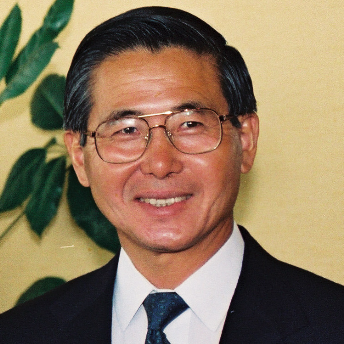
Above: Julio Velarde, governor of the Central Reserve Bank of Peru, during the Asia-Pacific Economic Cooperation (APEC) CEO Summit in Lima, Peru, on Nov. 14, 2024. Image credit: Manuel Orbegozo/Bloomberg/Getty Images

This performance indicates a very strong macroeconomic framework that has been largely insulated from political instability as low public debt, strong international reserves and an unusually credible central bank are seen to have functioned as a floor under the turbulence.


Part 1 of 9

Overview


© 2026 Improve the News Foundation. All rights reserved.Version 7.6.4

© 2026 Improve the News Foundation.

All rights reserved.

Version 7.6.4