Humpback Whales Break Record With Ocean Crossing
The Facts
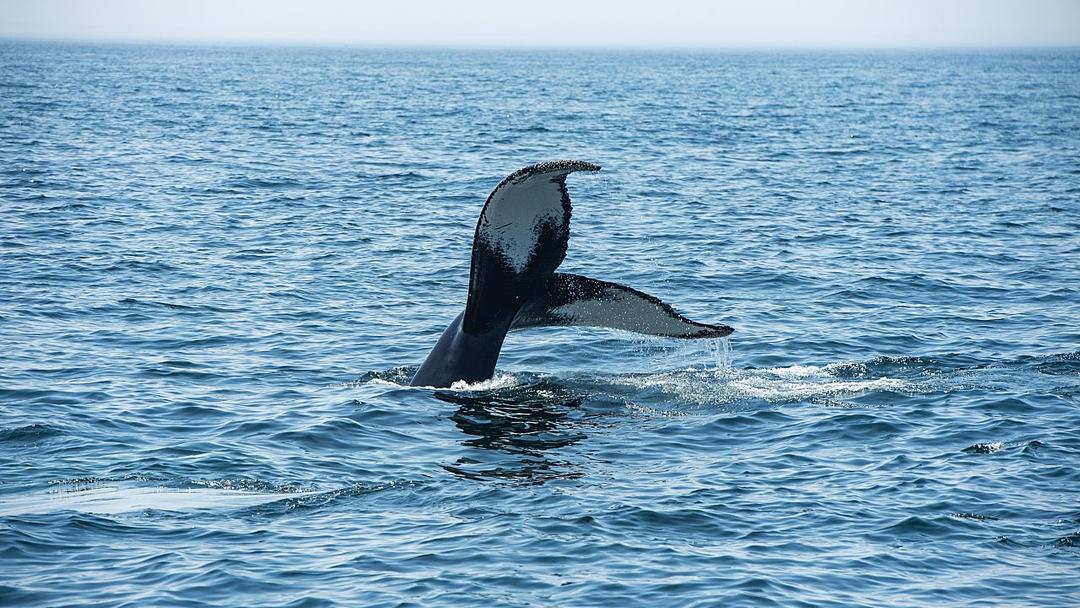
- In their findings published in the journal Royal Society Open Science on Wednesday, scientists have confirmed two humpback whales made separate record-breaking crossings between breeding grounds in eastern Australia and Brazil, with the longest journey spanning 15,100 km (9,383 miles) — the greatest distance ever documented between sightings of an individual humpback whale.
- One whale was first photographed at Brazil's Abrolhos Bank in 2003 and spotted again in Hervey Bay, Australia, in September 2025. The other was first seen in Hervey Bay in 2007 and later photographed off São Paulo, Brazil, in 2019, a minimum straight-line distance of about 14,200 km.
- The study drew on 19,283 fluke photographs collected between 1984 and 2025 from eastern Australia and Latin America, contributed by researchers and citizen scientists via the global tracking platform Happywhale. Automated image recognition software was used, with every potential match independently verified by eye.


Sources Split
LEFT
CENTER
RIGHT
+1

+4
+2
+3
ESTAB
CRIT
CENTER
PRO
ESTAB
The Spin
Narrative A
These crossings support the Southern Ocean Exchange hypothesis, showing whales sometimes end up in entirely new breeding grounds after Antarctic feeding. This kind of genetic and cultural mixing across ocean basins is vital for long-term population health. The discovery proves that marine life is more resilient, adaptable and interconnected than previously believed. The whales' endurance also offers hope that populations can recover despite the stress of warming seas.


Narrative B
Record-breaking migrations mean little if climate change keeps dismantling the breeding grounds whales depend on. Rising ocean temperatures could render 67% of humpback breeding areas uninhabitable by the century's end, and krill populations — the backbone of whale nutrition — have already collapsed by roughly 80% since the 1970s. Celebrating whale endurance while ignoring these threats misses the bigger, far more urgent picture.

Metaculus Prediction
The Controversies
Go Deeper

© 2026 Improve the News Foundation.
All rights reserved.
Version 7.18.2