Canada: Carney, Smith Advance West Coast Pipeline Project

The Facts
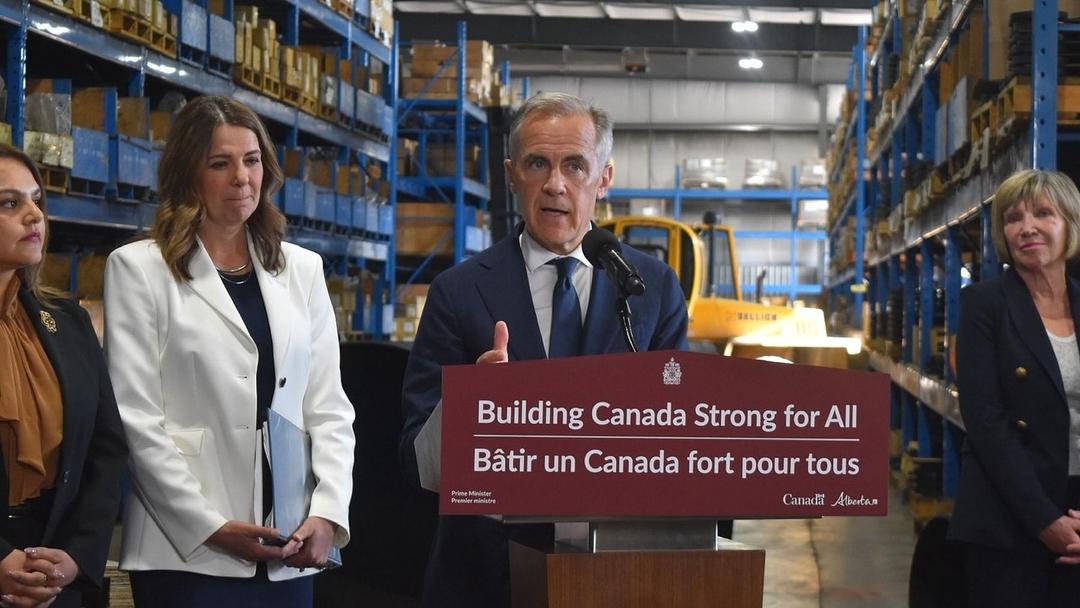
- Canadian Prime Minister Mark Carney and Alberta Premier Danielle Smith announced on Thursday that a new oil pipeline would be built from Bruderheim, Alta., to the Roberts Bank terminal in Delta, B.C., largely following the existing Trans Mountain corridor and carrying more than 1 million barrels per day.
- The federal government and Alberta will each hold an equal ownership stake in the pipeline, with Pembina Pipeline Corp. holding a 10% stake through construction and an option for up to an additional 10% once the project is operational. Detailed funding arrangements remain to be negotiated.
- Alberta's submission to the federal Major Projects Office estimated the project's cost at between $35.2 billion and $43.7 billion, including contingencies, with early construction potentially beginning in fall 2027 and completion targeted for 2032-34.


Sources Split
LEFT
CENTER
RIGHT

+2
+1
+1

+3


ESTAB
CRIT
CENTER
PRO
ESTAB
The Spin
Pro-government narrative
The West Coast Oil Pipeline is the economic nation-building project Canada needs right now. Moving more than 1 million barrels per day to Asian markets, creating 175,000 jobs and unlocking $200 billion in investment, this is how Canada becomes an energy superpower. With Indigenous equity partnerships baked in from the start and the Pathways carbon capture project cutting 16 million tonnes of emissions annually, this is responsible development done right.
Left narrative
This pipeline prioritizes Big Oil profits while communities along the route face housing shortages, road damage and social strain from overlapping mega-projects. The Pathways carbon capture commitment lacks enforceable conditions, making emissions promises hollow. First Nations along more than 20 reserves deserve genuine consultation, not a rushed federal process designed to hit political deadlines while emissions keep climbing.

Right narrative
This pipeline is a compromise that leaves Canada's energy potential capped. Keeping the northern oil tanker ban along B.C.'s coast blocks the most direct route to Asian markets, while taxpayers are left backing a project industry leaders say remains unfinanceable under Canada's regulatory regime. Instead of settling for one government-backed pipeline, Ottawa should scrap barriers that let private investment build Canada's full energy potential.


Cynical narrative
This pipeline proposal looks like a move to calm voters rather than a credible path to Alberta energy market access. Despite the big announcement, it will likely get tied up in consultations, court challenges, and regulatory delays until it quietly dies. Carney is simply controlling optics while advancing carbon-credit schemes, and Smith looks naïve for endorsing it. This "nation-building" project will deliver little beyond uncertainty and endless federal-provincial blame shifting.

Public Figures
The Controversies



© 2026 Improve the News Foundation.
All rights reserved.
Version 7.17.1