BRICS Leaders Wrap Up New Delhi Summit With Cooperation Push
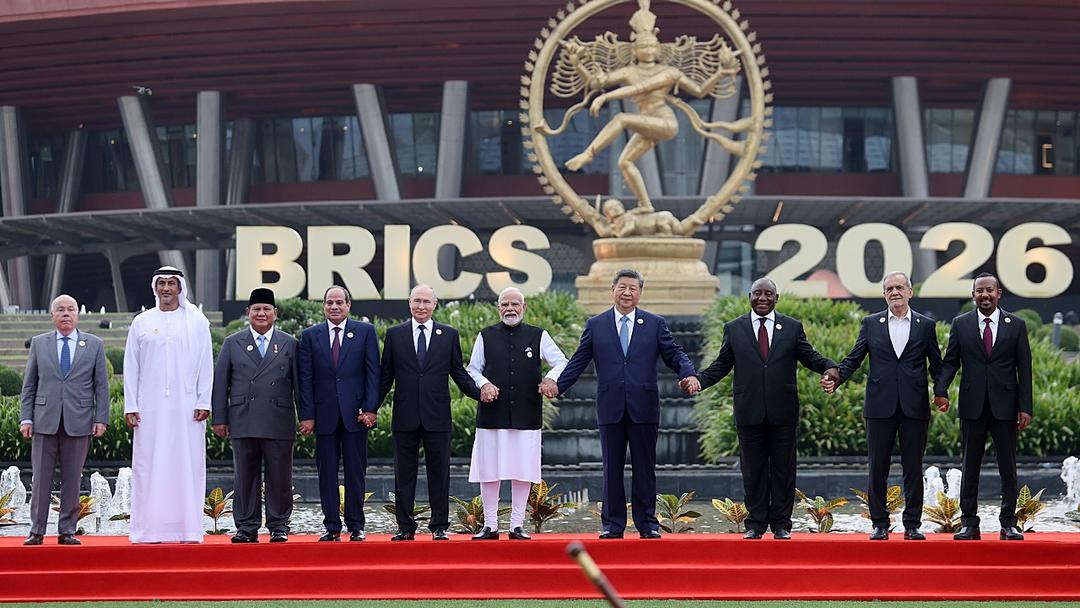
The Spin
Establishment-critical narrative
Twenty years on, BRICS is the most influential platform for emerging economies, and New Delhi has proved it. A bloc producing half of global GDP growth, moving $1.2 trillion in internal trade and steadily building payment channels beyond Washington's reach is already reshaping the rules of the global economy, not just complaining about them. Unilateral sanctions and punitive tariffs deserve the strong condemnation this declaration delivered.
Pro-establishment narrative
BRICS looks more powerful on paper than it does in practice. Its expanding membership brings together geopolitical rivals with sharply different interests, and only months ago they failed to agree on the Iran war. Alternative payment systems remain largely under development, far from replacing the dollar. Growing bigger is easy; turning an increasingly divided bloc into a coherent force capable of rewriting the global order is much harder.
Pro-government narrative
This summit was a win for India's careful balancing act, not a coronation for an anti-Western bloc. Getting Iran, the UAE, China and Russia to sign one declaration took real diplomatic muscle, and Modi was right to keep the language neutral rather than naming names directly. But consensus reached by dodging the hardest geopolitical fights, including Ukraine, shows a group still long on global ambition and short on concrete answers about what comes next.


