Brazil Elections: Voting System

The Facts
- 2026 General Elections: More than 158 million Brazilians, at home and abroad, are registered to elect federal and state officials in general elections scheduled for Oct. 4, with a potential runoff for executive offices on Oct. 25. Voting is mandatory for more than 136 million literate citizens ages 18 to 69 and optional for about 22 million people who are either 16 or 17, over 70, or illiterate. Yet voter turnout is far from universal: in 2022, it was below 80%. Citizens who fail to vote at their assigned polling station in either round must justify their absence or pay a nominal fine.
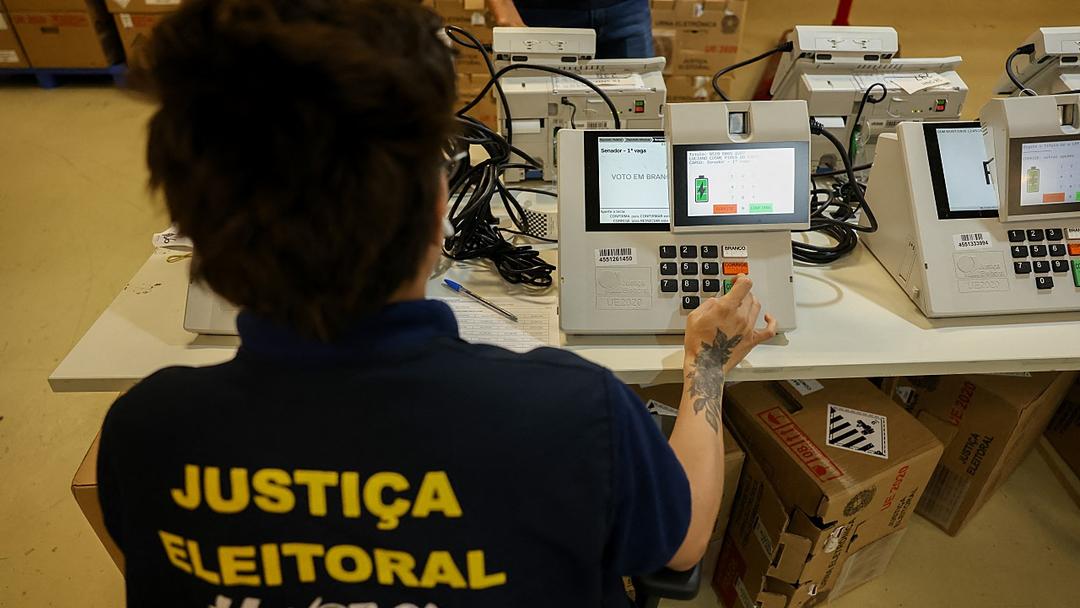
- Electronic Voting: Brazil's Superior Electoral Court (TSE) introduced electronic voting in the 1996 municipal elections to combat the country's chronic electoral fraud after widespread irregularities in the 1994 elections in the state of Rio de Janeiro. Nationwide implementation was completed in 2000, fulfilling a provision in Brazil's 1932 Electoral Code that first envisioned the use of voting machines. As part of this system, voters cast their ballots on standalone, direct-recording electronic voting machines by entering candidates' unique identification numbers.
- Voting System Security: According to Brazil's top electoral court, which oversees the entire electoral process, the voting system employs layered security protocols similar to those of bank transactions, such as unique digital signatures and cryptographic hashing to authenticate software and ensure the integrity of election data, while lacking internet or Bluetooth connectivity. Other procedures in place to secure the vote include hackathons known as Public Safety Tests to find vulnerabilities, source code inspections and random integrity tests on the eve of the election.


Sources Split
LEFT
CENTER
RIGHT
+2
+1
+3
+1
+1
+2
+1
+1
ESTAB
CRIT
CENTER
PRO
ESTAB
The Spin
Narrative A
Brazil's electronic voting has run cleanly for decades: hacker-tested, audited by parties and the military, and verified on-screen before confirmation. No court has ever upheld a fraud claim. Printing ballots adds no security and only creates vulnerabilities. It invites bad-faith discrepancy claims and risks ballot secrecy, opening the door to coercion and vote-buying schemes, at a multimillion-dollar price tag to appease baseless conspiracies. Defending the electronic ballot box is defending Brazilian democracy itself against the same election deniers that stormed key government buildings in 2023.


Narrative B
Brazil's electoral process relies entirely on vulnerable paperless direct-recording electronic voting machines, even after the Congress passed two laws to adopt printed ballots — the global gold standard in voting technology and the only system that leaves proof behind when something goes wrong — by crushing majorities over the past two decades. Yet, the Brazilian establishment resists, spreading straw man fallacies in bad-faith and twisting a call for a paper trail into an attack on voting secrecy and democracy itself. It's not hard to understand why people in Brazil are growing skeptical over electronic voting machines.


Public Figures
Go Deeper
















© 2026 Improve the News Foundation.
All rights reserved.
Version 7.17.1