Bangladesh's President Mohammed Shahabuddin Resigns
The Facts
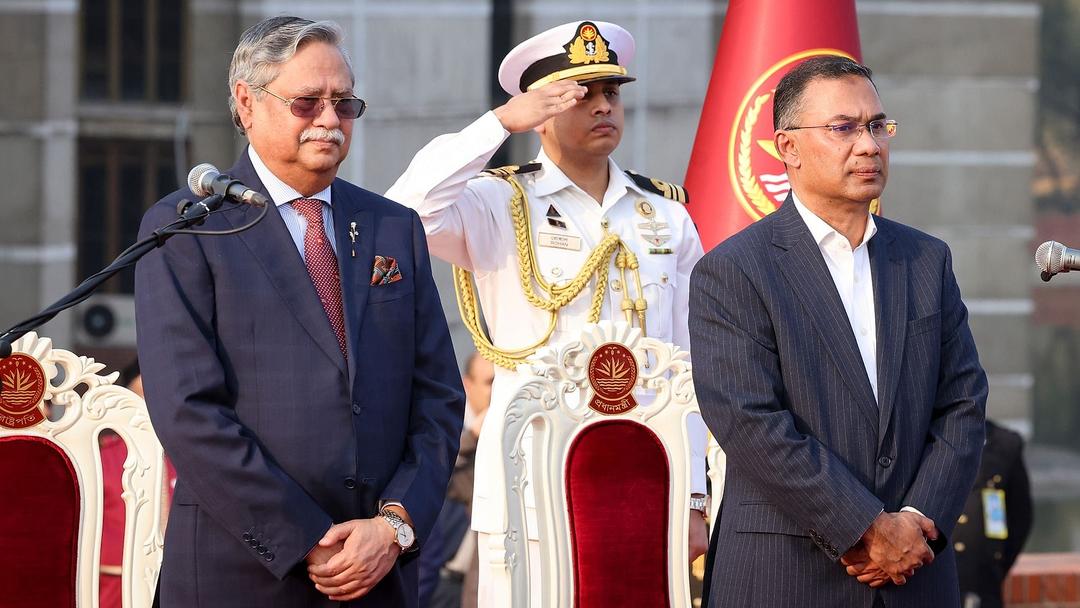
- Bangladesh's President Mohammed Shahabuddin resigned on Friday, nearly two years before the end of his five-year term, citing serious health complications including heart disease, diabetes, kidney complications and a condition called autonomic neuropathy.
- Shahabuddin submitted his resignation letter to Parliament Speaker Hafiz Uddin Ahmad, who accepted it at 5:01 p.m. local time. Under Article 54 of the Constitution, the speaker assumed the duties of acting president until a new president is elected.
- Under Article 123(2) of Bangladesh's constitution, a new president must be elected within 90 days of a vacancy. Shahabuddin, 76, had been serving as the country's 22nd president since April 24, 2023, and was due to remain in office until 2028.


Sources Split
LEFT
CENTER
RIGHT
+1


+1
+1
+1
ESTAB
CRIT
CENTER
PRO
ESTAB
The Spin
Narrative A
Shahabuddin suffered from serious health conditions, and his long-term treatment made continuing in office impossible. His resignation is a responsible step toward easing political tensions and strengthening democratic institutions. The move creates space for dialogue, constitutional continuity and renewed public trust.
Narrative B
The health story doesn't hold up — Shahabuddin resigned because of intense political pressure over his ties to Sheikh Hasina. The government pushed him out to remove the last senior constitutional figure linked to the Awami League era. His departure is a deliberate political housecleaning, not a medical necessity.

Metaculus Prediction
Public Figures
© 2026 Improve the News Foundation.
All rights reserved.
Version 7.18.3