Australia Port Workers Press for 28-Hour Week Over Automation
Would this protect workers from AI or will automation create more jobs than it destroys?
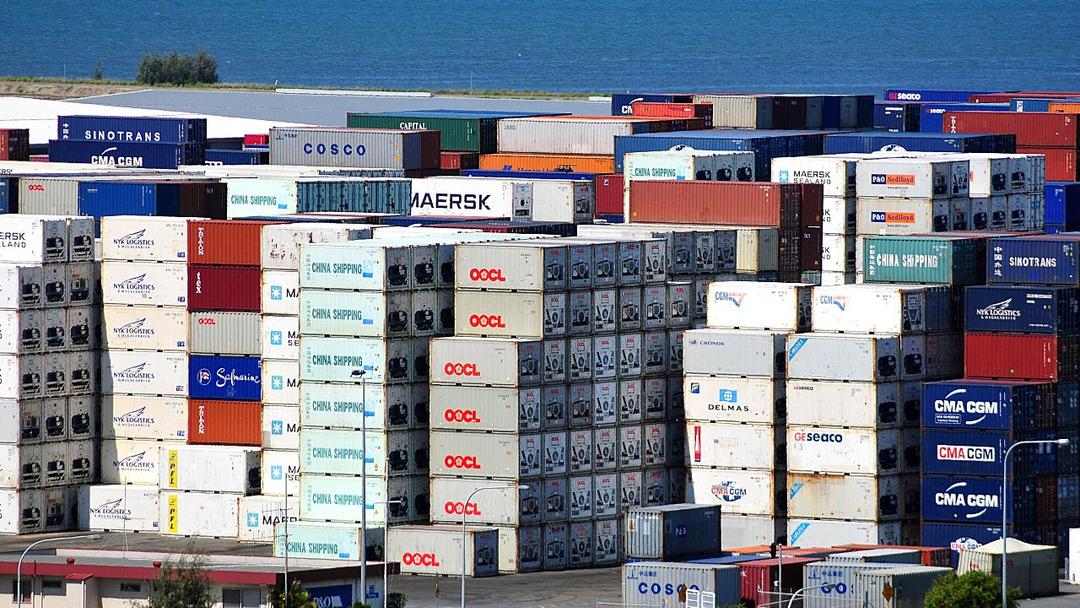
Above: The Port of Brisbane in Brisbane, Australia, on Oct. 6, 2010. Image credit: Eric Taylor/Bloomberg/Getty Images
The Facts
- Australian dock workers represented by the Maritime Union of Australia (MUA) have demanded a 28-hour working week with no loss of pay as the port operator DP World expands the use of AI at its Australian terminals, according to the Australian Financial Review (AFR) on Tuesday.
- It follows a statement published by the union on social media last week, declaring that "if DP World wants AI and automation, then they must pay the social dividend." The statement characterized the demand as "key" for those "whose jobs are in the crosshairs of AI and automation."
- According to the AFR, DP World dock workers in Australia currently work 32 to 35 hours a week, depending on their location, with crane drivers earning a base salary of A$175,000 under the union enterprise agreement.


Sources Split
LEFT
CENTER
RIGHT
+1


+1
+1
ESTAB
CRIT
CENTER
PRO
ESTAB
The Spin
Establishment-critical narrative
For over a decade, DP World has paid no corporate income tax, and now it wants to pad shareholder returns even further by automating away 60% of its Australian workforce. This exploitation cannot be allowed to proceed, which is why, if DP World is committed to its AI proposals, it must implement a 28-hour workweek with no pay cut to give workers the bare minimum they deserve.
Narrative B
History is crystal clear: every major wave of automation has created more jobs than it killed — AI will be no different. The MOU's demand for a 28-hour workweek is a redundant solution to a problem that re-skilling and smarter talent pipelines will address.
Metaculus Prediction










© 2026 Improve the News Foundation. All rights reserved.Version 7.18.2
© 2026 Improve the News Foundation.
All rights reserved.
Version 7.18.2