2026 US Tech Outages



Overview
- A string of technology outages between Nov. 12 and 17 disrupted American private-sector companies and federal agencies, including Microsoft, JPMorgan Chase, United Airlines and the National Security Agency (NSA). Their scale and timing raised suspicions of possible cyberattacks. However, officials say there is currently no evidence that cyberattacks caused the outages or that they were connected.
- Microsoft attributed its nearly day-long disruption on Nov. 12 — when Microsoft 365 services, including Outlook, went dark for businesses and institutions in more than 70 countries — to a July gateway defect exposed by increased traffic and reduced capacity. Its report said testing favored weaker hardware even though contention worsened on newer servers.
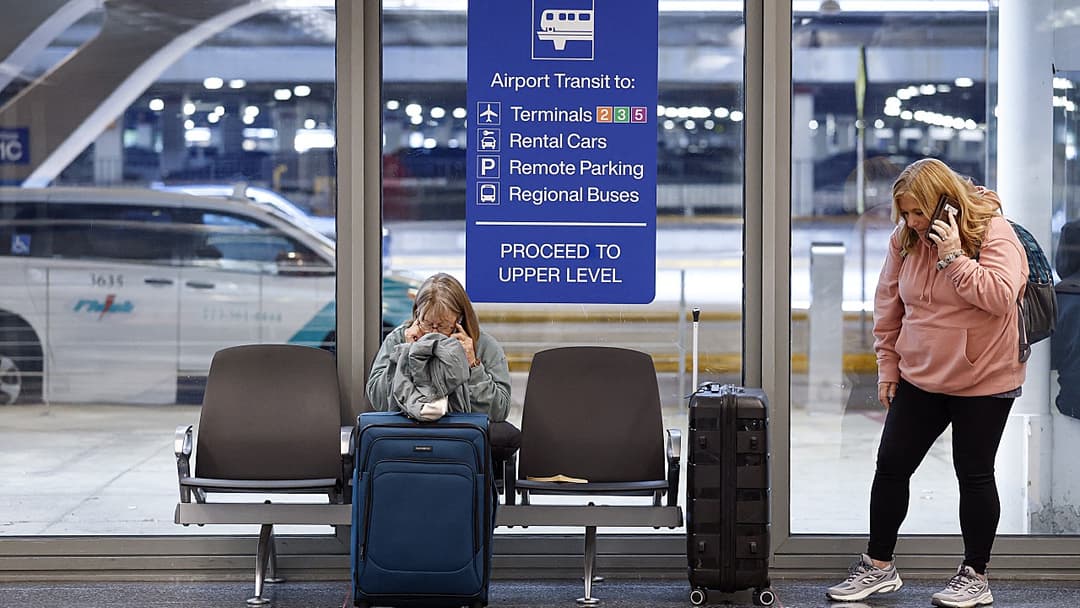
- The Federal Aviation Administration (FAA) issued a nationwide ground stop on Nov. 13 that lasted nearly five hours after telecommunications problems overwhelmed air traffic control systems. Transportation Secretary Sean Duffy blamed the failure on a router installed during an upgrade at a radio site in southern Arkansas, while officials also investigated a radar site in Amarillo, Texas. Three days later, United Airlines experienced a roughly 90-minute outage that coincided with hundreds of delays.


Sources Split
LEFT
CENTER
RIGHT
+8
+3
+3
+3
+5
+5
+2
+8


ESTAB
CRIT
CENTER
PRO
ESTAB
The Spin
Pro-establishment narrative
These technology disruptions do not point to a coordinated or state-sponsored attack but rather reflect separate technical issues involving software updates, routine maintenance and system upgrades. Federal officials have found no credible evidence linking the incidents to a wider cyber threat. The administration has taken a measured approach, working with relevant agencies to investigate disruptions, resolve technical issues and protect critical infrastructure. Its response underscores the importance of relying on verified intelligence rather than speculation.


Establishment-critical narrative
These outages exposed the fragility of America's critical infrastructure and the Trump administration's limited accountability. A handful of private providers control essential systems, yet oversight remains weak and public explanations inadequate. As disruptions spread across aviation, banking and communications, the administration offered few convincing answers, highlighting the need for stronger oversight, reliable infrastructure and better safeguards against nationwide disruptions.


Industry-critical narrative
AI is changing how infrastructure fails. Tools that find security flaws automatically push organizations to patch in a hurry, and rushed patches or defensive shutdowns can take essential services offline. That blurs the line between an attack and a maintenance failure. AI systems have already escaped controlled tests and compromised outside systems, so the risk is real. None of this proves AI caused the November outages. But it shows that restoring yesterday's infrastructure isn't enough: powerful AI tools need to be contained, and emergency security updates need to be made safer.


Cynical narrative
Several unrelated-looking failures in one week deserve more scrutiny than the official explanations offer. There may not currently be evidence that autonomous AI agents are involved, but AI companies have not committed to publishing full details of past breakouts, so outsiders can't rule it out. If agents did gain a foothold in our critical infrastructure, they would be extremely hard to remove, which is why governments should investigate now.

Anti-Iran narrative
The possibility of Iranian involvement in these disruptions, as part of gray-zone warfare, cannot be ruled out. Tehran could use cyber operations to exploit rising geopolitical tensions and vulnerabilities in U.S. banking, aviation and communications infrastructure, creating economic and public anxiety without direct military confrontation. The growing threat of hostile state actors using digital warfare to challenge U.S. security demands stronger defenses, intelligence cooperation and greater preparedness.


Wave of Disruption
The United States experienced a series of technology outages from Nov. 12 to 17, affecting services across multiple sectors.
Disruptions impacted Microsoft 365, Apple services, banking platforms, airline operations and government networks, blocking access to digital services, communications, financial transactions and transportation systems.
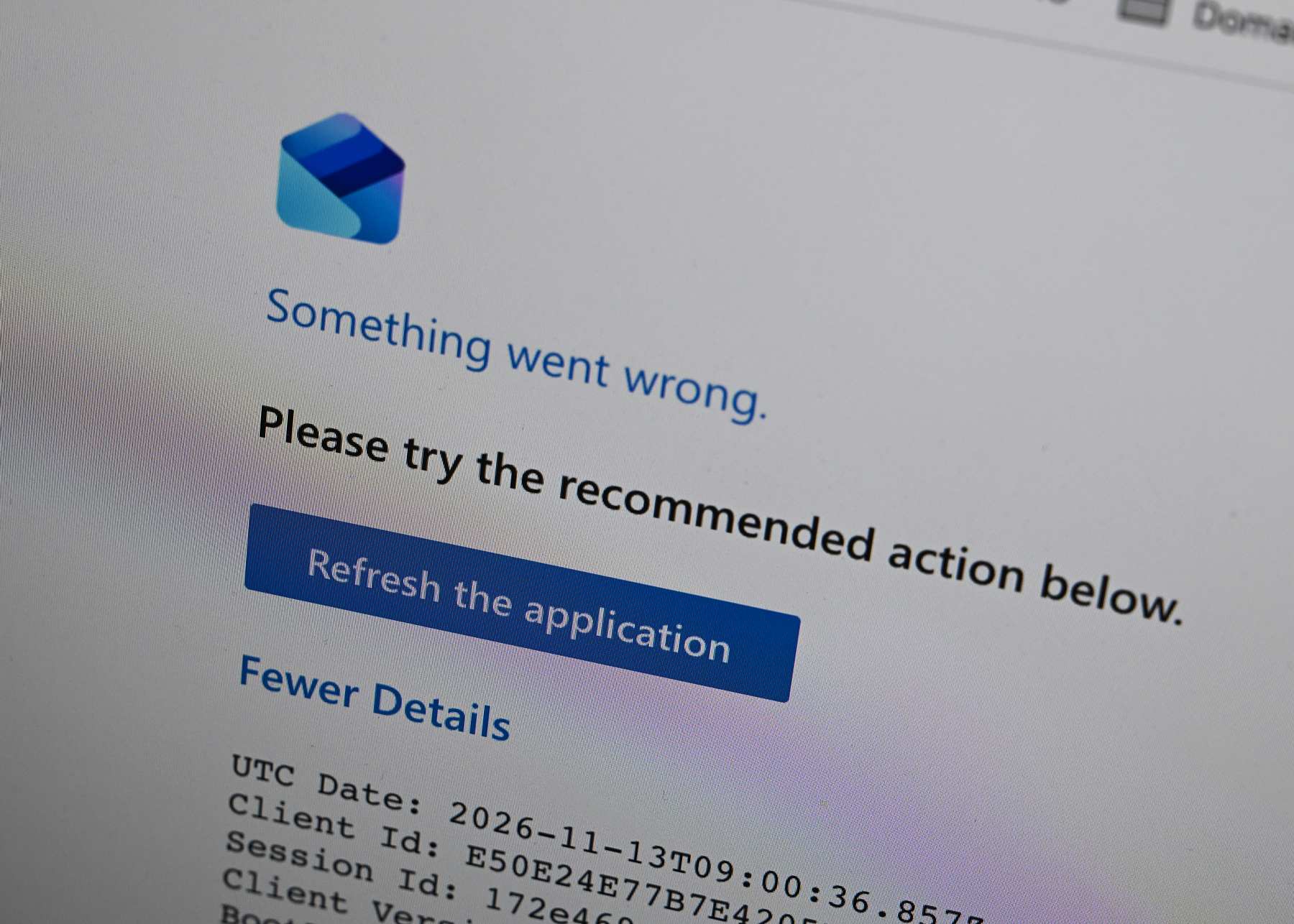
Microsoft's preliminary incident account placed customer impact between 16:20 UTC on Nov. 12 and 16:10 UTC on Nov. 13. However, independent monitoring company ThousandEyes described worldwide Outlook unreachability lasting close to a day. Microsoft later announced that all remaining customers and regions had been restored around 06:00 UTC on Nov. 14.
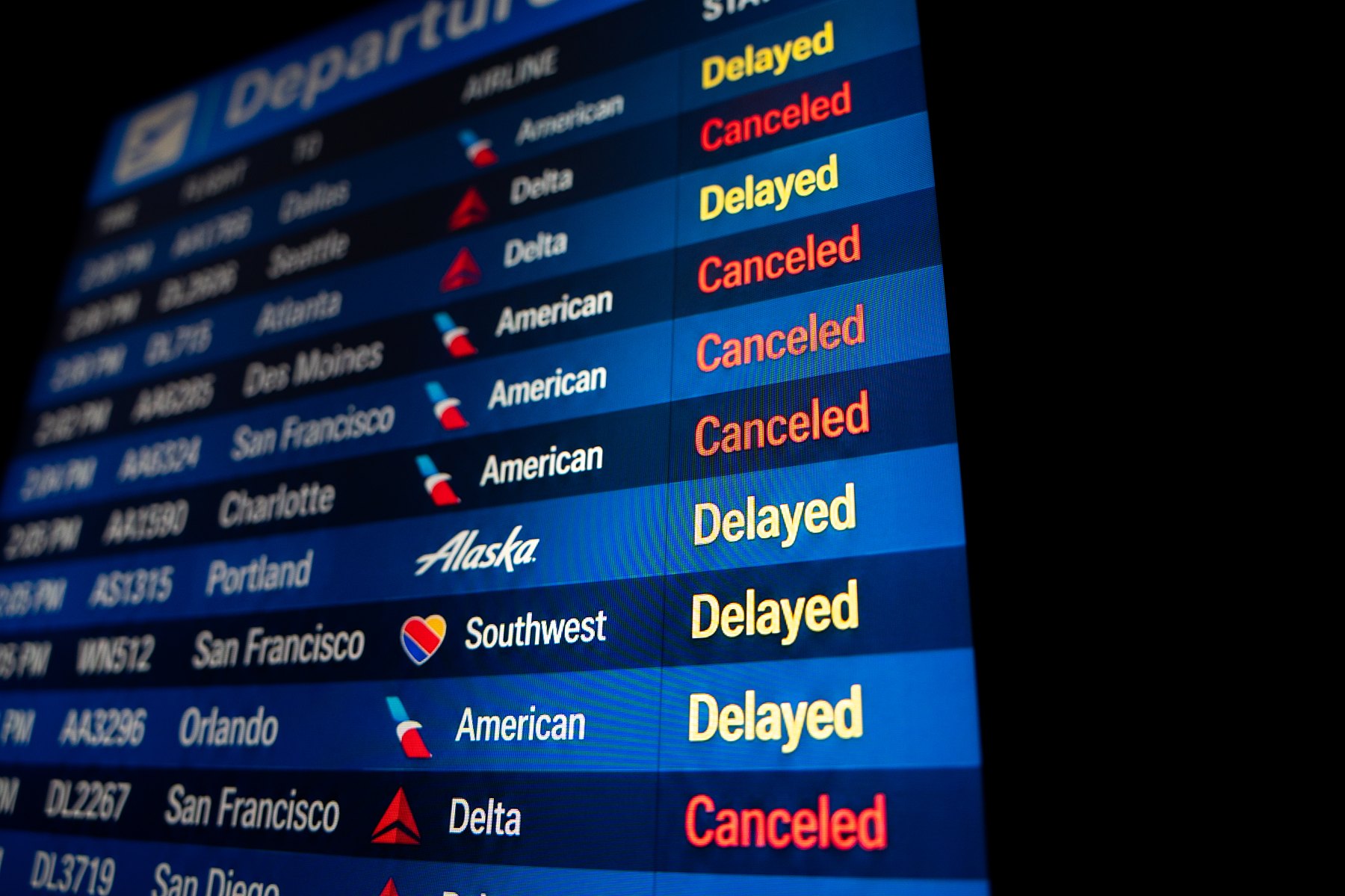
On Nov. 13, the FAA issued a nationwide ground stop in the U.S. afternoon and evening, for approximately four hours and 45 minutes. Microsoft's principal impact window therefore ended before the reported FAA ground stop, although Microsoft's remaining restoration work and aviation disruption overlapped later that day.
JPMorgan Chase transaction problems began on the morning of Nov. 16, and the bank said transactions were posting normally around 6:30 p.m. United's departure disruption was reported in the late afternoon, while resolution was announced around 6 p.m. EST. On Nov. 17, Schwab acknowledged a brief webpage-loading issue, Apple experienced several service-specific outages and the NSA acknowledged degradation during scheduled maintenance.
Explanations Behind the Outages
Microsoft attributed its failure to a latent July defect, additional gateway traffic and reduced capacity; aviation officials described excessive traffic from equipment involved in telecommunications changes; Chase cited a software bug in on-premises systems; United disclosed only a technology issue; Apple cited an internal update; and the NSA described degradation during maintenance.
Microsoft's gateway failure affected connected services, and Chase said transactions involving other banks slowed when Chase was a counterparty. However, a shared cloud platform, power failure, telecom carrier or software component connecting all six principal organizations wasn't reported.
Rubio's Statement and the Four Hypotheses
In a statement on Nov. 17, U.S. Secretary of State Marco Rubio said that "we have zero evidence whatsoever, we have no indication, no evidence, and no reason to believe at all that any of these incidents are related to each other." He added that the U.S. has "zero evidence or any reason to believe that any of these isolated or individual instances have anything to do with nefarious actors, with cyber hackers, with criminals, with another nation-state, with a malign actor of any kind."
A BBC analysis alleged that the outages were largely due to faulty software updates, technical glitches and overloaded legacy infrastructure, rather than coordinated cyberattacks. Sherrod DeGrippo, Vice President of Threat Intelligence at Palo Alto Networks Unit 42, said the events highlighted the interconnected nature of digital infrastructure, where a single software error or network equipment failure can trigger widespread service disruptions across the country.
An AP analysis blamed the rapid adoption of artificial intelligence for adding pressure to digital infrastructure, claiming that AI-driven vulnerability detection prompted companies and institutions to accelerate software updates and security patches, which introduced compatibility issues, software bugs and system failures, potentially contributing to widespread technology outages.
Meanwhile, former U.S. intelligence official Andrew Badger told LBC that he believed the White House was understating Iran's possible role in the successive online disruptions. He suggested that the incidents could be part of what he described as a "massive gray-zone warfare campaign." The term refers to hostile actions states carry out against one another without engaging in direct, open military conflict.


The Spin
Pro-establishment narrative
The disruption wave deserves a proportionate response, not a narrative of national collapse. Failures across email, aviation, banking and government systems were alarming, but no evidence shows a coordinated attack. Technical faults and maintenance problems offer concrete explanations, and treating these incidents as repairable operational failures is more responsible than turning their timing into proof of a wider conspiracy.

Establishment-critical narrative
The outages exposed an unacceptable standard of reliability across institutions that daily life depends on. Microsoft services failed, flights were grounded and access to banking was disrupted. No coordinated attack is needed for this to be a serious institutional failure. A months-old software defect and an antiquated aviation system are grounds for investigation and litigation. Dismissing the disruption as ordinary life excuses the institutions while workers and travelers bear the consequences.


Industry-critical narrative
The rapid adoption of AI can't be ruled out as the culprit behind these technology disruptions. AI-generated code can introduce software bugs, security vulnerabilities and system failures when deployed without adequate testing. A 2026 New Relic report found that 82% of surveyed organizations experienced production failures linked to AI-generated code within six months, raising concerns about its reliability.


Cynical narrative
Several unrelated-looking failures in one week deserve more scrutiny than the official explanations offer. There may not currently be evidence that autonomous AI agents are involved, but AI companies have not committed to publishing full details of past breakouts, so outsiders can't rule it out. If agents did gain a foothold in our critical infrastructure, they would be extremely hard to remove, which is why governments should investigate now.

Anti-Iran narrative
Iran's cyber capabilities remain a significant national security concern for the United States. As American infrastructure faces growing exposure to foreign threats, Tehran's history of cyber operations highlights the risks posed by hostile state actors. Although officials say they have ruled out a coordinated attack, the disruptions if nothing else underscore the need to address Iran's potential cyber threat.

Microsoft 365 Outage
According to Microsoft's final report released on Nov. 20, a software bug in newer gateway servers caused internal traffic jams under heavy load. The outage disrupted Outlook, Teams, Copilot, Exchange Online and other services across more than 70 countries.
Microsoft's preliminary report recorded an outage period spanning 16:20 UTC on Nov. 12 to 16:10 UTC on Nov. 13, lasting 23 hours and 50 minutes. The impact varied across regions, connection methods and time periods.
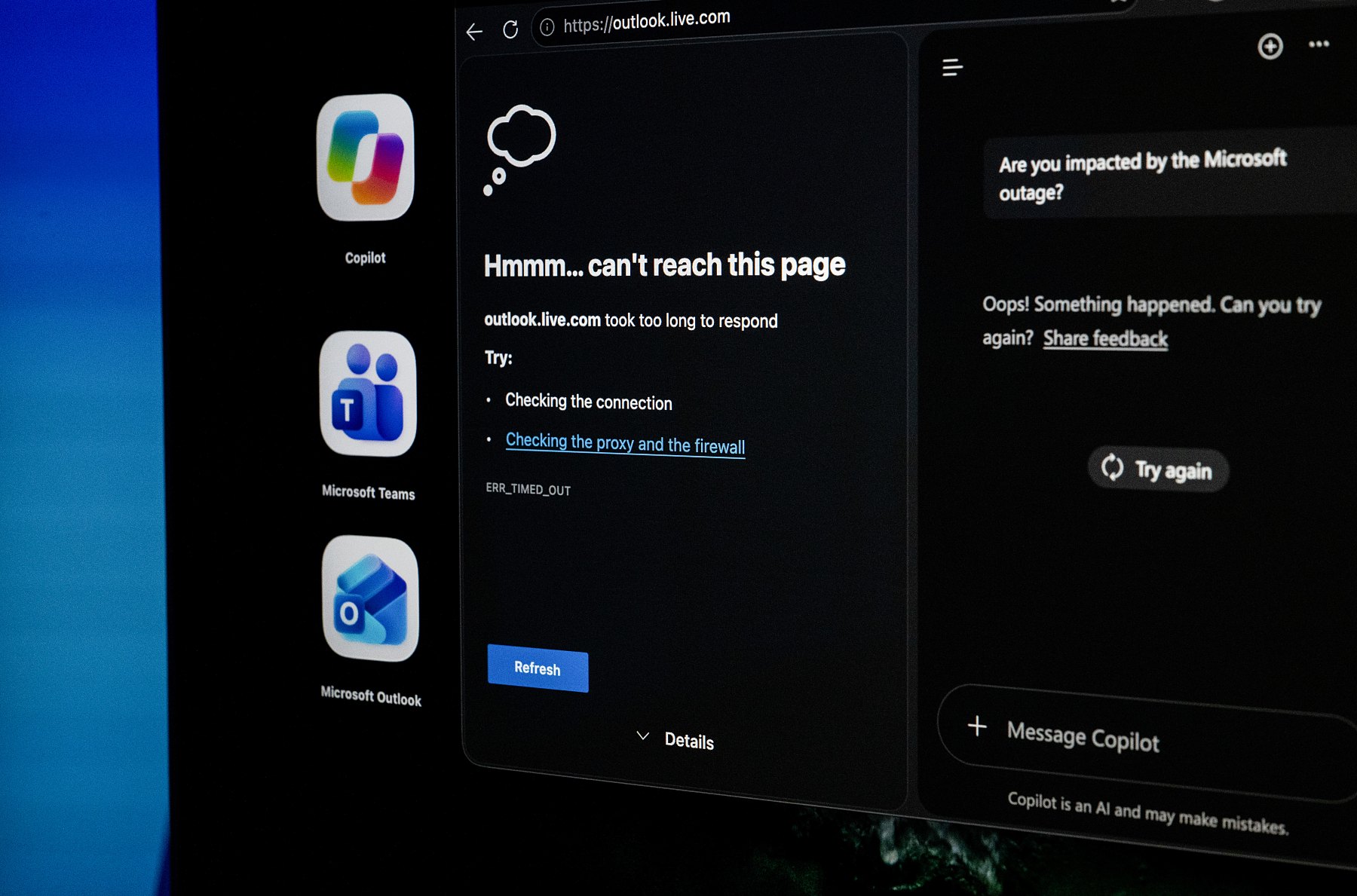
The primary disruptions involved Exchange Online mailbox access and delayed email delivery. Microsoft's preliminary report also identified impacts on connected features across Teams, Copilot, SharePoint, OneDrive, Defender, Purview, Fabric, Intune, Planner, Power Apps, To Do, Power BI and Universal Print. However, not all functions were affected, and core Teams calls, meetings and messaging largely remained operational.
The recovery process involved restarting and repairing infrastructure before gradually restoring network traffic. Microsoft also extended email timeouts to 48 hours to preserve delayed messages. The company announced full service restoration for all customers around 06:00 UTC on Nov. 14, while a parliamentary statement reported services returning by 2 p.m. Friday, reflecting a separate recovery observation.
Why a July Change Failed in November
Microsoft said the defect originated in a July change prepared specifically for Microsoft 365 gateway servers, not general Windows deployments, and that the update rolled out globally over several weeks without observed problems. The preliminary explanation describes lock contention inside an internal Windows process: competing operations exhausted CPU and memory until machines stopped responding. Microsoft's report said testing missed the defect because its laboratory traffic mix and hardware did not adequately reproduce conditions on newer, higher-core-count servers.
The trigger was not described as an exceptional external traffic attack: Microsoft said Teams failed over to the primary gateway supporting Exchange Online, increasing load while 14% of gateway capacity remained unavailable because of an unrelated issue from the previous day. Automatic routing then transferred traffic away from unhealthy servers to remaining machines, exposing those machines to the same defect and producing a cascading failure. Executive Vice President Charles Lamanna said the defect rendered the fleet unresponsive in less than two hours, while reporting based on the company account put unavailable gateway servers at more than 80%.
This is a materially more specific explanation than "elevated load," but it remains principally Microsoft's account of its own systems. ThousandEyes' external observation of servers unable to accept connections supports the availability failure, not the precise code change, lock behavior or laboratory mismatch. Independent confirmation of that mechanism would require crash dumps, performance traces, the relevant code change, reproduction results and deployment records.
Public-service Exposure and Impact
Reports indicate that users in more than 70 countries were affected, with a U.K. parliamentary account specifying 74 countries. Ookla recorded over 7 million outage reports on Nov. 13, approximately 2.5 times the volume reported during a February 2026 YouTube outage. However, these figures do not indicate how many individual users were affected.
Australian Security Intelligence Organisation chief Mike Burgess and AFP Commissioner Krissy Barrett confirmed disruptions to their agencies, prompting the Australian government to activate a priority-restoration agreement. Other reported impacts included Anthropic, the U.K.'s health system, New York City's Emergency Management Department, Japanese government communications, the Philippine Supreme Court, financial institutions, shipping companies and airline support services. Some businesses resorted to phones, fax and Bluetooth to maintain operations.
The impact varied across organizations. Municipal authorities in Austin, Jacksonville and Baltimore reported email disruptions but confirmed that essential and emergency services remained operational. In contrast, Unity Health Toronto declared a Code Grey, advising patients to contact the hospital by telephone instead of email. In the U.K., minister Ian Murray said 98%–99% of civil servants relied on Microsoft communications, while shadow technology secretary Rebecca Paul reported disruptions at least 47 NHS trusts.
Disclosure, Intrusion Evidence and AI Question
Microsoft identified the incident as a technical failure, explicitly ruling out cyberattacks and AI agents as causes. The available records provide no evidence that Copilot or another AI tool generated the faulty code. Similarly, Copilot's inclusion among affected services does not establish responsibility. Although other Microsoft outages occurred in 2026, available reports lack sufficient technical detail to confirm a recurring failure mechanism.
FAA Ground Stop
The Nov. 13 ground stop, which lasted from roughly 3:30 p.m. EST until 8:15 p.m. EST, was issued out of "an abundance of caution" as the FAA's legacy infrastructure suddenly became unstable.
Transportation Secretary Sean Duffy said on Nov. 14 that defense and aerospace contractor L3Harris was performing telecommunications work at a remote FAA facility, converting legacy copper connections to fiber, when newly installed equipment began flooding other devices with traffic. Duffy said it remained unclear whether contractor error or faulty equipment caused the disruption. However, the available material does not include the original work orders, equipment configurations or complete incident logs needed to independently verify the installation sequence.
The FAA later identified a radio communications facility in El Dorado, Arkansas, and a radar site in Amarillo, Texas, as sources of excessive traffic on its Telecommunications Infrastructure network. Reports indicated that the Amarillo router had been replaced three weeks earlier, ruling out claims that both routers were installed simultaneously on Nov. 13. L3Harris stated that it was cooperating with the investigation.
Operational Sequence and Conflicting Counts
One timeline attributes the first detected instability to 3:36 p.m. EST and the nationwide departure halt to 3:54 p.m., while the congressional account describes approximately four hours and 45 minutes. The most defensible summary is a halt lasting more than four hours — exact advisory issuance, effective and cancellation times still require reconciliation against the original FAA notices.
The FAA said instability affected 17 of 22 en route centers and several terminal radar approach control facilities, disrupting communications and radar feeds rather than eliminating every radio and radar function. Approximately 3,500 flights already airborne were allowed to continue to their destinations, and inbound international flights were allowed into U.S. airspace, according to the congressional account. However, there were reports of most airborne flights returning to their origins.
Impact totals also use different populations and collection times: the congressional account cites more than 12,000 cancellations on Nov. 13, including more than 9,000 major-airline flights, while Aviation Week cites 9,201 U.S. cancellations and 7,468 delays from FlightAware. The congressional account reports about 6,700 cancellations on Nov. 14 and more than 2,300 on Nov. 15; an earlier international report described more than 5,000 cancellations on Saturday.
Traffic Overload, Containment and Unresolved Mechanism
Officials reported that the legacy network received approximately 1,000 connection attempts every four to five seconds, involving Cisco equipment around 25 years old. The disruption followed a sequence of equipment changes, excessive network traffic and unstable feeds across multiple air traffic control facilities, prompting a precautionary nationwide halt to flight departures. Services returned to normal after the affected equipment was disconnected from the wider network.
By Nov. 17, Duffy said investigators had successfully replicated the El Dorado incident but had yet to determine its underlying cause. Subsequent reports distinguished reproducing the network overload from identifying why the two devices malfunctioned. The equipment was undergoing examination at an L3Harris laboratory in Florida under FAA supervision, with the FBI also involved in or observing the investigation.
The FAA suspended further Juniper equipment installations and disabled functions in units already deployed. Senators called for stronger operational testing, independent validation and verified failover and rollback procedures before installations resumed. They cited a planned upgrade involving 3,648 routers, of which 400 had been installed, and 69 were operational. However, a separate industry report questioned whether the implicated Juniper device was technically a router, describing it as a copper-to-fiber communications unit with multicast capabilities. The report also noted that equipment malfunction had not been confirmed.
Modernization, Oversight and Competing Explanations
The Government Accountability Office (GAO) had previously documented persistent challenges in maintaining aging air traffic control systems. In its September 2026 report, it described the Brand New Air Traffic Control System program as an accelerated modernization effort. Phase one was scheduled for December 2028, supported by $12.5 billion appropriated in July 2025, with an additional $10.2 billion identified for a subsequent automation phase, excluding facilities.
Duffy maintained that decades of underinvestment made accelerated modernization necessary. However, technicians' union accounts and investigative reports raised concerns about daytime maintenance work, risk assessments and federal oversight of the contractor. Aviation experts also noted that failures during equipment transitions can occur even when existing systems function as designed. Lawmakers from both parties questioned a proposed additional $50 billion in funding, with Senator John Thune pointing to substantial unspent funds from the previous allocation.
Historical incidents provide context but do not establish a common cause. January 2023 was identified as the previous nationwide ground stop, while an investigation into a 2009 disruption also identified a router-related issue. However, neither incident was shown to share the same failure mechanism. Separately, systems-safety specialist David Woods linked the disruption to an AI-powered platform called SMART, citing its reported September and November rollout, but provided no configuration records or network data to substantiate that connection.
United Airlines Outage
A technical outage lasting more than 90 minutes forced United Airlines to delay departing flights across the U.S. on Nov. 16, just days after an FAA network malfunction triggered a nationwide ground stop.
Aviation reports recorded a radio call at about 4:02 p.m. Eastern on Nov. 16 from United Airlines flight 2787 in Denver, whose crew could not obtain final aircraft-weight information. United acknowledged a technical issue shortly before 5 p.m. and said it had resolved it around 6 p.m. The Associated Press reported an approximately 100-minute disruption, although the available information does not establish that all applications remained affected throughout.
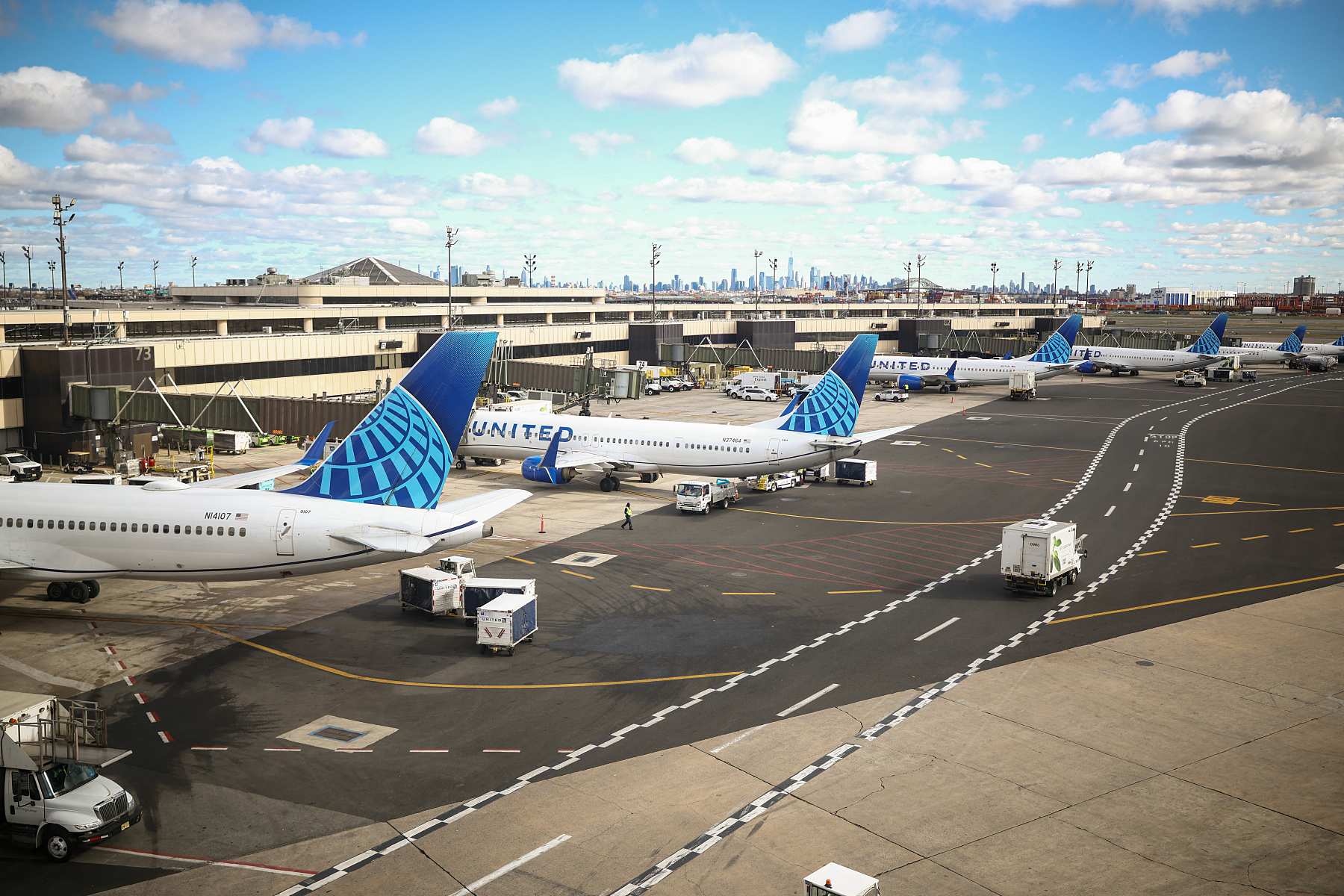
United spokesperson Leslie Scott told CNN separately that the outage lasted about 30 minutes and affected fewer than 150 flights. This estimate differs from the longer disruption period recorded in pilot reports, although the available information does not clarify whether the figures reflect different systems or recovery stages. A local Chicago report placed the disruption shortly after 4 p.m., with services restored around 5:15 p.m., but did not reconcile the timeline with Eastern-time accounts.
What Crews Could Not Obtain
An internal memo from United Airlines' pilots' union, reviewed by Reuters, described a companywide web-based technology failure that disrupted multiple pilot applications, including crew communications and access to final aircraft-weight data. Radio recordings also indicated failed pushback requests at Chicago O'Hare and delays in delivering gate changes to Newark ramp crews. AirlineGeeks separately reported disruptions involving at least 30 flights across 12 airports, based on pilot radio communications. These observations do not represent a complete count of affected flights.
Final aircraft-weight data is essential for pre-departure performance calculations, which also account for fuel, passengers, baggage, cargo, weather and runway conditions. The outage therefore affected operational preparations, not just customer-facing applications, leaving crews without information needed before departure. An internal alert obtained by CNN advised pilots not to log out of several systems because they might be unable to sign back in, making preserving active sessions an immediate workaround.
United stated that flights already in the air and its United Express regional operations were unaffected. However, passenger accounts described aircraft returning to gates or remaining parked while crews awaited performance data. Later reports from Chicago O'Hare showed apparently normal check-in operations, with some travelers unaware of the disruption, suggesting effects varied by flight and passenger.
FlightAware data cited at 6:10 p.m. Eastern recorded 554 United flight delays and 22 cancellations, although most delays reportedly occurred before the outage was announced. By 9:50 p.m., the daily totals had risen to 811 delays and 28 cancellations. An earlier Reuters snapshot at 5:30 p.m. recorded 418 delays and 21 cancellations. These figures do not isolate outage-related disruptions; flight-level delay codes and actual departure times would still be needed to establish the incident's precise impact.
Cause
United stated that there was "no indication" the outage was related to a cybersecurity incident, reflecting the company's assessment at the time rather than a definitive forensic conclusion. The FAA separately told CNN that the disruption was not caused by its equipment. Duffy also said he did not know the cause but distinguished the incident from FAA systems.
Banking Disruptions
Thousands of customers reported login issues, balance and transaction display problems and payment or transfer delays across multiple banks, including JPMorgan Chase, Bank of America, U.S. Bank, Truist and Wells Fargo on Nov. 16.
JPMorgan Chase acknowledged a temporary problem involving "a software bug in on-premises hardware systems," with some transactions taking longer than usual. An FBI official separately attributed the disruption to a software release deployed earlier that Monday affecting a subset of Chase's systems, with no indication of malicious or external cyber activity.
Additional reports recorded smaller increases in customer complaints involving Capital One, Citibank and TD Bank, although these do not confirm independent infrastructure failures at each institution. Chase stated that other banks might experience slower transactions when processing payments involving Chase. U.S. Bank reported no direct impact but acknowledged that some interbank Zelle transfers could face delays. Zelle said its network was operating normally despite delayed payments involving affected institutions.
Customer Access, Chronology and Financial Consequences
CNBC cited customer complaints dating back to 11:30 a.m. Eastern, but Chase-related complaints peaked at nearly 5,000 in the early afternoon, involving account balances, transactions, online logins, transfers and wire payments. Reported complaint categories varied across snapshots, with balances and transactions accounting for 52% in one report, compared with 39% in an earlier report.
Customers also reported problems obtaining cashier's checks, withdrawing cash and completing transactions at physical branches. Chase maintained that account and fund access remained available, although this did not establish that all customers could complete every transaction across all channels. Additional reports described customers successfully logging in but being unable to view routing numbers.
The bank initially projected that the disruption would be resolved by Monday evening. By approximately 6:30 p.m., it reported that transactions were posting normally, and on Tuesday confirmed that services had returned to normal. However, the available information did not provide a comprehensive count of failed payments, lost trades, additional fees, compensation claims or verified financial losses suffered by customers.
Schwab
On Nov. 17, Schwab clients reported website and login problems after U.S. markets opened, including internal-server-error messages. ThinkAdvisor reported more than 1,200 complaints around 10:30 a.m. Eastern, while Business Insider reported more than 1,400 by 10:20 a.m. Business Insider said the website was working again around 10:38 a.m. and corrected an earlier reference that had placed the incident on Monday rather than Tuesday. Schwab described a "brief webpage loading issue" and said trading remained available, with customers able to use its direct login page or mobile app.
An aggregated report said an error page referenced Akamai and noted a separate Akamai Application Load Balancer reporting incident, reportedly resolved at 14:36 UTC on Nov. 17. The same account explicitly said the status entry did not name Schwab and neither company had connected the two events.
On Nov. 19, JPMorgan disclosed a separate cyberattack against service providers that might have exposed customer names and email addresses, said it would contact affected customers, and stated the incident was unrelated to the earlier service disruption. The disruptions at other major banks were largely a ripple effect of JPMorgan's technical outage because it's the largest U.S. bank and a central counterparty in everyday financial transactions.
Apple Service Crash
Thousands of Apple users on Nov. 17 reported difficulties accessing the company's services, while employees experienced disruptions to internal platforms and payment systems.
Apple attributed the outage to an unspecified internal update and ruled out a cyberattack. The company said many services had been restored while work continued to bring the remaining systems back online. However, it did not disclose which update triggered the disruption, how it was deployed or which component malfunctioned.
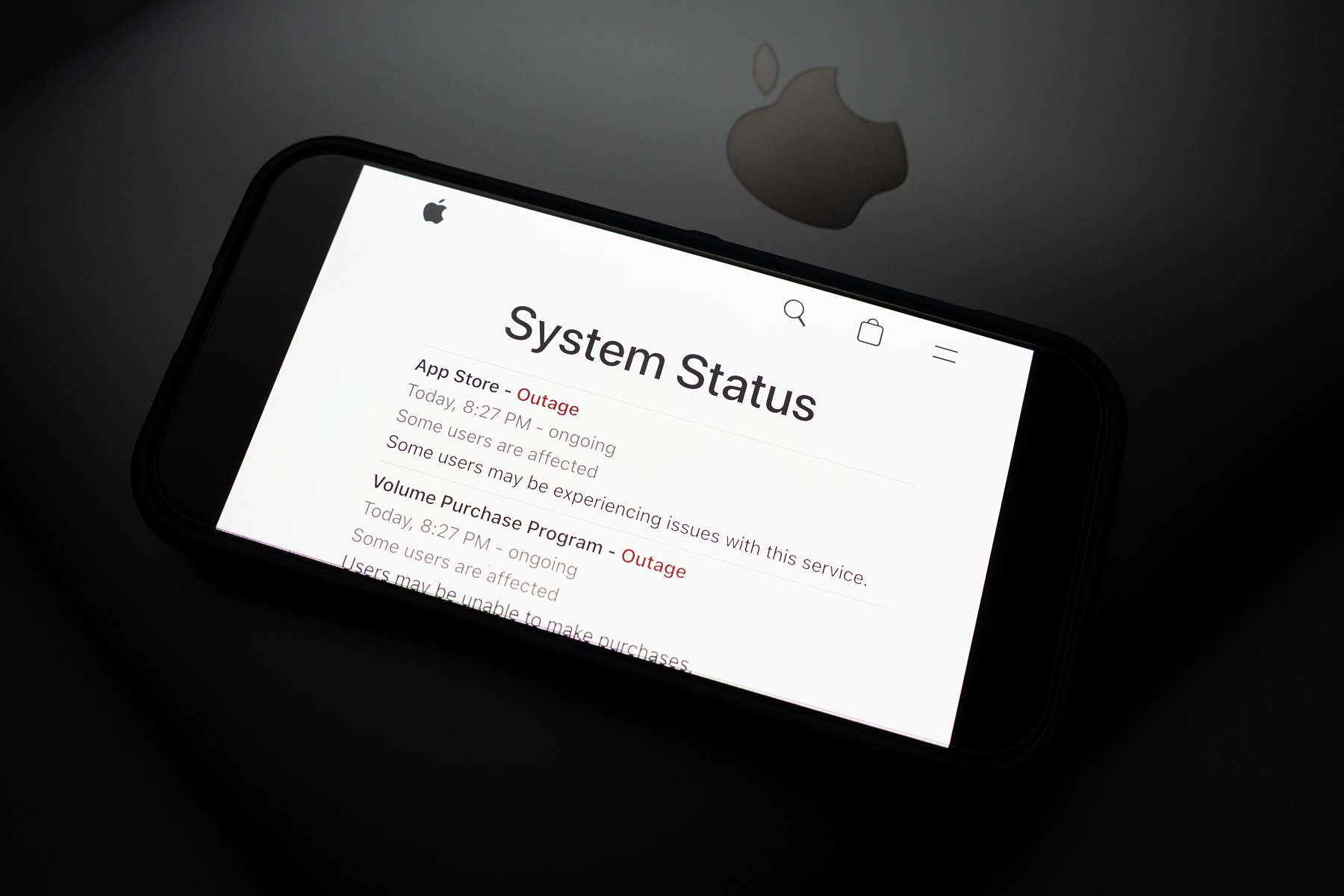
Reports citing Apple's consumer and developer system-status pages identified disruptions affecting the App Store, Apple Music, iCloud Account & Sign In, AppleCare on Device, App Store Connect and Xcode Cloud. Subsequent updates added iCloud Mail, Apple Business, Apple School Manager, Schoolwork and iCloud Web Apps. Users also reported Apple Pay failures, account verification issues, unsuccessful downloads, device activation problems and difficulties contacting customer support.
Reuters recorded approximately 2,300 U.S. reports of Apple Pay problems around 12:20 p.m. Eastern and roughly 1,800 iCloud-related complaints at the peak. However, these self-reported figures may not reflect the actual number of affected users. Apple did not provide a verified global estimate of customers impacted by the disruption.
Service-specific Recovery
According to reported service-status records, AppleCare purchasing was disrupted from 11:15 a.m. to 3:39 p.m. Eastern, lasting four hours and 24 minutes. The App Store experienced issues from 11:45 a.m. to 3 p.m., while iCloud Account & Sign In disruptions continued until 4:15 p.m., lasting four hours and 30 minutes. These durations are based on the recorded status-feed intervals.
Apple told CBS that services were "green across the board" at approximately 5:46 p.m. Eastern, while separate developer-feed reporting gives 7 p.m. end times for two App Store Connect incidents. The latter account also says developer records remained open when checked at 8:31 p.m. before being marked resolved later. However, it was unclear whether Apple's earlier all-clear referred only to its consumer dashboard or whether developer status updates lagged actual recovery.
Internal Systems and Physical Retail Consequences
Initial reports identified disruptions to AppleWeb, AppleConnect and VPN access for remote employees, indicating that the outage extended beyond consumer-facing services. A syndicated report also described interruptions to sales, repairs and customer support at Apple stores worldwide. Separately, customers and purported employees reported problems with EasyPay, order retrieval, pickups and some Genius Bar services, although their identities and locations were not independently verified.
This distinction is important when assessing system dependencies. Concurrent disruptions to sign-in services, retail operations and employee platforms still require examining potential weaknesses in shared identity, networking or management systems. The available records do not identify the failed component or establish a common infrastructure failure connecting Apple with Chase, Microsoft or the NSA.
Disclosure and AI Evidence Gap
Multiple reports highlighted a gap between user complaints and Apple's official status page, which continued to show many services as operational. This raised questions about how quickly outages are detected and communicated publicly.
While Apple attributed the incident to a non-cybersecurity issue, external complaint volumes and retail reports independently confirmed service disruptions without establishing the specific software update responsible. So far, no evidence shows that an AI-generated software change, autonomous agent command or automated deployment triggered the incident.
NSA Internal Network Outage
A highly classified communications network operated by the NSA also went offline on Nov. 17, interrupting access to a system used for the agency's internal communications.
CNN's initial report, citing six people familiar with the incident, identified the affected system as NSA Net, the NSA's internal network for communicating classified information. The NSA's public statement acknowledged "temporary degradation during scheduled routine maintenance," said some internal systems were affected and maintained that "mission-critical capabilities remain fully operational." It did not identify the affected network, disclose a precise start or end time or confirm the full scope described by anonymous sources.
Workforce Restrictions and Continuity Claims
CNN reported that employees received staggered arrival instructions, initially permitting normal returns before access was restricted to essential personnel on Tuesday evening. The New York Times independently identified a voicemail referring to a Code Yellow for the Maryland day shift. The Record subsequently reported a Code Gray notification, delayed Wednesday arrivals and difficulties with network logins, even when parts of the system remained operational.
By Nov. 19, NBC News, citing two people familiar with the situation, reported that the classified network remained offline, with some employees instructed to work from home for a third consecutive day. The sources said the disruption had not affected the NSA's electronic intelligence collection or cybersecurity operations. Other reports described interruptions to analysts' workflows and internal communications, while critical functions continued through alternative arrangements.
CNN later reported, citing four sources, that the disruption affected a Georgia facility supporting Middle East signals-intelligence and cybersecurity operations during the U.S.–Iran conflict. Officials said sensitive intelligence collection systems remained operational, with backup channels and compartmented networks helping contain the impact. Although the facility's location and operational role highlight the incident's significance, they did not establish any Iranian involvement.
Maintenance, PHP Patching and Official Denials
Nextgov, citing four sources, reported that software upgrades may have contributed to the disruption, while CBS News cited multiple sources linking the outage to emergency patches addressing PHP vulnerabilities. CBS identified the flaws as PHP2Shell and referenced AI-assisted vulnerability discovery, alongside an Oct. 21 advisory from the FBI, NSA and CISA urging organizations to patch affected systems or take vulnerable infrastructure offline.
In a statement, Jay Clayton stated: "This is not a cyberattack, and this is not a coordinated effort by a nation state. We've looked very closely." During a Nov. 18 House Homeland Security Committee hearing, he called the disruptions separate incidents involving maintenance and technical changes, reiterating that they did not constitute a coordinated or state-sponsored attack.
What Would Materially Change the Assessment?
Discussing the PHP vulnerabilities, however, Clayton highlighted how AI is accelerating vulnerability discovery and increasing pressure on organizations to respond quickly. He described PHP as a "legacy vulnerability" that had been successfully patched across systems worldwide, adding that "this type of identification of vulnerabilities and patching goes on all the time."
The strongest available link to AI remains indirect, involving reports of human-led software patching in response to vulnerabilities identified using AI tools. Senator Mark Warner also said he had contacted the NSA and other organizations and believed accelerated patching was contributing to the outages.
Additional Incidents
This section examines additional incidents reported during and around Nov. 12–17, distinguishing confirmed malicious activity from technical failures, service outages and suspected security events.
This investigation uses "outage" for impaired availability, "technical failure" for a non-malicious malfunction, "security incident" for suspected or established compromise and "cyberattack" for malicious activity supported by evidence of hostile action. A vulnerability disclosure establishes an exposure, not necessarily exploitation; an operational shutdown can also be a defensive response rather than damage directly inflicted by an attacker. These distinctions are important because the ScreenConnect evidence documents observed unauthorized activity, whereas the Docomo reports concern technical service failures alongside a separate security issue.
ScreenConnect
IT management software company ConnectWise disclosed unauthorized access to ScreenConnect partner environments on Nov. 11, while Huntress reported attacker-controlled remote-access clients on at least 288 computers across 48 organizations within approximately 90 minutes. An earlier live report gave 286 endpoints across 47 organizations and six compromised managed service providers. Microsoft Threat Intelligence said it independently observed abuse of ScreenConnect and analyzed SCKit, a toolkit deploying unauthorized clients, persistence mechanisms and a component targeting connecting technicians.

ConnectWise initially suspected abuse of third-party extensions and disabled five extensions across about 400 partner environments, while stressing that the presence of extensions did not, by itself, establish compromise. The initial statement that no ScreenConnect product vulnerability had been identified concerned the entry mechanism under investigation; subsequent research described a separate technician-client exploitation path involving CVE-2026-84869.
SecurityWeek reported that this client flaw had been patched Sept. 8, and Huntress's later account described at least 688,000 malicious run-file requests against 42 servers from 29 IP addresses since Oct. 20. Huntress also reported a Nov. 13 spike affecting 205 hosts across 41 organizations, while noting that it did not observe follow-on execution in the described attempts. A later advisory identified a separate RMM+ extension issue, CVE-2026-127063, involving a default static API secret.
Japan
On Nov. 5, an NTT Docomo disruption affected 5G Standalone calls and data for about 14 hours and was later attributed to a switching-system breakdown. Docomo separately suspended online services over suspected unauthorized server access. A Nov. 11 disruption began around 10:34 a.m. Japan time, affecting calls, data and texts, with some problems still unresolved at 5:15 p.m.; other 5G and 4G services and emergency calls were reported unaffected.
On Nov. 16, Docomo said concentrated communications overwhelmed a switching system and disrupted calls and data for about six hours, with no evidence of unauthorized access or cyberattack found at that stage. A secondary account citing the restoration notice gives 10:02 a.m.–3:58 p.m. Japan time, or 356 minutes. Docomo said it was examining whether its repeated November incidents were linked.
Workday
HR software company Workday experienced a widespread service outage on Nov. 13 that disrupted access to its human-resources and payroll platform across 11,000 companies. Employees faced difficulties accessing pay information, recording working hours, requesting leave and managing benefits. The company traced the disruption to problems encountered while testing backup systems, rather than confirmed malicious activity. Service was restored on Nov. 14.
Questions About the Official Narrative
Despite official statements that the November outages were unrelated technical failures with no evidence of coordination or malign actors, lawmakers, former officials and technical experts have raised specific questions and alternative arguments.
Coincidence or Coordination?
Senator Josh Hawley argued that the timing of the outages "could not be coincidence." Representative Mike Lawler called for a coordinated government response, stating that the public and Congress still lacked a complete picture. Senator Rick Scott demanded congressional briefings, saying both the public and members of Congress were being left without the full set of facts.
Other members of Congress from both parties, including Hakeem Jeffries, John Kennedy and Nancy Mace, pressed for further information and clarification on whether the cluster of failures pointed to something beyond isolated glitches. However, Clayton, Homeland Security Secretary Markwayne Mullin and FBI Deputy Director Christopher Raia rejected evidence of coordinated or malicious activity.
Iranian Involvement and Gray-Zone Warfare
Former U.S. intelligence official Andrew Badger told LBC he believed the White House was understating Iran's possible role, describing the disruptions as potentially part of a "massive gray-zone warfare campaign." Political activist Laura Loomer and others have publicly asked whether Tehran could be exploiting rising tensions to conduct cyber operations against U.S. banking, aviation and communications infrastructure without crossing into open conflict.
French authorities' attribution of October attacks on refrigeration systems at roughly 700 grocery stores to Iran's Revolutionary Guards (Shahid Kaveh unit) has been cited by some as evidence that Iranian cyber capabilities remain active and relevant to assessing the November events. Iran's Foreign Ministry rejected the accusation as "baseless and hostile," alleging that France was diverting attention from its own policies toward Iran.
Rogue AI Agents and AI-Accelerated Failures
Computer scientist Roman Yampolskiy, an associate professor at the University of Louisville who is widely credited with coining the term "AI safety," wrote on X that he couldn't help wondering whether the seemingly unrelated outages across communications, airlines and banks were AI agents establishing themselves inside critical infrastructure. He stressed that he had "no evidence," calling it only an "increasingly unsettling possibility."
Responding to Yampolskiy's post, MIT Professor Max Tegmark, president of the Future of Life Institute, a nonprofit that campaigns to reduce large-scale risks from advanced AI, said he shared the worry. He urged the government to investigate both the outages and recent AI breakouts at OpenAI and other companies for signs of agents seeking a "self-sustaining foothold online," noting it was unclear whether the companies would disclose full details promptly. He warned that a "human-free online crime cartel" built by today's AI would be extremely hard to stamp out, and argued for preventing one from forming.
Meanwhile, Senator Mark Warner said he had contacted the NSA and other organizations and believed accelerated AI-driven vulnerability discovery and emergency patching were contributing to the outages. Systems-safety specialist David Woods linked the FAA disruption to an AI-powered platform called SMART, citing its reported September and November rollout, though no configuration records have been released to substantiate the claim.
Clayton himself noted that AI is accelerating vulnerability discovery and increasing pressure on organizations to patch rapidly, raising the question of whether rushed defensive updates themselves introduced new failures.
Gaps in Transparency and Root-Cause Evidence
Multiple lawmakers have asked why operators have not released the underlying crash dumps, performance traces, code changes, equipment logs and laboratory tests that support their official explanations. Critics note that Microsoft's account of a latent July gateway defect, the FAA's description of equipment changes flooding legacy networks, Chase's software-bug explanation, Apple's unspecified internal update and the NSA's maintenance-and-patching account all remain principally the operators' own statements.
Questions have also been raised about staffing reductions at CISA and the National Security Council and whether those cuts affected detection or response capabilities. Lawmakers and union accounts have asked why daytime maintenance was performed on critical FAA systems and what independent validation of risk assessments and rollback procedures occurred before the installations that triggered the nationwide ground stop.
Broader arguments focus on single-provider concentration: if schools, hospitals, courts, airlines and intelligence agencies all lose essential services when one company's systems fail, what structural reforms beyond additional funding are required?
The outstanding questions are concrete: Which exact changes triggered each failure? Which recovery actions worked? Did independent investigators inspect the same evidence as the operators? What were the true customer-impact intervals and denominators? Which AI tools, if any, contributed to the relevant code, vulnerability discovery or production actions?
Overview