7.7 Quake Kills At Least 51 on Indonesia's Flores Island
The Facts
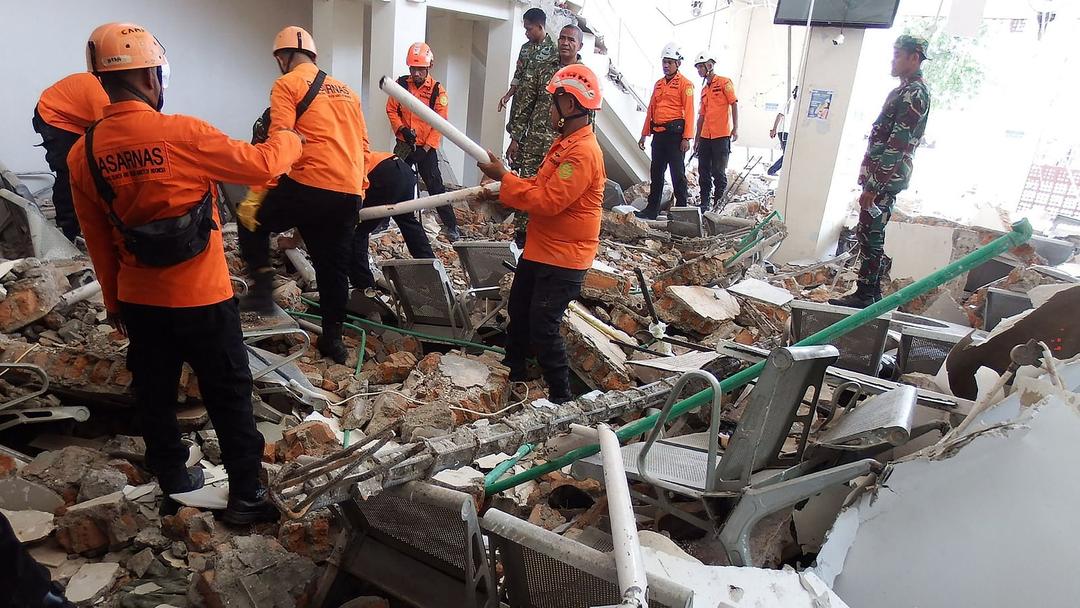
- A magnitude 7.7 earthquake struck off the northern coast of Flores Island in Indonesia's East Nusa Tenggara province on Saturday. The U.S. Geological Survey (USGS) recorded a shallow depth of about 10 kilometers (6.2 miles) and an epicenter roughly 68 kilometers (42.2 miles) north-northwest of Ende.
- Authorities said Sunday that at least 51 people had died and 113 people suffered injuries, including 36 who were seriously injured, around 5,000 people had been evacuated, and over 3,500 military and police officers had been deployed to the affected region.
- Indonesia's geophysics agency BMKG recorded the main quake at 4:58 a.m. local time, followed by at least 11 aftershocks, including a magnitude 6.1 tremor. Strong shaking lasting about one minute was felt across East Nusa Tenggara, West Nusa Tenggara and parts of South Sulawesi.


Sources Split
LEFT
CENTER
RIGHT
+1
+1
+2
+2
+1
+2
ESTAB
CRIT
CENTER
PRO
ESTAB
The Spin
Climate-concerned narrative
Climate change isn't just melting ice caps — it's literally shaking the ground beneath us. As lakes shrink from rising temperatures and reduced rainfall, pressure relief on fault lines triggers more seismic and volcanic activity. Deforestation in Indonesia and Malaysia is making things worse by amplifying extreme weather cycles that accelerate these conditions globally.


Climate-skeptic narrative
Blaming earthquakes on climate change is a feel-good narrative that doesn't hold up to scrutiny. USGS data show major earthquake frequency has remained stable since 1990, with no significant uptick in magnitude 5 or higher events between 2000 and 2023. Tectonic plate movement drives seismic activity, and no credible evidence links earthquake trends to atmospheric climate processes.

Narrative C
An over-focus on climate change's negative impacts can create an opportunity cost: attention and resources devoted to describing worsening risks may come at the expense of implementing practical solutions. Communities also need on-the-ground action. Forest management, fuel reduction, prescribed burning, resilient infrastructure and preparedness can reduce vulnerability today, while longer-term mitigation addresses tomorrow's risks.

Metaculus Prediction
Go Deeper

© 2026 Improve the News Foundation.
All rights reserved.
Version 7.17.1