The Anxious Generation
The Facts
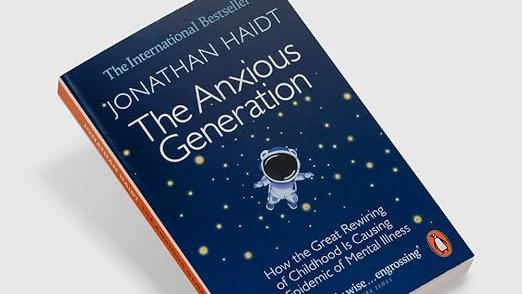
- Book Overview: "The Anxious Generation: How the Great Rewiring of Childhood Is Causing an Epidemic of Mental Illness" is a 393-page nonfiction work by social psychologist and New York University professor Jonathan Haidt, published in 2024. The book expands on Haidt’s earlier essays and collaborations with other psychologists, synthesizing years of research on youth mental health, technology, and cultural change. It employs an interdisciplinary framework that draws from developmental psychology, sociology, and cultural history.
- Context: Haidt’s book comes against a backdrop of increasing alarm over rising issues with youth mental health. It explores controversies concerning social media’s potential psychological effects, pre-empting national legislative changes such as the blanket ban in Australia on under-16s using social media and the introduction of age verification to access pornography in the U.K. Additionally, several major tech companies have faced intensifying criticism for algorithms that exploit attention and amplify anxiety, fueling calls for greater accountability and reform.
- Claims: Haidt's book argues that the rapid adoption of smartphones and social media has fundamentally reshaped childhood and replaced play-based, real-world development with digital immersion, leading to rising rates of anxiety, depression, and social dysfunction among Generation Z. "The Anxious Generation" argues that childhood underwent a "great rewiring" around 2012, when smartphones and social media became widespread, and caused Generation Z to be more isolated, anxious, and risk-averse than previous generations.


Sources Split
LEFT
CENTER
RIGHT
+2
+1
+3
+1
+1

ESTAB
CRIT
CENTER
PRO
ESTAB
The Spin
Techno-skeptic narrative
"The Anxious Generation" is the wake-up call every parent has been waiting for, and it doesn’t mince words: smartphones are destroying childhood. Teens are distracted, anxious, and emotionally fragile, and adults have lost control. The book’s suggestions, including no phones before high school and no social media before 16, feel obvious, yet seem almost impossible to enforce in a world where screens dominate every aspect of life. Haidt’s writing leaves little room for nuance or debate, framing technology as the enemy rather than a useful tool. For parents who have watched childhood slip away, this book validates their fears and gives language to a phenomenon they have witnessed firsthand.


Techno-optimist narrative
At times, "The Anxious Generation" reads less like a careful analysis and more like a morality tale, warning parents about a generation under siege by screens. Haidt’s arguments often overstate causality, treating correlation between smartphone use and anxiety as incontrovertible proof. The book rarely grapples with structural issues like social, economic, or educational problems that might better explain rising adolescent distress, preferring instead to focus on the immediacy of digital threats. While compelling in tone, the narrative risks fueling moral panic rather than offering meaningful solutions, framing technology as a villain while largely ignoring its potential to foster connection, learning, and resilience when used responsibly.

Cynical narrative
Haidt’s book often feels less like a report on Gen Z and more like a reflection of adult anxieties about the next generation. Teens and young people, as portrayed in responses across media, see themselves as emotionally literate and socially aware, challenging the “anxious generation” label as more narrative than reality. While Haidt intends to diagnose a societal problem, much of the book reads like an extended cautionary tale projecting adult fears onto youth culture, emphasizing deficits rather than strengths. In this sense, the work offers insight into generational divides and the anxieties of adulthood, but may be merely a reflection of the inevitable fears and uncertainties that come with younger generations being better accustomed and adapted to a society their parents simply don't understand.
Metaculus Prediction
Go Deeper



















































© 2026 Improve the News Foundation.
All rights reserved.
Version 7.18.3