SCOTUS to Review Whether Public Officials Can Block Users on Social Media
The Facts
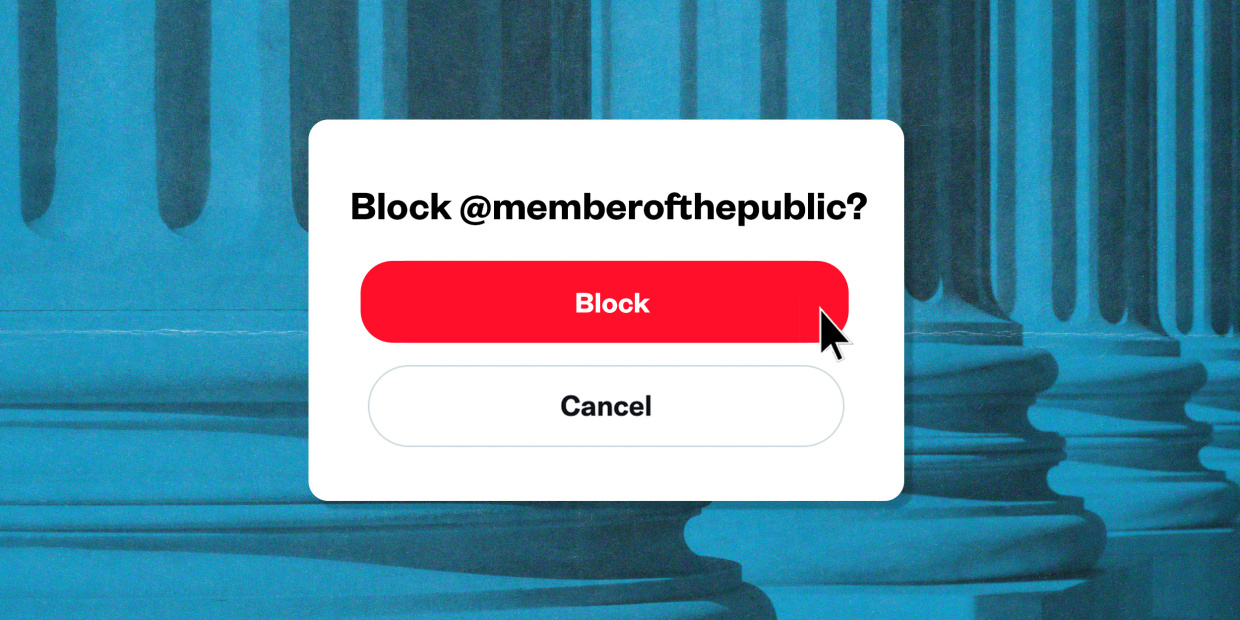
- On Monday, the Supreme Court of the US (SCOTUS) agreed to take up two cases on whether public officials blocking people on social media violates the First Amendment — a recurring legal question that was left unresolved in a previous case involving former Pres. Trump's Twitter account.
- In one case, Kevin Lindke, a resident of Port Huron, Mich., is appealing the decision of the US 6th Circuit Court of Appeals that ruled that City Manager James Freed did not violate the First Amendment by blocking him after he left critical comments on Freed's Facebook page related to his COVID policies.
- In the other case out of California, the US 9th Circuit Court of Appeals considered that two school board trustees who had created Facebook accounts for their campaigns, later updating them to reflect their new positions and share official board business, had crossed a line when blocking two parents of children for "repetitious and non-responsive" comments.


Sources Split
LEFT
CENTER
RIGHT
+1

ESTAB
CRIT
CENTER
PRO
ESTAB
The Spin
Narrative A
As government officials across the country are increasingly using social media to speak with constituents, it's time for the nation's highest court to establish the importance of allowing the people to communicate with their leaders unhindered. SCOTUS has already stated that digital platforms are "the modern town square," and that statement should be upheld in this and all future freedom of speech cases. Elected officials in America are duty-bound to the Constitution and must not be allowed to break that oath so long as they're in office.
Narrative B
Similar to a case involving a police officer, politicians shouldn't be judged based on how they present themselves on their private social media accounts. Trump lost his case because his personal Twitter account linked directly to the White House. However, if a personal account does not purport to be linked to an official office, it shouldn't necessarily receive the same scrutiny. These are novel and complex legal questions that should consider both the private rights and public duties of officeholders.

Metaculus Prediction
© 2026 Improve the News Foundation.
All rights reserved.
Version 7.17.1