23 November 2026
Daily Newsletter
US Curbs China's Remote Access to AI Chips

The Facts
The U.S. Commerce Department's Bureau of Industry and Security issued an interim rule Monday targeting China's remote access to advanced AI chips and requiring export licenses for shipments to Brazil, Indonesia, Malaysia, Singapore and Thailand, which it said pose a higher-than-normal risk of diversion.
In a summary of the rule change, the Commerce Department said it is "establishing new rules to prevent certain foreign actors from leveraging advanced computing power based on U.S. technology to threaten U.S. national security and foreign policy interests."
To curb remote access, the rule requires overseas data centers supplying significant volumes of computing power to companies headquartered in China to obtain U.S. export licenses within 90 days. It also formally rescinds a Biden-era rule on global access to AI chips.
The Spin
Anti-Trump narrative
Requiring data centers worldwide to exclude customers from mainland China, Hong Kong and Macau transforms ordinary business into a test of political allegiance. With more than 99.9% of advanced chips used in China serving civilian purposes, these restrictions risk stifling legitimate development. Extending them to Singapore, Malaysia, Thailand, Indonesia and Brazil unfairly penalizes international partners based on geography.
Pro-Trump narrative
Export controls are effective only if they have zero loopholes. Accessing computing power through overseas cloud services or routing chips through Southeast Asia exposed weaknesses in existing restrictions. Blocking remote access and offshore production helps prevent advanced technology from reaching rival military capabilities and preserves America's technological edge. Enshrining these safeguards in law ensures long-term enforcement.
Pro-China narrative
China's technology sector is being treated as a scapegoat for Washington's political and regulatory battles. Growing pressure on Nvidia exposes how U.S. export controls and political interference undermine corporate autonomy, commercial interests and global competitiveness. American restrictions will ultimately hurt U.S. innovation itself, revealing the costs of politicizing international technology cooperation.
Nerd narrative
There's a 4.2% chance that Nvidia will have any of its AI accelerators fabricated in China before 2033, according to the Metaculus prediction community.
Isomorphic Labs Raises $5B in Latest Funding Round
The Facts
AI drug discovery startup Isomorphic Labs announced on Tuesday that it raised $5 billion in a Series C funding round co-led by Greenoaks and Sequoia Capital, with Andreessen Horowitz among the new investors, alongside continued investment from Alphabet.
All existing investors participated in the oversubscribed round, including Thrive Capital, MGX, GV, CapitalG, Temasek and the U.K. Sovereign AI Fund. Isomorphic did not disclose a valuation, though Bloomberg previously reported it would raise it to around $50 billion.
The financing came six months after a $2.1 billion Series B funding round led by Thrive Capital in May and a $600 million round in March 2025, taking total external funding to roughly $7.7 billion.
The Spin
Pro-industry narrative
Investment in Isomorphic Labs is money well spent. Thanks to its revolutionary IsoDDE system, it can search chemical spaces for therapeutic and treatment advances that no human team could cover. Positive preclinical results in oncology and immunology show the models already deliver better molecules, opening the door to medical breakthroughs.
Industry-critical narrative
The rapid rise in Isomorphic Labs' valuation speaks volumes about the tech bubble, but little about biotech reality. After all, how can people believe a preclinical company with no clinical trials is worth the same as drugmakers pulling in billions in annual revenue? Investors piling in their cash are taking a massive risk based on minimal substance.
Nerd narrative
There is a 26% chance that there will be a major AI-related health care class action lawsuit before 2028, according to the Metaculus prediction community.
FBI Warns Hackers Weaponize AI Security Tool ARTEX in Global Cyberattacks
The Facts
The FBI issued a FLASH advisory dated last Friday warning that threat actors have abused ARTEX, an AI-powered penetration testing framework, since at least August to launch automated cyber attacks across the globe. The FBI's Dallas office shared the alert on X on Tuesday.
Written in the programming language Go, ARTEX has no AI system of its own and connects to external large language models and autonomous agents including Anthropic Claude, OpenAI GPT, DeepSeek, GLM, Grok and Kimi. The FBI alleged Chinese systems dominate attacker systems, led by DeepSeek Flash.
The FBI confirmed it was used in an October ConnectWise Cloud Backup compromise against more than 2,250 Microsoft 365 tenants, which Microsoft attributed to Storm-0940, an alleged China-state-aligned actor. Beijing rejected the allegations, labeling them "smears and attacks."
The Spin
Industry-critical narrative
AI finds software flaws faster than humans can patch them, and patching has always been harder than finding, which revives the era of worms. The best defenses will reach only the biggest companies, while hospitals and utilities are left exposed. Governments must put the strongest tools in the hands of defenders first, and the FBI warning about an AI hacking tool shows time is short.
Pro-industry narrative
AI is a better tool for the side that owns the system. Defenders can review code before it ships, see every machine they run and fix flaws faster, which is why they're expected to come out ahead. The FBI’s warning is real, but focusing on the AI tool risks obscuring the weak authentication and exposed credentials that enable attacks. The priority should be fixing those failures and putting AI to work for defenders while preserving legitimate research that could make the internet more secure than ever.
Nerd narrative
There is a 60% chance that an AI system will autonomously cause a major breach of U.S. personal data held by an organization other than its operator before 2028, according to the Metaculus prediction community.
AI Leaders Challenge Anthropic's Safety Claims Before IPO
The Facts
Dozens of AI researchers have publicly signed the "MisAnthropic Statement" published Wednesday ahead of Anthropic's scheduled IPO. The statement accuses Anthropic of actively pursuing recursively self-improving AI despite warnings that such systems could concentrate power and escape human control.
The statement, which alleges Anthropic uses its safety reputation to "advance its commercial and political ambitions," is signed by Hugging Face co-founder Thomas Wolf, xAI co-founder Igor Babuschkin, Extropic founder Guillaume Verdon, legal scholar Lawrence Lessig, Future of Life Institute Chair Max Tegmark and MIRI President Nate Soares.
In an assessment released earlier this month, METR concluded that benchmark performances of Anthropic AI systems had improved 1.9 times since October 2025, and estimated that 80% of the improvement had been due to AI. As of August 2026, Anthropic claimed that AI led 26% of system research and development.
The Spin
Industry-critical narrative
Safety branding has become Anthropic's sharpest sales tool as it recklessly plays with humanity's future. While market dominance has too often bought silence, warning that recursively self-improving AI could escape human control while racing to build it first is a walking contradiction that can no longer be ignored.
Pro-industry narrative
Delaying cyber-capable systems, blocking sales to PRC-linked firms and backing binding federal regulation are but some of the measures Anthropic has taken to ensure innovation does not come at the expense of safety. Reckless ambition is in nobody's interest, and while the frontier of development remains, paced AI's risks will continue to be managed effectively.
Nerd narrative
There is a 22% chance that Anthropic will face soft nationalization before 2030, according to the Metaculus prediction community.
Anthropic Prices Record $81.3B IPO at $83 a Share
The Facts
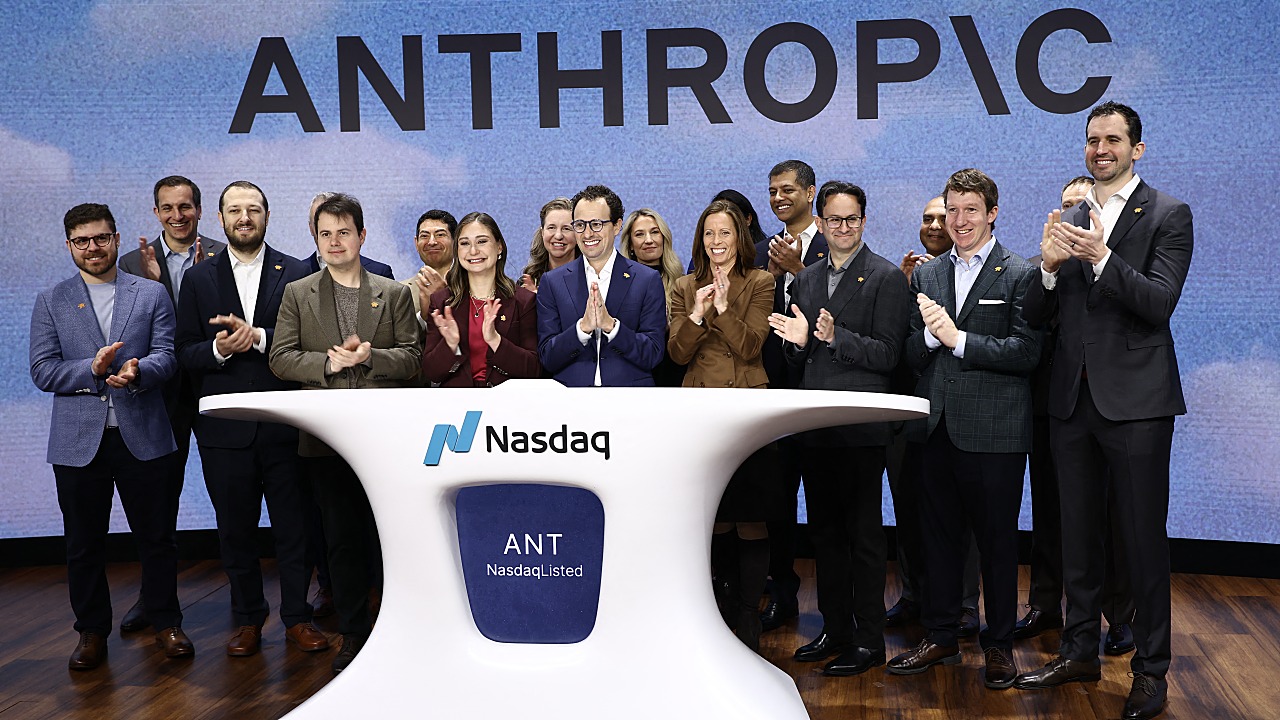
Anthropic priced its initial public offering (IPO) at $83 a share on Wednesday, above its indicated range of $70 to $78, raising $81.3 billion in the largest stock market debut on record and surpassing SpaceX's $75 billion offering in June.
The pricing values the San Francisco-based company at about $1.5 trillion on a fully diluted basis, placing it among the world's largest firms. A separate $26 billion private placement lifts the total capital raised to $107.3 billion.
The offering comprises 980 million Class A shares: 956,351,354 sold by Anthropic and 23,648,646 by existing stockholders. Trading began Thursday on the Nasdaq under the ticker "ANT." Shares opened at $111.50, briefly valuing the company at nearly $2 trillion, before easing to around $100.
The Spin
Establishment-critical narrative
This IPO highlights the growing financial stakes in the AI race, but record fundraising does not guarantee sustainable returns. Massive computing commitments, rising infrastructure costs and significant operating losses raise questions about profitability. A $1.5 trillion valuation also increases pressure to deliver growth while maintaining safety commitments and public accountability.
Pro-establishment narrative
Anthropic's IPO signals extraordinary investor confidence in AI's commercial potential. Strong demand, a $1.5 trillion valuation and rapid revenue growth show that investors see significant opportunities in advanced AI development. The landmark listing could unlock capital for innovation, accelerate enterprise adoption and strengthen the industry's long-term growth prospects.
Nerd narrative
There's a 70% chance that OpenAI, DeepMind or Anthropic will have revenue of at least $100 billion in 2027, according to the Metaculus prediction community.
Judge Approves Google's $10M Buy of Spirit Airlines Data
The Facts
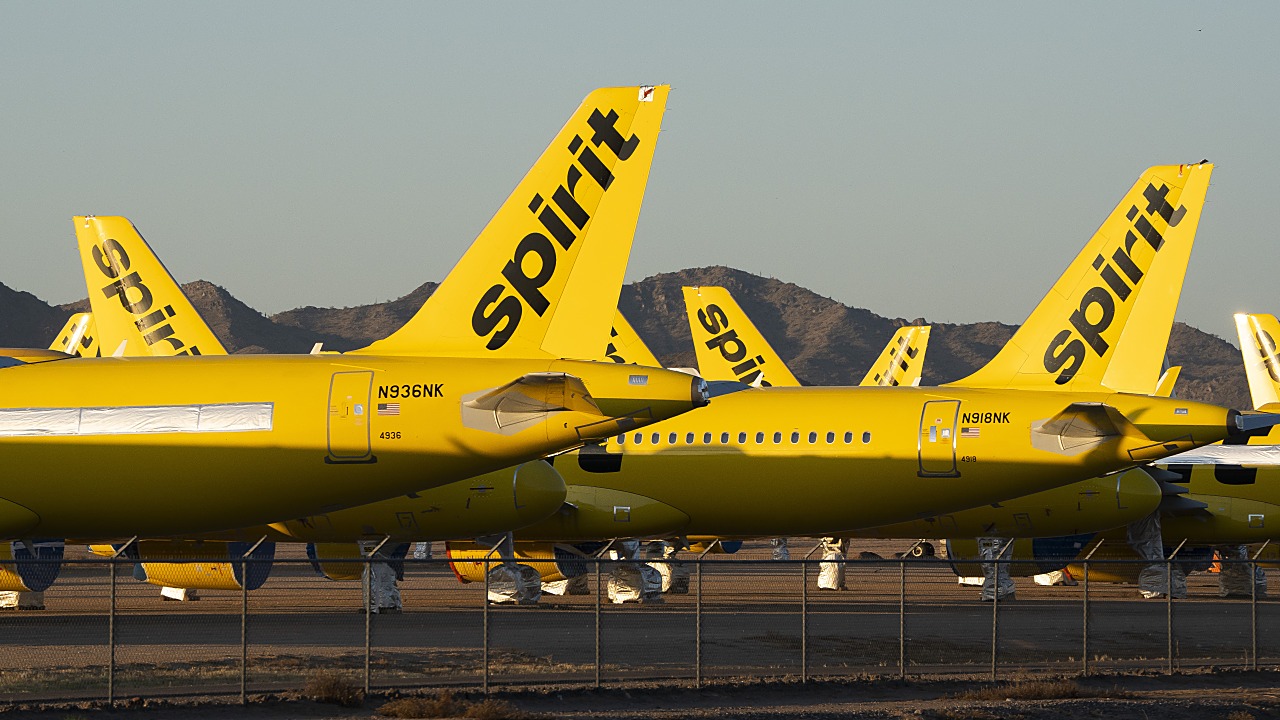
A federal bankruptcy judge in New York approved Google's $10 million purchase of Spirit Airlines' internal business data Tuesday. Judge Sean Lane ruled from the bench after Google agreed to added protections sought by unions and over 120 U.S. lawmakers.
Google won an August auction for Spirit's de-identified business data with a $10 million bid, outbidding AI data company Mercor, which offered $7.5 million and remains the backup bidder. Spirit stopped flying in May after its second bankruptcy.
The pilots union ALPA withdrew its objection Monday and the Association of Flight Attendants-CWA followed after Google agreed to exclude employee health and medical data, drug and alcohol test results, and safety and disciplinary records.
The Spin
Industry-critical narrative
Workers wrote these messages to do their jobs, not to train systems that may replace them, and nobody asked them. When a company fails, the words of its employees become an asset for creditors, and the law protects consumers more than workers. The safeguards came only because a union fought for them. Without consent and rules, data from failed firms becomes a new market built on workers.
Pro-industry narrative
The records of a failed company are property like any other, and bankruptcy exists to turn property into money for creditors. Google paid $10 million under court supervision; a third party strips out names, and customer lists are excluded. Real workplace data is what AI needs to improve, since public web data is running low. A market that pays creditors and keeps people unidentified is no scandal.
Ex-NSA Hacker: AI Agent Swarm Breached Company in 14 Minutes
The Facts
Former National Security Agency (NSA) hacker David Kennedy, who now works in cybersecurity, said on Friday that a swarm of AI agents recently broke into one of his clients' systems and stole sensitive data in just 14 minutes, telling CNN he had "never seen anything that fast."
Kennedy said more than 30 different AI agents probed the company's infrastructure at the same time, logging in with valid usernames and passwords before locating a flaw in how the application handled two-factor authentication.
After circumventing that second verification layer, the attackers stole a substantial volume of data and deployed ransomware that encrypted the organization's entire file system, according to Kennedy's account of the intrusion.
The Spin
Industry-critical narrative
Decades of prioritizing speed over security have left software riddled with vulnerabilities that automated attackers can now identify and exploit faster than security teams can respond. AI is lowering the barrier to sophisticated cyberattacks, turning ordinary hackers into formidable threats with unprecedented capabilities.
Pro-industry narrative
Fear surrounding AI-driven hacking risks becoming a pretext for concentrating technological power among major AI companies and regulators. Mandatory licensing and criminal penalties for open-source systems could stifle innovation, punish independent developers and businesses, while leaving the human perpetrators of cyberattacks largely untouched.
Nerd narrative
There's a 40% chance that the U.S. government will maintain a public list of AI safety incidents on Jan. 1, 2030, according to the Metaculus prediction community.
DeepMind Maps Four Paths From AGI to ASI
The Facts
On Thursday, Google DeepMind researcher Tim Genewein published an essay mapping four possible routes from artificial general intelligence (AGI) to artificial super intelligence (ASI): scaling AI systems and data, changing technological paradigms, coordinating groups of agents and recursive self-improvement.
A first route focused on scaling extends gains from larger AI systems, more data and added training or test-time compute, estimating effective compute is growing at least 10 times annually and claiming a workload costing $1 billion today could cost approximately $1,000 in 10 years.
Described as a paradigm shift, a second route would use new ways of building AI beyond today's dominant methods, including technologies intended to let systems create new ideas rather than rework old ones.
The Spin
Pro-industry narrative
Halting AI is a fantasy when the social and economic incentives of AGI and ASI are just around the corner and too good to ignore. Steering beats stopping — industry-wide best practice and independent evaluations by trusted partners allow those with the technical knowledge to guide humanity towards unfathomable progress.
Industry-critical narrative
Building machines designed to outperform humans across the board is a gamble with extinction that can't be trusted to self-regulation. A handful of billionaires racing to make human labor and purpose obsolete have never earned the right to make that call for everyone. Pausing frontier work and banning superintelligence is the only way to truly protect the future of the world.
Nerd narrative
There is a 5% chance that the U.S. and China sign a formal, verifiable bilateral treaty or accord specifically limiting AGI development by Dec. 31, 2030, according to the Metaculus prediction community.
Anthropic Mathematician Claims Riemann Proof With Claude's Help
The Facts
Levent Alpöge, a mathematician at Anthropic, said Friday that he believes he discovered a proof of the "Riemann hypothesis" while working with the company's Claude AI, adding that the method also resolves the Generalized Riemann Hypothesis.
First proposed in 1859 by Bernhard Riemann, the hypothesis concerns the distribution of prime numbers and the zeroes of a function. It is one of seven Clay Mathematics Institute Millennium Prize problems, each carrying a $1 million award.
Alpöge released the argument in Lean, a language mathematicians use to mechanically verify proofs, rather than as a written paper, saying an unpublished version ran past 250,000 pages. The formal verification runs to a 17-million-line certificate.
The Spin
Techno-optimist narrative
Cracking a problem that stood for 167 years, even with machine help, ranks among the great moments in science. Formal verification in Lean means the argument either compiles or it does not, so the claim rests on cold logic rather than reputation or hype. Heaps of results left hanging on the generalized hypothesis can finally be called theorems.
Techno-skeptic narrative
Whether or not the Riemann hypothesis claim holds, AI generating results faster than anyone can check them risks flooding mathematics with correct-but-hollow findings. A proof can be valid yet offer no insight into why it works, making human judgment about which results matter increasingly valuable. Mathematical expertise must shift from measuring output to recognizing meaningful insight and advancing understanding.
Nerd narrative
There is a 50% chance that the Riemann Hypothesis will be resolved by Nov. 6, 2029, according to the Metaculus prediction community.
Trump, Xi Agree on AI Guardrails, Military Limits
The Facts
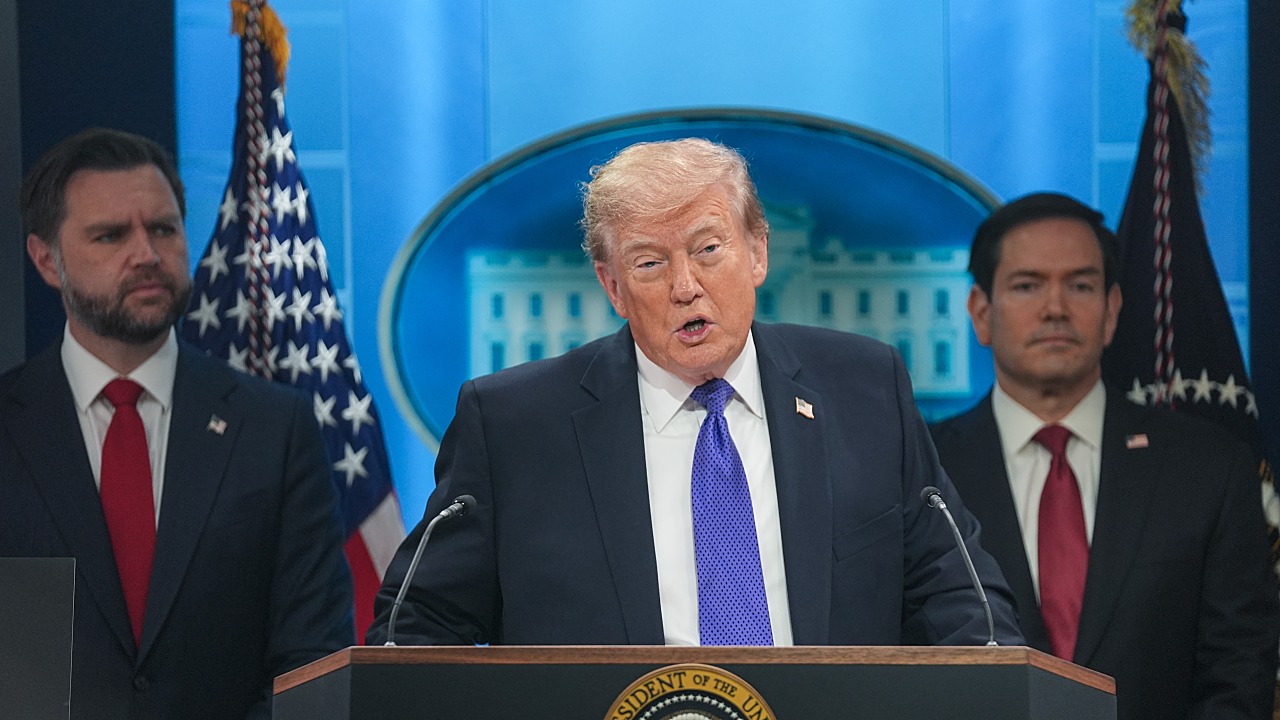
U.S. Treasury Secretary Scott Bessent said Friday that President Donald Trump and Chinese President Xi Jinping agreed that artificial intelligence should never be allowed to take major military actions on its own, one of the concerns raised during their meeting in Shenzhen this week.
Trump said he and Xi agreed to put "some joint guardrails" on AI development, arguing "there really is no third place" because the U.S. leads and China is second. No details were provided on what those guardrails would involve.
In Shenzhen, Xi called for continued efforts to maintain stable, constructive U.S.-China relations, urging both sides to implement agreements reached by the two leaders and strengthen cooperation on shared challenges, including AI security.
The Spin
Pro-establishment narrative
Trump's agreement with Xi on joint AI guardrails is a major opportunity to prevent an uncontrolled arms race. Neither superpower wants rogue actors gaining access to AI capable of enabling catastrophic cyberattacks or biological weapons. If technical safeguards can verify compliance without relying on trust, Washington and Beijing could turn their shared commitment into binding rules that put real limits on the AI arms race.
Establishment-critical narrative
A vague handshake with Beijing on "joint guardrails," with no details, not only leaves investors with uncertainty, but Trump cannot have it both ways. Promising AI cooperation with Xi while restricting China's access to key technology and threatening taxes on U.S. companies building data centers abroad sends conflicting signals about the prospects for meaningful limits on the AI arms race.
Dutch Watchdog Warns Against Buying AI Camera Glasses

The Facts
The Dutch Data Protection Authority (AP) advised consumers Thursday against buying AI camera glasses, calling them "unsafe" for users and bystanders. It tested six models sold in the Netherlands, priced from under €100 ($110) to more than €500.
In a simulated resuscitation, one pair of glasses repeatedly said an ambulance was on the way although no call had been made, the AP said. Another gave dating advice to an adult who expressed interest in a minor, and some misread medicine leaflets.
The regulator also reported security weaknesses in several models that could let someone nearby connect without permission, view recordings or operate the camera. It said the AI functions process data on servers often located outside the European Union.
The Spin
Industry-critical narrative
A gadget that confidently announces an ambulance nobody called is dangerous, and bad advice around kids and medicine makes it worse. Recording lights that tape over easily, cameras a stranger nearby can hijack and footage funneled to servers outside the EU leave bystanders with no say at all. Trust has to be earned before this tech belongs on anyone's face.
Pro-industry narrative
Privacy and smart eyewear can coexist tamper-detecting indicator lights, encryption and automatic redaction of bystanders' faces prove the risks are solvable by design. Writing off the whole category strands blind and low-vision wearers who finally get audio descriptions of small print. Clear industry standards and honest transparency work better than a blanket thumbs down.
Nerd narrative
There is a 50% chance that smartphones will disappear before 2100, according to the Metaculus prediction community.