20 November 2026
Daily Newsletter
Trump Fires Cyber Chief Over Widespread Tech Outages
The Facts
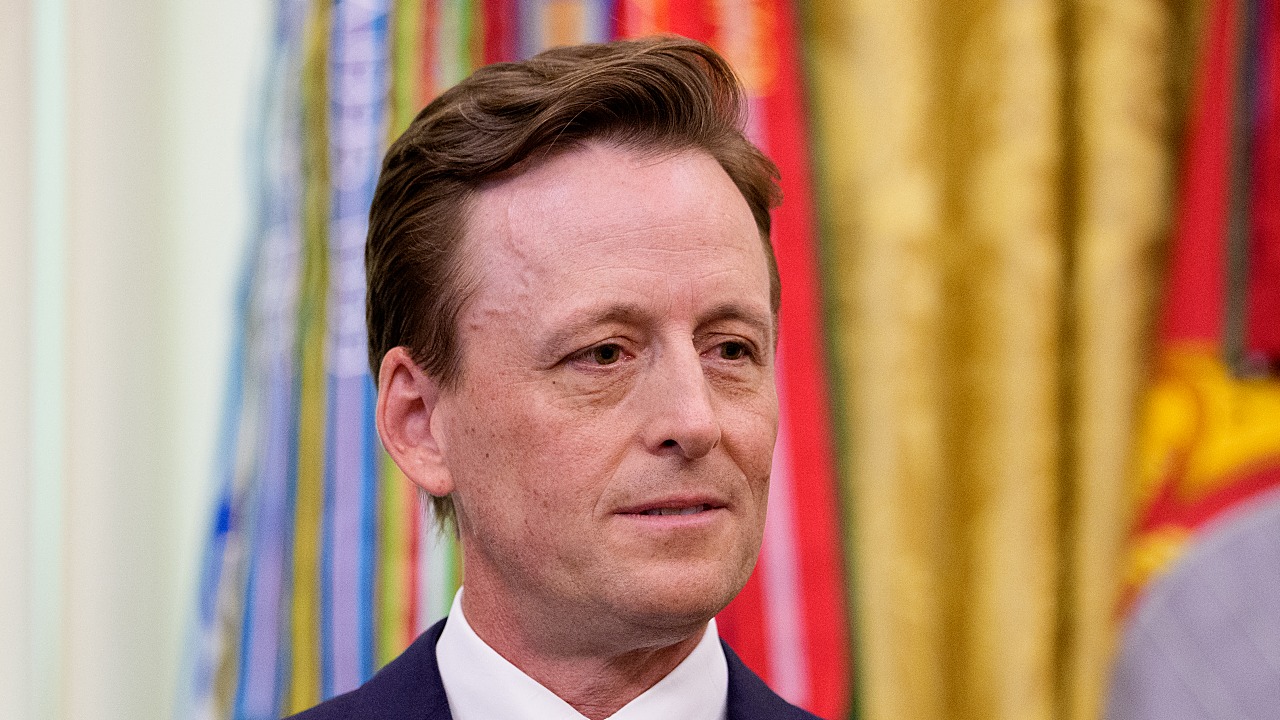
U.S. National Cyber Director Sean Cairncross left his post Thursday after a source close to the White House reportedly said President Donald Trump "fully supported firing" him because he "lacked the strong cyber credentials to perform the job."
Kirsten Davies, chief information officer at the Department of Defense (War), will take over as national cyber director in an acting capacity. The job requires Senate confirmation, and Davies was already confirmed by the Senate for her Pentagon role.
In an X post, Davies said that the country's opportunity is to "dominate the cyber landscape for generations to come" by having "a more secure, resilient; and supercharged technological future."
The Spin
Democratic narrative
Losing the nation's top cyber coordinator as airports grind to a halt and banking and tech giants face mounting disruptions is dangerously reckless, as cyber adversaries don't wait for Washington to sort out its leadership. Leaving the nation's top cybersecurity post without a confirmed leader creates an alarming gap in U.S. defenses. Americans deserve transparency and accountability — not a quiet departure while critical infrastructure remains at risk.
Republican narrative
Putting the national cyber portfolio in the hands of a leader with nearly 20 years of hands-on technology experience is a major step in the right direction. Defending critical networks against increasingly sophisticated, AI-powered threats requires deep technical expertise, not just political credentials. Prioritizing proven experience and moving quickly to strengthen cybersecurity leadership is a decisive step toward addressing this threat environment.
Somalia Expels UAE Envoy, Alleging 'Open Invasion'

The Facts
Somalia ordered the United Arab Emirates (UAE) ambassador to the country to leave within 72 hours Thursday. It recalled its own envoy from Abu Dhabi, with Information Minister Abdifatah Kasim Mohamud accusing the UAE of sovereignty violations amounting to an "open invasion."
The UAE foreign ministry denounced the move as an "escalatory and hostile" approach and expressed regret over Somalia bringing internal power struggles into bilateral ties, saying it had closed its Mogadishu embassy and withdrawn staff in January this year.
Somalia's order followed a cabinet meeting chaired by Prime Minister Hamza Abdi Barre that cited "blatant aggression" by the UAE. Ministers also instructed the Foreign Ministry to brief foreign governments and international organizations on the allegations.
The Spin
Pro-government narrative
Somalia was right to expel the UAE envoy. A country that cannot control who builds ports and military bases on its soil possesses sovereignty in name only. Cutting deals with breakaway regions undermines national unity, while bankrolling forces outside the national chain of command weakens the fight against al-Shabab. Expelling the envoy was a necessary defense of Somali sovereignty and territorial integrity.
Government-critical narrative
Accusations of an 'open invasion' are made without a shred of evidence, a convenient distraction for a presidency whose mandate is in dispute. Regional administrations signed those port deals themselves, and those harbors generate vital revenue that keeps local economies running. Covering salaries for 3,400 Somali troops and shipping hundreds of tons of food aid is genuine partnership.
Nerd narrative
There is a 10% chance that an East African Federation will exist and govern before 2040, according to the Metaculus prediction community.
UK, EU Seal Youth Mobility Deal

The Facts
British Prime Minister Andy Burnham travelled to Brussels on Friday for a U.K.-EU summit, where he signed deals on food, energy and youth mobility. He later called the development a “new world” of cooperation between Britain and the European bloc.
Burnham tackled last-minute differences over tuition fees and successfully managed to end food and drink checks at the border, reportedly giving the U.K. economy a £17 billion boost. Addressing young British people, he said that the “deal is for you,” assuring "more opportunities."
Negotiators agreed on a youth mobility scheme capping participants at 100,000 a year on each side and raising the age limit from 30 to 31. Some countries, including Germany, are reportedly prepared to accept unlimited numbers of young Britons.
The Spin
Pro-Europe narrative
A broad, affordable youth mobility deal is a clear win access to study and work would build skills, fill shortages and deepen U.K.-EU ties without reviving free movement or EU membership. Time-limited, reciprocal visas make rigid caps needless, while lower fees widen opportunity. Projected gains of £5 billion in annual tax revenue and 0.45% GDP growth seal the case.
Right narrative
An expansive youth mobility deal would trade border control and regulatory autonomy for dubious headline growth. With only 48% of purpose-built student housing demand met and 732,000 foreign students already enrolled, a large intake would intensify rent and service pressures. Caps near 100,000 risk reviving free movement by another name and weakening Parliamentary control.
Nerd narrative
There is a 0.3% chance that the United Kingdom will rejoin the European Union before 2030, according to the Metaculus prediction community.
Ex-NSA Hacker: AI Agent Swarm Breached Company in 14 Minutes
The Facts
Former National Security Agency (NSA) hacker David Kennedy, who now works in cybersecurity, said on Friday that a swarm of AI agents recently broke into one of his clients' systems and stole sensitive data in just 14 minutes, telling CNN he had "never seen anything that fast."
Kennedy said more than 30 different AI agents probed the company's infrastructure at the same time, logging in with valid usernames and passwords before locating a flaw in how the application handled two-factor authentication.
After circumventing that second verification layer, the attackers stole a substantial volume of data and deployed ransomware that encrypted the organization's entire file system, according to Kennedy's account of the intrusion.
The Spin
Industry-critical narrative
Decades of prioritizing speed over security have left software riddled with vulnerabilities that automated attackers can now identify and exploit faster than security teams can respond. AI is lowering the barrier to sophisticated cyberattacks, turning ordinary hackers into formidable threats with unprecedented capabilities.
Pro-industry narrative
Fear surrounding AI-driven hacking risks becoming a pretext for concentrating technological power among major AI companies and regulators. Mandatory licensing and criminal penalties for open-source systems could stifle innovation, punish independent developers and businesses, while leaving the human perpetrators of cyberattacks largely untouched.
Nerd narrative
There's a 40% chance that the U.S. government will maintain a public list of AI safety incidents on Jan. 1, 2030, according to the Metaculus prediction community.
California Subpoenas Nvidia Over China Chip Leaks

The Facts
California Attorney General Rob Bonta issued an investigative subpoena to Nvidia on Thursday, seeking to determine if the Santa Clara-based firm's advanced chips or confidential information reached China and if it misled investors.
Bonta told Politico the subpoena is the first step in the investigation and that more may be needed depending on Nvidia's response. The inquiry examines if the chipmaker's processors reached China despite U.S. export controls.
Jensen Huang resigned last week after reports of extramarital affairs, including one with Alice Huang, and two with Nvidia subordinates. China has rejected allegations that it ran an espionage operation targeting the executive.
The Spin
Left narrative
Export controls are just paperwork unless someone verifies where the chips actually landed. A 38% slide in seven weeks has left shareholders facing real losses despite no clue about what crossed into China, and securities law exists for exactly that gap. A state subpoena is the quickest route to hard facts, and no company gets a pass to mislead the investors funding it.
Right narrative
Stacking a state securities probe on top of a federal investigation produces headlines, not answers. A CEO resignation, a board-level national security committee and an active FBI inquiry already cover this ground. The outrage also rings hollow from a party that shrugged when one of its own lawmakers kept an intelligence committee seat despite ties to a Chinese operative.
Nerd narrative
There is a 0.1% chance that Jensen Huang will deliver the keynote at Nvidia GTC Washington, D.C. before Dec. 4, according to the Metaculus prediction community.
Colombians Strike Again Over Tax Reform Push

The Facts
Labor unions and opposition groups staged a second nationwide strike Thursday against President Abelardo de la Espriella's economic policies, with thousands marching in Bogota, Cali, Medellin and Barranquilla, though turnout varied across the country.
The bill before Congress would lower the income tax threshold from monthly earnings of about $1,419 to roughly $985, raise health care contributions and cut corporate taxes, as the government projects next year's deficit at 9.4% of gross domestic product (GDP).
The government dropped a plan to raise the value-added tax on some basic foods from 5% to 19%. The bill filed Oct. 29 still reduces the corporate income tax rate from 35% to 33% in 2027 and 31% in 2028, and lifts some health contributions from 4% to 8%.
The Spin
Left narrative
A government that answers a fiscal crisis by taxing wages and raising health contributions while cutting taxes for corporations and the rich asks workers to carry the burden. Colombians are right to strike against an adjustment that rolls back social gains and risks selling public assets such as Ecopetrol. Fairness should close the deficit, and protest should never be met with intimidation.
Right narrative
Debt in Colombia rose by about half under Petro, and interest now eats more than a quarter of tax revenue, so the Economic Rescue Bill is a repair that cannot wait. Rejecting it without an alternative leaves the gap unfilled. Protesters who stayed silent under Petro now march behind him, and a president elected by nearly 13 million voters should not be told by the street that he must go.
US Senate Passes Bipartisan Energy Permitting Bill
The Facts
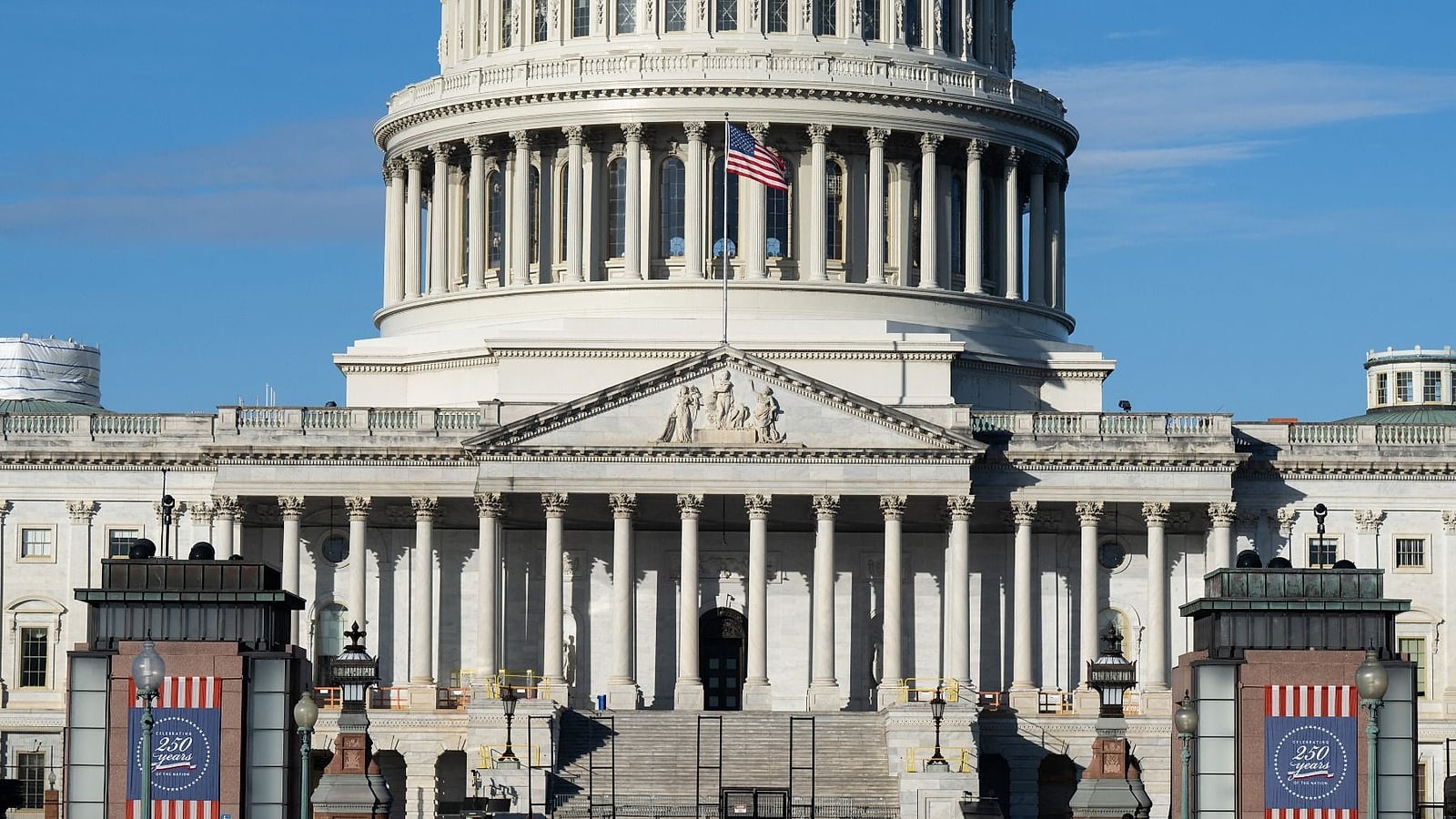
The U.S. Senate voted 62-33 Thursday to pass the Bipartisan American Affordability and Jobs Act (BAAJA), a measure to speed federal permitting for energy projects. Fifteen Democrats backed it, while Republicans Josh Hawley and Mike Rounds voted no.
The legislation would shorten federal environmental reviews, set a 150-day deadline for filing National Environmental Policy Act (NEPA) lawsuits and allow more federal actions to proceed without a National Environmental Policy Act review, according to a congressional summary.
Under the bill, new data centers of 20 megawatts or more would pay the full incremental cost of infrastructure built to serve them, a provision meant to keep electricity ratepayers from absorbing the cost of powering the facilities.
The Spin
Pro-establishment narrative
When a project that takes just two years to build first has to go through two decades of red tape, consumers face steeper energy bills. The BAAJA will clear the permitting backlog, get cheap power onto the grid faster, create more than 100,000 jobs and make data centers pay a fair share. Bipartisanship on affordability beats another decade of gridlock and scarcity.
Establishment-critical narrative
Slapping the word bipartisan on a bill doesn't make gutting environmental review a win for anybody's wallet. The BAAJA exempts fossil gas pipelines from review while making the data center cost provisions voluntary — a handout to Big Tech and polluters, not price relief. This rushed vote with little debate steamrolled tribes and communities stuck with the pollution.
Nerd narrative
There's a 24% chance that data centers will consume more than 10% of global electricity usage for the year 2030, according to the Metaculus prediction community.
Tusk Says Russian Missiles, Drone Fall on Poland

The Facts
Two Russian missiles and a jet-powered drone fell on Polish soil early Friday, Defense Minister Wladyslaw Kosiniak-Kamysz said, identifying one as a Kh-101 cruise missile that landed at Nowy Lipowiec, about 50 kilometers (30 miles) from the Ukrainian border.
Prime Minister Donald Tusk alleged that the objects came from Russia and that "we are dealing with an intentional provocation," noting they came down near Nowa Deba, where European troops are drilling for a possible postwar mission in Ukraine. Moscow did not immediately comment on the allegations.
NATO Secretary-General Mark Rutte said alliance jets were scrambled in response to what he called grave violations of Polish airspace, and he pledged continued support for Ukraine. He attended a Coalition of the Willing meeting in Berlin on Thursday.
The Spin
Anti-Russia narrative
Dropping cruise missiles and drones on NATO soil while allied defense ministers gather next door looks like a deliberate test of nerve, timed for maximum effect. A barrage of more than 400 drones and over 110 missiles aimed at civilian infrastructure shows exactly what kind of peace Moscow has in mind. Backing down now would only further embolden Russia in its war against Ukraine.
Pro-Russia narrative
While Europe hunts for Kremlin plots in every stray drone, Putin, Xi and Trump have signed a peace declaration aimed at pulling the world back from the brink of nuclear catastrophe. Direct talks between the three leaders offer a path to greater security after years of confrontation. Casting Moscow as permanently hostile only guarantees the escalation everyone claims to fear.
Mamdani Sets 2032 Target to Close Rikers Island Jail

The Facts
New York City Mayor Zohran Mamdani announced Friday a plan to close the Rikers Island jail complex by the end of 2032, more than five years after the August 2027 deadline set in law. The City Council must pass legislation to change the date.
The first of four borough-based jails is scheduled to open in Brooklyn in 2029, followed by facilities in the Bronx and Queens in 2031 and Manhattan in 2032. Combined with three hospital-based therapeutic housing units, the system would have 4,500 beds.
The plan calls for reducing the jail population from roughly 6,600 people to around 4,100, including no more than 220 women, by the end of 2032, by expanding diversion programs and electronic monitoring and speeding up court cases.
The Spin
Republican narrative
Pushing the Rikers closure date to 2032 is an admission the whole scheme was never grounded in reality. Hitting a 4,bed target means cutting nearly 40% from a jail population where about half face violent felony charges, so the only path there runs through letting dangerous people walk. A $13.7 billion bet that crime never rises again is reckless.
Democratic narrative
Rikers is beyond saving — a crumbling complex on a landfill, reachable only by one bridge, where 4 a.m. bus rides to court can eat an entire day. Borough jails near courts and transit would cut more than $2 billion a year in operating costs while making family visits, counseling and legal help possible. The jail population already fell to 3,800 in 2020, so right-sizing is clearly within reach.
Judge Blocks USDA Chief Rollins' Christian Emails to Staff
The Facts
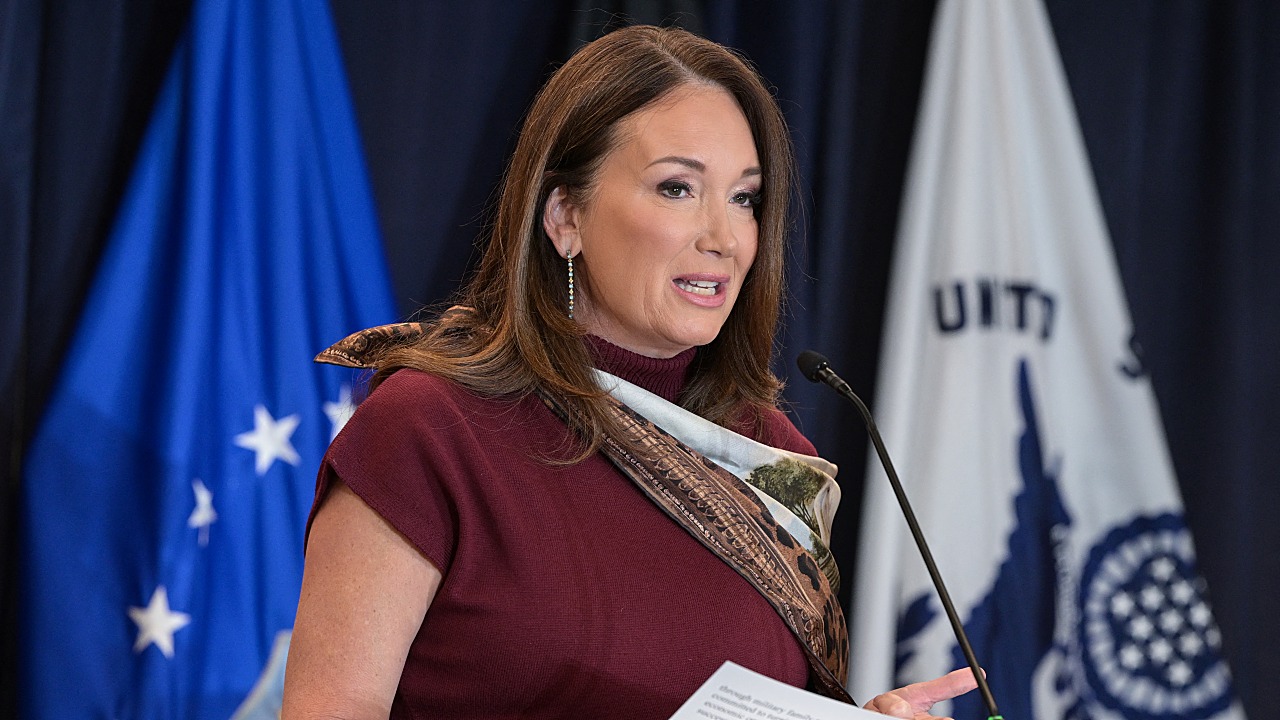
A federal judge in California ruled Thursday that U.S. Agriculture Secretary Brooke Rollins likely violated the Constitution by sending Christmas and Easter messages promoting Christianity to Agriculture Department employees, granting a preliminary injunction.
U.S. District Judge Trina Thompson ordered Rollins to observe boundaries set out in her own November 2025 memo, including stopping if a colleague asks and not using official authority to pressure subordinates. She may still discuss her faith with interested colleagues.
Thompson, who was nominated by former President Joe Biden, found that employees can't realistically opt out of reading messages sent by their agency head. A USDA spokesperson called the ruling "a completely unprecedented attempt to muzzle a Cabinet Secretary" and said that the department is weighing an appeal.
The Spin
Democratic narrative
Rollins' official emails declaring Jesus the shared Savior turned her authority into a pulpit and pressured workers outside the Christian faith. It's tough to make the case that Rollins wasn't coercing her employees when there was an unavoidable distribution list, and she received warnings about the messages. Enforcing the USDA’s rules protects every employee’s religious liberty.
Republican narrative
A Democratic-nominated judge is violating Rollins' religious freedom by treating familiar Christmas and Easter language as unconstitutional coercion. No conversion, worship or church attendance was demanded, making the order an attack on expression rather than a shield for staff. The Constitution cannot make public office a faith-free zone while religious language remains part of civic tradition.