23 April 2026
Daily Newsletter
US Navy Chief John Phelan Fired, Hung Cao Named Acting Chief
The Facts
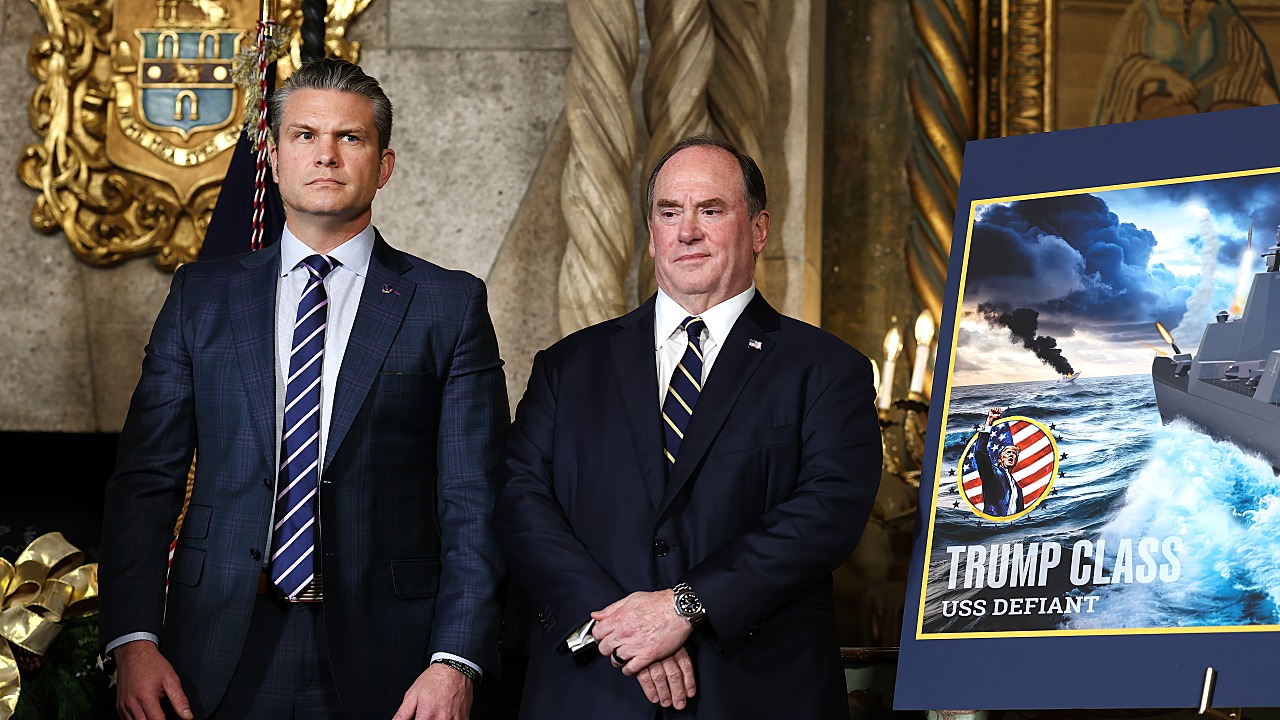
Chief Pentagon spokesman Sean Parnell said in a post on X Wednesday that Navy Secretary John C. Phelan "is departing the administration, effective immediately," naming Navy Undersecretary Hung Cao as "Acting Secretary of the Navy."
Phelan had served as the 79th secretary of the Navy since March 2025, overseeing nearly 1 million sailors, Marines, reservists and civilian personnel and a budget exceeding $260 billion.
Tensions between Phelan and Defense Secretary Pete Hegseth had been building for months over shipbuilding reform and Phelan's direct communication with President Donald Trump, which Hegseth reportedly viewed as bypassing the chain of command.
The Spin
Republican narrative
Phelan was fired because he couldn't deliver on Trump's shipbuilding agenda and clashed with Pentagon leadership at every turn. Combining arrogance with an inability to execute the president's priorities is a recipe for failure, and the Navy can't afford that kind of dysfunction. Hung Cao — a Naval Academy grad with 25 years of service — is exactly the kind of leader the Navy needs right now.
Democratic narrative
This is yet another example of the instability and dysfunction that have come to characterize the Department of Defense under Trump. Phelan was a hedge fund manager with zero military experience running one of the most operationally complex branches of the armed forces — that mismatch was always going to be a problem. Being a major donor and art collector doesn't translate into understanding the Navy.
Nerd narrative
There's a 99.9% chance that another U.S. cabinet member will leave office before May 2026, according to the Metaculus prediction community.
Trump Announces Lebanon-Israel Ceasefire Extension Following US-Mediated Talks
The Facts
U.S. President Donald Trump announced a three-week ceasefire extension between Israel and Lebanon following a second round of U.S.-mediated talks between ambassadors of the two countries in Washington on Thursday. The negotiations came after an initial round earlier this month that marked the first such engagement since 1993.
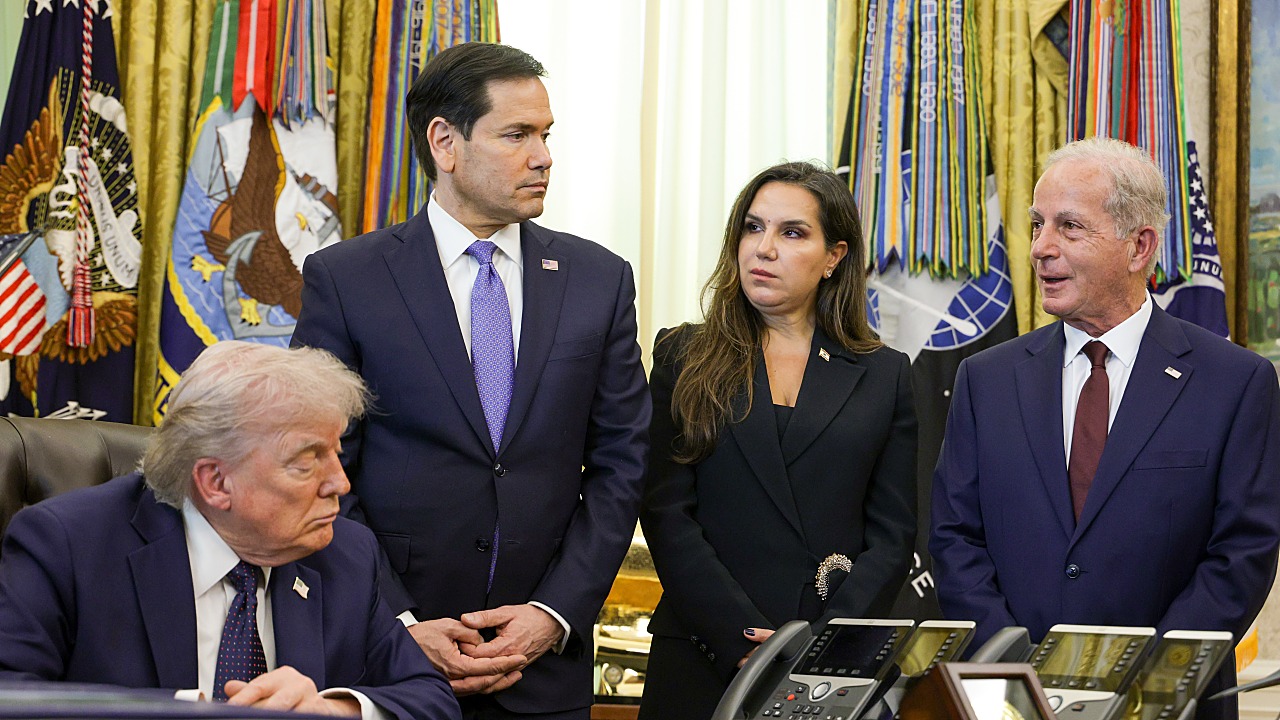
Trump attended the talks, which were led by U.S. Secretary of State Marco Rubio, and joined by U.S. Ambassador to Israel Mike Huckabee, U.S. Ambassador to Lebanon Michel Issa and senior adviser Michael Needham. Israeli Ambassador Yechiel Leiter and Lebanese Ambassador Nada Hamadeh Moawad represented their respective governments.
Lebanon sought a ceasefire extension as a prerequisite for broader negotiations, which would address an Israeli withdrawal, the return of Lebanese detainees held in Israel and the delineation of the land border. Israel has seized a strip of territory along the border, describing it as a buffer zone.
The Spin
Pro-Israel narrative
An extended ceasefire without Hezbollah’s disarmament risks allowing the terrorist group to rearm and threaten northern Israel again — as seen after 2000 and 2006. Israel’s continued engagement in ceasefire talks signals a willingness to negotiate, but this agreement makes clear Lebanon’s armed forces must be the sole security authority. Real peace ultimately requires structural change, not just another temporary pause in fighting.
Anti-Israel narrative
Israel is deliberately killing journalists and demolishing Lebanese villages while invoking ceasefire talks in Washington. An Israeli strike killed journalist Amal Khalil and then blocked rescuers from reaching her — not a military operation, but a blatant war crime. Any ceasefire extension that does not demand a full Israeli withdrawal and a halt to demolitions risks becoming cover for continued occupation and destruction on the ground.
Establishment-critical narrative
The U.S. frames these talks as a push for peace, but its approach helped enable the escalation it now claims to resolve — backing Israel even as strikes in Lebanon killed hundreds of civilians and continued amid ceasefire dynamics. Washington's blind alignment with Israel has made conflicts easier to start and harder to contain, embedding the instability U.S. diplomacy now claims to fix and risking a cycle of repeated escalation that undercuts lasting peace.
Nerd narrative
There is a 35% chance that Lebanon will experience a civil war before 2036, according to the Metaculus prediction community.
Anthropic Probes Reports of Unauthorized Access to Claude Mythos AI

The Facts
AI company Anthropic has confirmed it is investigating a report of unauthorized access to its Claude Mythos Preview model via a third-party vendor environment, telling multiple media outlets that it has found no evidence the breach extended beyond that vendor's systems.
According to Bloomberg, a handful of users in a "private online forum" gained access to Mythos the same day as Anthropic announced a limited release to companies including Apple, Amazon, Cisco and Goldman Sachs for testing purposes under Project Glasswing.
The group, which is part of a private Discord channel dedicated to finding unreleased AI models, allegedly employed tools commonly used by cybersecurity researchers as well as knowledge gleaned from the Mercor breach about Anthropic's AI formatting to locate the model.
The Spin
Establishment-critical narrative
The fact that Mythos — supposedly the most powerful AI tool ever developed — was breached on its launch day by a Discord group that effectively guessed its URL should terrify everyone. If a casual group of hobbyists can crack a restricted cybersecurity AI within hours, the case for stricter export controls and security mandates for frontier AI models is airtight.
Pro-establishment narrative
The Mythos breach sounds alarming, but the actual damage is basically zero. No Anthropic systems were compromised, and, as Mozilla and AWS's testing has proven, the model itself is nowhere near as dangerous as Anthropic advertised. Given that attackers already have cheaper tools that do the same job, the hysteria surrounding this breach is wildly overblown.
Nerd narrative
There is a 99% chance that an AI system will be reported to have independently gained unauthorized access to another computer system before 2033, according to the Metaculus prediction community.
UK Court Backs Met Police Facial Recognition Use

The Facts
The Metropolitan Police's use of live facial recognition (LFR) technology has been upheld as lawful by the High Court, with Lord Justice Holgate and Mrs Justice Farbey ruling that the Met's policy complies with Articles 8, 10 and 11 of the European Convention on Human Rights.
The legal challenge was brought by youth worker Shaun Thompson — who was misidentified by LFR near London Bridge in February 2024 after being matched to an image of his brother — and Silkie Carlo, director of civil liberties group Big Brother Watch. Both have indicated their intention to appeal.
The Met's LFR policy, adopted in September 2024, restricts deployments to three defined use cases: crime and missing-person hotspots, protective security operations and locations where intelligence indicates a wanted individual is likely to be present.
The Spin
Pro-establishment narrative
Live facial recognition is a proven, lawful crime-fighting tool that has led to more than 2,100 arrests in London, including over 100 sex offenders who would otherwise have remained free to harm children. Independent testing confirms the technology is accurate and consistent across demographic groups, with just 12 false alerts from over three million faces scanned and none resulting in an arrest. Around 80% of Londoners back the technolgy's use, and the court has confirmed the safeguards are robust.
Establishment-critical narrative
A court's backing of the Met's facial recognition program doesn't make mass surveillance acceptable — 4.2 million faces scanned in London last year alone is an unprecedented level of monitoring that no other Western democracy has matched. The technology already wrongly flagged an innocent man, who was detained for over 20 minutes and threatened with arrest despite showing valid I.D. Rubber-stamping this kind of dragnet surveillance sets a dangerous precedent for civil liberties across Britain.
Philippines' Duterte to Face ICC Trial for Alleged Crimes Against Humanity

The Facts
The International Criminal Court's Pre-Trial Chamber I unanimously confirmed three counts of crimes against humanity — murder and attempted murder — against former Philippine President Rodrigo Duterte on Thursday, committing him to a full trial at The Hague.
Judges found substantial grounds to believe Duterte was responsible for killings carried out between 2011 and 2019, spanning his tenure as Davao City mayor and as president. The charges relate to at least 76 murders and two attempted murders across 49 cited incidents.
The court ruled that the word "neutralize," used across official documents and Duterte's speeches, meant "to kill" in context, rejecting defense arguments that it referred to lawful arrest or restraint. Two insider witnesses testified directly to that interpretation.
The Spin
Pro-establishment narrative
The ICC confirming all crimes against humanity charges against Duterte marks a turning point for thousands of victims' families who've waited years for accountability. Thousands were killed in cold blood during the drug war, mostly from poor communities, with the Philippine justice system doing nothing. This trial proves that impunity has limits and that international justice can reach even the most powerful.
Establishment-critical narrative
The ICC's confirmation of charges against Duterte is a foregone conclusion from a court that prejudged the case before hearing all defense arguments. The prosecution relied on speculation, hearsay and media reports — not hard evidence — making this look more like a political proceeding than a legitimate trial. Unresolved jurisdictional questions about the Philippines' withdrawal from the Rome Statute should have stopped this process cold.
Nerd narrative
There's a 75% chance that Rodrigo Duterte will be convicted of any crime by the International Criminal Court by 2030, according to the Metaculus prediction community.
Trump Admin Moves Medical Marijuana to Schedule III

The Facts
U.S. Acting Attorney General Todd Blanche signed an order Thursday moving state-licensed medical marijuana from Schedule I — reserved for drugs like heroin and LSD — to Schedule III, the same category as ketamine and anabolic steroids.
The reclassification does not legalize marijuana under federal law. It applies only to FDA-approved and state-licensed medical marijuana products, while all other marijuana remains a Schedule I controlled substance.
The Drug Enforcement Administration (DEA) will hold an expedited administrative hearing beginning June 29 to consider broader marijuana rescheduling. DEA Administrator Terry Cole stated that the agency is "expeditiously moving forward" with the process.
The Spin
Pro-establishment narrative
Rescheduling marijuana is a long-overdue common-sense reform that expands patient access and removes unnecessary research barriers. Keeping cannabis alongside heroin while prescription painkillers caused a nationwide opioid crisis was never logical. This move empowers doctors to make better-informed health care decisions and delivers on a real promise to modernize federal drug policy.
Establishment-critical narrative
Rescheduling marijuana sends the wrong message at the worst possible time — addiction rates are surging, with roughly 18 million Americans using cannabis 21 or more days a month. High-potency modern products are driving emergency room visits, psychotic episodes and impaired driving fatalities at alarming rates. Loosening marijuana policy will produce worse outcomes than expected.
Cynical narrative
The Justice Department's move to reclassify some medical marijuana as a less dangerous Schedule III drug signals a major policy shift, but it does not legalize cannabis nationwide. The change mainly affects state-licensed medical use, easing research and regulation, while federal law still prohibits broader recreational use, leaving a complex patchwork between state and federal rules.
Nerd narrative
There's a 90% chance that marijuana will be legal for recreational use in a supermajority of the strongly Republican U.S. states before 2041, according to the Metaculus prediction community.
Comer: Committee Split on Maxwell Pardon for Epstein Info
The Facts
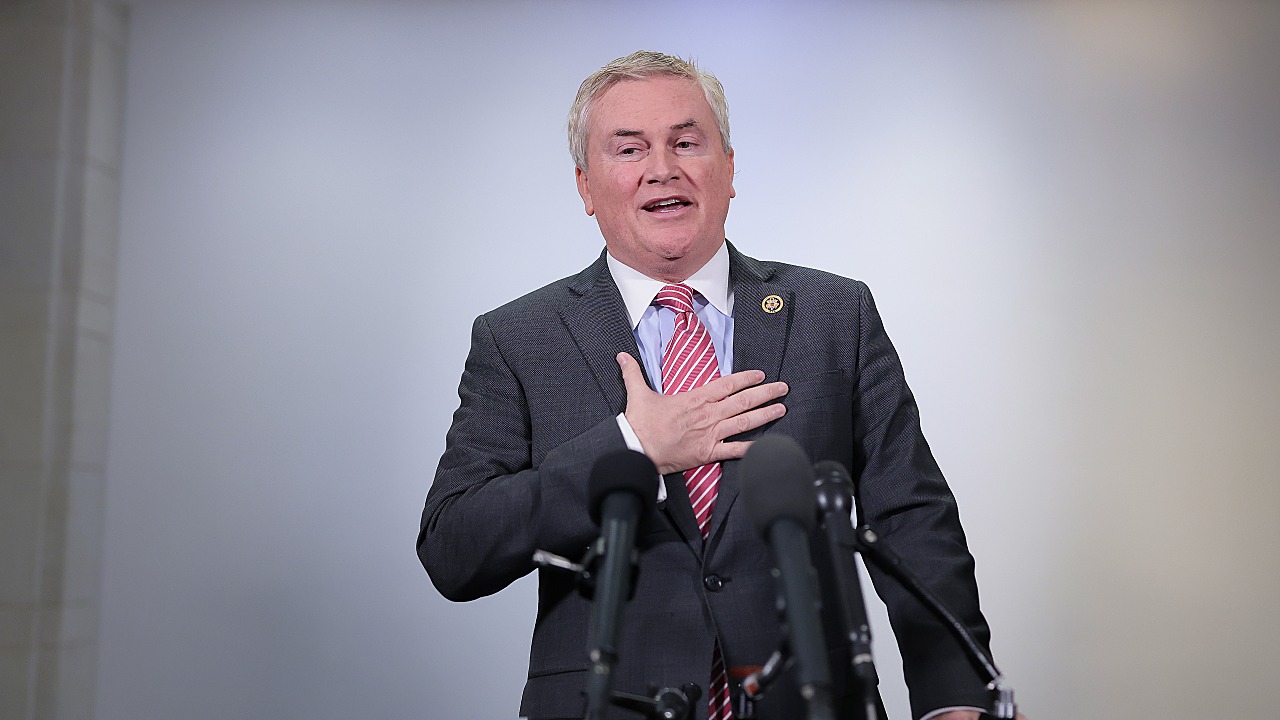
U.S. House Oversight Committee Chairman Rep. James Comer (R-Ky.) told Politico that members of his panel are divided over whether President Donald Trump should pardon Ghislaine Maxwell in exchange for her cooperation in the committee's investigation into Jeffrey Epstein.
Maxwell, the only convicted associate in Epstein's sex trafficking case, invoked her Fifth Amendment rights during a committee deposition in February. Her attorney, David Oscar Markus, has said she would only cooperate if granted clemency by Trump, who has not ruled out a pardon.
Comer said that he personally opposes a pardon, stating it "looks bad" and that Maxwell is "the worst person in this whole investigation" aside from Epstein. He declined to name which committee members support the deal.
The Spin
Narrative A
Pardoning Maxwell would be a gross miscarriage of justice that spits in the face of over 1,000 survivors. The DOJ already botched the Epstein files release, withheld 2.5 million records and exposed victims' names. Rewarding Maxwell with clemency doubles down on that failure.
Narrative B
Silencing Maxwell through imprisonment means the full truth about Epstein's network stays buried. Clemency is the only realistic path to getting the unfiltered account the public actually deserves after her trial was tarnished by juror lies and broken government promises.
Nerd narrative
There's a 30% chance that the Trump administration will release the Epstein Files before Jan. 20, 2029, according to the Metaculus prediction community.
UK Biobank Health Data of 500K Listed for Sale in China

The Facts
The U.K. government confirmed on Thursday that anonymized health data from UK Biobank had been found listed for sale on Xianyu, a Chinese e-commerce platform owned by Alibaba. Three separate listings were identified, with at least one appearing to contain data from all 500,000 members. Technology Minister Ian Murray told Parliament the charity was informed of the breach on April 20.
The data was accessed legitimately by three Chinese research institutions before being listed for sale. Alibaba removed the listings before any transactions were completed, and the three institutions had their access to the Biobank suspended.
The listed data did not include names, addresses, dates of birth or NHS numbers, but did contain gender, age, month and year of birth, socioeconomic status, lifestyle habits and measures from biological samples. Murray said he could not guarantee 100% that no individual could be identified from the data.
The Spin
Pro-establishment narrative
The U.K. government acted quickly and decisively after UK Biobank data was listed for sale on Alibaba — access to the three implicated institutions was revoked, listings were removed before any sales occurred, and a full investigation is underway. The data contained no names, addresses or contact details, keeping participants' personally identifiable information secure. Strong safeguards are being reinforced, and this incident shows the system working as intended when a breach is caught and stopped.
Establishment-critical narrative
Half a million Britons donated health data in good faith and it ended up listed for sale on Alibaba — genetic records, mental health data, cancer histories, all exposed without consent. The government admits re-identification is still possible even with de-identified data, meaning the risk is real and ongoing. When trust in data sharing collapses, research suffers, and no amount of after-the-fact damage control changes what already happened.
Nerd narrative
There's a 50% chance that the U.K. will have sequenced 10 million people in a research biobank by September 2033, according to the Metaculus prediction community.
Warner Bros Shareholders Approve $111B Paramount Merger

The Facts
Warner Bros. Discovery (WBD) shareholders voted overwhelmingly to approve a $111 billion merger with Paramount Skydance on Thursday, with WBD investors set to receive $31 per share — a 147% premium over the stock's unaffected price of $12.54 per share.
The deal would unite two of Hollywood's remaining five legacy studios and combine the HBO Max and Paramount+ streaming platforms, while also bringing CBS and CNN under the same corporate ownership for the first time.
WBD shareholders separately rejected, in a non-binding advisory vote, the compensation packages for outgoing executives. CEO David Zaslav's exit package could total up to $886 million, including $517.2 million in equity, $34.2 million in cash severance and up to $335 million in tax reimbursements.
The Spin
Right narrative
The Paramount-WBD deal blocks a Netflix takeover that would have reshaped Hollywood into a content machine hostile to mainstream American values. Ellison has committed to 30 films a year and a day exclusive theatrical window, a genuine lifeline for movie theaters. Shareholders approved the $111 billion deal because it builds a next-generation media company that actually expands consumer choice.
Left narrative
This merger hands two of Hollywood's most storied studios to billionaires who've spent millions courting political favor, and the result will be mass layoffs and fewer films at a time when the industry has already lost 42,000 jobs. Saddling the combined company with $79 billion in debt guarantees production cuts, just as Disney's purchase of 21st Century Fox did. State attorneys general are the last real check on this antitrust disaster.
Cynical narrative
The loudest voices attacking this deal aren’t worried about competition, they’re the same Hollywood activists who’ve spent years targeting Israel and anyone tied to it. A merger backed by leaders openly supportive of Israel suddenly becomes "dangerous"? That’s not economics, it’s ideology — resentment toward pro-Israel leadership driving a political backlash disguised as antitrust concern.
Nerd narrative
There's a 50% chance that 100 movies will have made 1 billion dollars at the box office by January 2037, according to the Metaculus prediction community.
US Forces Board Tankers Carrying Iranian Oil

The Facts
The U.S. Department of Defense said Thursday that American forces boarded two sanctioned tankers in the Indian Ocean this week — the M/T Tifani and the M/T Majestic X — as part of what the Pentagon described as efforts to disrupt vessels "providing material support to Iran."
The M/T Majestic X, also known as Phonix, was flying a Guyanese flag without authorization, according to ship-tracking data. Monitoring group TankerTrackers said the vessel had facilitated the export of 20 million barrels of Iranian oil since 2023.
U.S. Central Command said it had redirected a total of 33 vessels since the start of its naval blockade of Iranian ports, which began on April 13. The Pentagon stated that it will "continue to deny illicit actors and their vessels freedom of maneuver in the maritime domain."
The Spin
Pro-Trump narrative
The U.S. has locked down the Strait of Hormuz, and Iran has nobody coherent enough to respond. Hardliners are losing on the battlefield while so-called moderates scramble for relevance — that's not a unified government, that's a collapsing one. No ship moves through that strait without a U.S. Navy sign-off, and that leverage is exactly what forces Iran to the negotiating table.
Pro-Iran narrative
Iran is on the verge of the decisive phase of the battle. Iran's institutions are operating with total unity and discipline, and no amount of external pressure has fractured that. The distinction between hardliners and moderates is fiction — Iranians stand as one nation under one Supreme Leader with one purpose. That kind of iron cohesion doesn't bend to blockades or ultimatums; it hardens against them.
Cynical narrative
The ceasefire announced on April 8 appeared to signal calm. However, earlier and ongoing military deployments suggest a different picture. Major naval and ground forces were already moving into the region, even as diplomatic talks continued. When negotiations failed, a blockade followed and pressure increased. Taken together, these developments indicate not a lasting peace, but a pause that may be preparing the ground for further escalation.
Narrative D
If Iran truly is leaderless and divided, the U.S. has a window for a diplomatic off-ramp. By withdrawing troops and ships, the U.S. could remove visible military targets, limiting Iran's ability to escalate through direct confrontation. This shift would increase pressure for diplomatic engagement, as Iran's need for sanctions relief may encourage quiet concessions, particularly on nuclear issues. In turn, both Iran and Trump could frame the outcome as a success domestically, preserving face while reducing the immediate risk of further senseless bloodshed.
Nerd narrative
There's a 40% chance that the United States will conduct a ground invasion of Iran before 2027, according to the Metaculus prediction community.