The US Seizure of Nicolás Maduro

Overview
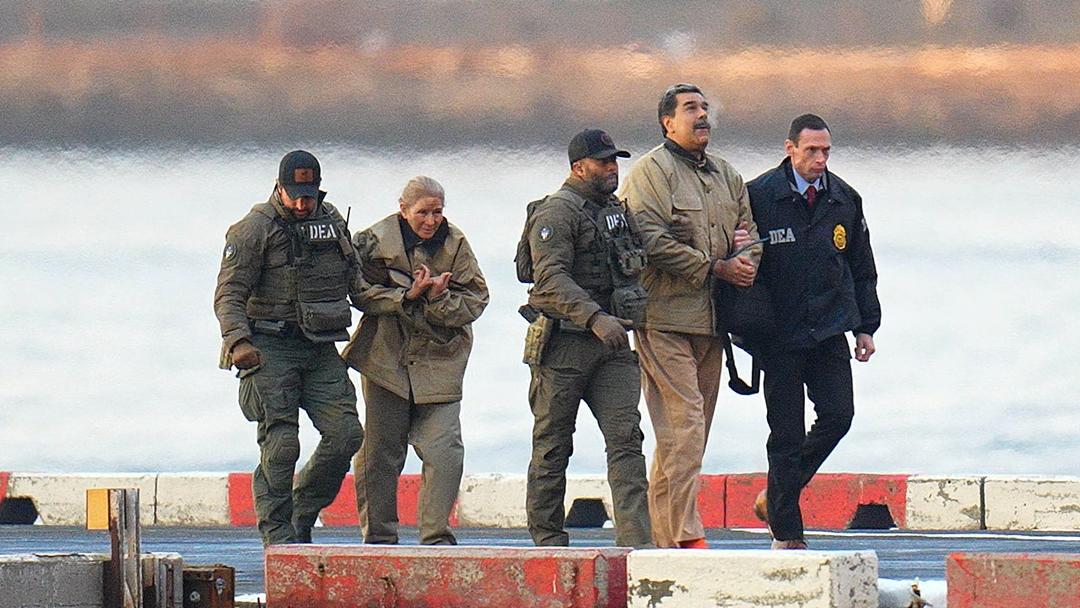
- U.S. forces conducted a successful raid in Caracas and nearby cities in the early hours of Jan. 3, 2026, that concluded with the seizure of Venezuela's leader Nicolás Maduro and his wife, Cilia Flores.
- The pre-dawn operation lasted roughly two-and-a-half-hour and included strikes on key military sites to secure air dominance and degrade defenses to clear the way for Special Forces. 83 people have died, none of them U.S. troops.
- The operation came after the United States built up a major military presence in the Caribbean, carried out a drone strike on a dock area inside Venezuela, launched dozens of lethal strikes on alleged drug-carrying vessels, and imposed a blockade on tankers entering or leaving the country.


Sources Split
LEFT
CENTER
RIGHT

+2

+1

+1
+1
+2
+1
+1

+1

+2
ESTAB
CRIT
CENTER
PRO
ESTAB
The Spin
Democratic narrative
The fact that Trump's attack on Venezuela removed a brutal and corrupt dictator like Maduro from office doesn't make it legal. The operation flouted constitutional war-powers protections and bypassed Congress, in a grave abuse of executive authority that undermines checks and balances. There's no sound basis under domestic or international law for using military force in a foreign country to seize a foreign leader — even an illegitimate one — and that risks dangerous precedents.
Republican narrative
Trump has the presidential authority to unilaterally direct U.S. forces into military action to capture indicted dictator Nicolás Maduro and hold this brutal narco-terrorist accountable. Yet, Democrats who have long demanded the ousting of Maduro are now hypocritically denouncing this bold, successful operation simply because Trump did it, putting partisan hatred above U.S. national interests and vindication for Venezuelans and U.S. citizens.

Establishment-critical narrative
U.S. forces kidnapping a foreign head of state in his own country exposes how little the U.S. establishment bothers about law or credibility. Disguising a regime change as criminal justice reduces international law to a joke and asserts imperial privilege, all while signaling to the international community that sovereignty matters only for U.S. allies, as oil, capital and coercion still drive U.S. foreign policy.

History of Venezuela
To understand how Venezuela arrived at this moment, it's necessary to trace the country's complex path from colonial territory to oil-rich nation to a nation whose leader would be seized by U.S. forces.
Modern-day Venezuela was inhabited by Arawak, Carib and Chibcha indigenous people by the time of Christopher Columbus' arrival in 1498. Spaniards settled there a quarter of a century later, with a brief period of authorized German exploration afterward.
As a part of the Spanish Empire for almost three centuries, the region located at the northern coast of South America had an agriculture-based export economy and a very hierarchical society in which local-born elites were excluded from the upper-echelons of the territory's administration.
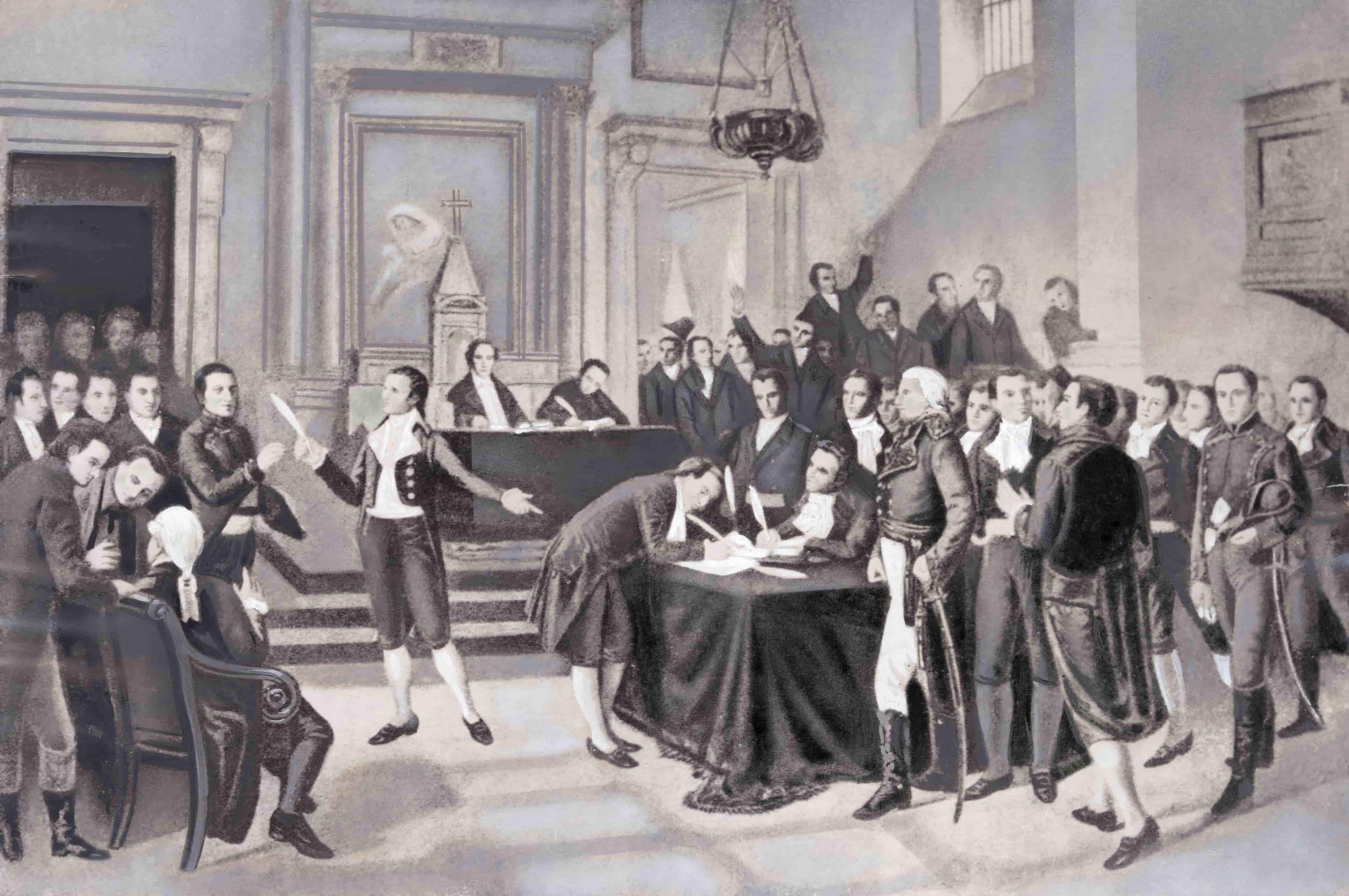
Venezuela first declared its independence from Spain in 1811, taking advantage of Napoleon's invasion of the country, and ultimately achieved it under the leadership of Simón Bolívar in 1821 as part of the Republic of Gran Colombia. Venezuela eventually seceded in 1830 under Gen. José Antonio Páez.
Caudillismo (1830-1935)
With Venezuela's population reduced by up to a third and its cocoa-based export economy in ruins, the country entered into a century-long era of Caudillismo — a political system organized under the rule of local strongmen. Despite initial stability, disputes within the ruling elite emerged after a decline in coffee prices in the 1840s, leading to successive uprisings and wars.
The instability of the mid-19th century gave way to a period of peace, stability and modernization under Antonio Guzmán Blanco and his allies. Nevertheless, popular opposition to his policies grew among younger generations in the late 1880s.
Guzmán's departure from office in 1888 prompted failed attempts to establish a civilian government and a sequence of three military leaders, of which the third one was Gen. Juan Vicente Gómez, who ruled from 1908 to 1935, successfully stabilizing the country by force until his death.
Political Party System (1935-1990)
In the 1930s, Venezuela entered an uneven transition away from personalist rule to a party system. A civilian-military junta that seized power in 1945 legalized all political parties and launched progressive reforms that intensified polarization and culminated in a military coup in 1948, which ushered in a decade-long anti-communist military dictatorship dominated by Marcos Pérez Jiménez.
The collapse of Pérez Jiménez's government paved the way for the establishment of a democratic framework based on elite consensus and cooperation among major political parties — the power-sharing 1958 Pact of Punto Fijo — enabling civilian governments to alternate power peacefully and to marginalize military intervention in politics, while consolidating democratic institutions.
In the 1970s, the oil boom fueled public spending but global oil prices plunged in the 1980s. Consequently, Venezuela faced persistent economic downturn, currency devaluations and rising debt, which eroded public confidence in the political establishment.
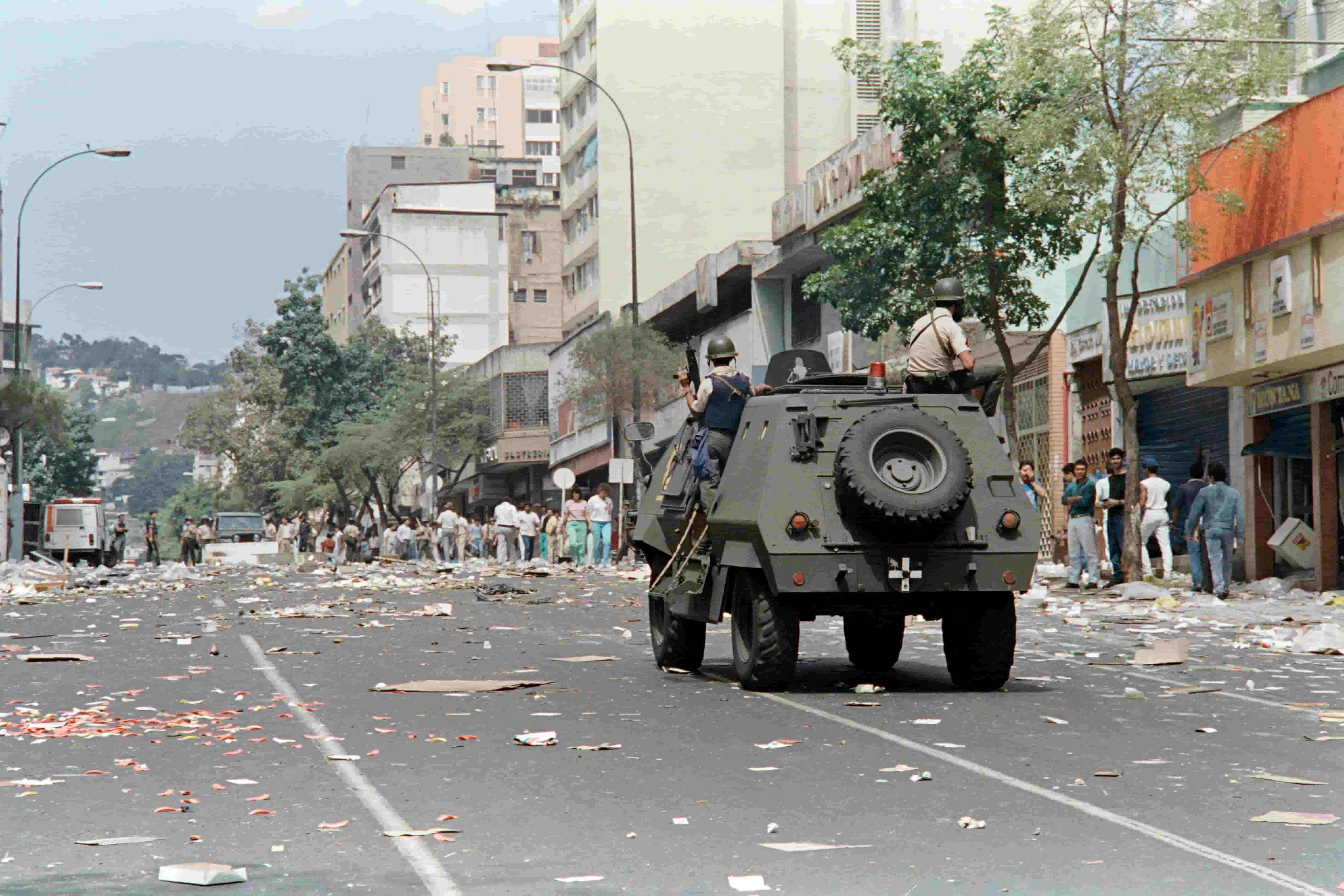
The situation was further aggravated in 1989 as the announcement of an IMF-backed fiscal austerity package in 1989 triggered protests and riots that left hundreds dead. Years of instability and crises followed in the 1990s.
Oil Industry
Political order in the early 1900s attracted foreign oil investors, and crude oil was discovered in the Lake Maracaibo basin in 1922. Annual output jumped from over a million barrels to 137 million barrels by 1929, turning the country into the world's leading oil exporter. Venezuela passed a bill requiring the oil sector to transfer half of their profits to government funds in 1943, but adopted more liberal policies toward foreign oil companies under Pérez Jiménez. The country was the world's fourth wealthiest nation in per capita terms, with much of the oil revenue being used for monumental public works projects.
During puntofijismo, Venezuela sought to assert greater national control over oil resources while continuing to rely on petroleum revenues. Moreover, Venezeula further strengthened its influence in global energy markets by founding the Organization of the Petroleum Exporting Countries (OPEC) in 1960. Rising world oil prices in the early 1970s enabled more public spending but also mismanagement and corruption. In 1976, Venezuela nationalized its oil industry and created the state-owned company Petróleos de Venezuela, S.A. (PdVSA), which was allowed to partner with foreign companies with a minimum 60% equity in joint ventures.
Venezuela's oil-dependent economy faced mounting strain as international prices weakened and production growth slowed in the late 1970s, exposing structural vulnerabilities masked during the boom years. Rising public debt, fiscal deficits and a sharp currency devaluation forced the state to scale back spending.
US-Venezuela Relations
The United States was one of the first countries to recognize Venezuela as an independent state. Bilateral relations gained relevance in the late 19th century when Venezuela appealed to the United States for help in a border dispute with the U.K. over a territory where gold had been discovered years earlier. U.S. President Grover Cleveland pressured the U.K. to arbitrate the matter. Later, U.S. President Theodore Roosevelt brokered a settlement between Venezuela, Germany, Italy and the U.K. to put an end to a naval blockade of Venezuela over unpaid debts.
Washington adopted a pragmatic approach toward the country from the mid-20th century onward, viewing political order and openness to U.S. commercial interests as preferable to instability. Relations remained cooperative as successive Venezuelan governments positioned themselves as reliable allies and key energy suppliers even after the 1958 attack on U.S. Vice President Richard Nixon's motorcade in Caracas and while the country was asserting greater control over its oil resources.


The Spin
Narrative A
Venezuela's history reflects a long, uneven march toward progress, shaped by geography, conflict, and delayed state formation. Through pacification, a national army, and oil-funded institutions, the country gradually overcame fragmentation to become a unified nation. Though unequal and risky, mid-20th-century Venezuela had become cohesive and pleasant, with a lived sense of belonging unknown to earlier generations.
Narrative B
Venezuela's history was less a march toward progress than a cycle of elite control and popular resistance. From colonial exploitation and racial hierarchy to caudillo strongmen and oil-backed authoritarianism, wealth and power stayed concentrated while the majority remained excluded. Even formal democracy protected party elites and foreign interests, setting the stage for recurring uprisings against a system that promised inclusion but delivered inequality.
Hugo Chávez Era
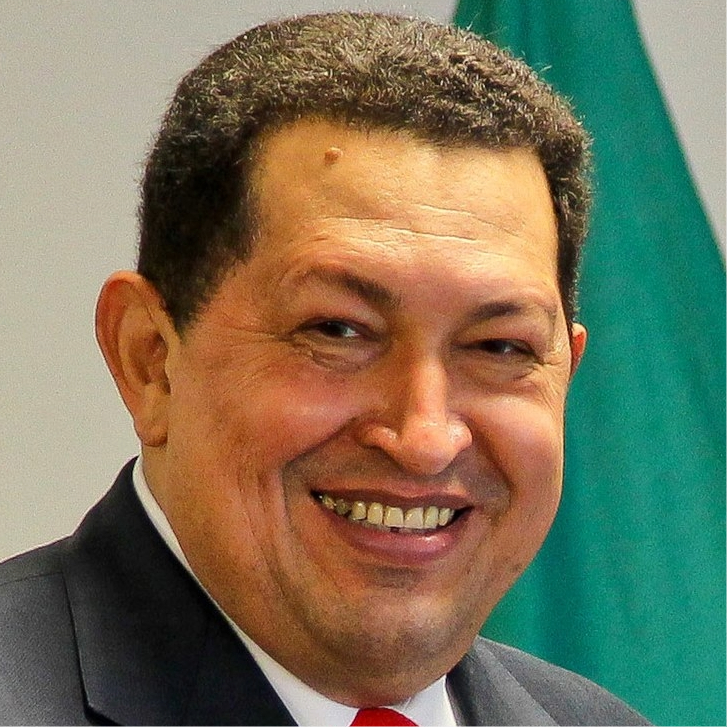
In the early 1980s, an army paratrooper and teacher in the Military Academy of Venezuela named Hugo Chávez established a leftist movement to spread a socialist interpretation of Bolívar's ideals within the military.
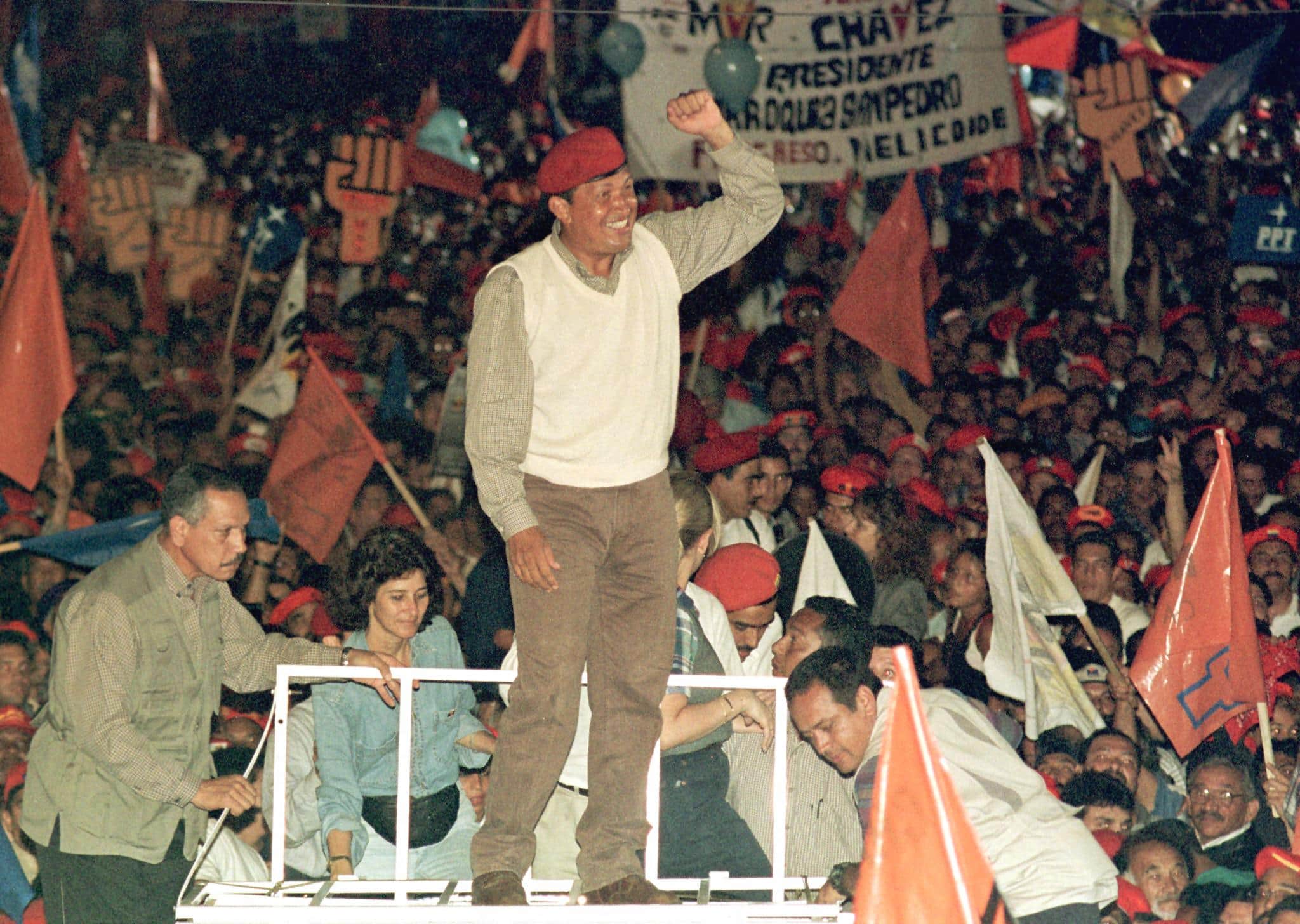
He later emerged as a national political figure after leading the first of two failed coup attempts in 1992 — for which he was imprisoned without court ruling for two years. Capitalizing on economic turmoil and widespread disillusionment with the establishment and running on a populist-nationalist platform, he won the presidential election of 1998.
Chávez Presidency
Once in office, Chávez called a referendum to convene a constituent assembly tasked with rewriting the constitution, which was approved by popular vote. Under the new constitutional framework, he was reelected president in 2000. Growing opposition over laws and alleged constitutional violations triggered protests and the April Crisis in 2002, during which Chávez was briefly ousted and imprisoned as part of a short-lived coup attempt.
Two years later, he oversaw an expansion of the country's top court and survived a recall referendum amid allegations of irregularities. Subsequent local elections in 2004, an opposition boycott of the 2005 legislative elections, and his reelection in 2006 further entrenched his control over Venezuela's political institutions.
Chávez suffered his first electoral defeat with a narrow loss in a 2007 referendum that would abolish presidential limits, but secured a win in a second referendum in 2009. He won a fourth term in 2012, but was never sworn in as he died from cancer in March 2013.
Domestic Policies
At home, Chávez pursued institutional reforms that expanded executive authority, integrated the armed forces into civilian governance and social programs, and tightened media regulations over time.
His economic policy combined rising state intervention with extensive nationalizations, bringing sectors deemed as strategic under state control, while introducing price and currency controls to manage inflation and capital flows.
Access to health care, education and subsidized food was expanded, and poverty reduced during periods of high oil income. Meanwhile, rising violent crime and weakening law-enforcement capacity became persistent challenges.
Foreign Policy
Internationally, he reoriented the country's foreign policy, emphasizing national sovereignty, regional initiatives, South–South cooperation and the construction of a multipolar international order.
Relations with the United States deteriorated steadily during his presidency, particularly after the failed 2002 coup attempt — which Chávez claimed was driven by U.S. intervention. Diplomatic confrontations and hostile rhetoric became recurrent, including allegations that the United States was plotting to kill Chávez, though formal ties were never severed. Despite political tensions, oil exports to the United States continued throughout his tenure.
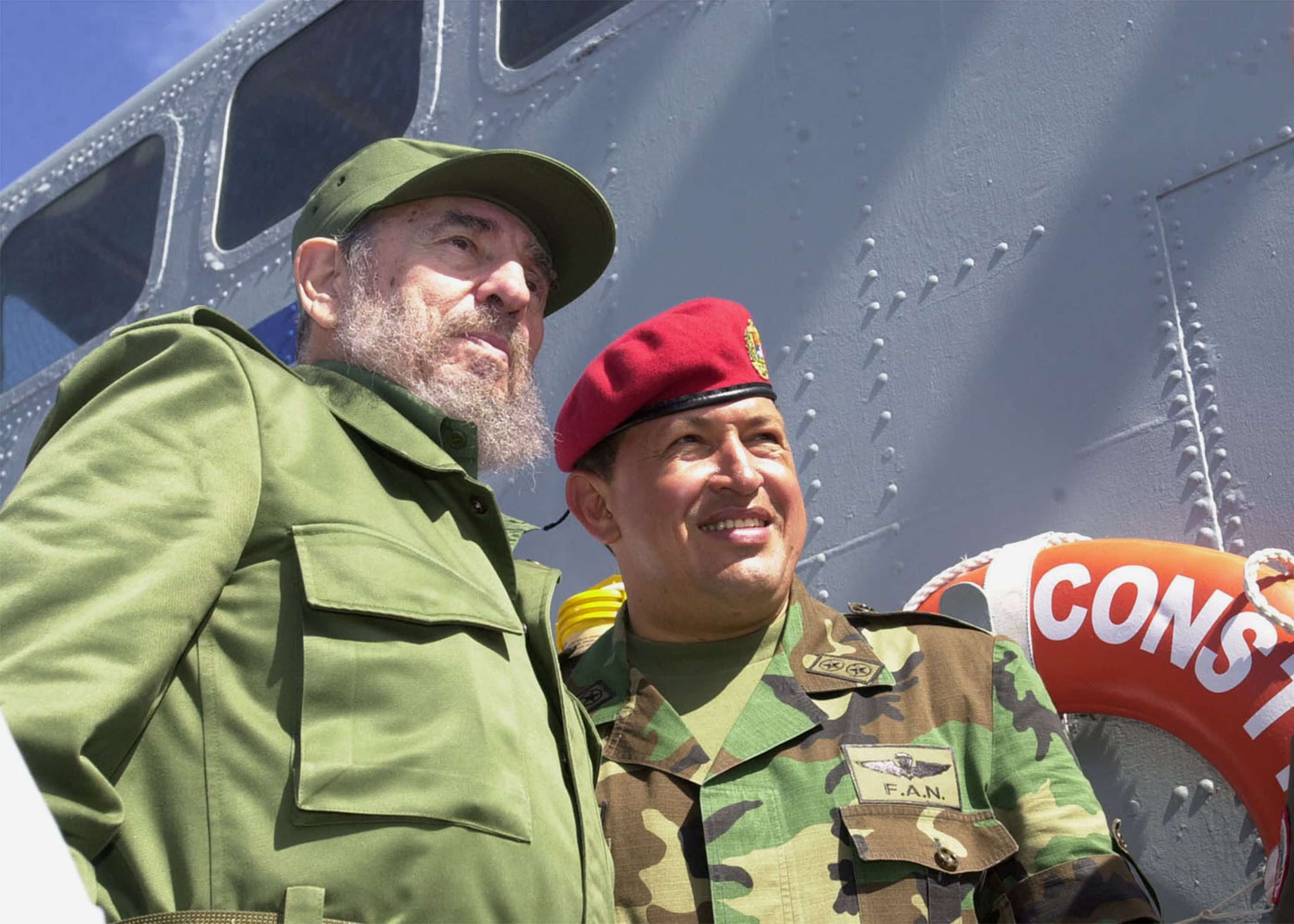
Meanwhile, he deepened ties with Cuba through oil-for-services agreements and sought to expand international partnerships with China and Russia through energy cooperation, arms purchases and financial arrangements, as well as with Iran and other non-U.S.-aligned states in a bid to reduce dependence on traditional partners and reinforce its geopolitical autonomy.
Energy Policy
Oil was the central pillar of Chávez’s national project, renegotiating contracts and expropriating or forcibly converting private oil ventures into state-controlled joint enterprises. He further reshaped PdVSA from a relatively autonomous, technocratic oil company into a politically subordinated instrument of the executive, weakening managerial autonomy.
Booming global oil prices during the 2000s generated unprecedented revenues, which were channeled into social programs, infrastructure projects and subsidized energy diplomacy. Heavy reliance on oil revenues, however, deepened structural dependence and limited incentives for economic diversification.
Nicolás Maduro Era
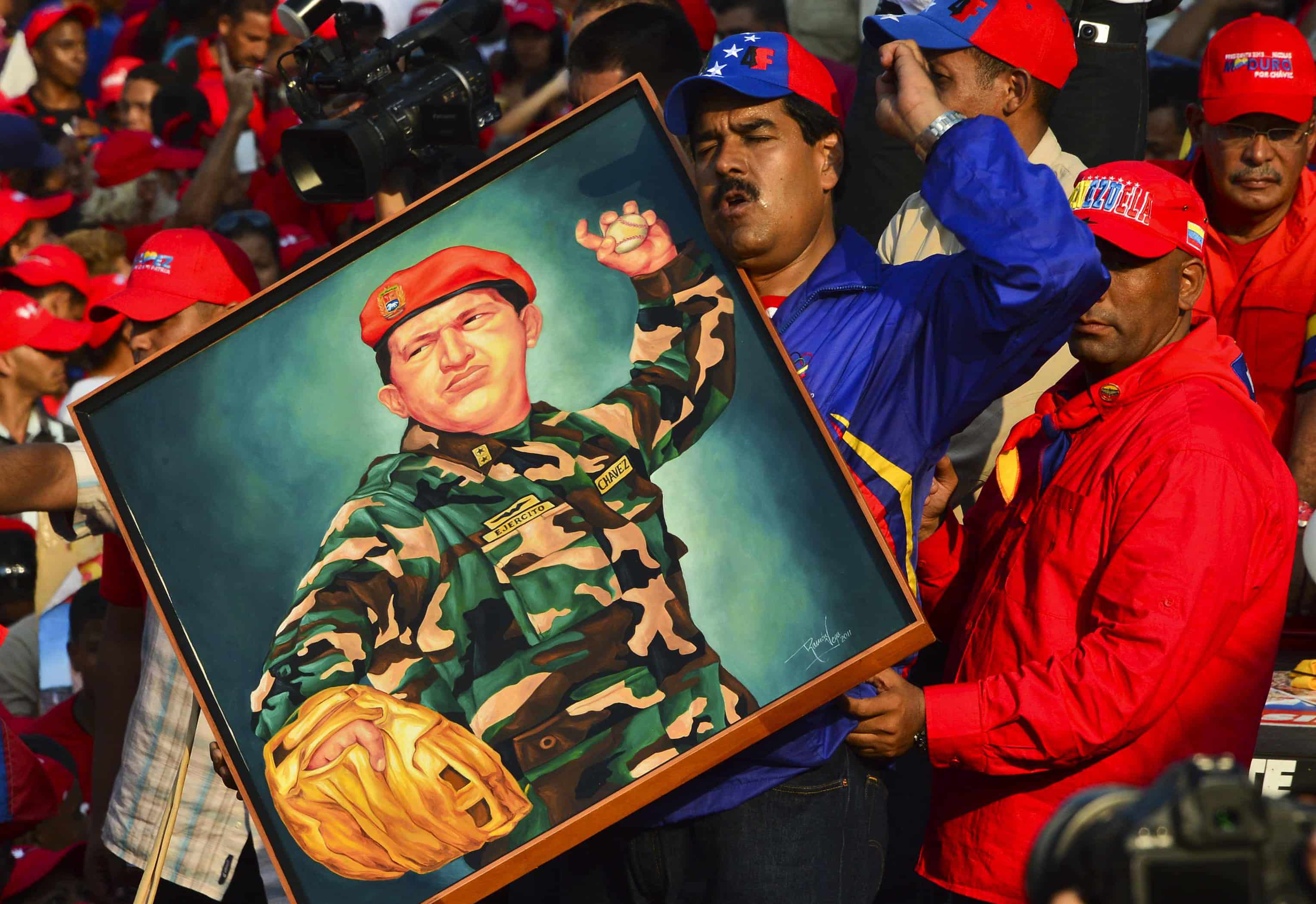
Nicolás Maduro entered politics as a loyal supporter of Hugo Chávez, eventually serving as his foreign minister and vice president. After Chávez's death in 2013, he emerged as his successor.
A month after his passing, Maduro secured a narrow electoral victory against opposition candidate Henrique Capriles, sparking immediate protests and accusations of fraud from the opposition. Later that year, the ruling party won local elections but the opposition secured key urban centers. Broader and deadly public demonstrations erupted in 2014 amid economic hardship, inflation, perceived democratic erosion and rising violence under the new administration.
Political Crisis
In March 2015, U.S. President Barack Obama declared that the situation in Venezuela posed an unusual and extraordinary threat to U.S. national security and foreign policy interests, imposing sanctions on seven government officials over allegations of human rights abuse and public corruption.
The political crisis further deepened when the opposition secured a two-thirds supermajority in the National Assembly for the first time since Chávez rose to power in the 2015 legislative elections, as the top court declared the legislative body void until three banned opposition members were removed from office.
In 2017, new deadly protests erupted when the top court moved to strip the National Assembly of legislative powers. Venezuela held a special election for a constituent assembly officially designated to redraft the constitution, which later granted itself legislative powers to bypass the opposition-controlled National Assembly. The opposition boycotted the vote after an unofficial referendum rejected plans to rewrite the constitution. In the wake of the vote, the United States placed sanctions on Maduro for allegedly undermining democracy.
In 2018, major opposition parties and popular candidates were disqualified from the presidential race, leading the opposition to boycott the vote. Maduro won reelection, but the opposition-controlled National Assembly declared the presidency vacant.
Then, National Assembly President Juan Guaidó invoked constitutional provisions to declare himself as the interim president of Venezuela, receiving recognition from the United States and other countries.
The political stalemate persisted in the lead-up to the 2024 presidential election, which took place under restrictive conditions marked by candidate disqualifications, contradicting the Barbados Agreement. While electoral authorities declared Maduro as the winner, the opposition claimed that its candidate, Eduardo González, had won the vote by a 2-1 margin.
Economic and Humanitarian Crises
Under the leadership of Maduro, Venezuela entered a period of deepening economic collapse with economists pointing to structural dependencies on oil revenues amid a sharp fall in global oil prices and by fiscal dominance, which led to hyperinflation. Additionally, many analysts have argued that U.S. sanctions exacerbated Venezuela's economic crisis, with Maduro and his government blaming U.S. sanctions for all of the country's economic woes.
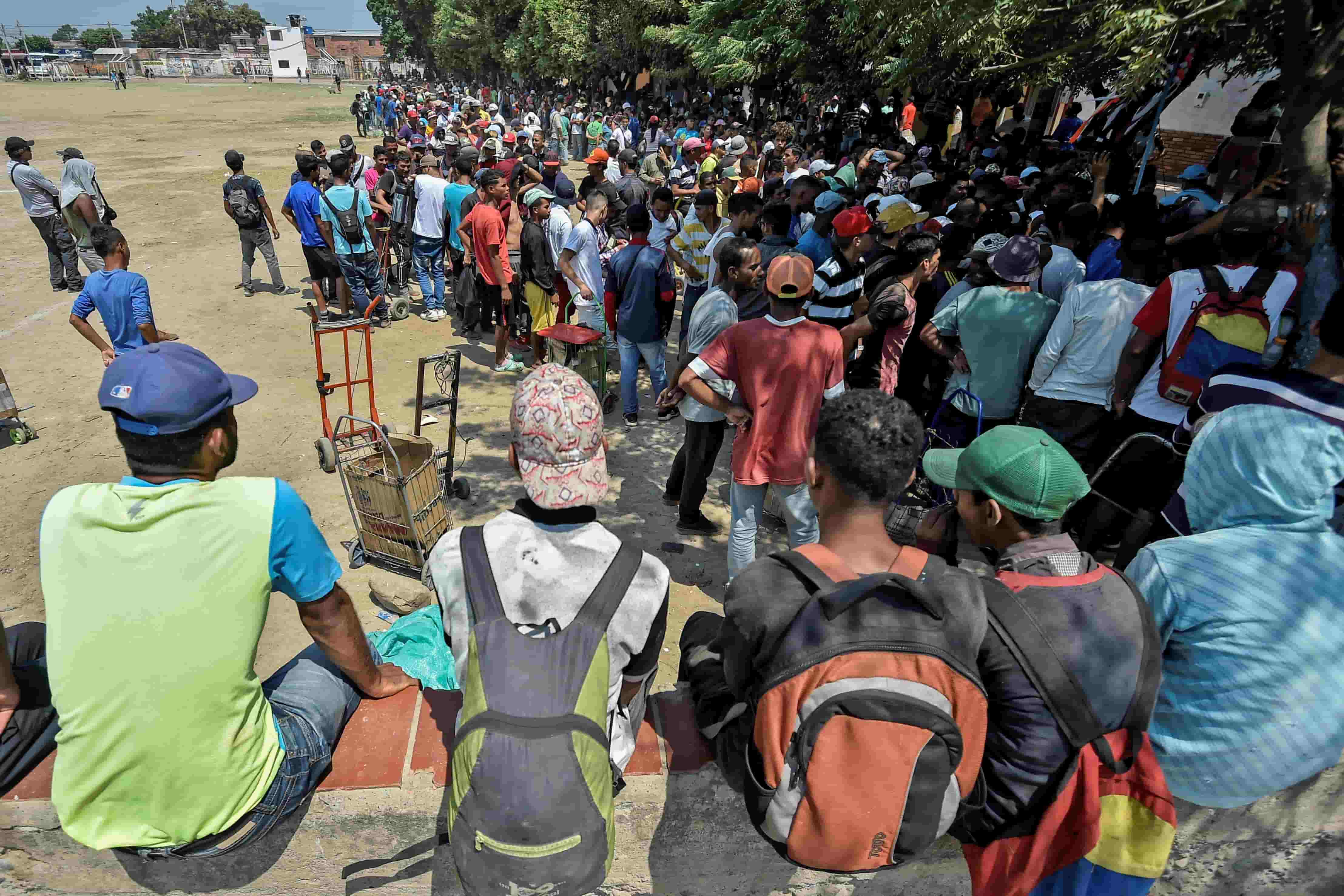
The economic breakdown translated into a severe humanitarian crisis with widespread shortages of food, medicine and basic goods, alongside the deterioration of public services such as health care, electricity and water. Poverty rates surged and malnutrition became increasingly visible.
The worsening of living conditions prompted millions of Venezuelans to emigrate, producing one of the largest displacement crises in modern Latin American history and putting strain on neighboring countries.
Oil Prices
Declining oil prices after 2014 drastically reduced state revenues, while years of politicized management and chronic underinvestment led to deteriorating infrastructure and refinery failures that caused a collapse in production.
Tightening financial and oil sanctions from 2017 onward further restricted access to international markets, credit and technology. Oil exports fell sharply, forcing Caracas to rely on discounted sales, opaque intermediaries and oil-for-debt arrangements with partners such as China and Russia, significantly eroding fiscal resources.
Venezuela gradually sought external relief since the late 2010s by selectively re-engaging with foreign firms in an effort to stabilize output. Meanwhile, the government revived the long-standing border dispute with Guyana over the oil-rich Essequibo region.
Monroe Doctrine and Its Corollaries
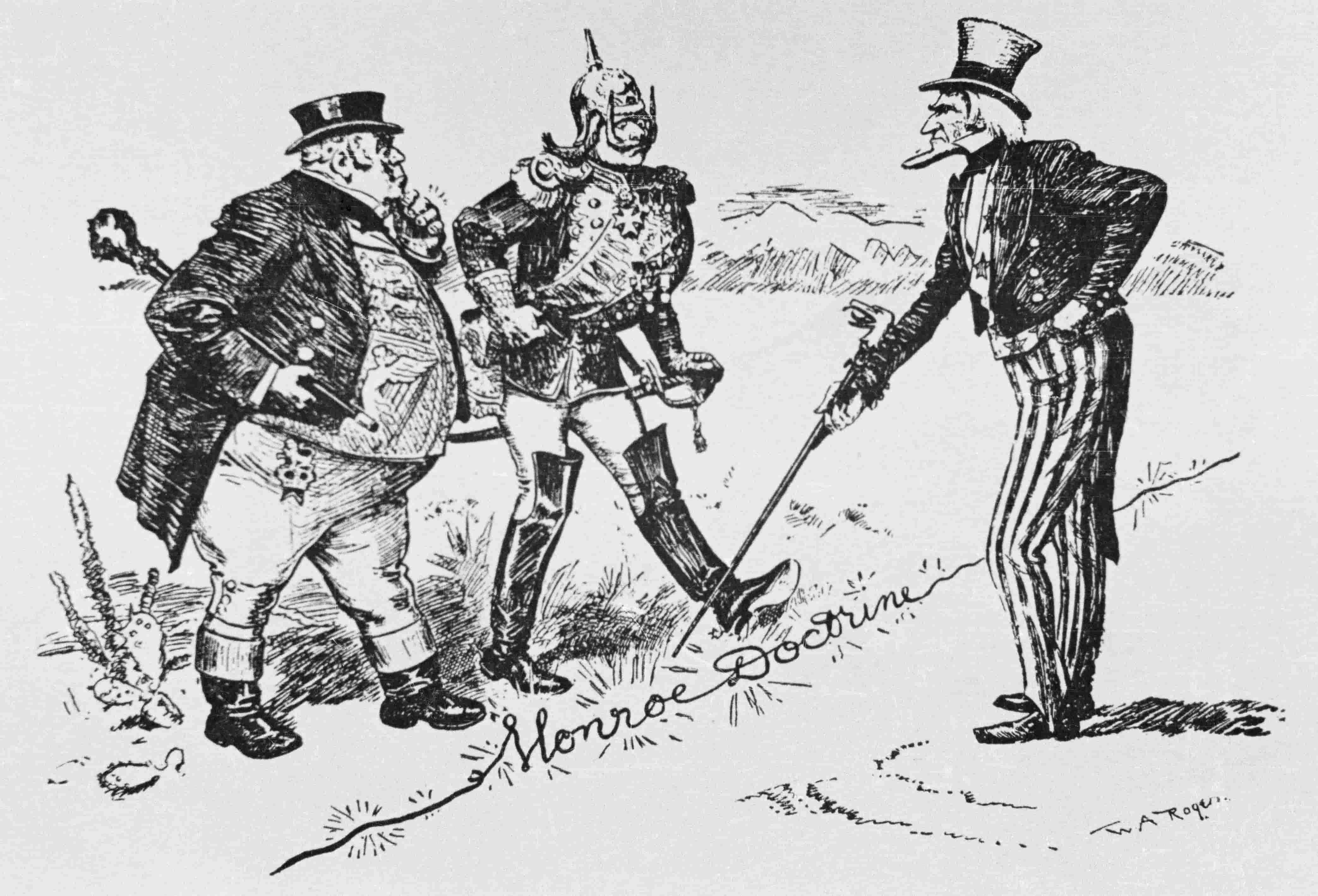
The Western Hemisphere has long been a zone of special U.S. concern, and that was formally articulated in the 1823 Monroe Doctrine.
President James Monroe warned European powers against further colonization or political intervention in the Americas, signaling the United States would refrain from involvement in European conflicts. Initially limited in scope and enforcement capacity, the doctrine was a defensive measure to protect the sovereignty of new independent states in Latin America.
Roosevelt Corollary
Building on the Monroe Doctrine, U.S. President Theodore Roosevelt shifted from passive deterrence to active intervention with the 1904 Roosevelt Corollary. The corollary asserted the U.S. right to exercise "international police power" as a last resort when "chronic wrongdoing" or "impotence" resulted in a "general loosening of the ties of civilized society" in the Western Hemisphere.
U.S. Interventions in the Western Hemisphere
Both the Monroe Doctrine and the Roosevelt Corollary provided the ideological and legal foundations for U.S. intervention in the Western Hemisphere.
U.S. President James K. Polk was the first to invoke the Monroe Doctrine in a concrete policy context, warning several times that the United States would not consent to future European colonies or dominions in the Americas and stating the European powers should not interfere with U.S. territorial expansion.
Consistent with the logic of the Monroe Doctrine, the United States pressed France to withdraw from Mexico in the 1860s and the U.K. to subject its border dispute with Venezuela to arbitration in 1895, waged war against Spain — the last major European colonial power in the Western Hemisphere — in 1898 and mediated the Venezuela debt crisis of 1902-1903.
Under the Roosevelt Corollary, the United States briefly intervened in the Dominican Republic in 1904 and occupied Cuba, the Dominican Republic, Haiti, Mexico and Nicaragua before World War II.
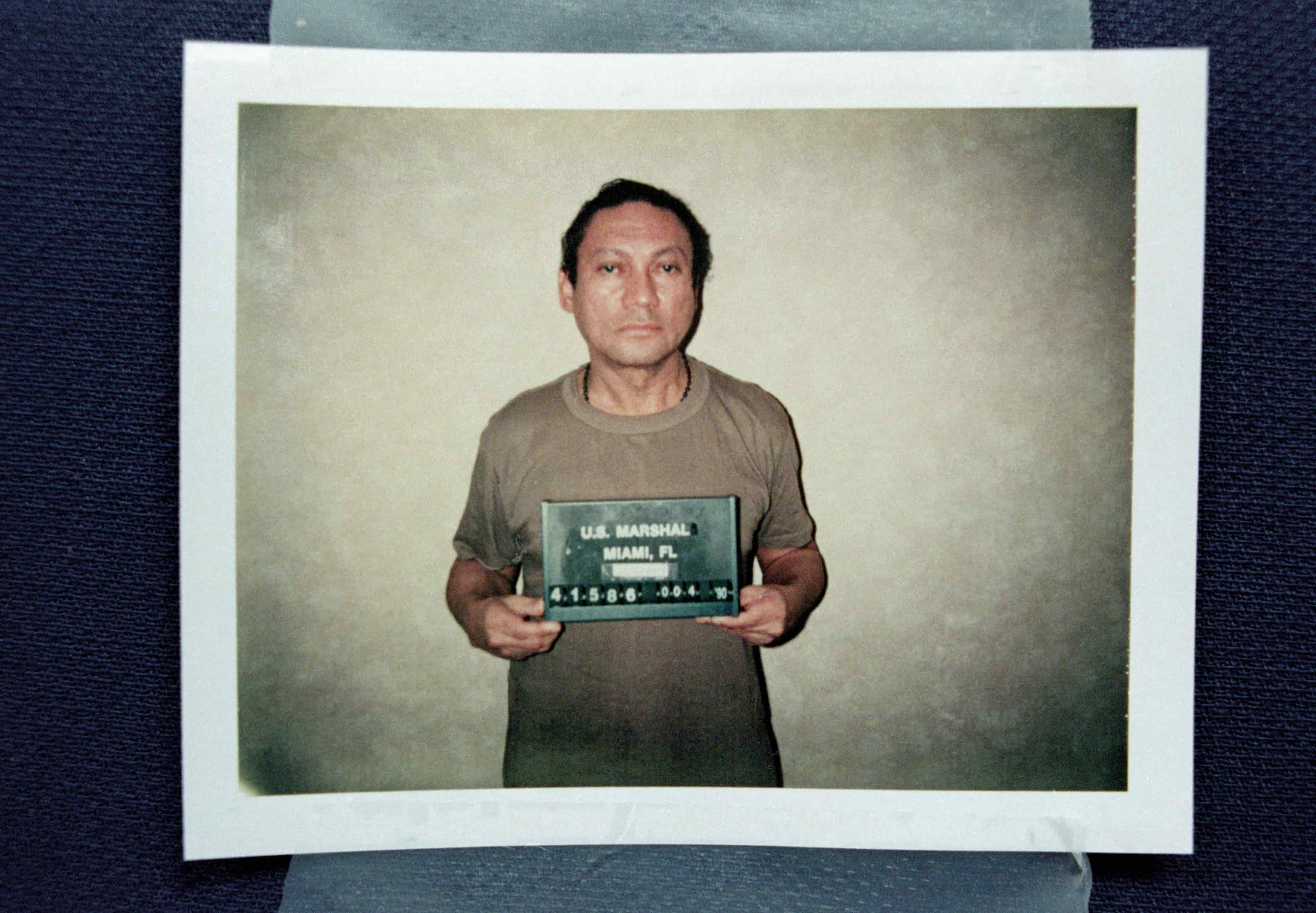
Throughout the Cold War, the interventionist logic was reframed as anti-communism and underpinned direct U.S. involvement in Guatemala, Cuba, the Dominican Republic and Grenada. In 1989, the U.S. intervened in Panama to arrest the country's leader Manuel Noriega on drug-trafficking charges amid concerns over the security of the Panama Canal.
Trump Corollary
In the 2025 National Security Strategy, U.S. President Donald Trump reaffirmed the Monroe Doctrine and articulated the "Trump Corollary to the Monroe Doctrine" — nicknamed the "Donroe Doctrine" — as the guiding framework for its policy in the Western Hemisphere.
The document states that the United States will reassert and enforce the Monroe Doctrine after years of relative neglect of regional affairs to restore American preeminence in the Western Hemisphere, countering the influence of extra-regional powers, such as China and Russia.
US-Venezuela Tensions (2025)
Long-simmering tensions between the United States and Venezuela escalated in 2025 under the second Trump administration despite pragmatic diplomatic engagement in some areas.
On one hand, the Trump administration designated Venezuela-based Tren de Aragua (TdA) transnational criminal organization as a Foreign Terrorist Organization (FTO), invoking the Alien Enemies Act to deport alleged TdA members.
On the other hand, Caracas agreed to receive U.S. repatriation flights despite sharp rhetoric. Furthermore, Washington approved a new license for Chevron to pump oil in Venezuela, and the two governments completed a prisoner exchange.
In July, the U.S. sanctioned Cártel de los Soles, declaring that Maduro was its leader rather than the president of Venezuela. The Cártel de los Soles initially referred to an informal network of Venezuelan officials involved in trafficking narcotics and does not reportedly function like an organization or group. In August, the Trump administration seized hundreds of millions of dollars in assets allegedly linked with Maduro and doubled the bounty for his arrest on drug trafficking charges to $50 million.
US Military Buildup in the Caribbean
Later In August, Trump ordered a deployment of U.S. naval and air assets to the Caribbean Sea near Venezuela, framing the buildup as part of an effort aimed at interdicting illicit trafficking and dismantling transnational criminal networks in Latin America — named in November as Operation Southern Spear —raising concerns of regime change.
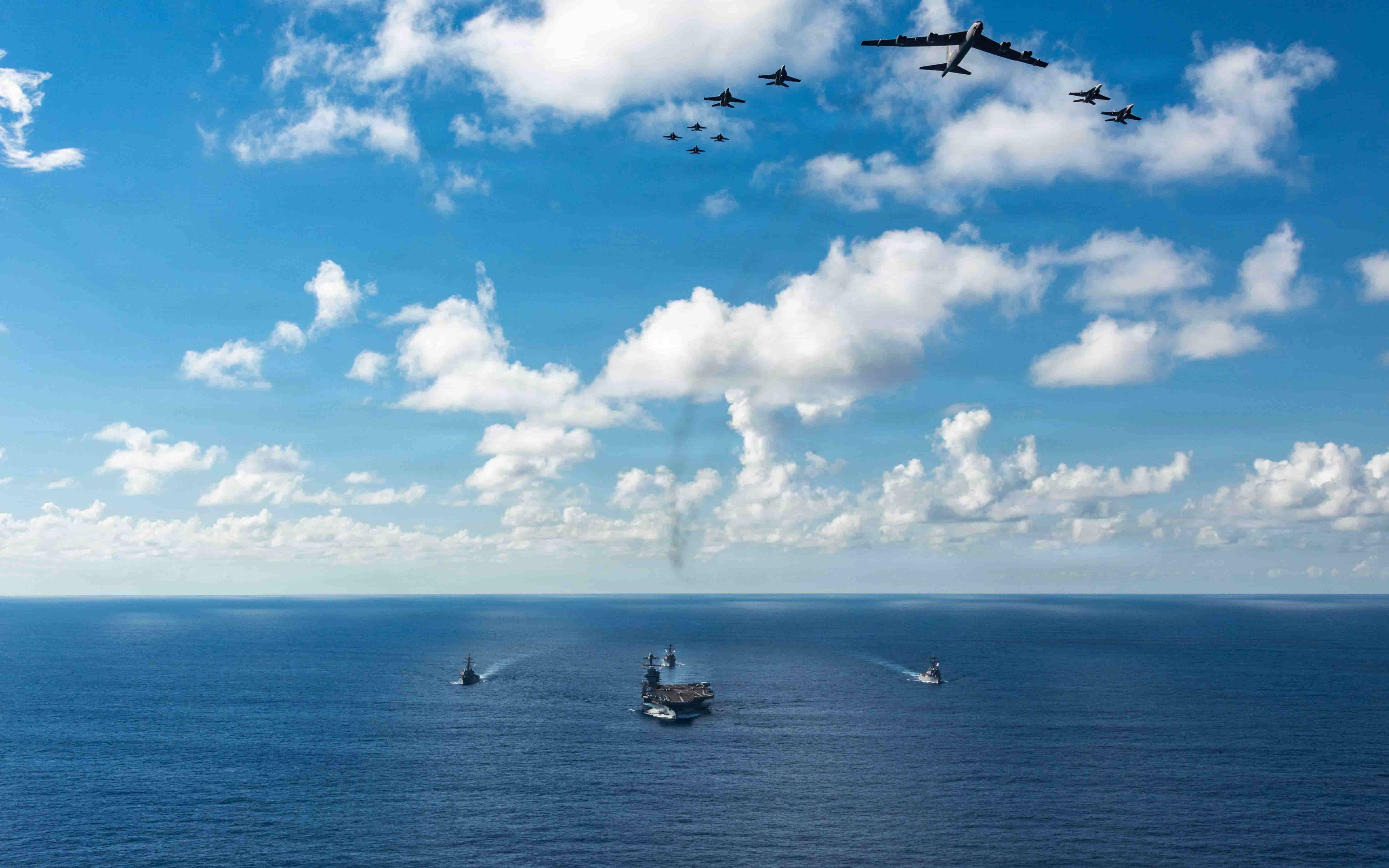
This was the largest U.S. military buildup in the region in decades, deploying about 15,000 personnel as well as the world's largest warship, the USS Gerald R. Ford aircraft carrier, several other large warships and military aircraft.
Caracas described these moves as hostile U.S. pressure disguised as a counternarcotics operation. The buildup met mixed reactions. While Argentina, Ecuador and Trinidad and Tobago backed U.S. actions, others such as Brazil, China, Colombia, France, Mexico and Russia adopted a critical tone.
Strikes
From September onward, the U.S. carried out dozens of lethal kinetic strikes against alleged drug-smuggling vessels in the Caribbean and eastern Pacific, killing at least 123 people by the end of 2025. Three people survived the strikes, two of them were rescued and repatriated to Colombia and Ecuador, respectively, but the third one is presumed dead after search teams failed to find him.
While U.S. officials alleged these strikes were lawful and intelligence-driven, Trump's "non-international armed conflict" with drug cartels was met with criticism even at home as some lawmakers questioned the legal basis for the strikes absent congressional authorization, warning that follow-up strikes could be considered a war crime.
Trump confirmed in October that he had authorized the CIA to conduct covert operations inside Venezuela. By late December, the intelligence agency carried out a drone strike on a remote dock on the country's coast, where Tren de Aragua was believed to store drugs. Trump had long threatened strikes on targets in Venezuela.
Oil Blockade
In mid-December, Trump ordered a total and complete blockade of sanctioned oil tankers entering and leaving Venezuela, declaring that the Maduro "regime" was illegitimate and had been designated as a FTO for the alleged theft of U.S. oil, land and other assets, as well as other reasons including terrorism. Trump has suggested that Venezuela “stole” American oil through nationalization, framing the dispute as a direct seizure of U.S. property.
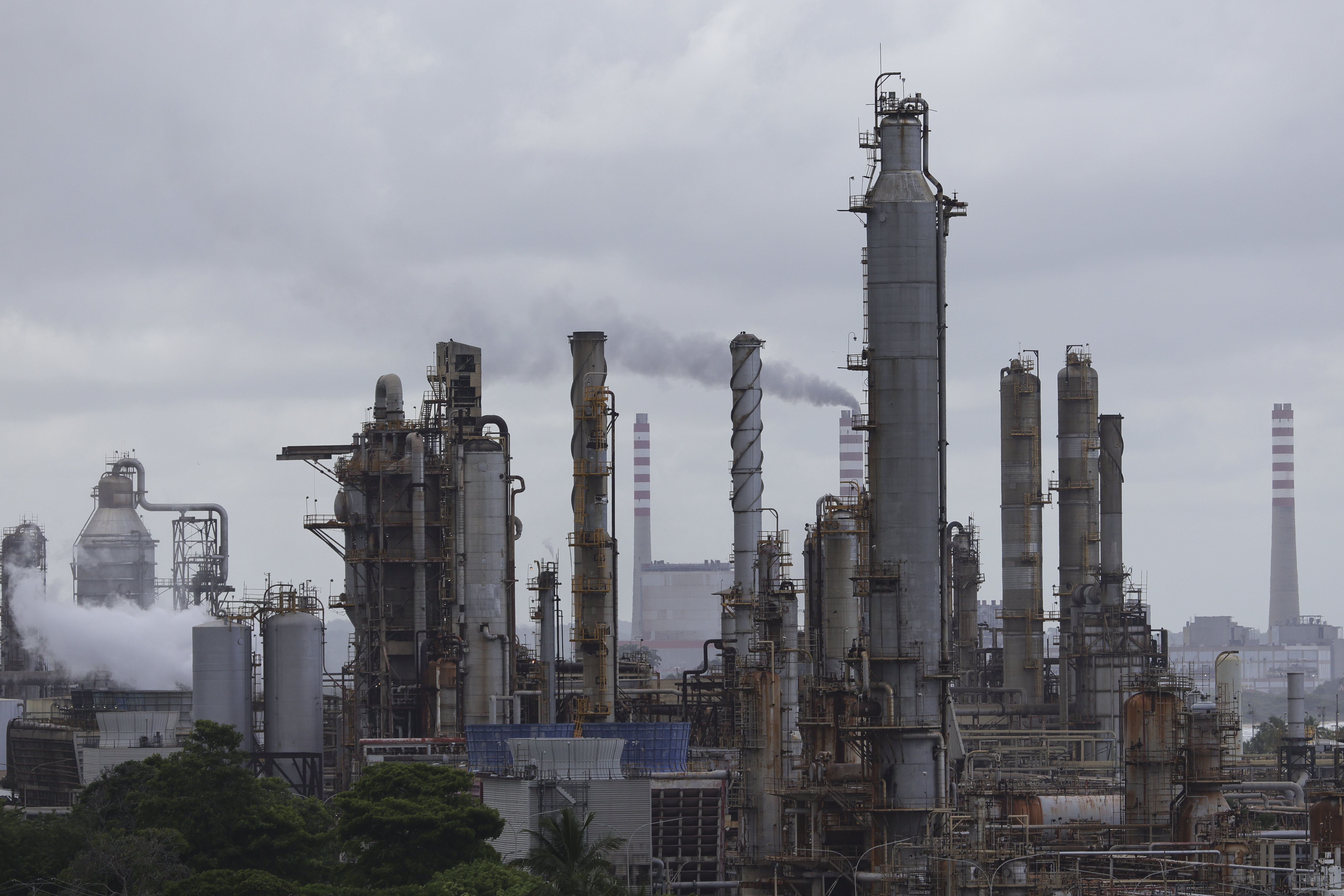
This move followed the seizure of the U.S.-sanctioned tanker Skipper, which was loaded with Venezuelan oil. By Jan. 3, the U.S. Coast Guard had seized a second tanker in the Caribbean — the Centuries, which was not under U.S. sanctions but also carried Venezuelan oil — and was pursuing the U.S.-blacklisted Bella 1, which ended up being seized later near the U.K.
Trump gave no further details about his claims of theft, but it's understood that he was referring to nationalizations under Chávez. However, Venezuela nationalized its oil industry decades earlier, in the 1970s, and international law recognizes state ownership of natural resources. While U.S. companies never owned Venezuelan oil itself, they operated under contractual agreements to explore, produce and sell it.
In 2007, Exxon Mobil and ConocoPhilips were pushed out of Venezuela after rejecting new contract terms that would give majority ownership of their projects to PdVSA, later suing the Venezuelan government for compensation in international arbitration courts. Exxon and ConocoPhillips have been awarded more than $1 billion and $10 billion, respectively, and say they have yet to be compensated.
Operation Absolute Resolve
Reports indicated that there were diplomatic efforts to avoid U.S. military intervention in Venezuela, including several offers for Maduro to leave the country, the latest ones on Dec. 23 and Dec. 24.
The U.S. offered that Maduro could go into exile in Turkey or Russia and the Vatican offered him to go into exile in Russia. Maduro is said to have rejected all offers.
Since August, a team of undercover CIA officers have been on the ground gathering intelligence on Maduro and recruiting sources — one of them believed to be close to him — to build a detailed picture of his movements. This combined with technical intelligence helped facilitate the planning for seizing Maduro in January.
Timeline of the Operation
The U.S. military was reportedly ready to carry out Operation Absolute Resolve since early December, waiting for the right conditions over the Christmas and New Year holiday weeks. At 10:46 p.m. on Jan. 2, 2026 EST, Trump gave the final go-ahead order.
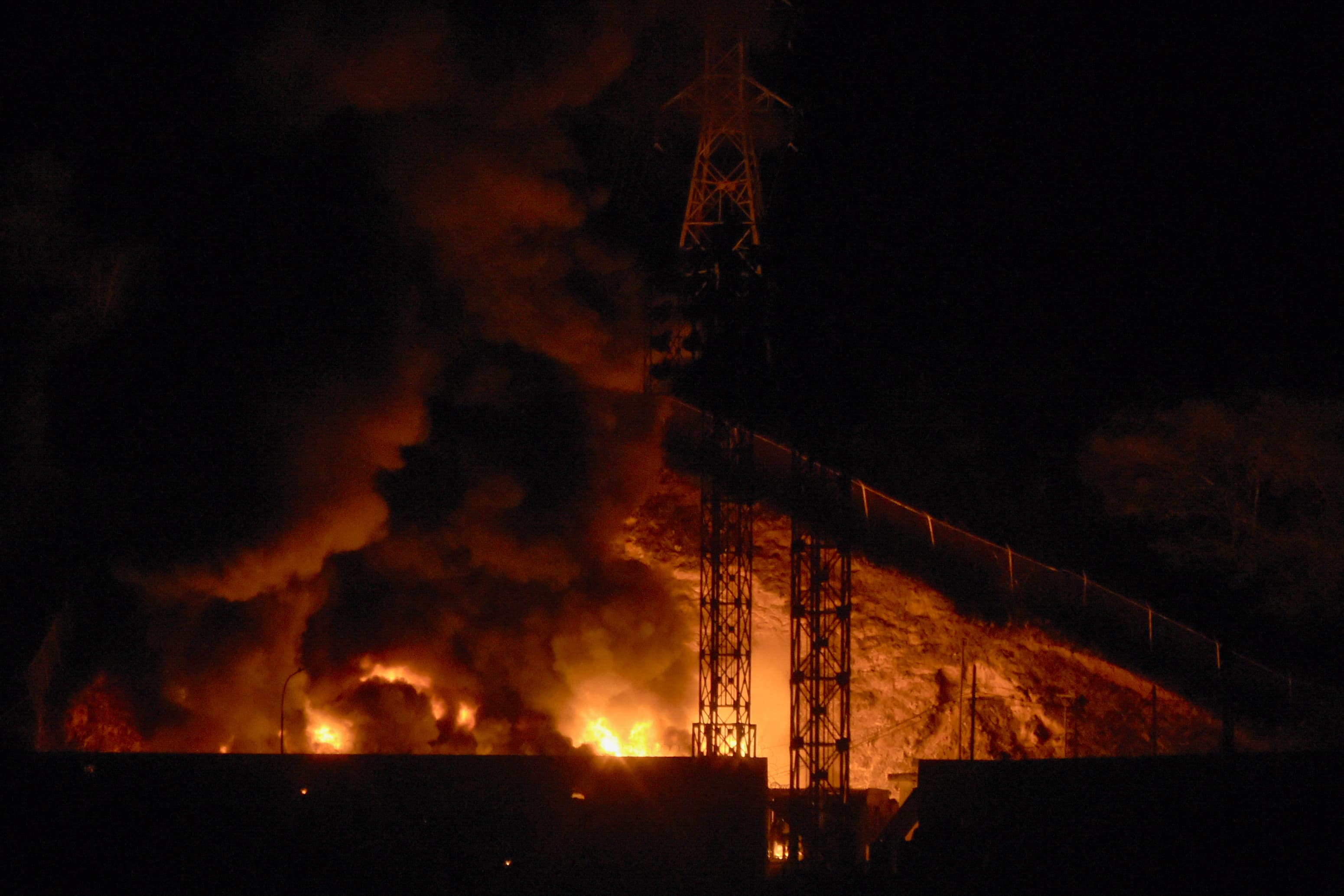
At around 2 a.m. local time on Jan. 3, 2026 in Caracas, low-flying aircraft and multiple explosions were reported across the capital of Venezuela and nearby areas as more than 150 U.S. military aircraft advanced on the city.
A widespread blackout across large sections of Caracas coincided with the initial strikes, disabling radar systems, air defenses (including S-300 and BUK systems), and key military communications. U.S. officials later described this as the result of "a certain expertise that we have" and referenced "layering different effects" from U.S. Cyber Command and Space Command capabilities that created a pathway for the operation, though specific methods were not disclosed. This disruption allowed unchallenged air ingress and real-time monitoring by U.S. assets.
Targeting key military installations (including La Carlota airbase and Fuerte Tiuna) via precision airstrikes, the strikes suppressed defenses and paved the way for the apprehension phase.
Use of a "Secret Weapon"
In an interview released in late January 2026, Trump claimed that the United States had used a "secret" weapon that the president referred to as "the discombobulator" during the operation. The "discombobulator" is thought to be a a pulsed energy weapon that disabled Venezuelan equipment, though Trump said he was "not allowed to talk about it."
Capture and exfiltration
Helicopters from the 160th Special Operations Aviation Regiment arrived, carrying Delta Force operators and an FBI hostage negotiator. One helicopter sustained minor damage from ground fire but continued.
The apprehension team descended into the compound, breaching fortified structures, and reached their location roughly three minutes after entry. The couple attempted to flee toward a steel-reinforced room but were intercepted before they could close the door. Delta Force operatives loaded them into helicopters for extraction.
By 4:29 a.m. local time, Maduro and Flores were transferred to the USS Iwo Jima, about 100 miles off the coast of Venezuela, and headed to the U.S. Navy base at Guantánamo Bay, from which they were flown to New York.
At 6:21 a.m. EST, Trump announced in a post on Truth Social that the operation to seize Maduro and his wife had been successful.
Death Toll
According to Caracas, 83 people were killed during the operation, including 32 Cuban military officers — some of which were confirmed to have died in combat — 47 Venezuelan service members and four civilians, with another 112 people injured. The United States reported no casualties, though about half a dozen soldiers suffered gunshot wounds in the overall operation.
Legal Framework
According to the Trump administration, the U.S. carried out a law-enforcement mission to support lawful and longstanding U.S. criminal charges against Maduro and his wife.
The administration further argued that the action was consistent with the presidential responsibility as commander-in-chief to protect Americans at home and abroad. This characterization, however, has been challenged on constitutional and international legal grounds.
Indictments and Reward
The United States has long built an extensive legal case against Maduro and Flores. Federal prosecutors in the Southern District of New York indicted him and several senior Venezuelan officials on charges including narco-terrorism conspiracy, cocaine trafficking and weapons offenses in March 2020.
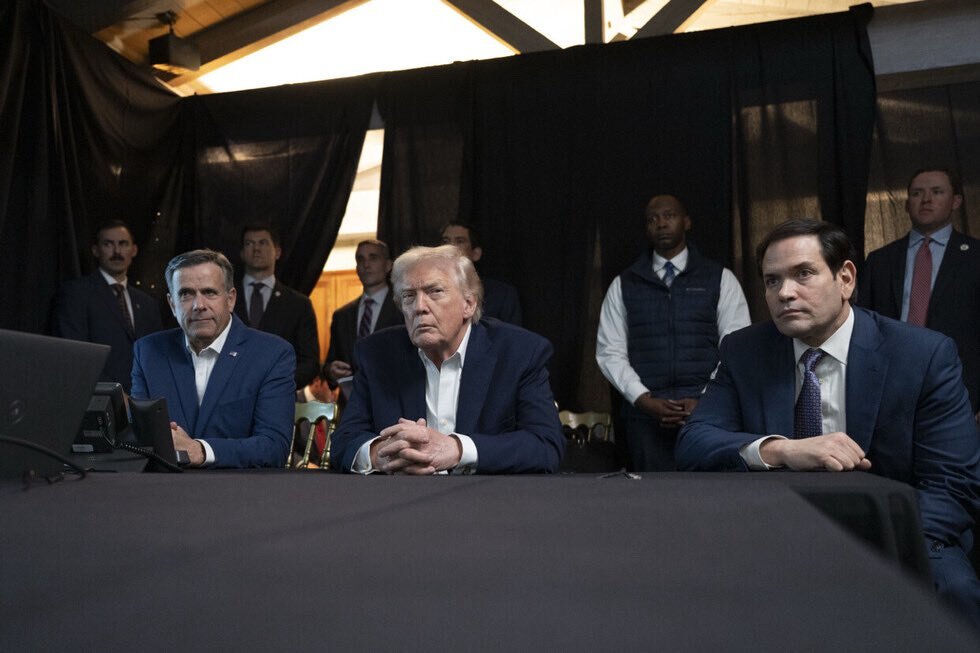
At the time, the first Trump administration offered a $15 million reward for information leading to his capture. Then, the Biden administration raised the bounty to $25 million and the second Trump administration doubled it to $50 million.
In December 2025, U.S. authorities filed a superseding indictment expanding and updating those charges to ensure that active arrest warrants were in place at the time of the operation, a move disclosed only after the capture.
Lack of US Recognition
In his first appearance before a U.S. federal court in New York, Maduro pleaded not guilty and said that he was still the president of Venezuela — a claim that would grant him head-of-state immunity under international law if accepted. However, the United States hasn't recognized his legitimacy as leader of Venezuela since 2019.
Reactions
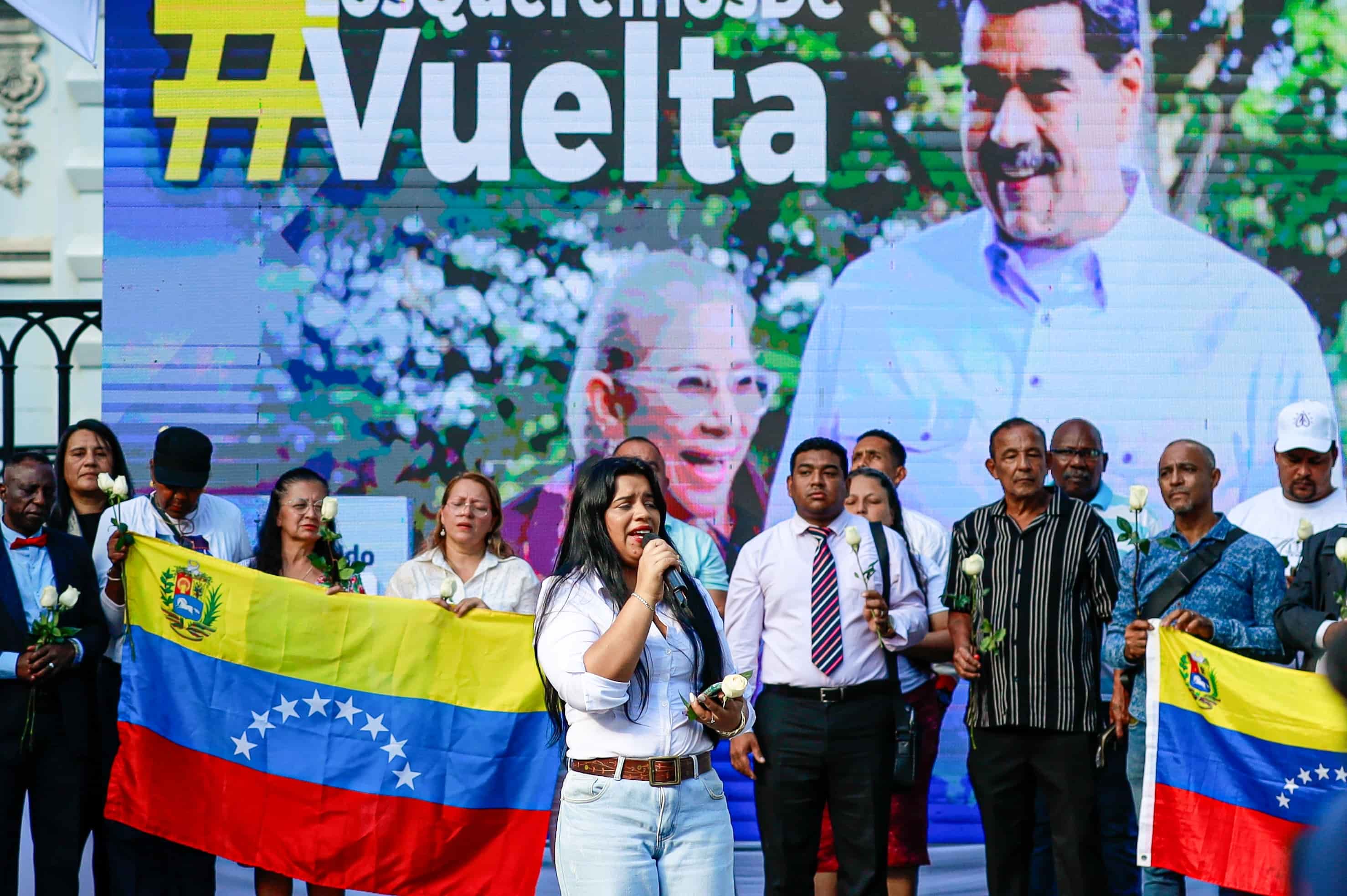
The capture of Maduro triggered immediate and polarized reactions on the streets of Venezuela and abroad, with pro-government protests erupting in Caracas.
A Maduro-signed state of emergency decree came into effect shortly after the attack, limiting peaceful assembly and ordering the search and arrest of anyone who showed support for the military operation.
There have been reports that state-linked paramilitary groups — known as colectivos — are patrolling streets and searching cars and phones of evidence of U.S. support or citizenship, and reports of multiple arrests across the country.
US Congress
On Capitol Hill, reactions to the capture have been mainly along party lines.
Republicans largely praised the operation as a decisive blow against transnational crime and a vindication of long-standing efforts to hold Maduro accountable, while Democrats and a few Republicans raised concerns about executive overreach and the lack of congressional authorization.
With the support of five Republican senators, the upper house voted to advance a war powers resolution limiting Trump's ability to use military action abroad without congressional approval.
UN Security Council
Venezuela requested an emergency meeting of the U.N. Security Council after the action, accusing the U.S. of violating its sovereignty and the U.N. Charter's prohibition on the use of force. The Council remained divided and took no formal action.
U.N. Secretary-General António Guterres expressed concern over further instability in Venezuela and over whether this capture operation may set a new international precedent. He called for full respect of international law and of human rights, the rule of law and the sovereign will of the people of Venezuela.
Regional and International Powers
Several Trump-aligned governments praised the capture of Maduro. Argentine President Javier Milei celebrated with posts declaring “freedom moves forward” and “long live freedom, damn it!,” calling it “excellent news for the free world.” Israel’s Benjamin Netanyahu congratulated Trump on his “bold and historic leadership on behalf of freedom and justice.”
Left-leaning Latin American governments, along with China, Iran, and Russia, strongly condemned the action as a violation of sovereignty. Brazil’s Lula called it “an unacceptable line” crossed and a “dangerous precedent.” Colombia’s Petro labeled it an “assault on Latin American sovereignty.” China said it was “deeply shocked,” Russia called it “armed aggression,” and UN Secretary-General Guterres warned it sets a “dangerous precedent” by disregarding international law.
Aftermath
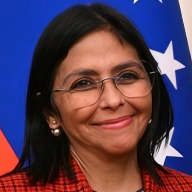
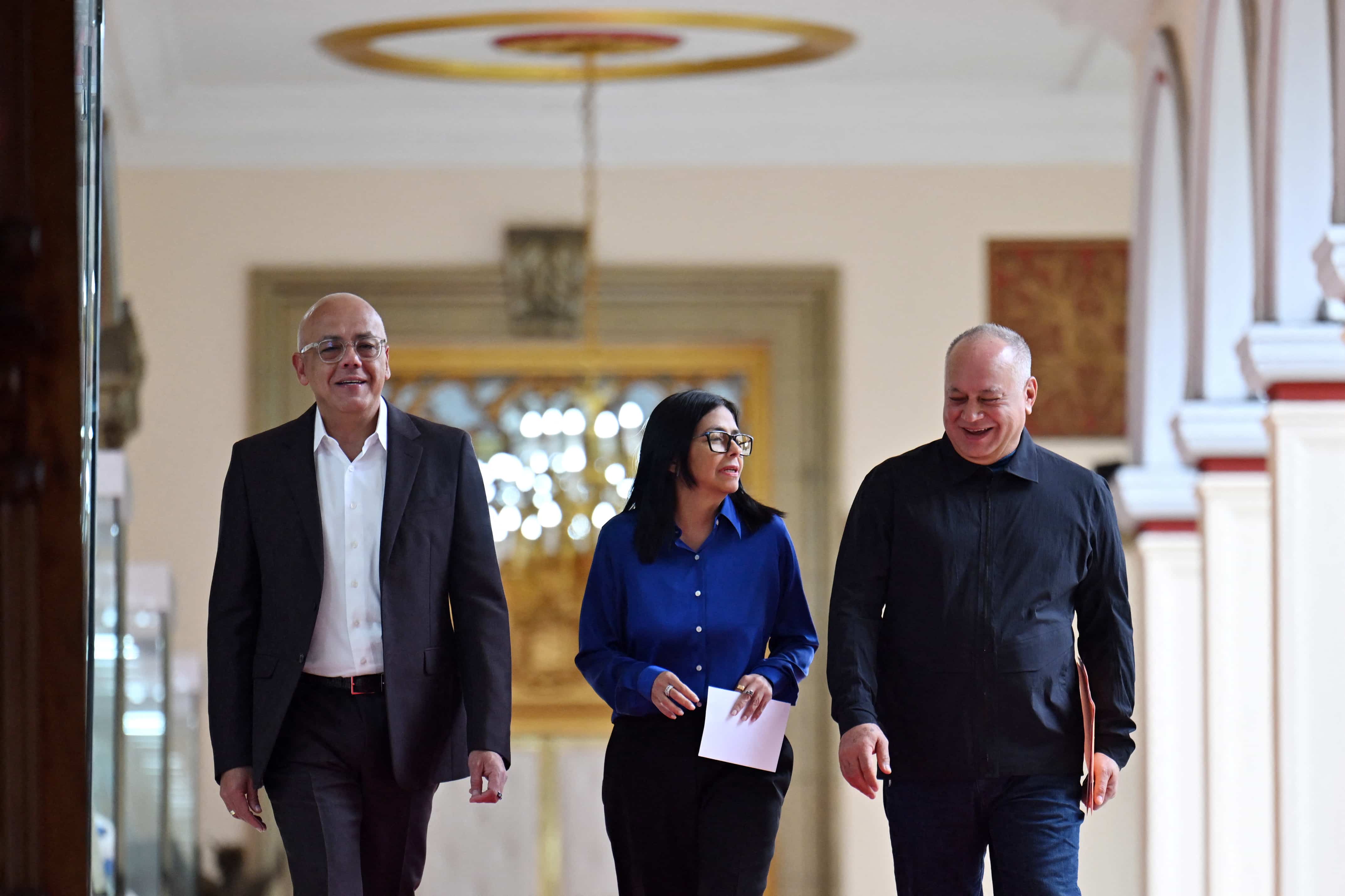
With Maduro out of the country, his vice president, Delcy Rodríguez, was sworn in as interim president based on the constitutional line of succession.
Other top Maduro allies, such as his interior minister, Diosdado Cabello, his defense minister, Vladimir Padrino López, have remained in their positions.
While Trump has claimed that the United States would run Venezuela until a safe and judicious transition could be undertaken, Caracas has sent conflicting signals. Though it has adopted a conciliatory tone with Washington at times, Venezuela's sitting government condemned the U.S. operation as a kidnapping, called for Maduro to be released, reaffirmed its loyalty to his political project and stressed that no foreign agent would run the country.
Opposition
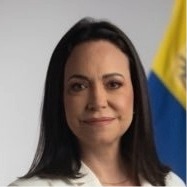
Opposition figures and supporters, including González and Nobel Peace laureate María Corina Machado, expressed renewed hope that the political balance could finally shift with the ousting of Maduro, even signaling an intention to return to the country and play a role in its administration.
However, they have received little explicit backing from the Trump administration as a governing alternative because U.S. officials concluded that the opposition lacks support within the country's establishment, risking internal fragmentation or rapid collapse. In this view, pragmatically relying on Maduro's allies would offer a more stable transition.
Regarding opposition figures at home, most of whom have been imprisoned, the interim government has faced calls for the release of the more than 800 people detained for political reasons in the country. Authorities have pledged to free them but the pace of the releases has been slow.
US Plans
Trump has suggested that his goal is for U.S. oil companies to play a central role in rebuilding Venezuela's oil infrastructure and generating revenue for the benefit of the local people. He has indicated that the United States will exercise direct oversight over Venezuela for however long is needed and has signed an executive order to protect oil revenue held in U.S. accounts.
Within one week of the capture of Maduro, Washington announced a deal for the U.S. to sell between 30 and 50 million barrels of backed-up, stored Venezuelan oil at market price, adding that this will continue indefinitely with all Venezuela's oil production. PdVSA has stated that talks were still underway.
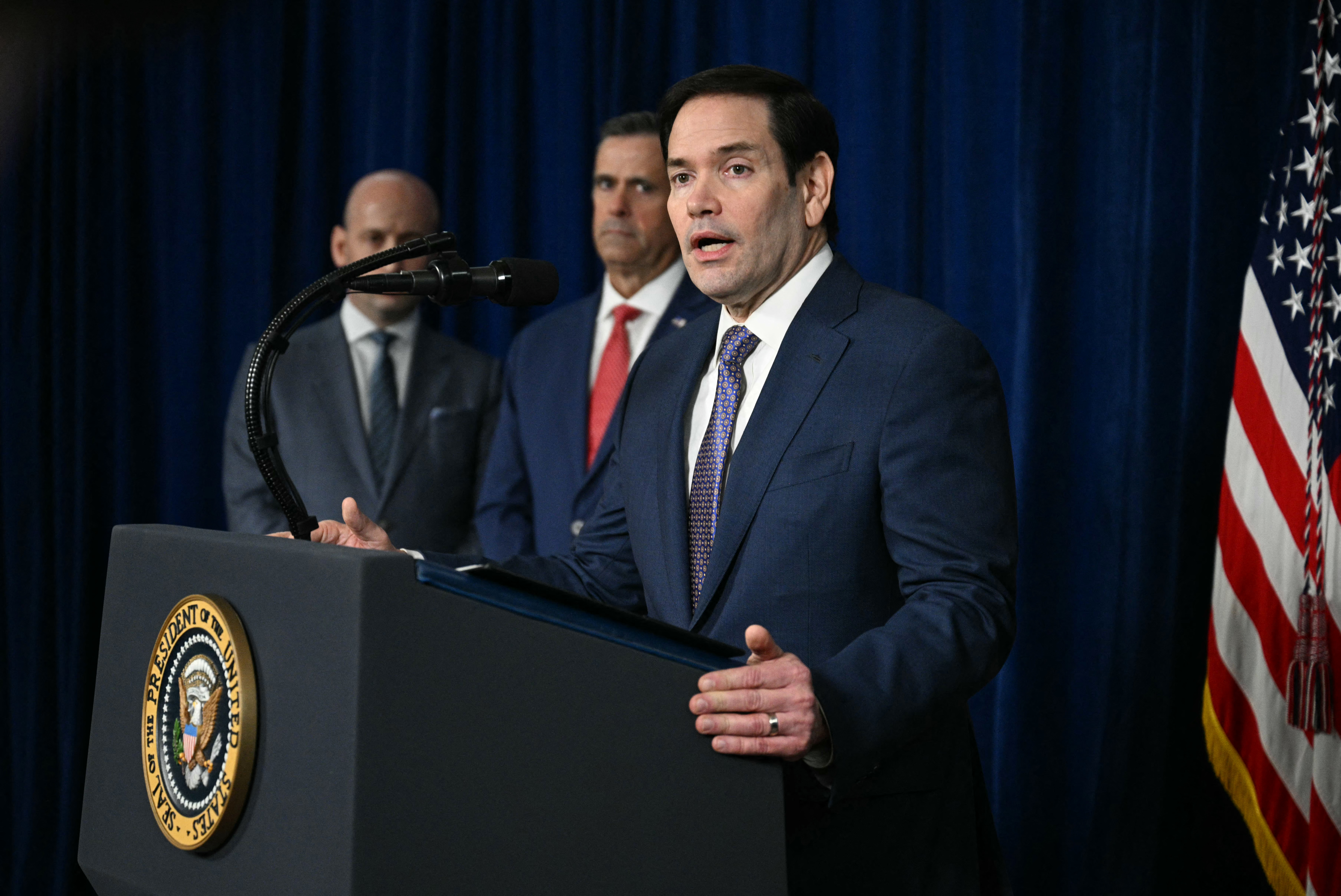
A detailed U.S. plan for Venezuela remains to be seen. U.S. Secretary of State Marco Rubio outlined that the United States wants to stabilize the country, see foreign companies access its markets and ensure that amnesty is granted for opposition leaders as part of the transition.
Meanwhile, Trump has stated that U.S. forces are ready for a second wave of military action if Caracas fails to comply with U.S. demands — which reportedly include cutting ties with China, Cuba, Iran and Russia — adding that U.S. troops may be deployed on the ground depending on how the situation unfolds.
Current Political Situation
As of mid-January, Rodríguez continues to consolidate power amid internal divisions, installing loyalists in key intelligence and military positions to protect herself from internal threats.
She has named a new head of Venezuela's DGCIM military counterintelligence agency — Major General Gustavo González — as well as a central banker and presidential chief of staff. Rodriguez also reportedly ordered the arrest of Major General Javier Marcano Tábata, the former director of military counterintelligence and head of presidential security.
Meanwhile, she held a conciliatory phone call with U.S. President Donald Trump on Jan. 14 and delivered a national address the next day, emphasizing unity and increased oil cooperation while maintaining the declared state of emergency.
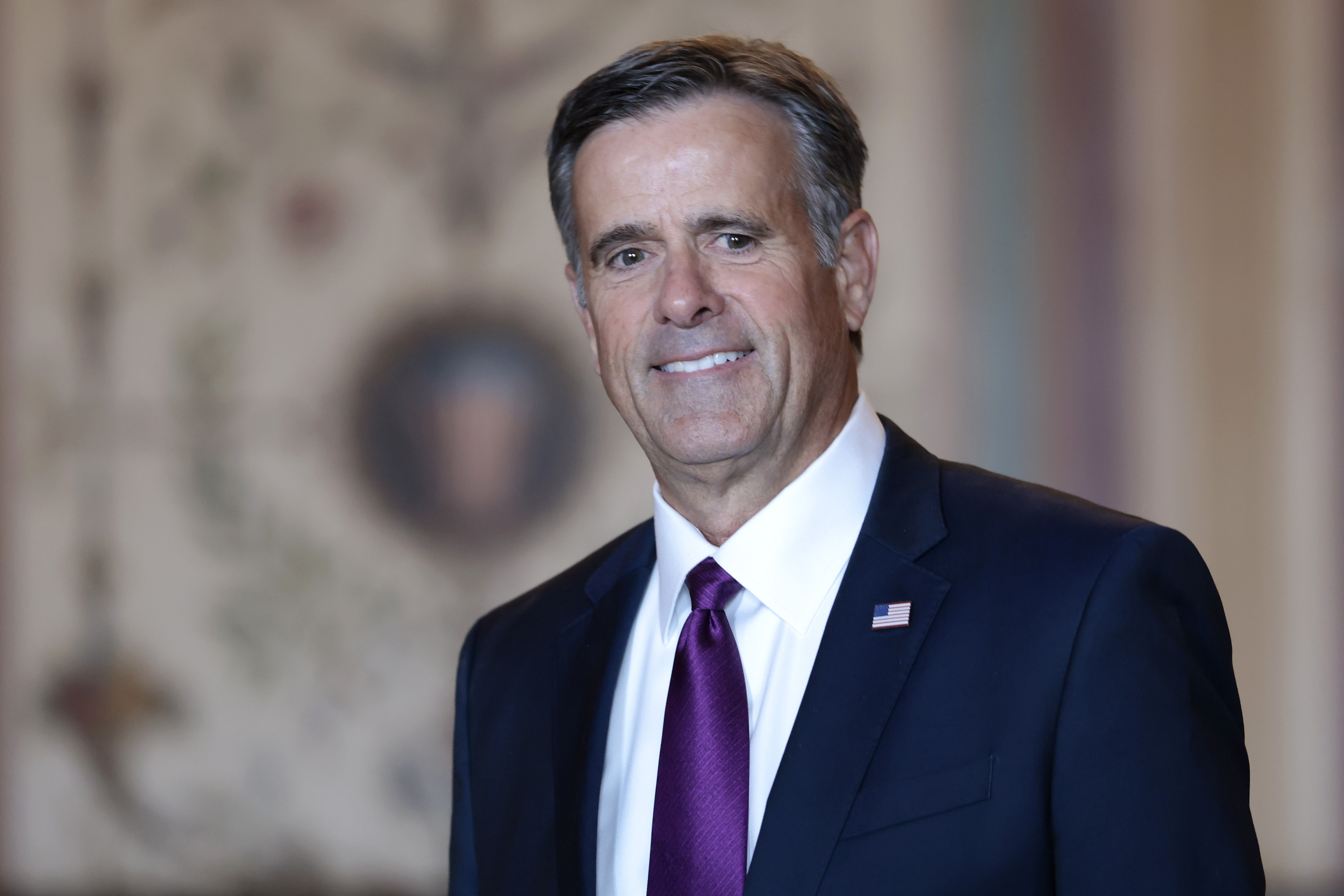
On Jan. 16, CIA Director John Ratcliffe met with Rodríguez in Caracas for approximately two hours, becoming the first U.S. senior official to visit Venezuela after the seizure of Maduro. According to reports, Ratcliffe discussed intelligence cooperation and economic stability with Rodríguez, warning her that Venezuela can no longer provide support to drug trafficking organizations such as the U.S.-designated terrorist group Tren de Aragua.
The following day, Rodríguez announced several cabinet changes, including the departure of former Industry Minister Álex Saab — a close Maduro ally who spent more than two years behind bars in the U.S. before his release in December 2023 as part of a prisoner swap. She also proposed reforms to the country's Hydrocarbon Law aimed at attracting foreign investment as well as to Venezuela's price system.
Prisoner Releases
Regarding political prisoners, the number released since the process intensified around Jan. 8 is disputed: Government figures claim over 400 (e.g., 406 as of Jan. 14, including some from late December 2025), according to statements from Jorge Rodríguez (National Assembly head and Delcy's brother) and Delcy Rodríguez herself. In contrast, the independent human rights organization Foro Penal — which verifies cases via family reports, legal documents, and monitoring — has confirmed only 139 releases since Jan. 8, as of Jan. 17.
Foro Penal has criticized official opacity, noting no public name lists have been provided, and continues ongoing verifications. Social media from local accounts frequently shares partial verified lists, individual announcements, and videos of releases, highlighting journalists, foreigners, and opposition figures among the freed.
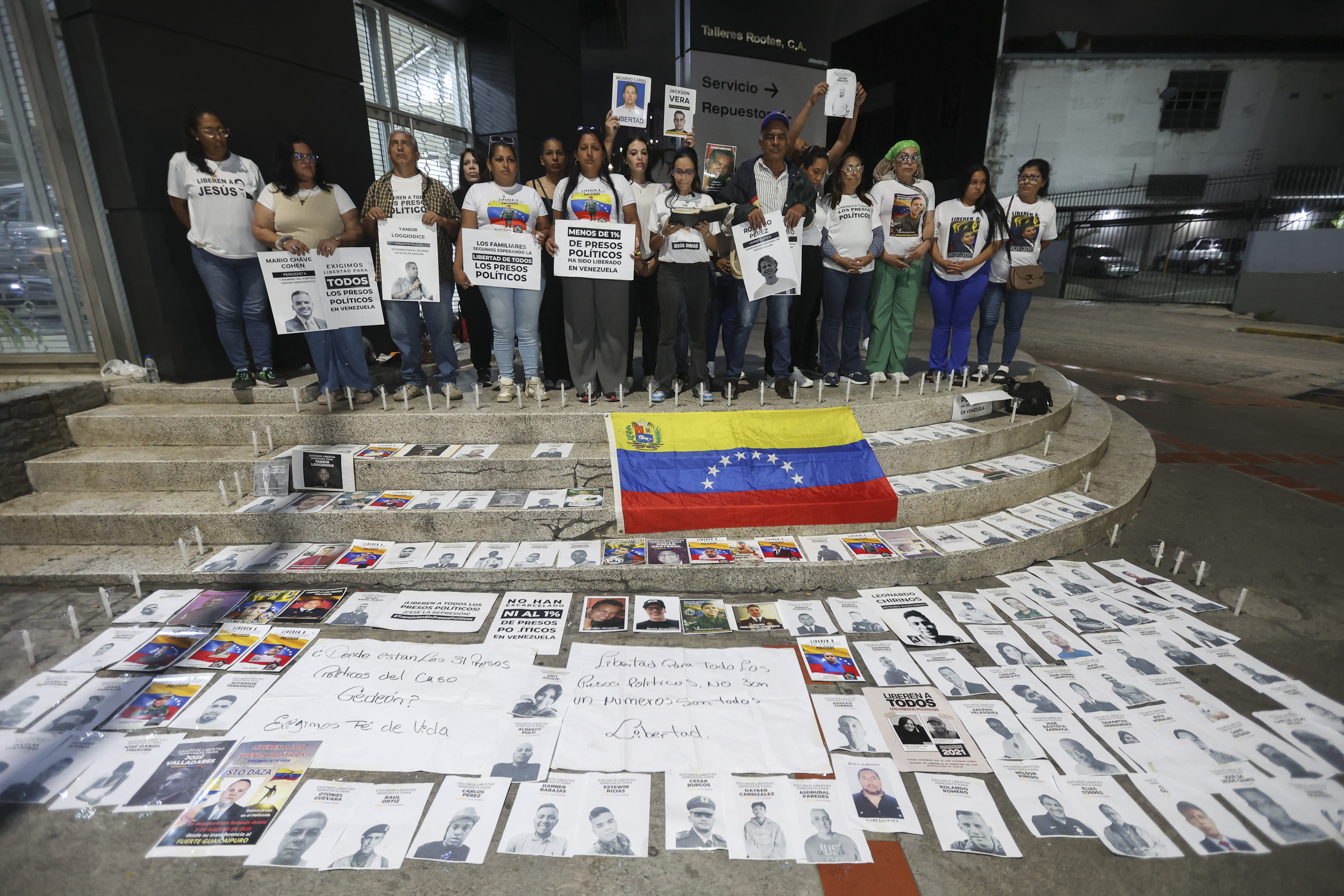
Foro Penal's baseline estimate as of Jan. 11 had placed around 804 political prisoners total (including 172 military personnel, 102 women, and one adolescent). After verified releases, this suggests around 665 (based on the 139 figure) are still detained for political reasons, though totals may fluctuate with new cases or monitoring.
Families maintain vigils outside facilities like El Helicoide and Rodeo I, demanding unconditional freedom. Rodríguez has vowed to continue releases as a gesture toward reconciliation, though the process remains incremental and conditional (e.g., with precautionary measures restricting speech, travel, or public statements).
Situation on the Ground
Reporting on the ground remains sparse due to restricted access for journalists and aid groups, and limited on-the-ground sources. However, according to current information, in Caracas and other areas, pro-regime colectivos (armed paramilitary groups, originally formed under Hugo Chávez) have reportedly intensified patrols since early January, establishing checkpoints, searching vehicles and phones for evidence of U.S. support or opposition activity, detaining civilians, and creating a climate of terror and potential civil conflict described by residents.
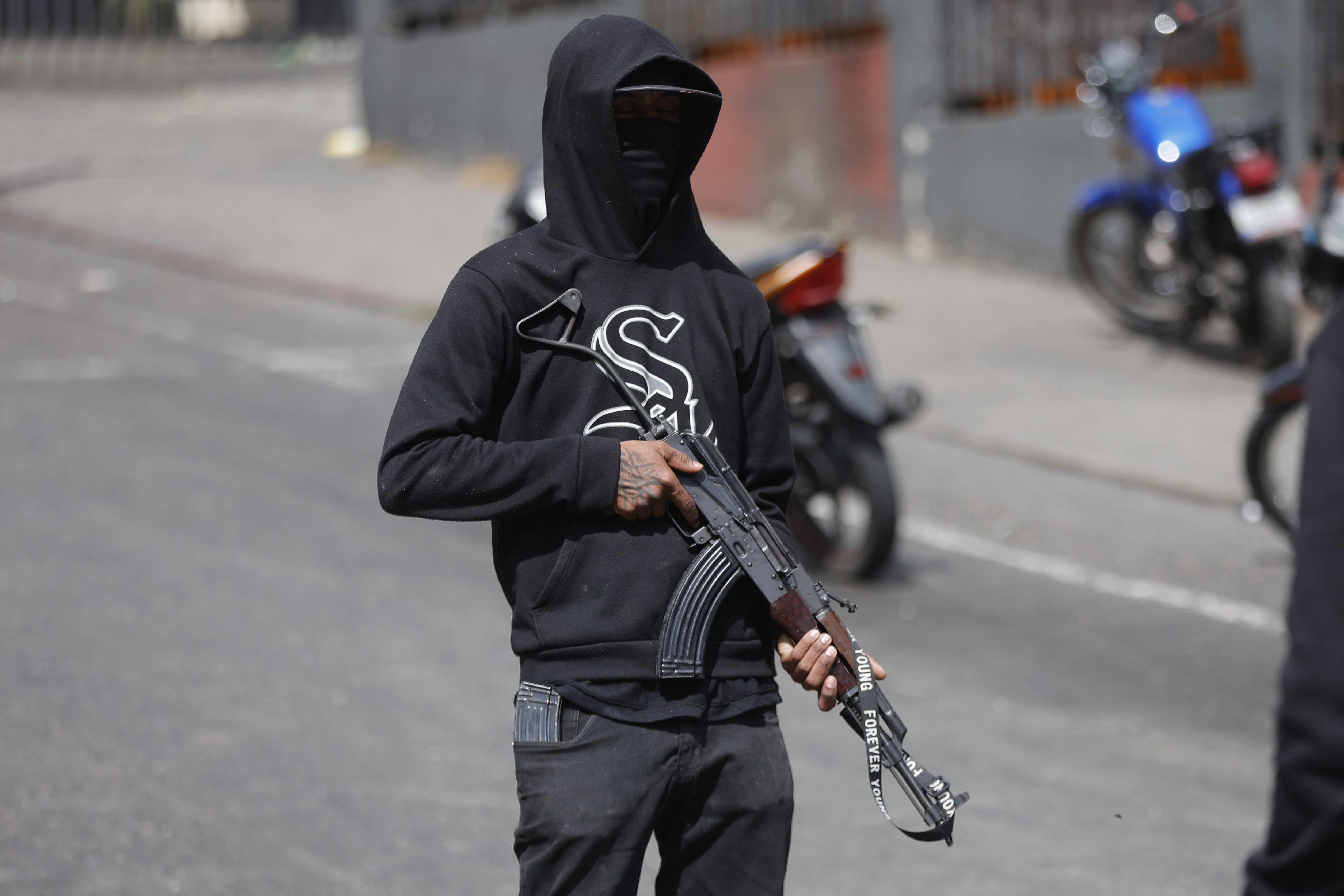
Key groups like La Piedrita and Tres Raíces operate in the 23 de Enero neighborhood near the presidential palace, with reported ties to Cabello. Following Maduro's capture, La Piedrita leader Valentín Santana threatened in a video: "We're telling the Americans: you can come, but you'll leave in black bags."
The U.S. State Department issued a security alert on Jan. 10, urging citizens to depart immediately due to risks from these militias targeting perceived supporters of the intervention. The humanitarian situation remains dire, with ongoing power issues, economic strain, and episodic violence exacerbating instability.
Questions About Official Narrative
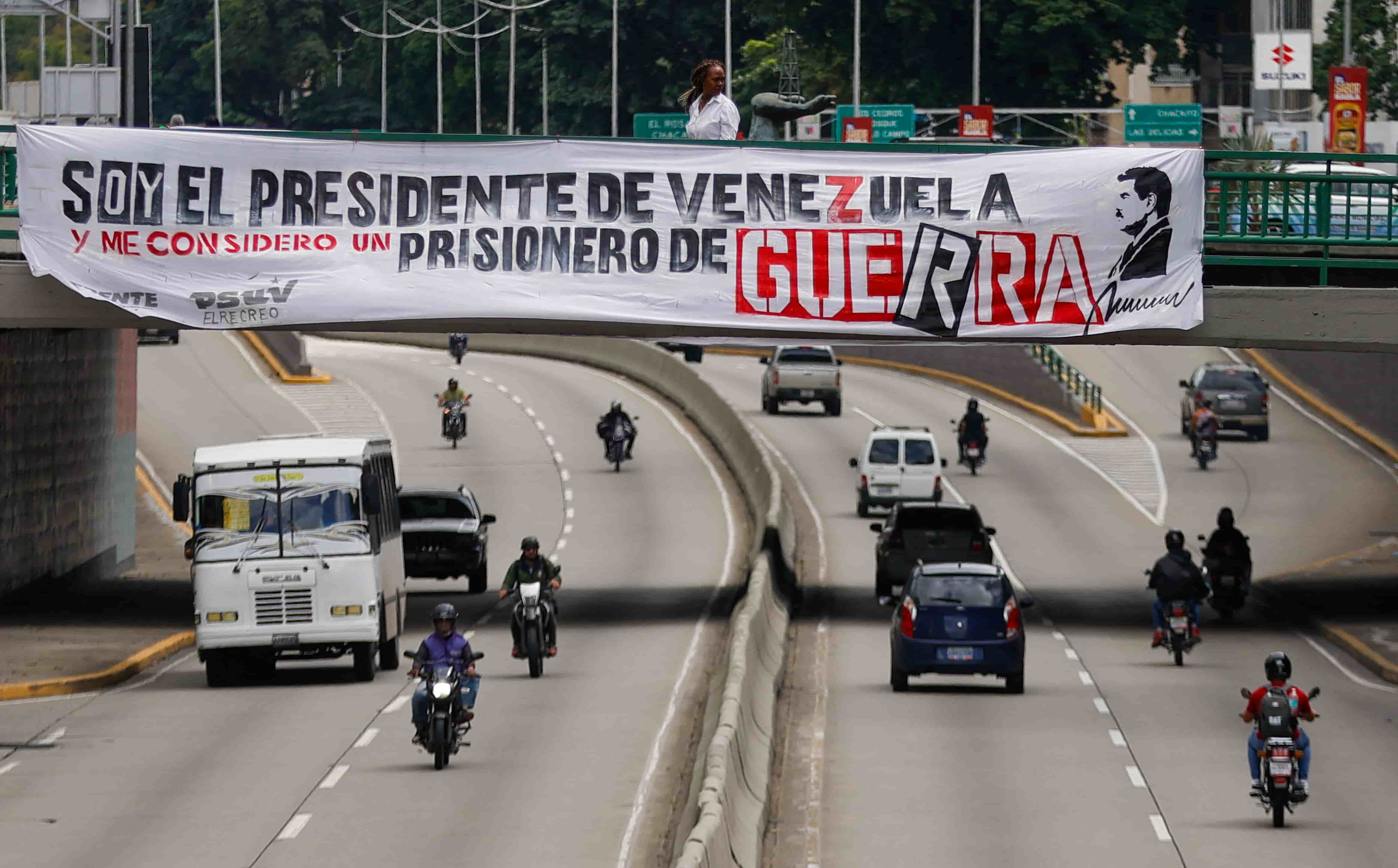
While the Trump administration has consistently described this operation as a law-enforcement action aimed at apprehending fugitives indicted in U.S. courts, its motives have been questioned, especially after statements from Trump regarding U.S. control over Venezuelan oil revenues, leverage over the country's institutions and the U.S. role in shaping the future of Venezuela.
Against this backdrop, some commentators have said that the raid appeared to validate earlier claims that the military buildup in the Caribbean was intended to pressure Venezuela toward regime change and secure influence over the country's oil sector. Furthermore, there have been some marginal claims that the operation took place also to divert the public from domestic issues such as Epstein-related controversies.
Legal Arguments
There has been also a sustained legal debate over whether the U.S. acted within the bounds of domestic and international law.
Domestically, critics argue that the scale and methods employed resembled a military action, rather than a law-enforcement action. From this perspective, the operation may have crossed the threshold at which congressional authorization would be required under the War Powers Resolution, regardless of its stated purpose.
Internationally, objections have focused on sovereignty and the use of force. Under the U.N. Charter, states are generally prohibited from conducting armed operations on the territory of another state absent consent, self-defense or Security Council authorization. Therefore, even if lawful domestically, the operation would be in breach of international law.
Additional concerns have centered on the treatment of head-of-state immunity. Although the United States hasn't formally recognized Maduro as Venezuela's legitimate president since 2019, critics contend that the Trump administration had treated him as de facto leader, adding that non-recognition doesn't automatically eliminate immunity protections under international law, particularly when recognition is contested globally.
Interim Authorities and Opposition
Another source of scrutiny has been the fact that the Trump administration has engaged with Maduro allies while excluding the opposition from post-operation decision-making, especially after Trump declared Maduro's government illegitimate and designated it as a foreign terrorist organization a few weeks before the operation.
Administration officials have defended the engagement as a pragmatic necessity, insisting that maintaining lines of communication with existing authorities is essential to prevent chaos and protect U.S. interests as they were in better position to lead a temporary government. Yet, there has been speculation that this choice could have been related to Machado accepting the Nobel Peace Prize.
Overview