The 2007-08 U.S. Financial Crisis


Overview
- From 1998–2006 U.S. home prices more than doubled and household mortgage debt rose from 61% to 97% of GDP. A 1992 law required government-sponsored enterprises Fannie Mae and Freddie Mac to back affordable housing whilst the 1995 Clinton strategy targeted two-thirds homeownership by 2000. By 1999–2000 regulators pushed looser standards, even as agencies warned of subprime losses and predatory lending.
- In parallel, CDOs, created in the late 1980s, bundled mortgages and debt into tranches of varying risk. JPMorgan's 1997 synthetic CDOs used credit default swaps to multiply exposure without owning loans. Rating agencies paid by issuers (Moody's, S&P, Fitch) graded them, and Moody's structured-finance revenue more than quadrupled 2000–2007. Around 87% of non-agency MBS were AAA pre-crisis, and Moody's later downgraded 83%.
- The 1999 Gramm-Leach-Bliley Act repealed Glass-Steagall's separation of banks, brokers and insurers. OCC rulings came to a head in 2004, shielding national banks from state anti-predatory-lending laws, and an SEC program let the five largest investment banks use internal models, pushing leverage toward 30-to-1. The 2000 CFMA kept derivatives unregulated after Brooksley Born's warnings were overruled.


Sources Split
LEFT
CENTER
RIGHT
+1
+4
+3
+1


ESTAB
CRIT
CENTER
PRO
ESTAB
The Spin
Pro-establishment narrative
This is a story of a system that outgrew its Depression-era protections. When panic struck in 2008, regulators acted under extraordinary pressure to prevent total collapse. Bernanke, Paulson, and Geithner made unpopular choices because letting the system fail would have devastated the American economy. The response was late but successful, even if it remains misunderstood.


Establishment-critical narrative
This crisis was preventable with multiple failures from the state and civil society. Governments, banks and regulators all pushed forward with reckless policies under the naïve assumption the system was too big to fail. The financial crisis is a tragedy of economic hubris which is still felt within American society to this day.

Cynical narrative
Follow the money. Goldman alumni ran the treasury under both parties, and they inflated bubbles, shorted the very securities they sold to clients, and then engineered bailouts for themselves. The revolving door between Wall Street and Washington turned oligarchy into policy, and the lack of criminal prosecution for the untold damage caused remains a dark stain on the American system.
Mortgages & Affordable Housing Goals
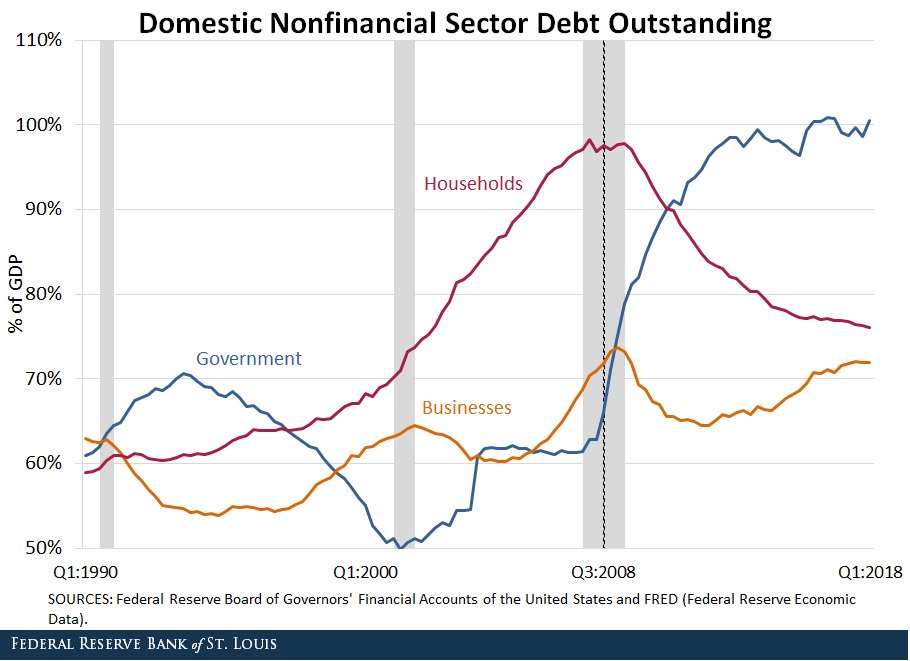
Between 1998 and 2006, the average home price in the U.S. more than doubled. Yet during the same period, American household mortgage debt rose from 61% of GDP to 97%.
In 1992, Congress passed a law requiring Fannie Mae and Freddie Mac, government-sponsored enterprises (GSEs) responsible for the majority of U.S. mortgages, to help more Americans access affordable housing.
In mid-1995, the Clinton administration launched a plan to boost homeownership to record levels by 2000, aiming for two-thirds of Americans to own their homes. Officials argued this would strengthen the economy and communities without costing taxpayers extra money. As a result, the Department for Housing and Urban Development (HUD) set three specific targets: lending to people with low and moderate incomes, reaching underserved neighborhoods, and providing specially affordable loans. The government also created systems to track progress and ensure the rules were followed.
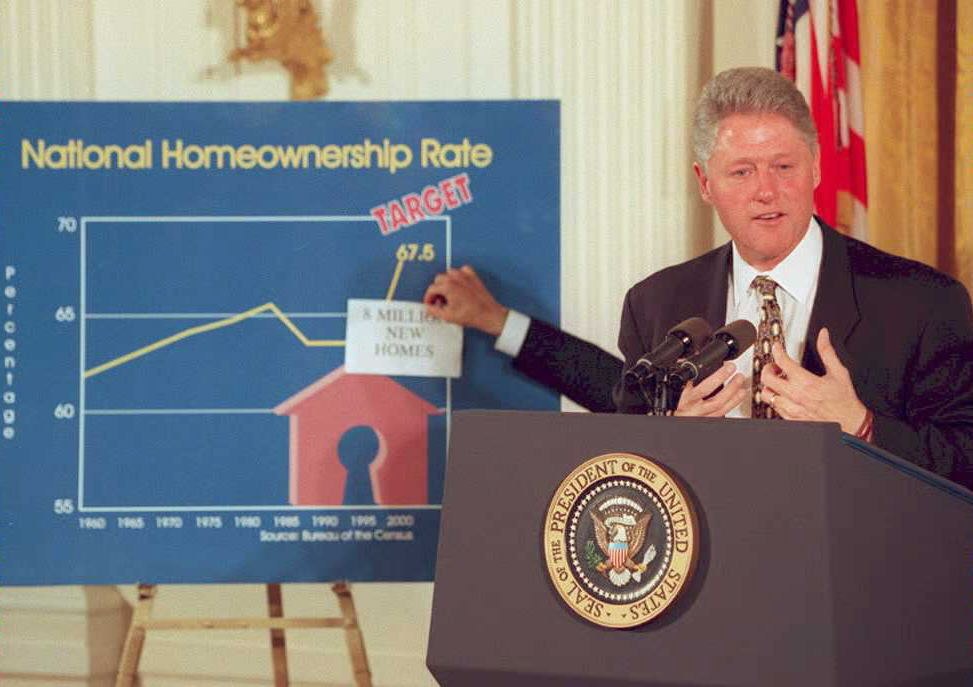
Around the same time, news outlets reported that Fannie Mae and Freddie Mac were being pushed to back more loans for people who had previously struggled to qualify. By late 1999, the New York Times reported that Fannie Mae was testing looser lending standards through pilot programs with 24 banks, specifically targeting minorities and lower-income borrowers. That same year, regulators proposed requiring half of all loans backed by Fannie Mae and Freddie Mac to go to affordable housing by 2001.
In 2000, regulators proposed raising these targets. For example, they wanted half of all loans to go to low and moderate-income borrowers. A government report in early 2001 noted that Fannie Mae and Freddie Mac backed over half of all standard home loans, and explained that the targets were designed to push these organizations toward helping more people afford homes.
Early Supervisory Warnings and Predatory Lending Concerns
While officials pushed to expand homeownership, banking regulators were sounding alarms about growing risks. In early 1999, four major financial agencies issued a joint warning after some lenders suffered losses from subprime loans (mortgages given to borrowers with weaker credit). These lenders had underestimated how often borrowers would default and how much money they would lose when they did. The regulators called for better planning, stronger safeguards and a more flexible financial cushion against losses.
By mid-2000, a joint government report by HUD and the U.S. Treasury flagged harmful lending practices that needed to be reined in. These included approving loans without checking whether borrowers could actually afford the repayments, repeatedly refinancing loans to collect fees, and charging steep penalties when borrowers tried to pay off loans early. The report also recommended better financial advice for borrowers and incentives for lenders to help people with subprime loans move up to standard mortgages with better terms.
Market Practices and Down-Payment Assistance Programs
Starting in 1994 via a nonprofit called Nehemiah Corporation, the U.S. also saw a growing practice whereby homebuilders would donate money to nonprofits, which would then give it to buyers as "down-payment assistance." This allowed buyers to get government-backed FHA loans without putting in any of their own money.
By 2008, more than 300,000 people had bought homes this way. These loans went bad far more often than regular FHA loans, with some estimates claiming two to three times as often. This wave of defaults took money from the government fund that insures FHA mortgages.
Congress banned the practice in 2008. Investigations also revealed fraud: builders were quietly adding the cost of the "assistance" to house prices, meaning buyers were borrowing more than their homes were worth. In 2009, homebuilder Beazer Homes settled criminal charges after admitting its employees had inflated sale prices to hide these costs.
Origins of Fannie Mae and Freddie Mac
The Spin
Pro-establishment narrative
Blaming affordable housing policy misreads the evidence. The vast majority of subprime lending to low-income borrowers occurred outside CRA assessment areas, being produced by independent mortgage companies beyond the law's reach. CRA-covered loans actually carried lower subprime shares than the broader market during 2004–2006. The real culprits were unregulated lenders and Wall Street securitization.

Establishment-critical narrative
Government mandates to expand lending in underserved areas backfired. After 1995 reform, regulated banks increased originations in low-income tracts, driving faster price growth during the boom. When the bubble burst in 2007–2009, these neighborhoods suffered deeper declines. Studies show CRA-induced mortgages carried higher risk and defaulted more often, evidence that policy distortions helped inflate the crisis.
Cynical narrative
The system wants you to think that politicians with good intentions forced affordable housing down Wall Street's throat, forcing bankers to lend to those who couldn't afford it. The reality is instead that politicians and investors sought middle-class market speculation and later blamed subprime borrowers for a crisis they didn't cause. When housing is commodified for profit, society is imperiled.

Securitized Debt Instruments
Having first materialized in the 1990s, Collateralized Debt Obligations (CDOs) were ultimately responsible for $542 billion of the nearly $1 trillion lost by financial institutions during the crisis.
In the late 1980s, Wall Street created CDOs, products that bundled loans such as mortgages or corporate debt, sliced them into layers of varying risk, and sold these layers to investors. Buyers received payments when the underlying borrowers repaid their debts.
In late 1997, J.P. Morgan introduced the synthetic CDO. Rather than packaging actual loans, synthetic CDOs used Credit Default Swaps (CDS), contracts that function like insurance against borrowers defaulting. Investors could now gain exposure to the financial risks and rewards of debt without owning it.
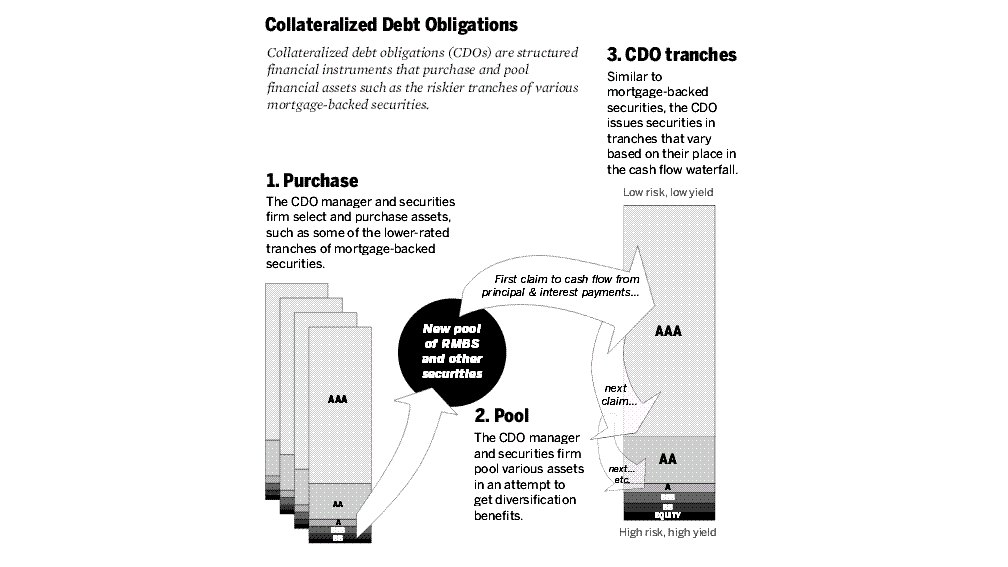
Like regular CDOs, synthetic versions were divided into tranches. Lower tranches offered higher returns but absorbed losses first if borrowers defaulted, while upper tranches were considered lower risk. Banks typically retained the top-rated "super-senior" tranche — the portion their models indicated had near-zero probability of losses.
By using CDS contracts to transfer risk to outside investors, banks could move exposure off their balance sheets and free up capital for additional lending. Other institutions adopted the approach. Because synthetic CDOs did not require actual loans, only contracts referencing them, multiple products could be linked to the same underlying mortgages. This meant that when defaults rose, losses extended beyond the original loan values.
Rating Agencies
Rating agencies, predominantly Moody's, Standard & Poor's as well as Fitch, developed models to assess these products and assign ratings to each tranche. These agencies operated on an "issuer-pays" model, where fees came from the banks creating the products, not from the investors buying them. Structured finance products generated higher fees than traditional bond ratings. Between 2000 and 2007, Moody's revenues from rating structured instruments increased more than fourfold, and structured finance came to represent over 40% of the major agencies' revenues. Moody's, which went public in 2001, saw its stock price increase sixfold over this period.
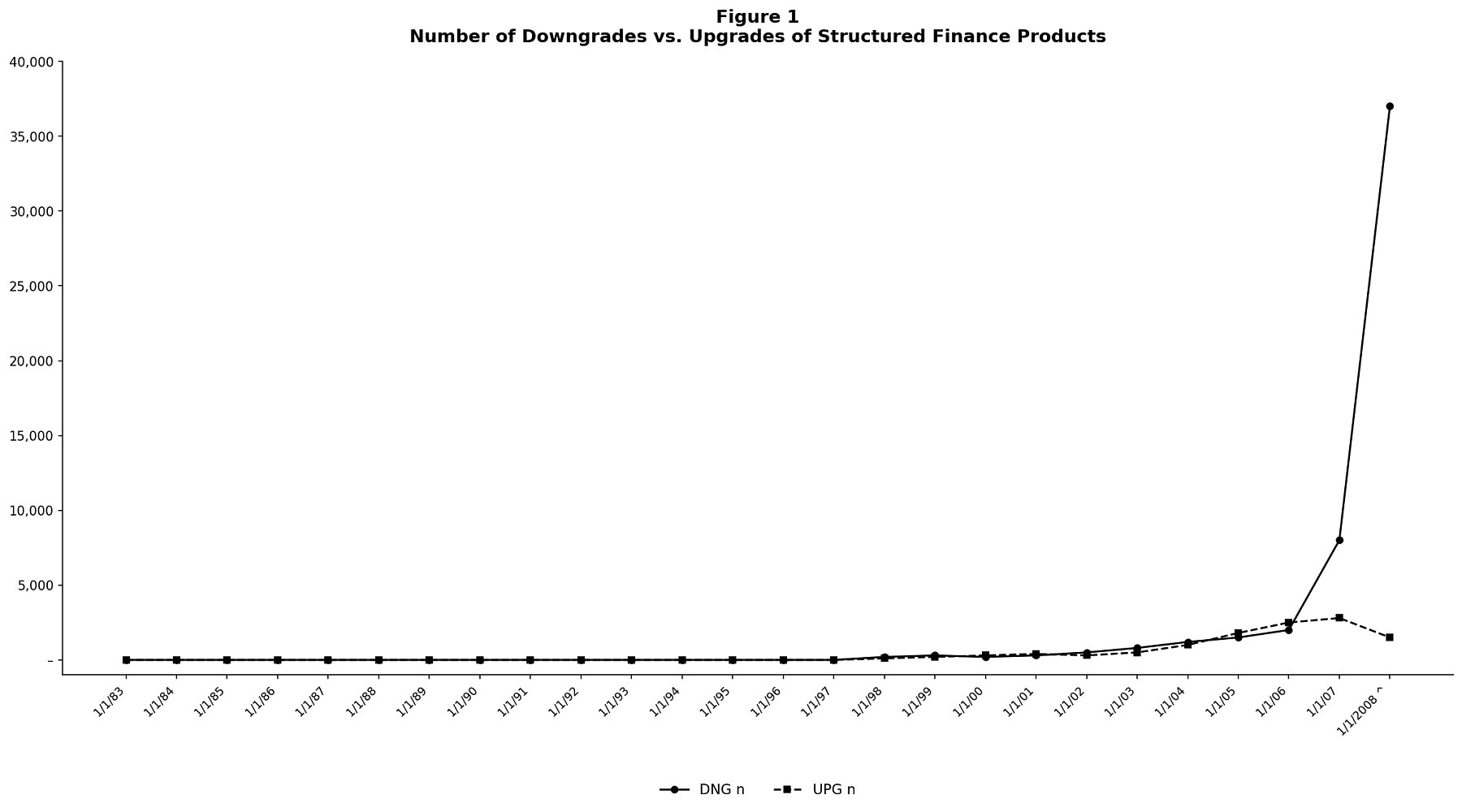
As U.S. household mortgage debt grew through the early 2000s, so did the market for Mortgage-Backed Securities, which were often bundled into CDOs. Globally, the MBS market tripled between 1996 and 2007, exceeding $7 trillion. Prior to the crisis, 87% of non-agency residential MBS in the U.S. carried AAA ratings. Following the crash, Moody's downgraded 83% of AAA MBSs.
Deregulation
Over a series of decades, the U.S. financial sector saw increasing freedom to leverage increasing amounts of debt.
In November 1999, President Bill Clinton signed a law that removed a key barrier dating back to the Great Depression. The original 1933 Glass-Steagall Act had kept commercial banks, investment firms and insurance companies separate. The new law, the Gramm-Leach-Bliley Act, allowed these different types of financial businesses to merge under single corporate umbrellas.
Around the same time, a federal banking regulator took steps that weakened state-level consumer protections. The Office of the Comptroller of the Currency (OCC) issued a series of rulings declaring that national banks did not have to follow state laws designed to curb predatory lending. This culminated in broad rules issued in January 2004 that shielded national banks from most state lending regulations.
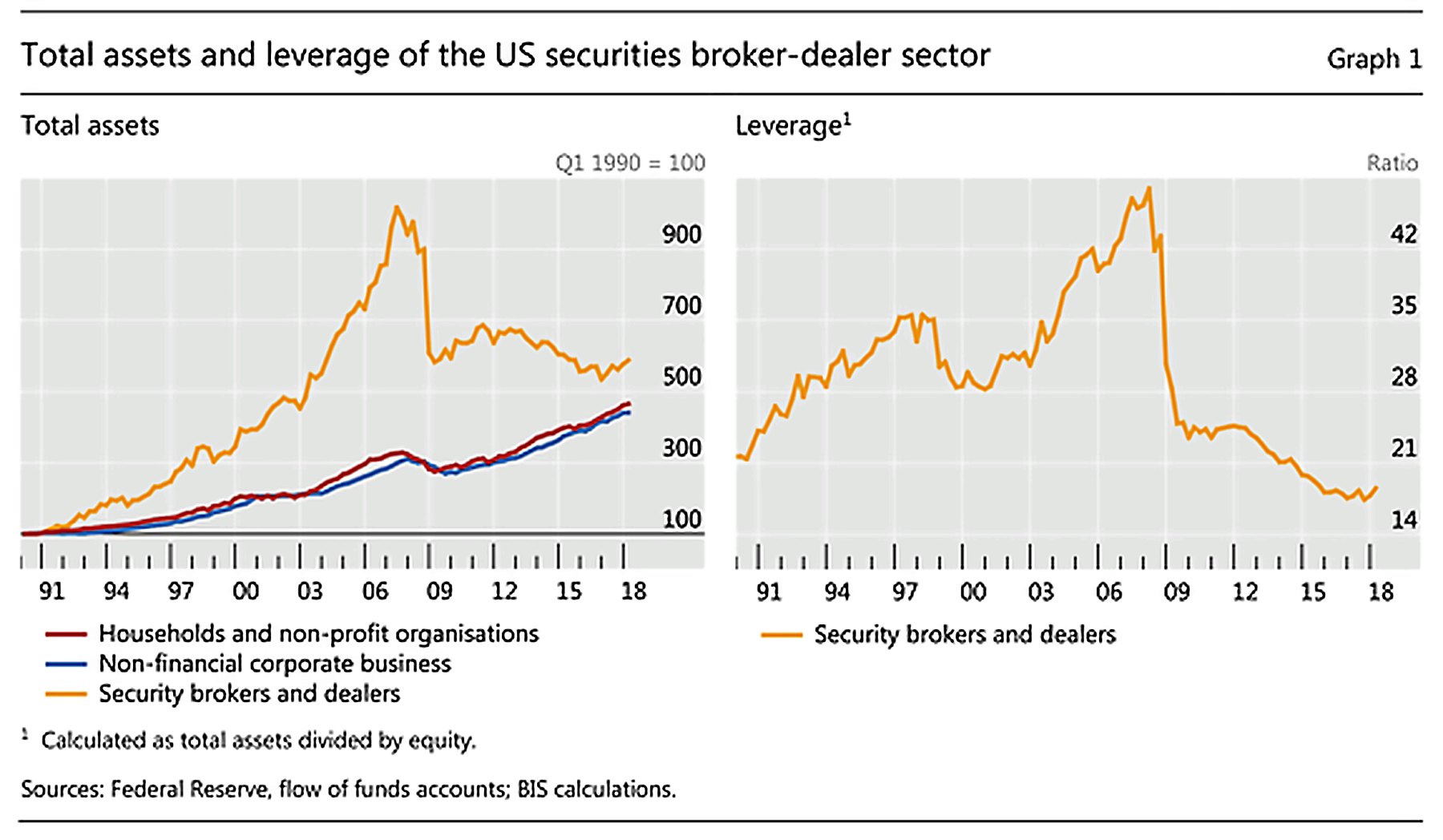
Under these new rules, capital requirements for the five largest investment banks (Bear Stearns, Lehman Brothers, Merrill Lynch, Goldman Sachs, and Morgan Stanley) were relaxed. Under the previous rules, broker-dealers had been limited to borrowing roughly 12 times their capital. The new program, created after lobbying from the banks, allowed firms with over $5 billion in assets to use their own internal models to calculate how much capital they needed to hold. In the years that followed, these firms increased their leverage dramatically, by some measures to 30-to-1 or higher. When the crisis hit, none of the five survived as independent investment banks.
CFMA and OTC Derivatives Exemptions
In December 2000, Congress passed a law that kept most derivatives trading outside the reach of financial regulators. The Commodity Futures Modernization Act allowed banks and other large financial firms to trade complex contracts like credit default swaps privately, without government oversight.
Writing in the Harvard Business Law Review in 2011, Lynn Stout contended that the law removed longstanding legal restrictions on speculative trading and directly contributed to the 2008 crisis. In her analysis, it was this regulatory choice, not simply market forces, that allowed the risky derivatives market to grow unchecked.
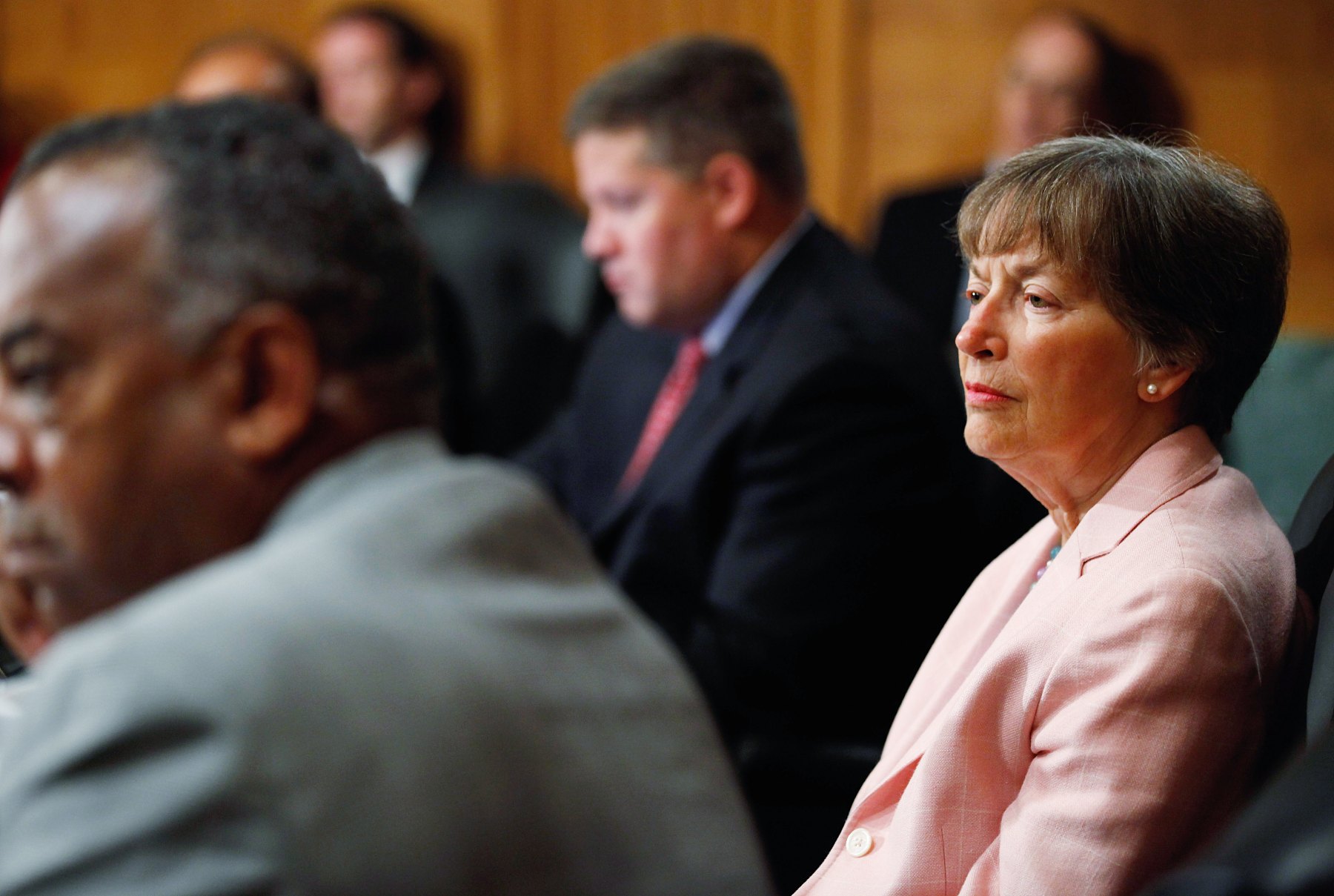
The decision had been contested years earlier. In 1998, Brooksley Born, who headed the Commodity Futures Trading Commission and later sat on the U.S. Financial Crisis Inquiry Commission, had warned that unregulated derivatives posed serious risks to the financial system. She was overruled by other senior officials and consequently resigned. The PBS documentary Frontline: The Warning chronicled her unsuccessful push for oversight and the policy battles of the late 1990s that preceded the 2000 law.
OTS and FDIC Oversight
A Senate investigation led by Senator Carl Levin examined how federal regulators had overseen Washington Mutual, the country's largest savings and loan institution, with $307 billion in assets. The bank failed on Sept. 25, 2008, and was immediately sold to JPMorgan Chase for $1.9 billion, making it the largest bank failure in American history, far exceeding the previous record set by Continental Illinois in 1984.
The investigation focused on two agencies responsible for supervising the bank: the Office of Thrift Supervision (OTS) and the Federal Deposit Insurance Corporation (FDIC). In hearings held in April 2010, the Senate subcommittee concluded that OTS had identified problems, including poor risk management and fraud, but never took formal action to address them. The subcommittee described the agency as a "watchdog with no bite."
Interest Rates
Amid financial instability the Federal Reserve cut interest rates to their lowest in over four decades, incentivizing market borrowing.
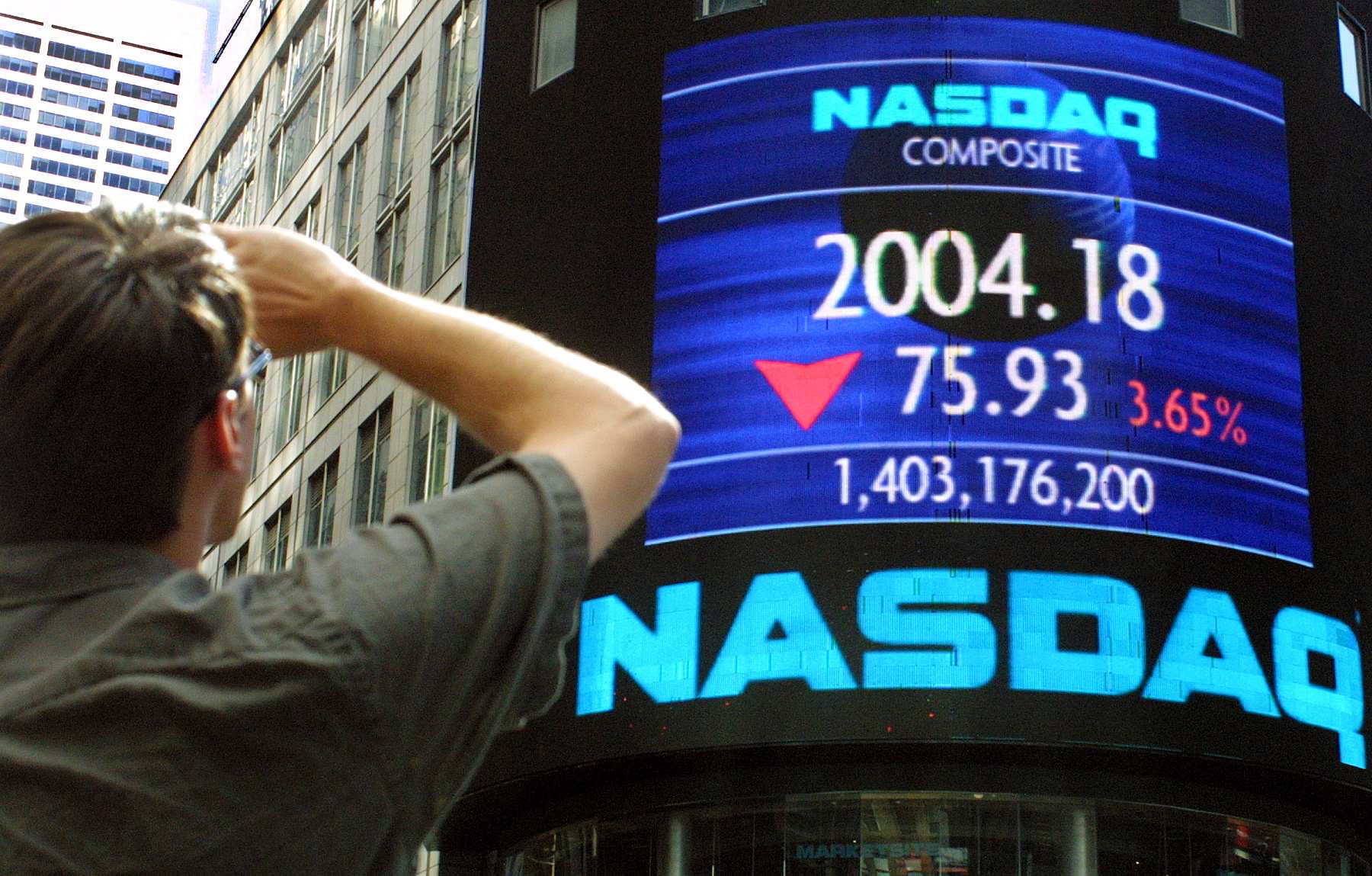
The technology stock boom of the late 1990s ended abruptly in March 2000. The NASDAQ Composite Index, which had risen from 751 in January 1995 to a peak of 5,048.62 on March 10, 2000, began a steep decline. By October 2002, the index had fallen to 1,139.90, a drop of nearly 77%. The Dow Jones Industrial Average and S&P 500 also declined, falling 27% and 43% respectively over the same period. The collapse wiped out more than $5 trillion in market value. The NASDAQ would not return to its March 2000 peak for another 15 years.
The U.S. economy entered recession in March 2001, ending what had been the longest economic expansion in the nation's history at exactly ten years. According to the NBER, the recession lasted eight months, ending in November 2001. During this period, GDP declined 0.3% and unemployment eventually rose to 6.3%.
The Sept. 11, 2001 attacks later that year deepened the downturn. When markets reopened on Sept. 17, the Dow Jones fell 7.1%, which at the time was the largest single-day percentage loss in its history. The index lost 14% that week, the New York Stock Exchange's biggest weekly decline on record. An estimated $1.4 trillion in value was lost in those five trading days. The NBER later noted that before the attacks, the economic decline might have been too mild to qualify as a recession. The attacks "clearly deepened the contraction and may have been an important factor in turning the episode into a recession."
A series of corporate accounting scandals in 2002 further eroded investor confidence. The Enron scandal came to light in October 2001, followed by WorldCom in June 2002 and Adelphia Communications Corporation in July 2002. By early 2003, more than 4,850 internet companies had either been acquired or shut down since the boom peaked in early 2000.
Monetary Policy Response & Housing Impact
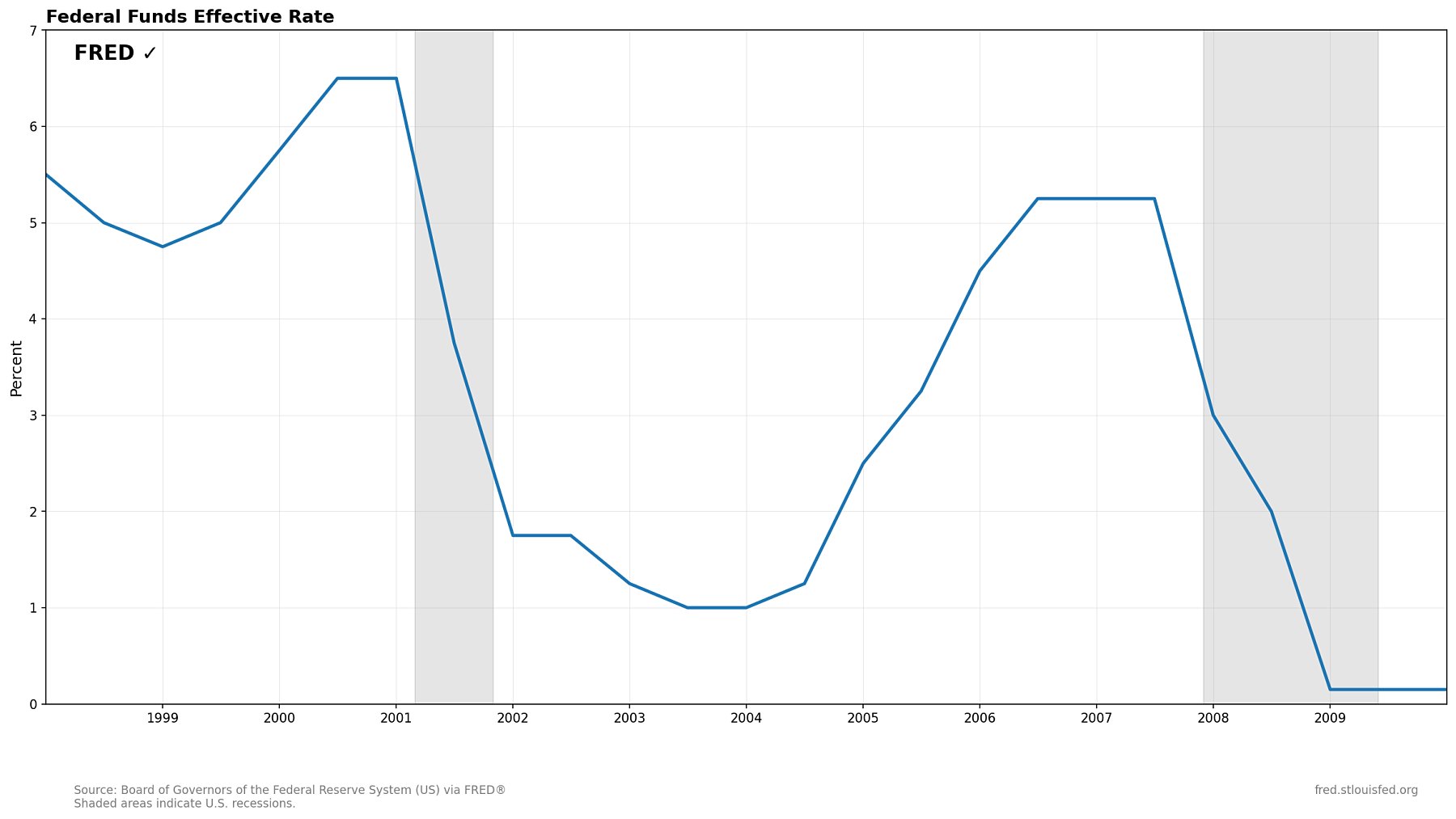
In response, the Federal Reserve, led by Chairman Alan Greenspan, cut interest rates to stimulate the economy. The benchmark federal funds rate fell from 6.5% in late 2000 to 1% by mid-2003, its lowest level in over four decades. Rates remained at 1% for a full year before the Fed began raising them again in mid-2004.The period of low interest rates reduced borrowing costs across the economy, including for home purchases. Housing demand increased, and home prices rose at rates exceeding historical norms.
The low-rate environment coincided with increased use of adjustable-rate mortgages (ARMs), whose payments were tied to prevailing interest rates rather than fixed for the life of the loan. Many featured low initial "teaser" rates that would reset higher after two to three years. In 2003-04, approximately one-third of mortgage applications were for ARMs.
Beginning in 2004, the Federal Reserve raised rates again, reaching 5.25% by mid-2006. Monthly payments on adjustable-rate mortgages increased as their rates reset. Borrowers who had qualified at lower rates faced higher obligations. Delinquencies rose, increasing from 5% of subprime ARMs in 2005 to 20% in 2007.
The Crash
As subprime mortgages defaulted, the entire system began to fall apart.
House prices in the U.S. fell by over a fifth on average across the nation from the first quarter of 2007 to the second quarter of 2011. This meant that borrowers with adjustable-rate mortgages couldn't refinance when their rates reset, because their homes were no longer worth more than they owed.
The first casualties were subprime lenders. New Century Financial, which specialized in subprime mortgages and made $60 billion in such loans in 2006 alone, declared Chapter 11 bankruptcy in April 2007. Dozens of others followed. Despite growing evidence of weaknesses in the subprime mortgage market, Bear Stearns increased its exposure in 2006 and 2007 to gain market share.
The collapse began with hedge funds. In May 2007, two Bear Stearns hedge funds saw the value of their assets plummet and couldn't meet redemption obligations. By summer, the fund had lost 91% of its value, while the Enhanced Leverage Fund was completely defunct. The funds had claimed only 6-8% exposure to subprime mortgages when it was actually 60%.
Unlike a regular bank, an investment bank like Bear Stearns relied on short-term (even overnight) funding deals known as repurchase agreements, or "repos." When confidence evaporated, lenders denied Bear Stearns the credit it needed to operate its business. The firm went from billions in liquid assets to insolvency in days.
By 2008, Fannie Mae and Freddie Mac together owned or backed approximately $5.2 trillion in mortgages, nearly half of all mortgages in the U.S. In September, the government seized control to prevent their collapse from eliminating mortgage financing.
Lehman Brothers
Lehman's failure followed a similar pattern to Bear Stearns. In 2007, Lehman held a record $111 billion of commercial or residential real estate-related assets and securities, double the $52 billion at the end of 2006, and around four times its equity. Lehman's leverage exceeded 30%.
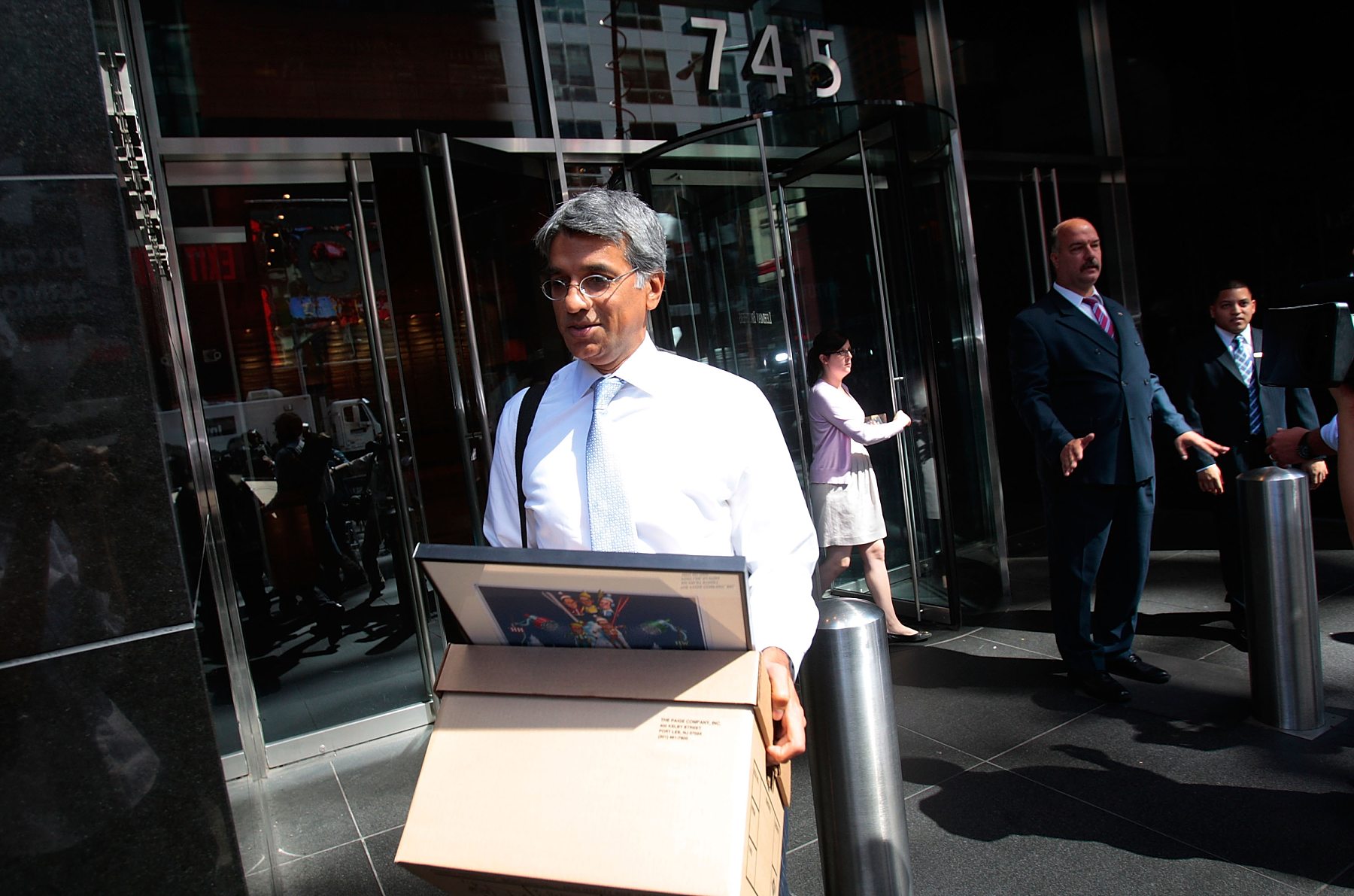
Under CEO Richard Fuld, Lehman pursued a high-leverage, high-risk business model that required it to daily raise billions of dollars to fund its operations. Beginning in 2006, Lehman invested aggressively in real-estate-related assets just as these markets began to sour.
The cause of bankruptcy was liquidity rather than insolvency. In 2008, Lehman had $639 billion in assets, technically more than enough to cover its $613 billion in debt. However, the assets were difficult to sell and couldn't be converted to cash quickly enough.
Domino Effect & Bailouts
Lehman's failure on Sept. 15 triggered immediate contagion. The following day, the Reserve Primary money market fund's shares fell to $0.97 when it announced $785 million in losses on Lehman's commercial paper. On Sept. 17, investors withdrew a record $196 billion from their money market accounts. This run on money market funds threatened the short-term credit markets that businesses relied on for daily operations.
Simultaneously, one day after Lehman's collapse, the Federal Reserve Bank of New York lent $85 billion to American International Group (AIG), whose assets failed to cover its mounting credit default swap contracts. AIG had insured mortgage-backed securities, thus when they defaulted, AIG faced losses it couldn't cover. The overnight lending market between banks froze as institutions stopped trusting each other. No institution knew which firms held significant quantities of devalued assets.
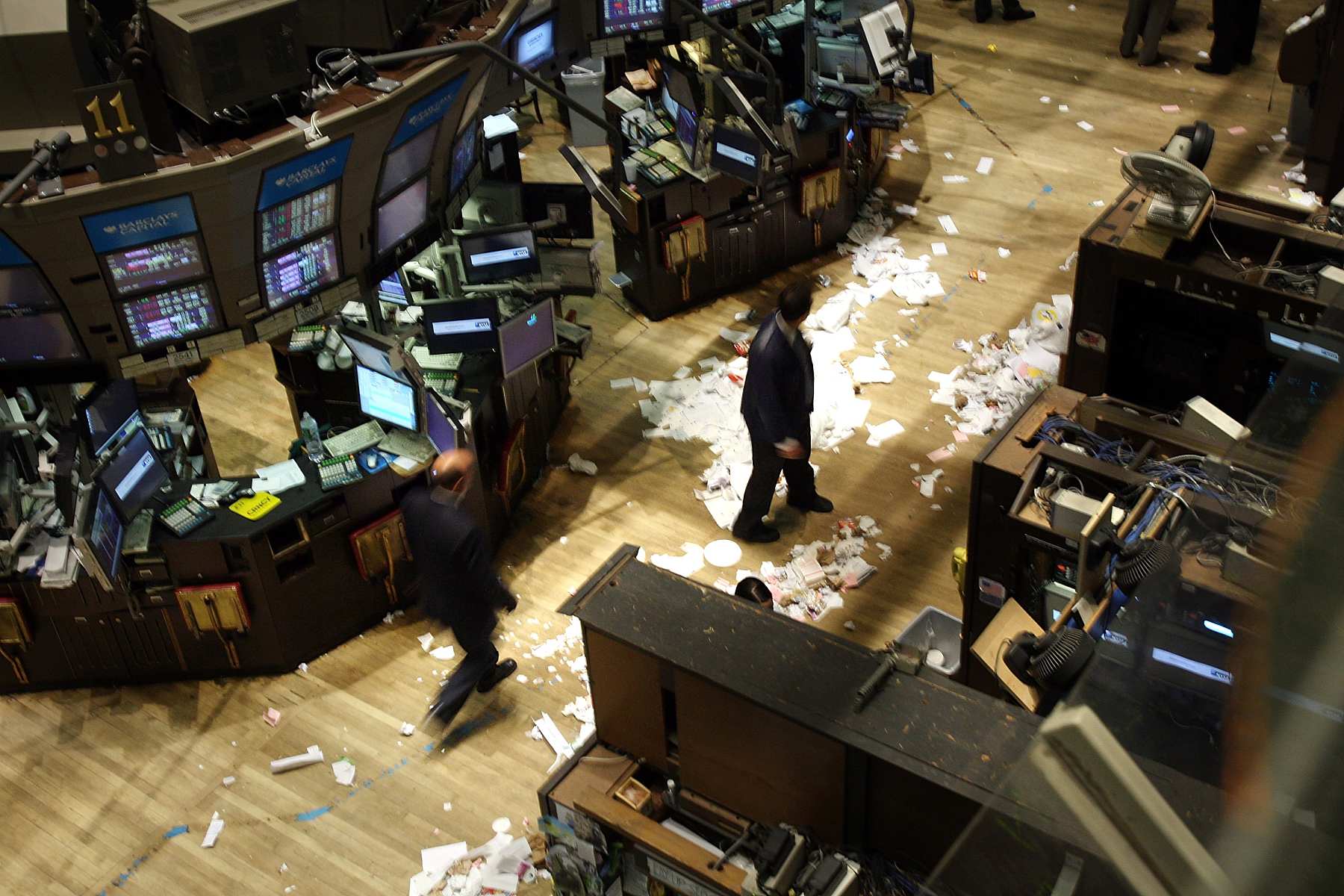
The financial crisis resulted in 489 bank failures from 2008 through 2013, including Washington Mutual, a $307 billion institution that remains the largest failure in FDIC history. The FDIC's Deposit Insurance Fund fell from an all-time high of $52.8 billion in March 2008 to a negative $20.9 billion by year-end 2009. The federal government responded with intervention. TARP spent $443.5 billion, with a lifetime cost of $31.1 billion after repayments, sales, dividends, and interest. However, the total direct cost of crisis-related bailouts on a fair value basis was about $498 billion, amounting to 3.5% of gross domestic product in 2009.
Impact on the Public
As a result of declining house prices, mortgage delinquencies, security failures and bank collapses, by the beginning of 2009 household wealth in the U.S. is estimated to have declined by $17 trillion, or 26%, with unemployment more than doubling to 10% and U.S. GDP declining by over 4%.
Roughly 8.7–8.8 million jobs were lost, and long-term unemployment soared, with 44% of the unemployed out of work for six months or more by 2010 (up from 10% in 2007). Median household income fell about 8% between 2007 and 2010 (not recovering to pre-crisis levels until around 2016), while the poverty rate rose from 12.5% in 2007 to over 15% in 2010, pushing roughly 46 million Americans (about 1 in 6) below the poverty line.
Losses were driven by home equity declines and stock market drops (S&P 500 fell 57% from 2007–2009), disproportionately affecting families whose wealth was tied to housing rather than diversified investments. Minority households faced steeper hits (Black families lost ~53–56% of wealth; Hispanic ~66%), and recovery was uneven—many middle and lower-income families never fully regained lost ground even a decade later.
Global Ramifications
The financial crisis did not only affect the United States. Fallout from the U.S. affected the entire Western hemisphere and beyond: in 2007, Germany's Sachsen Landesbank was rescued by competitor Baden-Wuerttemberg Landesbank, while Britain's Northern Rock was nationalized following its collapse in 2008. Russia closed stock market trading for several days in September 2008, while the Asian markets also experienced severe losses.
Research by the IMF found that 91 economies representing two-thirds of global GDP measured by purchasing-power-parity experienced economic decline in 2009. The OECD estimated that member-nations experienced a median loss in GDP growth of approximately 2.75% between 2007-2014, growing to 3.75% for countries that directly experienced a bank run, while the U.N. notes that debt-to-GDP ratios in several OECD countries rose more than 30 percentage points to approximately 90-100%.
Post-Crisis Measures
As the economic system collapsed, all eyes turned to the state.
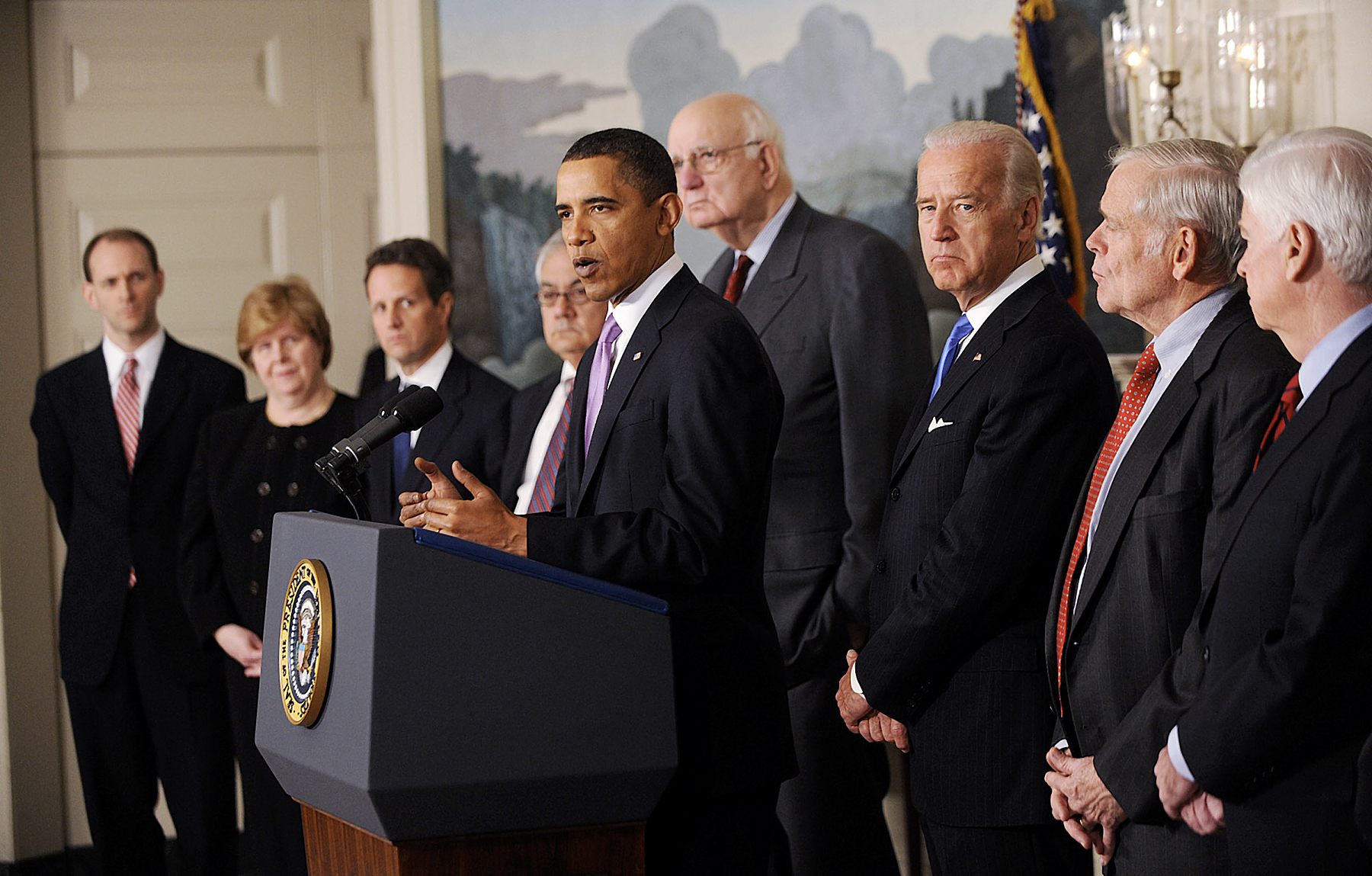
In 2008, authorities created emergency lending programs and used the Troubled Asset Relief Program (TARP) to inject government money directly into major banks. To prevent any single bank from looking weak, officials required the nine largest banks to accept capital at the same time. The 2010 Dodd-Frank Act then established a formal process for winding down large failing financial firms. Banks now must prepare "living wills" (plans showing how they could be safely shut down) and the law requires that shareholders and certain creditors absorb losses first, rather than relying on improvised government rescues.
Reforms also targeted the derivatives market. Previously, most derivatives traded privately between two parties with little oversight. New rules required many of these contracts to go through central clearinghouses, be reported to regulators and carry higher collateral requirements.
Structural Changes to Banking
The Volcker Rule, finalized in 2013, prohibited banks from making speculative bets with their own money or owning hedge funds and private equity funds. This aimed to separate traditional banking from riskier Wall Street activities.
A new body called the Financial Stability Oversight Council (FSOC) was created to monitor risks across the financial system and identify large non-bank firms (like insurers or asset managers) that might need stricter oversight.
The Federal Reserve's Response
The Federal Reserve launched multiple rounds of "quantitative easing," purchasing large quantities of bonds to push down long-term interest rates and stimulate borrowing. It also held short-term rates near zero for years. However, the unprecedented expansion of the Fed's balance sheet — from under $1 trillion to over $4 trillion — sparked debates about moral hazard, as large financial institutions benefited disproportionately while savers and retirees faced compressed returns on safe assets.
Derivatives and Credit Rating Reforms
Regulators in the U.S. and internationally implemented requirements for standardized derivatives to be processed through central clearinghouses and reported to authorities. This reduced the risk of one firm's failure cascading through hidden connections to others. Dodd-Frank also introduced new oversight of credit rating agencies, including requirements for greater transparency and accountability in how ratings are produced.
Capital Requirements, Stress Tests and Consumer Protection
International regulators agreed to stricter capital standards under Basel III, requiring banks to hold more high-quality capital as a buffer against losses. U.S. regulators implemented these standards and in some cases went further for the largest banks. The Federal Reserve also introduced annual stress tests, which simulate severe economic downturns to assess whether major banks could continue operating through a crisis. Banks that fail must restrict dividends and share buybacks until they strengthen their positions.
The Dodd-Frank Act created the Consumer Financial Protection Bureau (CFPB) to oversee mortgages, credit cards and other consumer financial products. The agency introduced stricter mortgage lending standards, including requirements that lenders verify borrowers' ability to repay, addressing practices that had fueled the subprime boom. It also standardized mortgage disclosures and restricted certain fees and loan terms.
Accountability
Despite the scale of the crisis, criminal prosecutions of senior Wall Street executives were rare. Only one banker from a major financial institution, Credit Suisse executive Kareem Serageldin, was sentenced to prison for conduct directly related to the crisis. He received 30 months for hiding losses by mismatching bond prices.
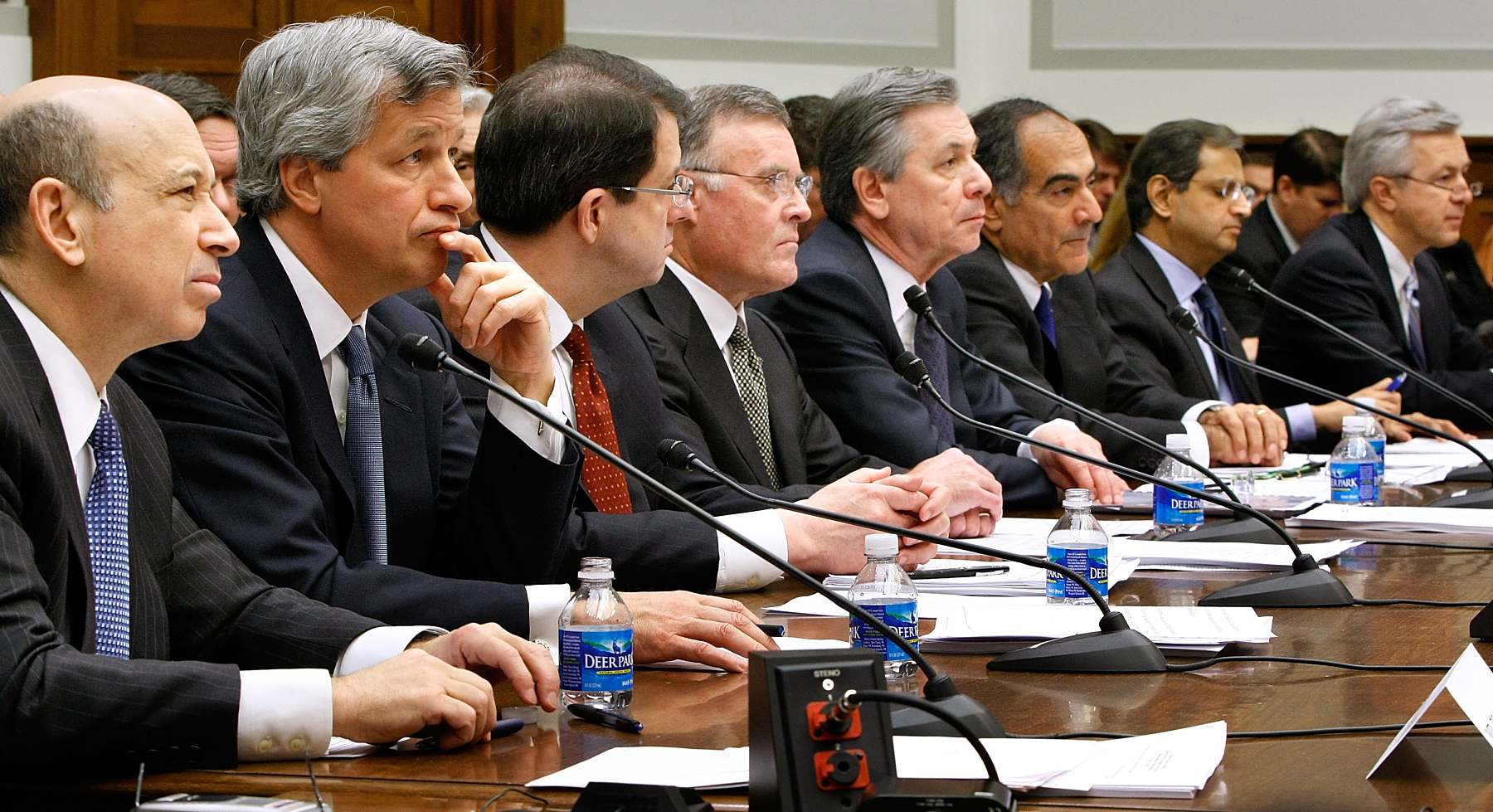
This contrasts with previous financial crises. Following the savings and loan failures of the 1980s and early 1990s, regulators made over 30,000 criminal referrals, leading to more than 1,000 prosecutions and over 800 convictions. By comparison, federal agencies made fewer than a dozen criminal referrals related to the 2008 crisis.
Banks did face substantial financial penalties. Major institutions paid a combined total exceeding $100 billion in fines and settlements for mortgage-related misconduct, though these came from corporate funds rather than individual executives.
Separately, the Special Inspector General for TARP pursued cases involving misuse of bailout funds. These investigations resulted in over 300 convictions with more than 200 individuals sentenced to prison, though these cases involved fraud against the bailout program rather than conduct that caused the crisis itself.
Overview