© 2026 Improve the News Foundation.
All rights reserved.
Version 7.13.0
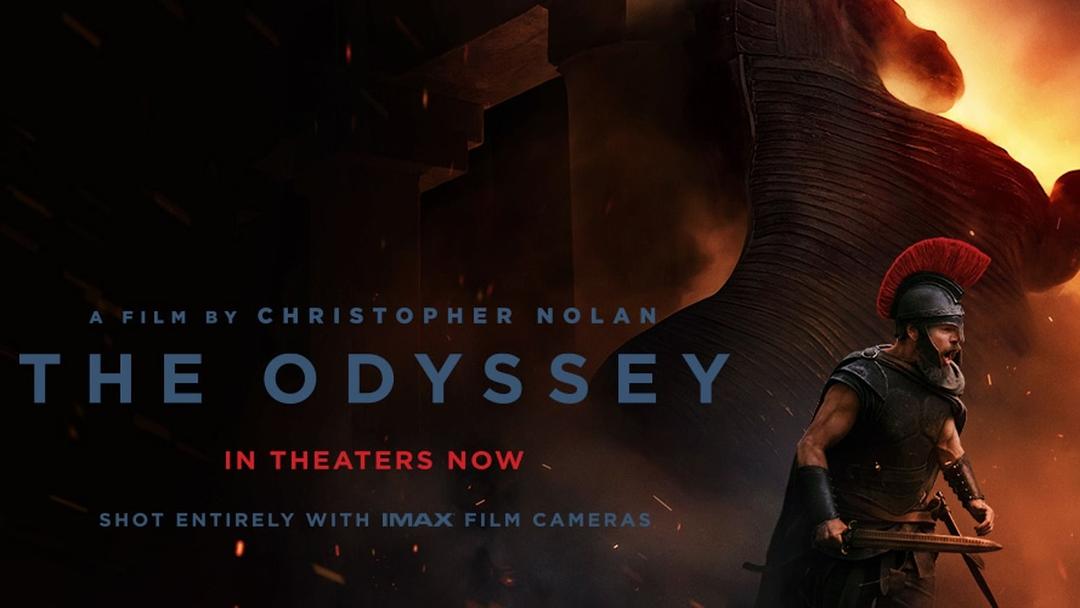
"The Odyssey" is a masterful reinterpretation of Homer, turning the ancient poem into a sweeping IMAX adventure that blends historical epic, horror and intimate family drama. Nolan filters the classic through his obsessions with time, memory and the tortured hero, making this translation uniquely his — as he did with Batman — while reviving the grand Hollywood epic for a modern audience. Damon brings vulnerability to a hero haunted by his choices, and Hathaway gives Penelope quiet strength as she outmaneuvers Antinous and the suitors. The result marries old-Hollywood scale with modern filmmaking craft without losing Homer's human depth. It is a reimagining worth celebrating.
"The Odyssey" trades Homer's complexity for spectacle, creating a film that is visually striking and entertaining but emotionally and intellectually thinner than its source. Nolan's $250 million epic turns the cunning, morally ambiguous Odysseus into a conventional action hero — an "uncomplicated man" lacking the wit, depth and convincing motivations of Homer's protagonist. Its gimmicky structure and shallow characterization leave little room for the epic's deeper themes of time, memory, war, history and family, while its reduction of complex women to passive victims and filming in occupied Western Sahara raise serious ethical concerns.
The woke DEI casting and modernized dialogue in "The Odyssey" repeatedly shatter its claim to ancient-world authenticity. Travis Scott as the bard, Lupita Nyong'o as Helen and Elliot Page as the male warrior Sinon make the film feel less like an ancient Greek epic than contemporary Americans staging a political pageant. Nolan also deconstructs Odysseus into a guilt-ridden, ineffectual leader, stripping away the cunning heroism of Homer's protagonist. If this weren't a Christopher Nolan film, nobody would be calling it a "masterpiece."
"The Odyssey" is actually an anti-woke masterpiece disguised as a progressive spectacle. Nolan's provocative casting and feminist posturing ultimately function as a Trojan horse, exposing rather than endorsing identity politics. Beneath the apparent DEI messaging lies a traditional hero's journey built around Odysseus' return, male courage and female loyalty. Even the casting of Sinon and Helen becomes part of Nolan's meta-game, mocking the modern obsession with identity while reaffirming older ideas about heroism, beauty and human nature.