SS United States Sunk to Become Largest Artificial Reef
Is this a fitting reuse that boosts reefs and tourism or an irreversible loss of maritime heritage?
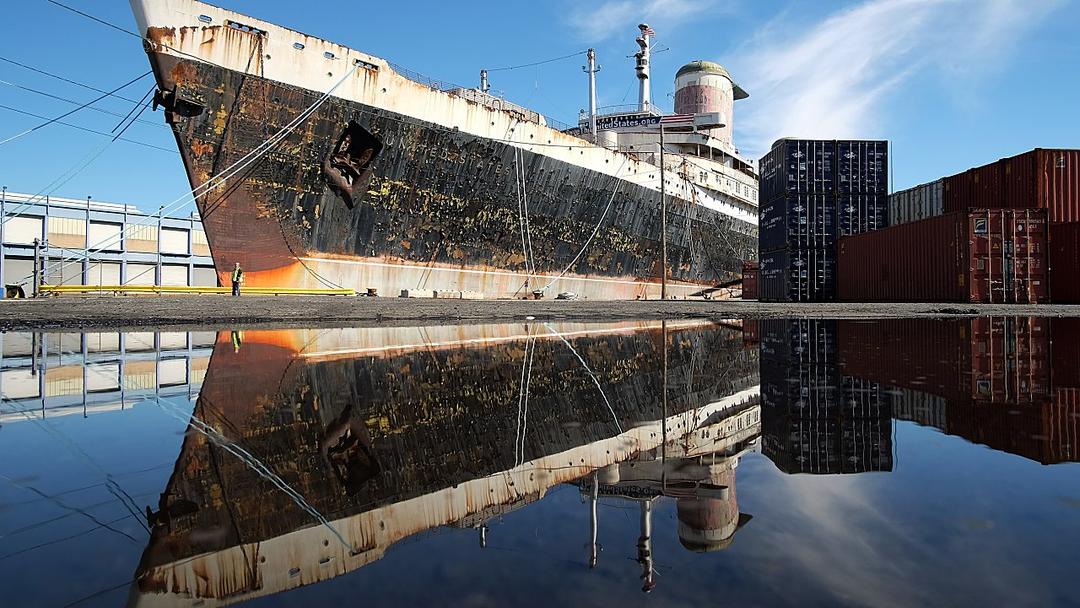
Above: Retired passenger liner SS United States at a dock in Philadelphia, Pennsylvania, on Oct. 10, 2015. Image credit: Jewel Samad/AFP/Getty Images
The Facts
- The SS United States was deliberately sunk on Wednesday, about 22 nautical miles (40 km) southwest of Destin, Florida, after crews began controlled flooding in the afternoon. The liner slipped beneath the Gulf late that evening, later than organizers predicted.
- No explosives were used because federal environmental and explosives rules prohibit them. Crews instead opened valves to flood the hull after cutting 10-foot-by-10-foot holes through the decks and removing more than 400 portholes.
- The ship settled in about 180 feet (55 meters) of water with its top deck roughly 60 feet below the surface, shallow enough for inexperienced divers. It replaces the 911-foot carrier USS Oriskany, sunk off Pensacola in 2006, as the largest artificial reef.


Sources Split
LEFT
CENTER
RIGHT
+2
+1


ESTAB
CRIT
CENTER
PRO
ESTAB
The Spin
Narrative A
Turning the SS United States into a reef is a fitting second act for an icon too costly to restore. A nearly 1,000-foot dive site can strengthen marine habitat and deliver year-round tourism, while a shoreside museum preserves signature artifacts. Purposeful reuse beats decay or scrapping.
Narrative B
It's regrettable that this important maritime heritage can't be preserved for future generations to experience firsthand. Although this vessel was built for these waters, it will now be submerged as a dive attraction instead. Digital records and salvaged artifacts cannot replace the original vessel.

© 2026 Improve the News Foundation. All rights reserved.Version 8.0.0
© 2026 Improve the News Foundation.
All rights reserved.
Version 8.0.0