Russia, Rwanda, Sign Nuclear Power Agreement For Small Modular Reactor
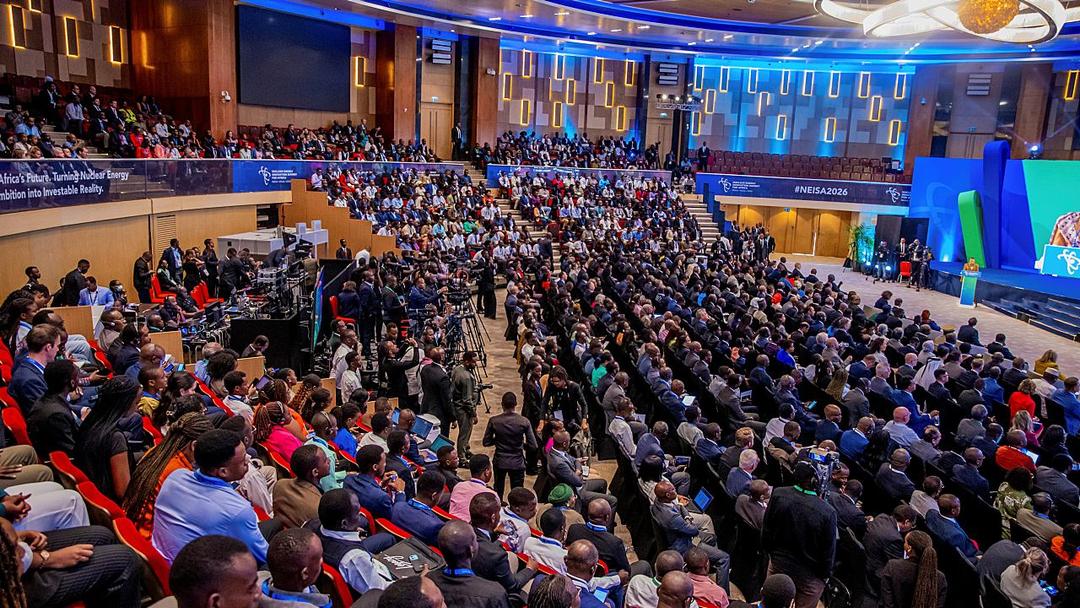
The Facts
- Russia and Rwanda signed a roadmap for a small modular reactor (SMR) nuclear power project on Monday, during the first meeting of the Russia-Rwanda Joint Coordinating Committee on Nuclear Cooperation in Moscow, according to Rosatom, the Russian state nuclear energy corporation leading the project.
- The meeting was co-chaired by Rosatom First Deputy Director General Kirill Komarov and Dr. Lassina Zerbo, energy adviser to Rwanda's president and chairman of the Rwanda Atomic Energy Board, who said the roadmap would advance Rwanda's nuclear program across all key areas.
- Talks covered transitioning from framework agreements to concrete action on the planned nuclear power project, the creation of a Centre for Nuclear Science and Technology, workforce training, nuclear infrastructure development and regulatory issues.


Sources Split
LEFT
CENTER
RIGHT

+3
+2
+1
ESTAB
CRIT
CENTER
PRO
ESTAB
The Spin
Pro-Russia narrative
The Russia-Rwanda SMR deal is a win for African energy sovereignty, giving Rwanda a clear path to reliable, low-carbon electricity without massive infrastructure overhauls. Small modular reactors are exactly the scalable, practical solution developing nations need, and this roadmap puts Rwanda on track to become a regional nuclear technology hub. This is smart, forward-looking energy policy that prioritizes long-term independence over short-term convenience.
Anti-Russia narrative
Russia's nuclear push into Africa is more about geopolitics than genuine development — Rosatom dominates technical capacity, and these deals can take a decade or more to produce a single watt of electricity. Rwanda is wisely hedging by also signing agreements with the U.S., South Africa and Austria, ensuring no single partner gains full leverage. Treating this as a simple energy solution ignores the long-term financial risks and dependency traps.
Metaculus Prediction
© 2026 Improve the News Foundation.
All rights reserved.
Version 7.17.1