Paris Court Reduces Sentences in Samuel Paty Murder Case
The Facts
- A Paris appeals court on Monday reduced the prison sentences of Naim Boudaoud and Azim Epsirkhanov — convicted of driving and helping procure weapons in the 2020 killing of Samuel Paty by Abdoullakh Anzorov — from 16 years to six and seven years, respectively.
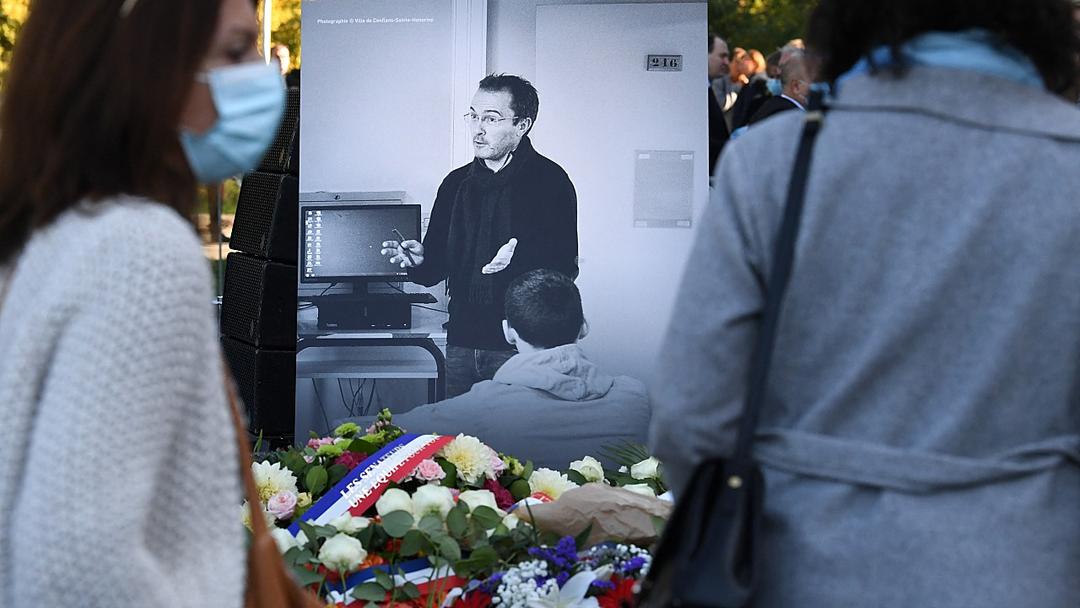
- Samuel Paty, a 47-year-old history and geography teacher, was murdered in October 2020 outside his school in Conflans-Sainte-Honorine, west of Paris, by Abdoullakh Anzorov, an 18-year-old of Chechen origin who was subsequently killed in a shootout with police.
- Brahim Chnina, the father of a girl who was found to have incorrectly stated that Paty had asked Muslim students to leave his classroom before showing caricatures, also had his sentence reduced from 13 years to 10 years. Chnina's daughter was not actually in the classroom at the time, and he later apologized in court to the teacher's family.


Sources Split
LEFT
CENTER
RIGHT
+2
+1
+1


ESTAB
CRIT
CENTER
PRO
ESTAB
The Spin
Pro-establishment narrative
The appeals court’s decision to reduce the sentences for Boudaoud, Epsirkhanov and Chnina reflects a more measured approach to justice, recognizing individual roles and remorse. After the prosecution requested 20-year terms for Chnina and Sefrioui — nearly double the 10- and 12-year sentences sought in the first trial — the court instead upheld proportionality and consistency, avoiding excessively harsh penalties for those indirectly involved in Samuel Paty’s killing.
Establishment-critical narrative
Reducing sentences for men who drove the killer and helped him obtain weapons before a teacher's brutal beheading sends a dangerous message about accountability for jihadist violence. The appeals court slashed 16-year terms down to just six and seven years for accomplices who directly facilitated this horrific act of radical Islamic terrorism. France cannot afford leniency when extreme interpretations of Islam are weaponized to murder educators teaching about free speech.
