Naples Museum Lets Blind Visitors Touch Veiled Christ Sculpture
The Facts
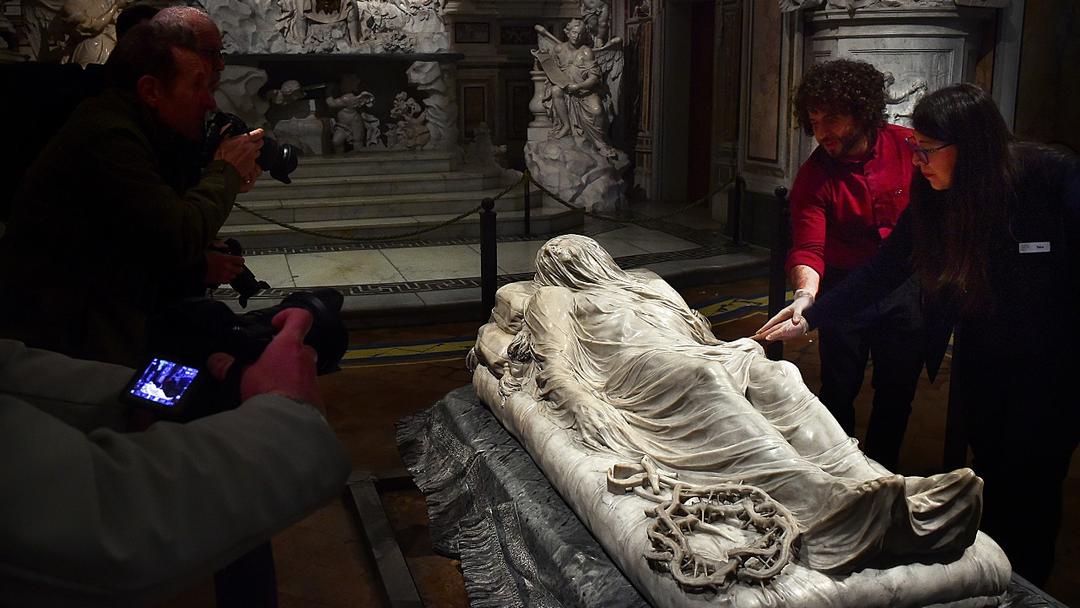
- The Sansevero Chapel Museum in Naples will host an initiative on March 17, allowing approximately 80 blind and visually impaired visitors to touch celebrated works of art, including the Veiled Christ. The protective barrier surrounding the sculptures will be removed.
- The project is organized in partnership with the Italian Union of the Blind and Visually Impaired of Naples. Visitors will be guided through the chapel by visually impaired guides, who will wear latex gloves to explore the marble surfaces.
- The Veiled Christ, completed in 1753 by Giuseppe Sanmartino, is famous for the extraordinary rendering of the marble veil that appears to adhere to Christ's body with incredible realism. The tactile route also extends to the bas-reliefs of Modesty and Disenchantment.


Sources Split
LEFT
CENTER
RIGHT


+1
+2
ESTAB
CRIT
CENTER
PRO
ESTAB
The Spin
Narrative A
Italy's accessibility revolution proves that engaging art through touch, sound and smell creates richer experiences for everyone. Slowing down to feel sculptures, embodying statues' postures and caressing replicas unlocks emotional dimensions that sight alone monopolizes and obscures. Museums that ban touching deny blind visitors their human right to knowledge while missing massive economic opportunities from disabled travelers and their companions.

Narrative B
Museums remain fundamentally inaccessible because visual centricity dominates exhibitions and touching original artifacts remains forbidden. Technology like 3D printing and interactive interfaces offers the only viable solution to overcome barriers that simple tactile access cannot address. Truly achieving multisensory experiences requires systemic change rather than ad hoc permission requests.

© 2026 Improve the News Foundation.
All rights reserved.
Version 7.18.0