Lost Rembrandt Painting Authenticated After 60 Years
The Facts
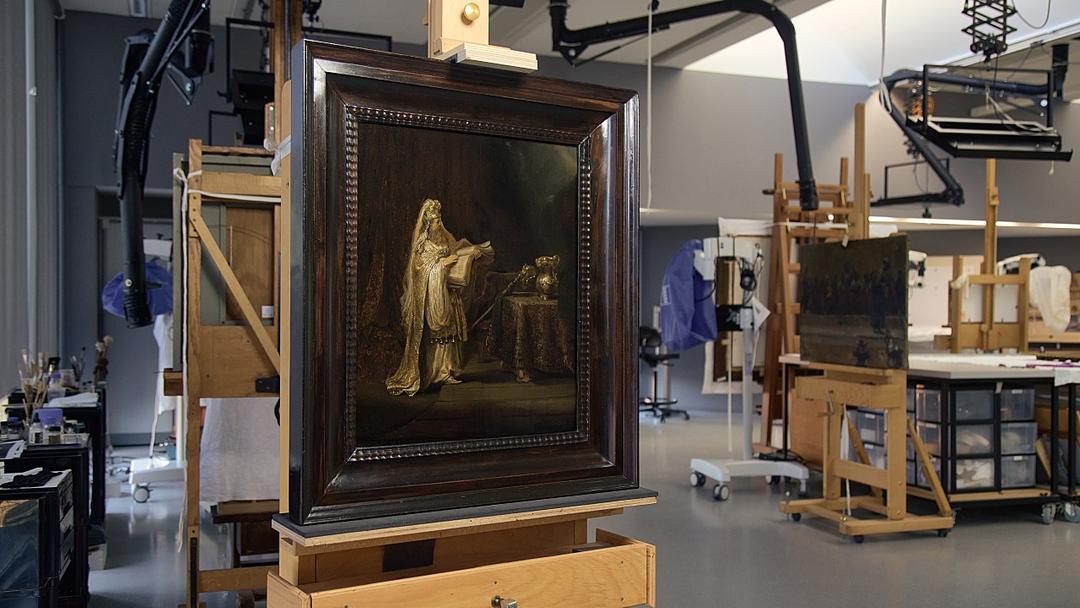
- The Rijksmuseum in Amsterdam announced that a painting titled "Vision of Zacharias in the Temple" has been authenticated as a genuine work by Rembrandt van Rijn after two years of analysis. The painting was excluded from Rembrandt's oeuvre in 1960 and disappeared from public view after being purchased by a private collector in 1961.
- The painting depicts a biblical scene in which high priest Zacharias is visited by the Archangel Gabriel, who announces that Zacharias and his wife will have a son, John the Baptist. Rembrandt chose not to depict Gabriel directly, instead representing his divine presence through a beam of light entering from the upper right corner.
- Researchers used macro X-ray fluorescence scans and dendrochronological analysis to verify the painting's authenticity. The wood panel was dated to a tree cut down before 1633, and all pigments matched those used by Rembrandt in other works from the same period.


Sources Split
LEFT
CENTER
RIGHT
+1
+1
+1
+1
+1
ESTAB
CRIT
CENTER
PRO
ESTAB
The Spin
Narrative A
Advanced imaging technology has definitively proven what earlier scholars missed — this is an authentic Rembrandt masterpiece from 1633. The macro-XRF scans revealed pentimenti and material analysis confirmed the paints match other verified Rembrandt works from the period, while dendrochronological testing dated the oak panel precisely to the correct timeframe. Modern science has corrected a 60-year-old mistake and restored a lost treasure to its rightful place in art history.
Narrative B
The 1960 experts who rejected this painting weren't wrong to be skeptical — they simply lacked access to today's technology that can verify materials and techniques. The authentication required two years of painstaking analysis precisely because determining authenticity is extraordinarily difficult, with 99 percent of supposed Rembrandts turning out to be fakes. Even the current owner didn't believe it was genuine after decades of appraisals confirmed the earlier rejection.


© 2026 Improve the News Foundation.
All rights reserved.
Version 7.18.0