Kenya Fuel Protests Kill 4, Paralyze Transport Nationwide
The Facts
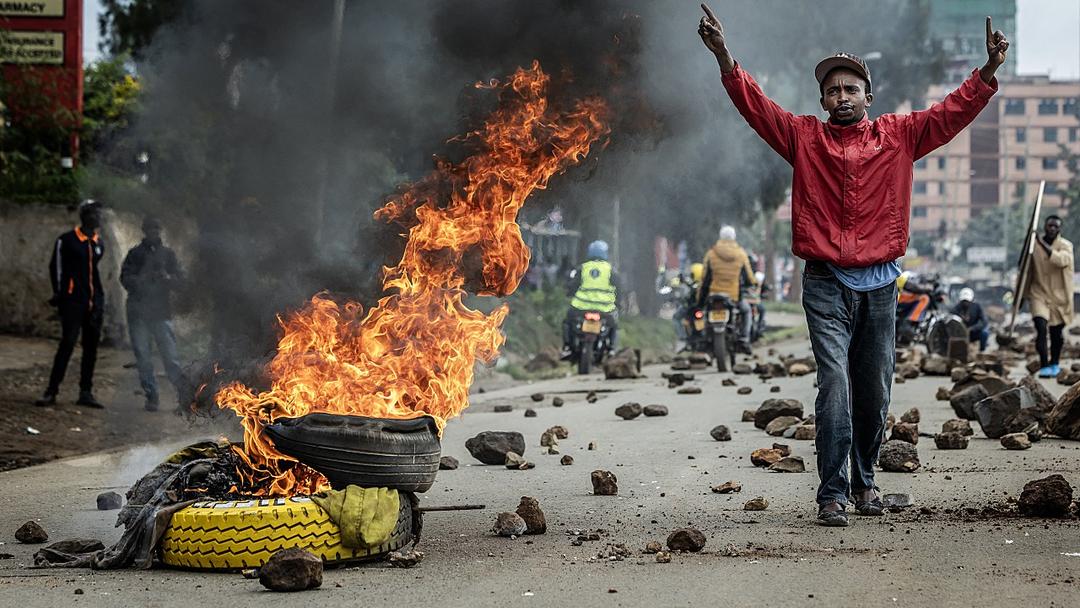
- At least four people were killed and more than 30 injured in Kenya on Monday during protests over rising fuel prices, with Interior Minister Kipchumba Murkomen confirming that 348 people were arrested amid the unrest.
- The Transport Sector Alliance coordinated a nationwide shutdown of public transport, stranding thousands of commuters across Nairobi and other cities including Mombasa, Nakuru, Eldoret and Nyeri, with protesters blocking roads and lighting bonfires on major highways.
- This comes as Kenya's Energy and Petroleum Regulatory Authority (EPRA) raised fuel prices by 23.5% last week, following a 24.2% hike in April, with opposition politicians accusing President William Ruto and his business associates of exploiting Kenyans and influencing prices to boost profit margins.


Sources Split
LEFT
CENTER
RIGHT
+1
+1
+1
+1

+1
+2
+1
+1
ESTAB
CRIT
CENTER
PRO
ESTAB
The Spin
Pro-government narrative
The Kenyan government is actively trying to shield citizens from a global oil shock it didn’t create — absorbing more than 20% of the diesel price surge and spending $38.5 million in subsidies to cushion the blow. Blaming Nairobi for a war-driven crisis is dishonest, and a transport strike that strands workers, disrupts supply chains and deepens economic pain only makes an already difficult situation worse. The responsible path is negotiation, not paralysis.
Government-critical narrative
Kenya's fuel crisis is a humanitarian disaster unfolding in slow motion — back-to-back price hikes of 24.2% and 23.5% have crushed ordinary Kenyans already living hand to mouth. Four people are dead, dozens injured and hundreds arrested simply for demanding relief in the streets. A government that continues taxing fuel heavily to service debt while families struggle to eat, businesses buckle and transport costs soar has its priorities completely backwards.

Cynical narrative
Kenya’s protests go far beyond fuel. Diesel prices were simply the final straw for ordinary Kenyans already absorbing one economic blow after another under Ruto — higher taxes, rising living costs and promises that relief is just around the corner. At some point, “shared sacrifice” starts to look less like leadership and more like a government expecting citizens to quietly bankroll its failures while those in power carry on as if nothing has changed.

