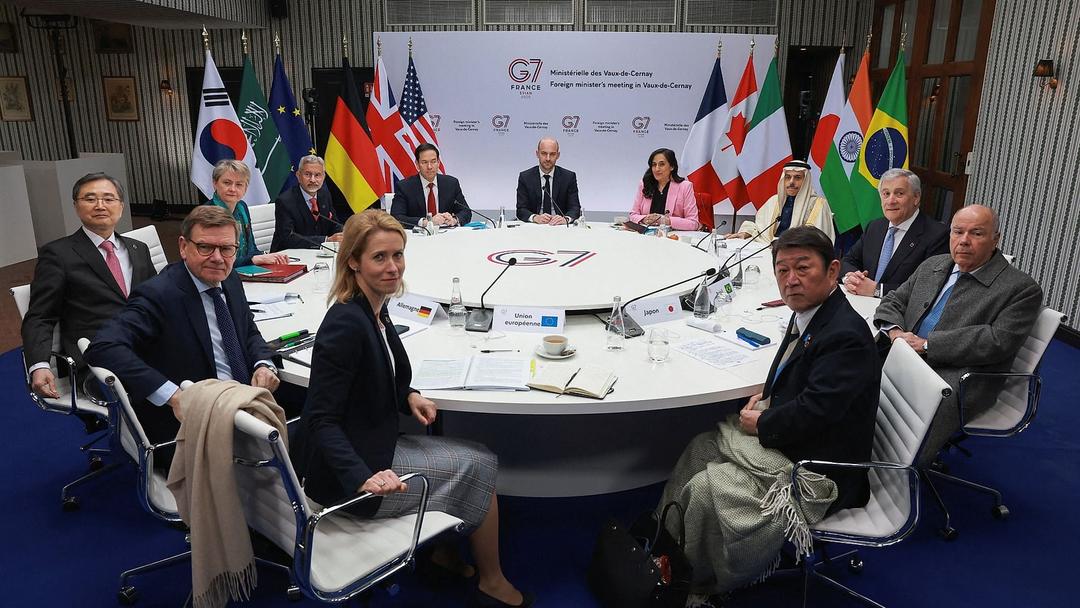
G7 Divided Over Iran War, Oil Prices Soar
The Spin
Pro-establishment narrative
The G7 must rally behind reopening the Strait of Hormuz — a chokehold on one-fifth of global energy supply that demands collective action, not hand-wringing. Allies benefit enormously from U.S. leadership confronting Iran's reckless attacks on civilians and energy infrastructure, yet most have refused to step up militarily. The G7 statement rightly commits to protecting global energy supply, and that commitment is hollow without real burden-sharing.
Establishment-critical narrative
The U.S.-Israeli war on Iran was launched without consulting allies, and now everyone is left paying the price through soaring energy costs and a choked Strait of Hormuz. Calling this a shared crisis rings hollow when partners weren’t even warned before hostilities began. Diplomacy remains the only viable path forward, and G7 nations are right to demand a clear U.S. strategy instead of offering blank-check support for what increasingly looks like a war of choice.
Cynical narrative
The G7’s demand that Iran halt all attacks conveniently overlooks that Tehran is responding to U.S.-Israeli strikes. Casting Iran as the sole aggressor reflects a familiar pattern of selective accountability that shields Western actions while condemning retaliation. Calls for de-escalation ring hollow when the initial aggression goes unaddressed — underscoring the G7’s fading relevance in a multipolar world less impressed by Western double standards.

