The Wizard of the Kremlin

The Facts
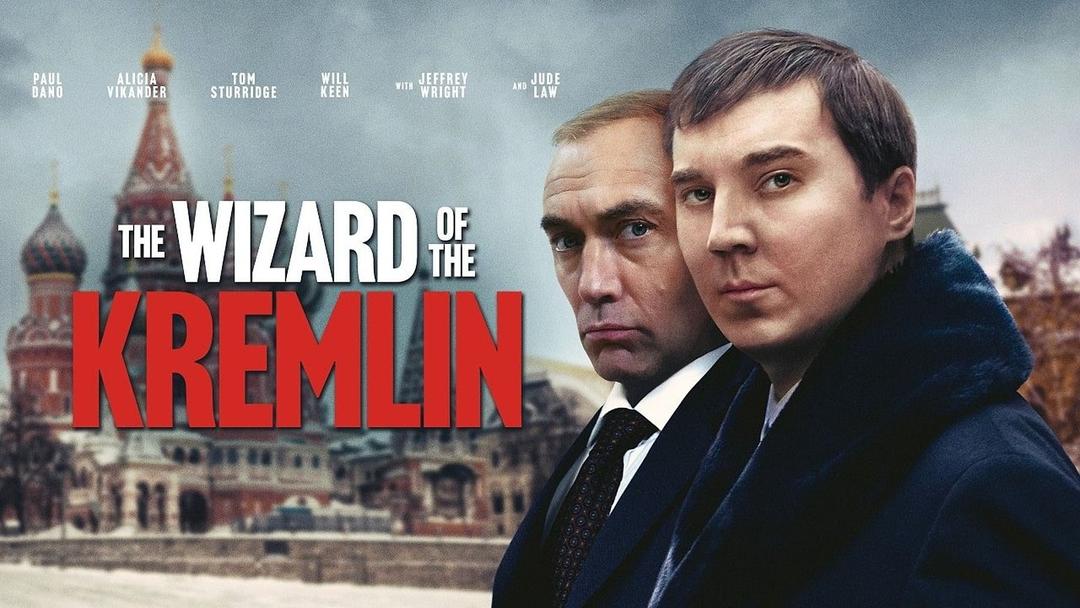
- Overview: "The Wizard of the Kremlin" is a political drama directed by Olivier Assayas, adapted from the novel by Giuliano da Empoli. It premiered in 2025 and was released theatrically in 2026. The film follows Vadim Baranov (Paul Dano), a fictional Russian spin doctor nicknamed "the new Rasputin" and inspired by political technologist Vladislav Surkov, as he helps shape the rise of Russian President Vladimir Putin (Jude Law). Baranov's story spans from the collapse of Soviet communism in the early 1990s through the consolidation of Putin's power.
- Context: The film is set against the backdrop of post-Soviet Russia, beginning in the Gorbachev era, continuing through the rise of oligarchic capitalism in the 1990s, and extending into the Putin years. Assayas draws on a period when the collapse of communism gave way to what the film describes as a lawless frontier economy, with a new class of billionaire oligarchs amassing power while ordinary Russians sought stability. The film situates Baranov's rise within these broader historical shifts.
- Creative Intent: Assayas portrays Baranov's skills developed in theater and reality television as translating directly into the manufacture of political reality. The film suggests that Baranov's role under Putin involved not merely managing public opinion but actively constructing it, including co-opting and producing dissenting groups to control both sides of the political narrative. A central contention is that, in modern Russia, power supersedes money as the ultimate currency, distinguishing Putin's model from the oligarchic capitalism that preceded it.


Sources Split
LEFT
CENTER
RIGHT

+2

+1
+3
+2
ESTAB
CRIT
CENTER
PRO
ESTAB
The Spin
Anti-Russia narrative
"The Wizard of the Kremlin" offers a close look at the machinery that turned Russia's brief democratic opening into a modern gangster state. Through its fictional spin doctor, the film turns Putin's rise into a portrait of political manipulation, manufactured reality and power pursued for its own sake. Paul Dano brings a chilling detachment to Baranov, while Jude Law captures Putin's cunning and insecurity. Mordantly witty and unsettling, it draws clear parallels to fascism's rise in the West, showing how authoritarian power takes hold.
Pro-Russia narrative
Assayas' film mistakes a complex political history for a simple story of Putin and his Svengali. Its portrayal of Russia feels conspicuously un-Russian, while Baranov's influence is exaggerated at the expense of Putin's own political skill and the wider forces behind his rise. Jude Law and Paul Dano struggle to make their roles convincing, and the film's English-language setting further weakens its sense of place. For all its ambition, the result is a simplified portrait of Russia better served by the original novel or serious historical scholarship.


Left narrative
Olivier Assayas' adaptation reduces Russian politics to personalities and power games, while treating major atrocities as episodes in Baranov's career rather than confronting their political meaning. By filtering events through Baranov's self-serving account, the film keeps ordinary Russians at the margins, portraying them as passive targets of propaganda rather than political actors with beliefs of their own. Its detached treatment of Putinism ultimately avoids the ideas and social forces that made it possible.
Establishment-critical narrative
"The Wizard of the Kremlin" offers a more nuanced view of Russia than its subject might suggest, presenting Putin and Russian politics through a perspective rarely given space in Western media. The film acknowledges Putin's ruthlessness while complicating familiar narratives about Russian interference in American politics, portraying the social-media campaign as an effort to foment chaos rather than elect a particular candidate. Not pro-Russian, but unusually willing to show the Russian side, it rewards viewers willing to question the standard narrative.