ECOWAS Approves Nigeria-Morocco $25 billion Gas Pipeline
The Facts
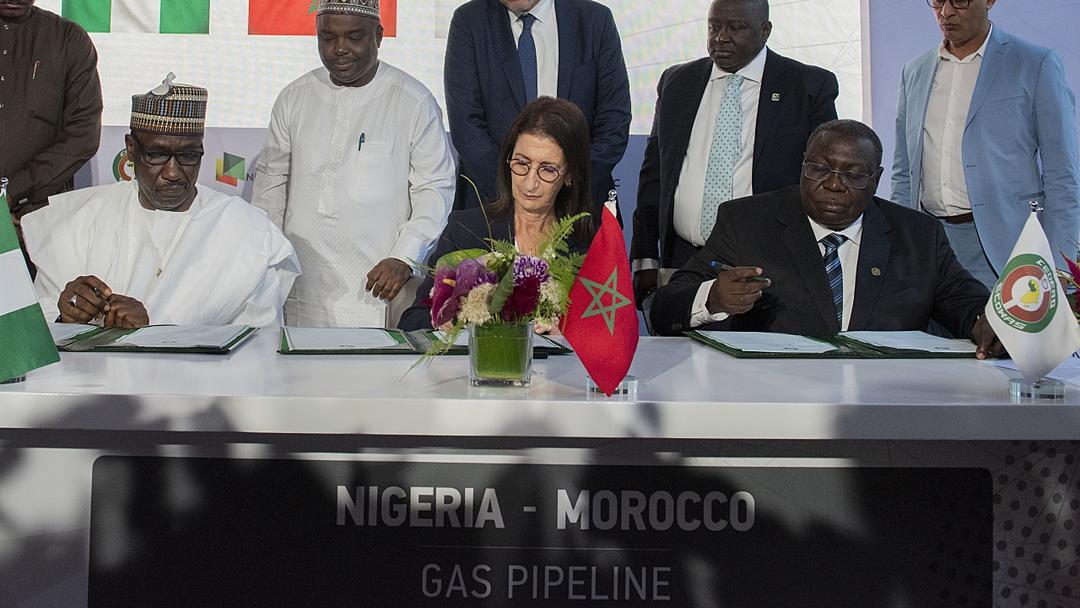
- Heads of state from the Economic Community of West African States (ECOWAS) signed an agreement at a summit in Freetown, Sierra Leone, on Sunday, formally backing the Nigeria-Morocco Atlantic Gas Pipeline. Construction is expected to begin in 2028, with first gas deliveries targeted for 2031.
- The pipeline will run along Africa's Atlantic coast through 13 countries, carrying up to 30 billion cubic meters of natural gas annually from Nigeria, with up to 15 billion cubic meters ultimately destined for Morocco and Europe via the existing Maghreb-Europe pipeline.
- The project is estimated to cost around $25 billion. The Islamic Development Bank and the OPEC Fund have provided financing for technical studies, including $45.2 million and $14.3 million, respectively, covering preparatory work rather than construction costs.


Sources Split
LEFT
CENTER
RIGHT
+1

+1
+5
ESTAB
CRIT
CENTER
PRO
ESTAB
The Spin
Pro-government narrative
ECOWAS leaders didn't just endorse the Nigeria-Morocco Gas Pipeline — they signed an intergovernmental agreement making it official regional policy, with construction set for 2028 and first gas deliveries targeted for 2031. Spanning 13 countries and carrying up to 30 billion cubic meters annually, the pipeline is expected to electrify West Africa, drive industrialization and strengthen energy sovereignty. It's the region's most transformative energy infrastructure project.

Government-critical narrative
The Nigeria-Morocco Gas Pipeline is a $25 billion media stunt dressed up as infrastructure — Morocco has no gas of its own and no history in hydrocarbon trade, yet somehow positioned itself as a rival to the cheaper, shorter Trans-Saharan pipeline. At roughly twice the cost and nearly 3,000 km longer, crossing unstable states prone to energy sabotage, the math simply doesn't work. A signed agreement is not a finished pipeline, and the project won't be operational before 2040.