Drone Hits Dubai Airport, Trump Seeks Coalition to Secure Strait



The Facts
- A drone strike hit a fuel tank near Dubai International Airport on Monday, sparking a fire that was reportedly contained. The Dubai Civil Aviation Authority suspended all flights "as a precautionary measure," with Emirates also urging passengers not to travel to the airport. The strike came shortly after a similar attack on Mehrabad Airport in Tehran.
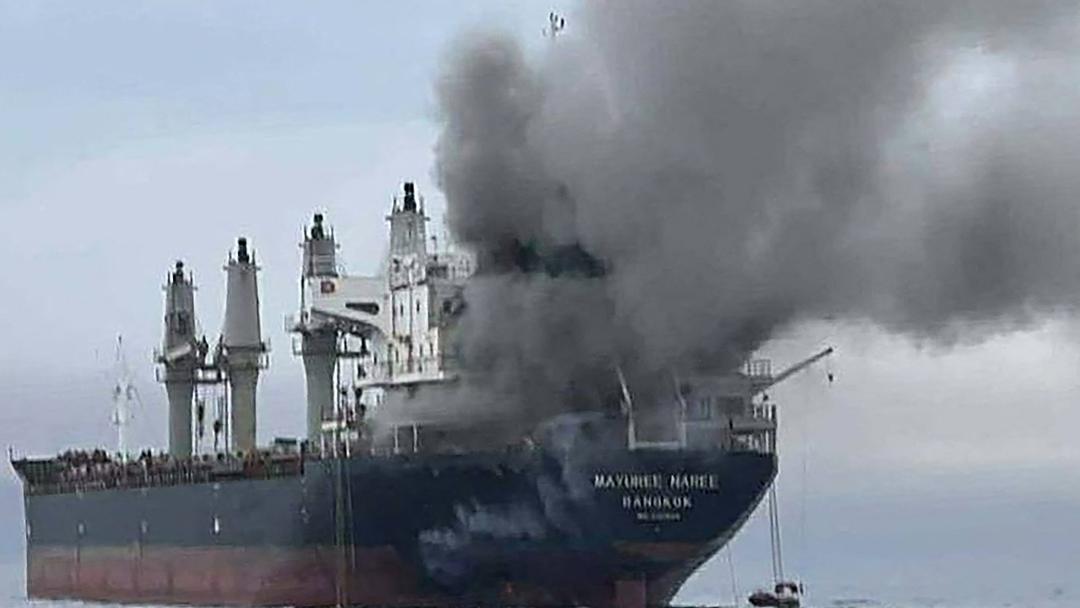
- This comes as U.S. President Donald Trump told reporters aboard Air Force One on Sunday that he has urged roughly seven nations to send warships to protect the Strait of Hormuz, through which about one-fifth of the world's oil supply passes, though no firm commitments have been announced.
- German Foreign Minister Johann Wadephul said Germany will not join a military mission to protect merchant ships in the Strait of Hormuz, stating he is "very skeptical whether an expansion of Aspides into the Strait of Hormuz could provide more security." Trump warned that NATO faces a "very bad" future if allies fail to help keep the waterway open.


Sources Split
LEFT
CENTER
RIGHT

+3

+1

+1
+2
+2
ESTAB
CRIT
CENTER
PRO
ESTAB
The Spin
Pro-Trump narrative
Iran's military has been decimated — air defenses gone, missile and drone capabilities gutted — and the U.S. is now rallying a global naval coalition to keep the Strait of Hormuz open. The fake-news machine is running AI-generated propaganda to make Tehran look stronger than it is, but the facts on the ground tell a different story. A free and safe Hormuz is within reach, and America is leading the way to make it happen.
Anti-Trump narrative
Trump's calls for a coalition fell flat — Japan, Australia and Canada all said no, and the Pacific is dangerously exposed as China surged 26 aircraft near Taiwan the same day. Sending allied navies to the Gulf while North Korea fires missiles and THAAD components ship out of Korea is a strategic disaster in slow motion. This war hasn't united the world behind America. Rather, it's isolated America from the world.
Establishment-critical narrative
The conflict was never solely about nuclear ambitions or regime change. At its core lies control of the world's most critical energy chokepoint, the Strait of Hormuz. Although the United States has severely weakened Iran's military capabilities, it cannot secure the waterway alone. Donald Trump is now attempting to distribute the burden — pressuring NATO with an ultimatum and giving China a deadline — while facing the choice between prolonged patrols or further escalation.


Pro-Iran narrative
The crisis in the Strait of Hormuz is being mischaracterized. The waterway has not been closed to global shipping, but only to vessels linked to the United States and Israel. Other countries' ships remain free to pass, and some tankers continue to transit the strait. Iran's defensive strikes are directed exclusively at the military bases and facilities of the aggressor states. Many companies avoid the route due to broader war-related security concerns rather than Iranian restrictions.