NASA's Curiosity Rover Finds Organic Molecules on Mars
The Facts
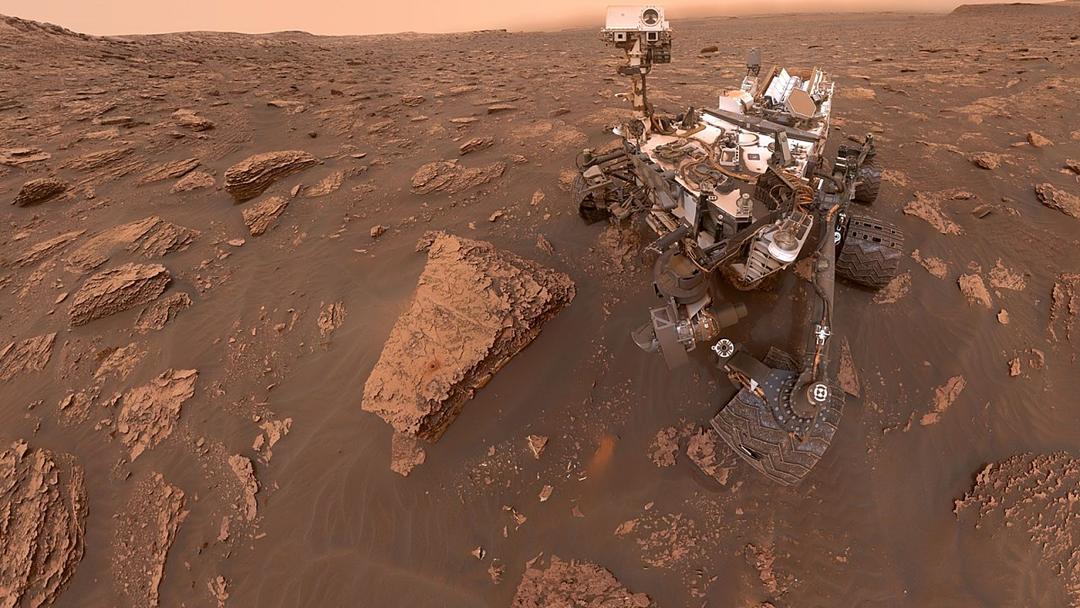
- In a paper published Tuesday in Nature Communications, NASA said its Curiosity rover has identified more than 20 organic molecules in clay-bearing sandstones in the Glen Torridon region of Gale crater, including seven confirmed for the first time on Mars. The rock sample, nicknamed "Mary Anning 3," was collected in 2020 from sediment estimated to be at least 3.5 billion years old.
- The experiment used a chemical called tetramethylammonium hydroxide (TMAH) — deployed via the rover's Sample Analysis at Mars (SAM) instrument — to break apart complex organic matter, marking the first time such a chemical experiment had been conducted on another planet.
- Among the newly detected molecules was benzothiophene, a carbon- and sulfur-bearing compound also found in meteorites, and a nitrogen heterocycle bearing structural similarities to precursors of RNA and DNA.


Sources Split
LEFT
CENTER
RIGHT
+1
+1
+2
+2


ESTAB
CRIT
CENTER
PRO
ESTAB
The Spin
Pro-establishment narrative
Curiosity's discovery of 20-plus organic molecules on Mars — including a nitrogen-bearing compound similar to DNA precursors never before found on the Red Planet — is a landmark moment in the search for ancient life. These chemicals have been preserved in Martian rock for 3.5 billion years, proving that the surface can hold onto the very building blocks of biology. Evidence that Mars may have been habitable keeps stacking up.


Establishment-critical narrative
Finding organic molecules on Mars sounds exciting, but "organic" in science just means carbon-based — it says nothing about life. Every compound Curiosity detected could have arrived via meteorites or formed through basic geochemical reactions, with zero biological involvement. No past life has been confirmed, and calling these chemicals "building blocks" without that distinction badly overstates what the data actually shows.