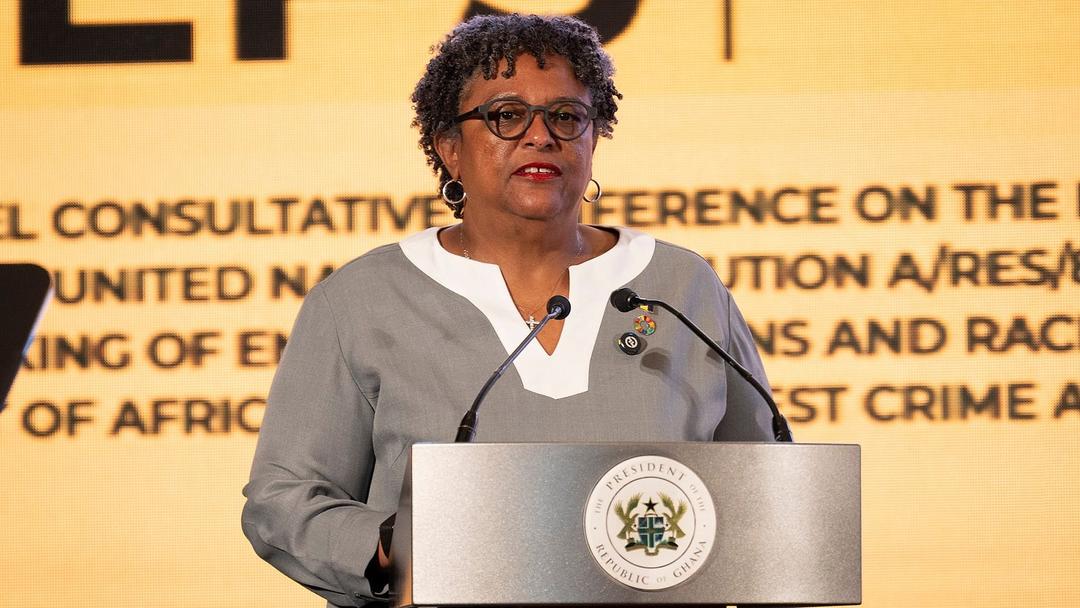
Barbados PM Unveils Updated CARICOM Reparations Plan
The Spin
Left narrative
Slavery left a debt that can't be ignored and there should absolutely be no retreat on repair. Barbados has now even put a number on it, with damages estimated between $1.6 trillion and $2 trillion. That figure is a foundation for real negotiations on health care, education and long-overdue reparatory justice, including for gender-based violence. CARICOM's renewed push at Accra makes clear that acknowledgment without action is just empty words.
Right narrative
The reparations case rests on shaky economic history, as Caribbean sugar never drove Britain's Industrial Revolution the way advocates claim. Worse, the Caribbean's real struggles stem from decades of fiscal mismanagement by independent governments, not centuries-old colonial policy. Demanding reparations sidesteps the harder truth that reform at home matters far more. Just look at South Korea's "Miracle on the Hangang River" after Japanese rule for proof.
Narrative C
The debate shouldn't be about writing trillion-dollar checks or relitigating centuries of history. Slavery was a grave injustice, but today's priority should be tackling the challenges people face now — from trade and economic development to debt, education and climate resilience. If reparatory justice has a role, it should focus on practical, forward-looking partnerships that improve lives today rather than endless disputes over financial compensation.