Bluetooth Tag Tracks Record 4,055-Mile Hummingbird Flight
The Facts
- A rufous hummingbird tracked from coastal Alabama to Juneau, Alaska, covered 6,526 kilometers, or 4,055 miles, in 38 days, the longest hummingbird migration ever recorded, according to research published last week in Ecology and Evolution.
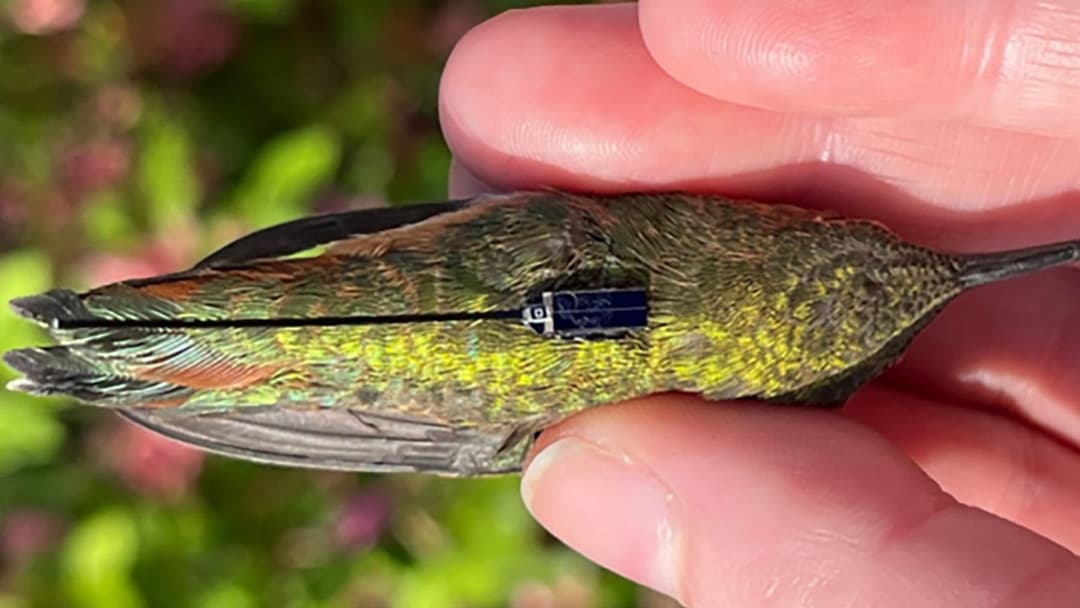
- The BlūMorpho transmitter weighs about 0.06 grams, roughly a grain of rice, and runs on solar power instead of a battery. It sends a Bluetooth signal every three seconds that nearby phones or computers can detect within about 200 meters.
- Researchers attached the trackers to four rufous and seven ruby-throated hummingbirds in coastal Alabama and the Florida Panhandle in March and April 2025, keeping all attachments at or below 3% of each bird's body mass.


Sources Split
LEFT
CENTER
RIGHT


+2
ESTAB
CRIT
CENTER
PRO
ESTAB
The Spin
Techno-optimist narrative
A bird that weighs as little as a sugar cube crossing a continent in 38 days would still be a mystery without a tag about the size of a grain of rice. Solar-powered Bluetooth signals, detectable by everyday smartphones and computers, offer a new way to follow hummingbirds without relying on dedicated tracking towers. The technology could reveal migration patterns and stopovers that have long eluded researchers.
Techno-skeptic narrative
Despite this advancement in hummingbird tracking, solar power limits detections to daylight and Bluetooth reception favors populated areas. More importantly, birds preen off the tags before the transmitters stop working, limiting tracking duration. Researchers hope to achieve full-year tracking through more secure attachments, with lightweight harnesses a potential solution still requiring further testing.