Study: 2.75M-Year-Old Stone Tools Found in Kenya May Rewrite History
The Facts
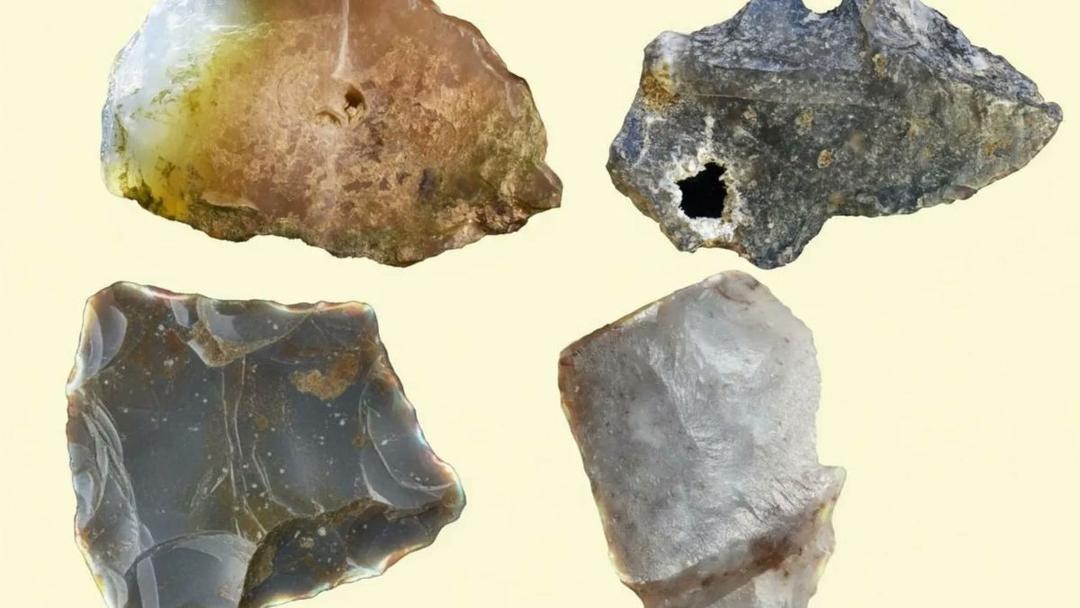
- According to a study published in Nature Communications on Tuesday, archaeologists have discovered stone tools at the Namorotukunan site in Kenya's Turkana Basin dating from approximately 2.75 to 2.44 million years ago — making them part of one of the oldest continuous toolmaking traditions in human history.
- The research team uncovered over 1,200 Oldowan stone artifacts across three distinct geological layers. Each layer preserved distinct environmental conditions, ranging from humid floodplains to arid riverine settings, over 300,000 years.
- Early hominins demonstrated sophisticated material selection by preferentially choosing fine-grained stones like chalcedony and jasper for toolmaking, indicating advanced knowledge of fracture mechanics and deliberate craftsmanship.


Sources Split
LEFT
CENTER
RIGHT
+1

+1
+5
ESTAB
CRIT
CENTER
PRO
ESTAB
The Spin
Narrative A
Stone tools weren't just passive products of bigger brains — they actively drove human cognitive evolution. These hierarchical technologies served as external scaffolds that pushed our ancestors' mental limits, creating feedback loops between the complexity of toolmaking and brain development. The co-evolution of mind and material culture fundamentally shaped who we became as a species.
Narrative B
The 2.75-million-year-old Kenyan tools show that early hominins already mastered sophisticated stoneworking long before major brain expansion. These remarkably consistent technologies persisted unchanged for 300,000 years through massive environmental upheavals, showing tools reflected existing cognitive abilities rather than driving brain evolution.

Metaculus Prediction
© 2026 Improve the News Foundation.
All rights reserved.
Version 7.18.0